
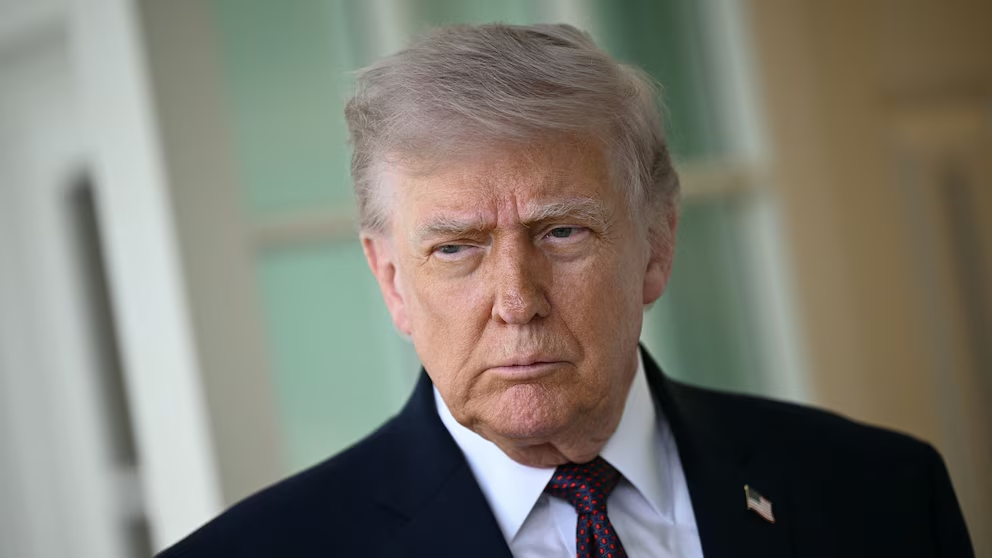
President Donald Trump addresses reporters outside the Oval Office at the White House in Washington, April 13, 2026.Brendan Smialowski/AFP via Getty Images
Following unsuccessful discussions this past weekend in Pakistan, negotiators have begun intense efforts directed at restarting talks between the U.S. and Iran. They are hoping to set up another session of face-to-face talks between the sides before the two-week cessation of hostilities is slated to lapse next week, according to two U.S. authorities and an additional source familiar with the matter.
Even with the U.S. and Iran leveling accusations at each other for breaching the armistice since it began, mediators view its upcoming termination as a possibly beneficial means of enhancing strain on both parties to return to negotiations.
The officials and other source report that mediators are endeavoring to prevent a recommencement of assaults on Iran from the U.S. and prompt Tehran to reexamine a proposition presented by the Trump administration during the Islamabad dialogues.
Discussions have also centered on President Donald Trump's naval blockade of Iranian harbors, being enacted Monday, which is generally considered a maneuver to diminish Iran's influence at the discussion table.
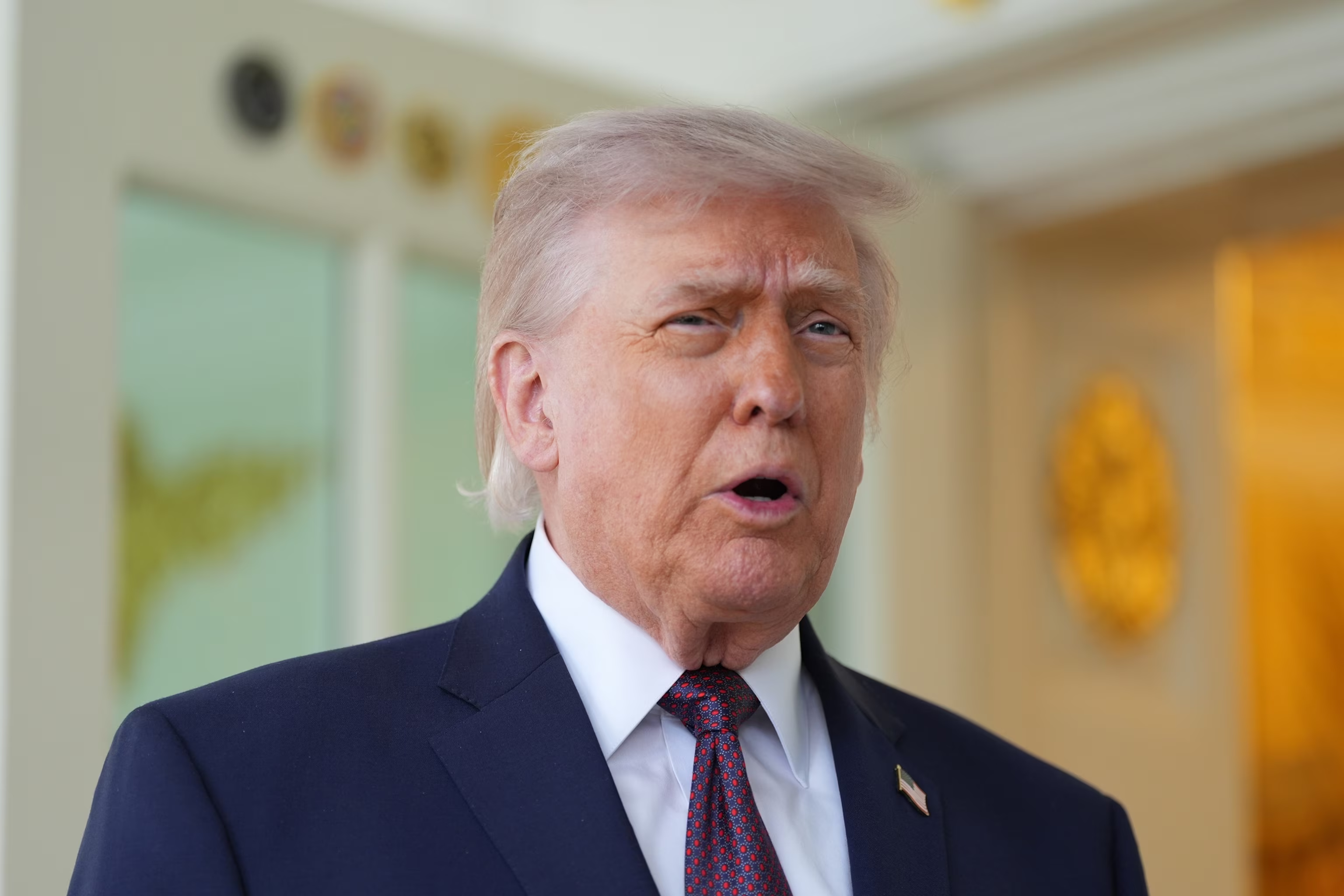
President Donald Trump speaks to journalists outside the Oval Office at the White House in Washington, April 13, 2026.Alex Brandon/AP
When queried about the negotiations with Iran at the White House Monday afternoon, President Trump stated "we've received communication from the opposing party," and "they're very eager to strike a deal, extremely eager."
Although more details on that exchange were not immediately accessible, both the U.S. and Iran have conveyed enthusiasm for continuing to strive toward a diplomatic resolution, the officials and source conveyed.
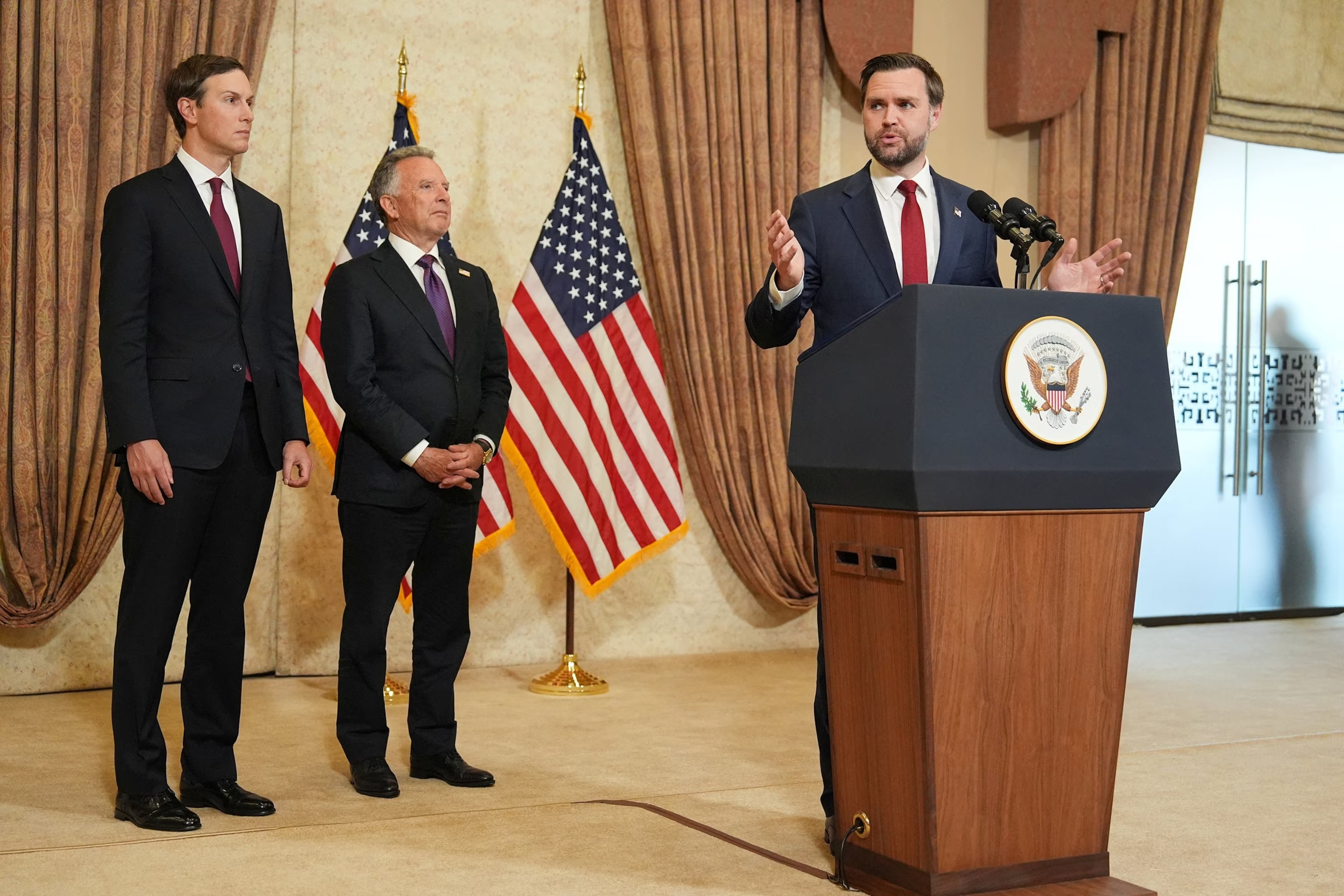
U.S. Vice President JD Vance speaks during a press conference after meeting with representatives from Pakistan and Iran as Jared Kushner and Steve Witkoff, Special Envoy for Peace Missions, listen, on Sunday, April 12, 2026, in Islamabad, Pakistan.Pool/via Reuters
Any sanctioned understanding between the nations pertaining to Iran's nuclear ambitions would mark the first such agreement since the Joint Comprehensive Plan of Action, an accord from the Obama era forged after over 20 months of intense discussions that Trump withdrew from during his initial presidential tenure.
The enrichment matter
Numerous entities engaged in the Islamabad talks have openly suggested that negotiations collapsed due to the same contentious issue that has recurrently hampered diplomacy between the U.S. and Iran: the enhancement of uranium within Iran's territory.
The U.S. contingent proposed enforcing a complete prohibition on Iran's enrichment of uranium for a minimum of 20 years; Iran responded with a significantly shorter period, according to a U.S. representative.
Even though these stipulations were presented by the delegations, it's uncertain if either faction would have ultimately embraced those preconditions as constituent parts of an ultimate agreement or if they were suggested as components of a negotiating tactic.
Both factions also deliberated Iran's current reserve of highly enriched uranium; Iran proposed disposing of it via downblending, a technique that diminishes the uranium to a state where it remains viable for fuel utilization but cannot be re-enriched to weapons-grade status, the official noted, including that downblending has traditionally been perceived by the U.S. as a suitable solution.
Simultaneously, Trump commented Monday that "we're going to reclaim what was lost."
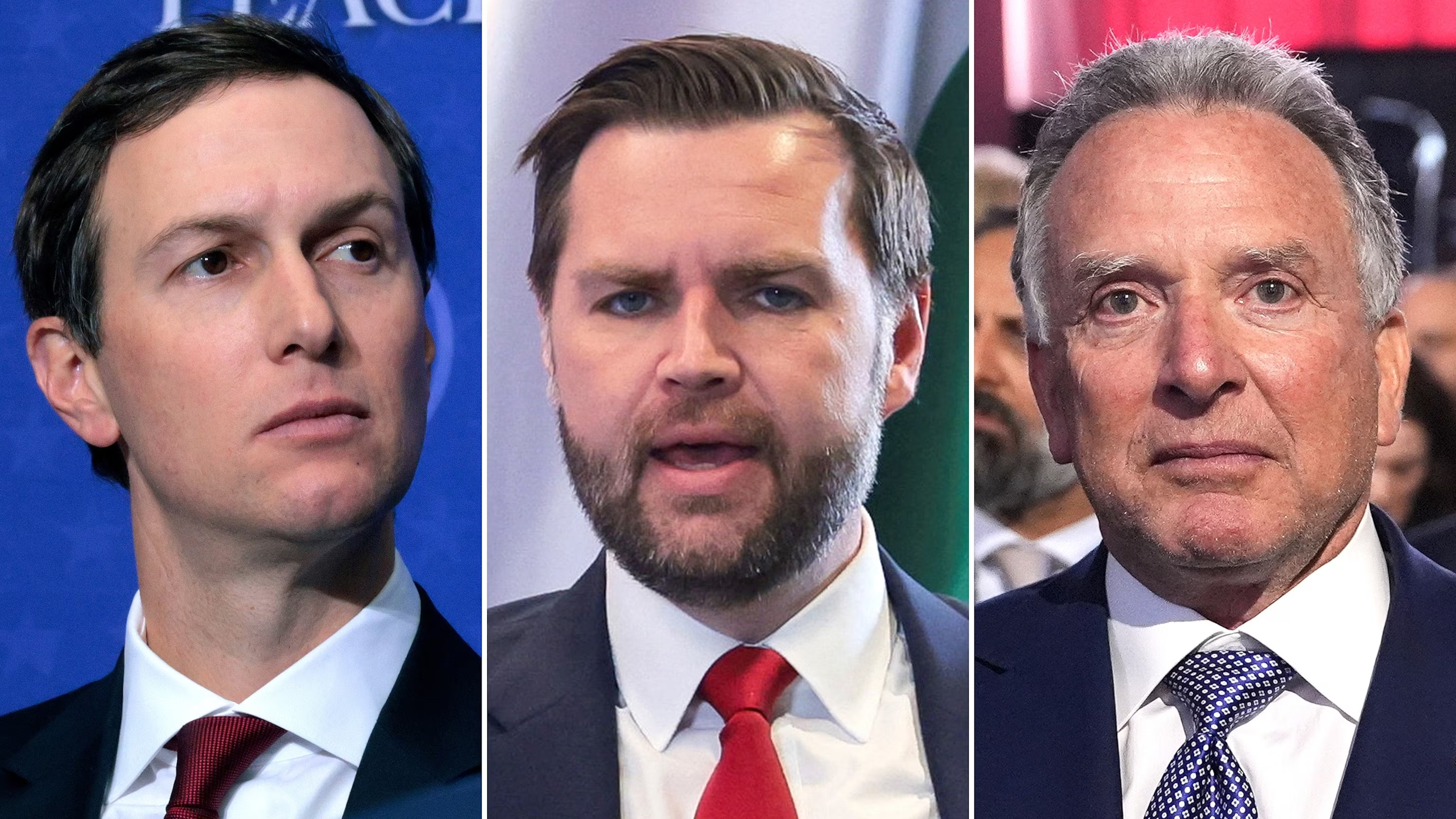
Jared Kushner in Washington, Feb. 19, 2026, Vice President JD Vance in Budapest, Hungary, April 8, 2026, and Steve Witkoff in Miami Beach, March 27, 2026.Getty Images/Reuters/AP
Engaging via telephone
Beyond the interaction Trump referenced Monday, Special Envoy Steve Witkoff has been in communication with various officials from mediating nations subsequent to the conclusion of the dialogues in Islamabad, one official divulged.
Israel was not officially party to the negotiations, but there were elevated-level conversations between the Trump administration and the Israeli government throughout the weekend. Israeli Prime Minister Benjamin Netanyahu further informed his cabinet that Vice President Vance contacted him en route from Islamabad.
Secretary of State Marco Rubio is also anticipated to convene with Egypt's foreign minister, Badr Abdelatty, during his visit to Washington this week.
Moreover, Pakistan's foreign ministry conveyed that the nation's deputy prime minister/foreign minister has conducted calls with his counterparts from Turkey, Egypt, Saudi Arabia and China since the cessation of the discussions.
Although China has been hesitant to assume a more prominent role in mediation, Beijing has been a highly engaged participant in the background and is advocating for a prompt resolution stemming from apprehensions regarding the economic ramifications of the conflict, officials indicated.
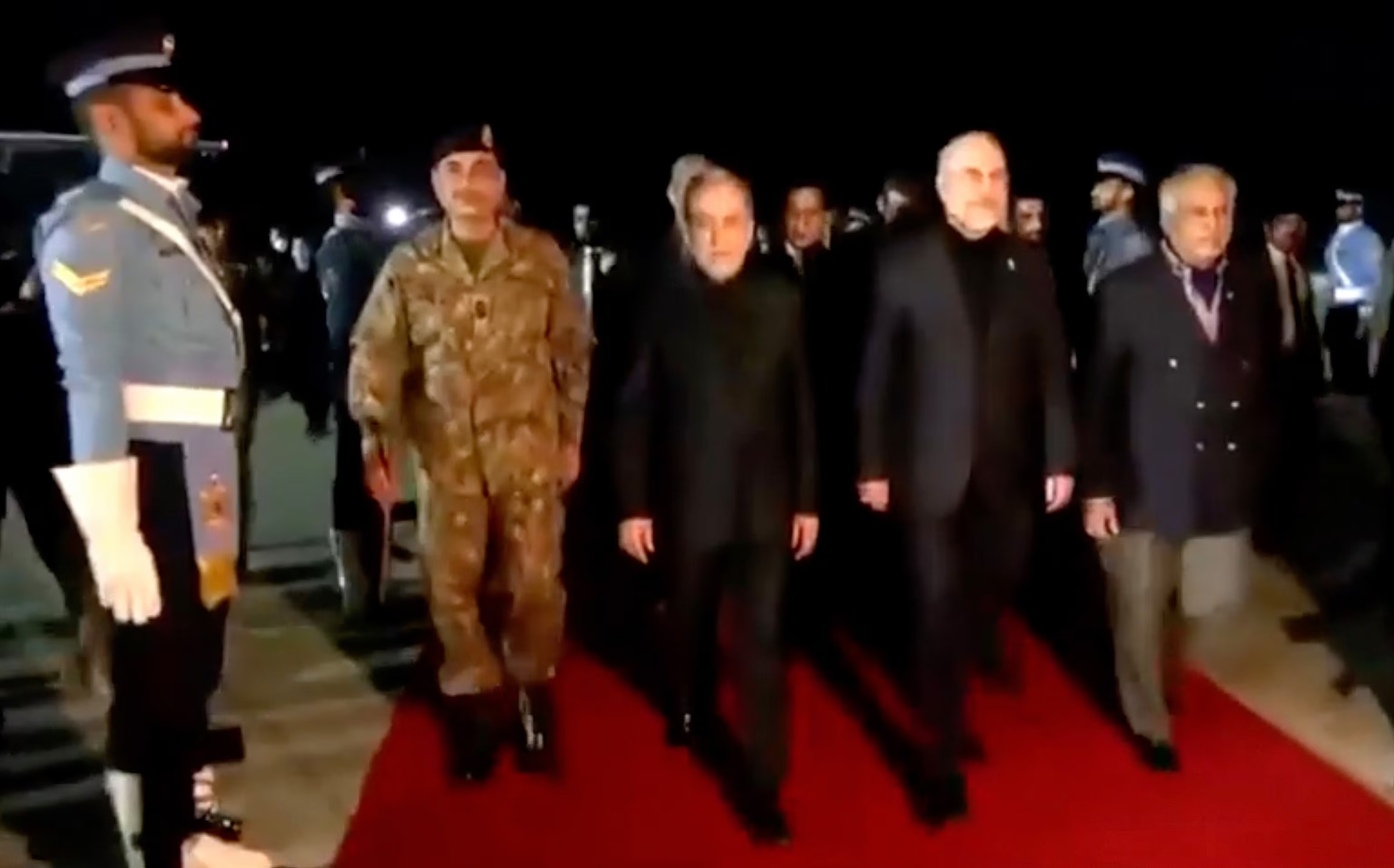
Iranian Parliament Mohammad Ghalibaf, head of the Iranian delegation for talks with the United States arrives in Islamabad, April 10, 2026.Pakistan Foreign Ministry
The Islamabad MoU
Iranian Foreign Minister Seyed Abbas Araghchi communicated after the breakdown of the dialogues that the U.S. and Iran had been "merely fractions away" from "Islamabad MoU" — or an Islamabad Memorandum of Understanding.
U.S. functionaries refute that the factions were near any accord, but a Memorandum of Understanding is commonly delineated as a structured yet non-binding arrangement that progresses toward a more solid agreement.
It's not altogether unimaginable that the two nations might undertake the intermediate measure of consenting to an MoU before a definitive accord, the U.S. — and the Trump administration, specifically — typically prefer to employ MoUs in spheres of collaboration as opposed to higher-stakes diplomatic conventions.
One justification Iran could have been pursuing an MoU is that Iranian negotiators have previously signaled that the country's novel supreme leader, Mojtaba Khamenei, would be required to endorse a finalized settlement, according to a U.S. official and source familiar.
The Iranians assert Ayatollah Mojtaba Khamenei is governing Iran's government and that he authorized the two-week truce last week — but there are varying accounts regarding the severity of the wounds he suffered during the strike that resulted in his father’s death and inquiries regarding whether he genuinely presides over the nation persist.
While Vance could readily contact and advise President Trump during the conversations, the Iranian contingent would not necessarily directly converse with the supreme leader while in Pakistan due to anxieties that Ayatollah Khamenei's whereabouts could be pinpointed, adding an added layer of complexity.
Sourse: abcnews.go.com