
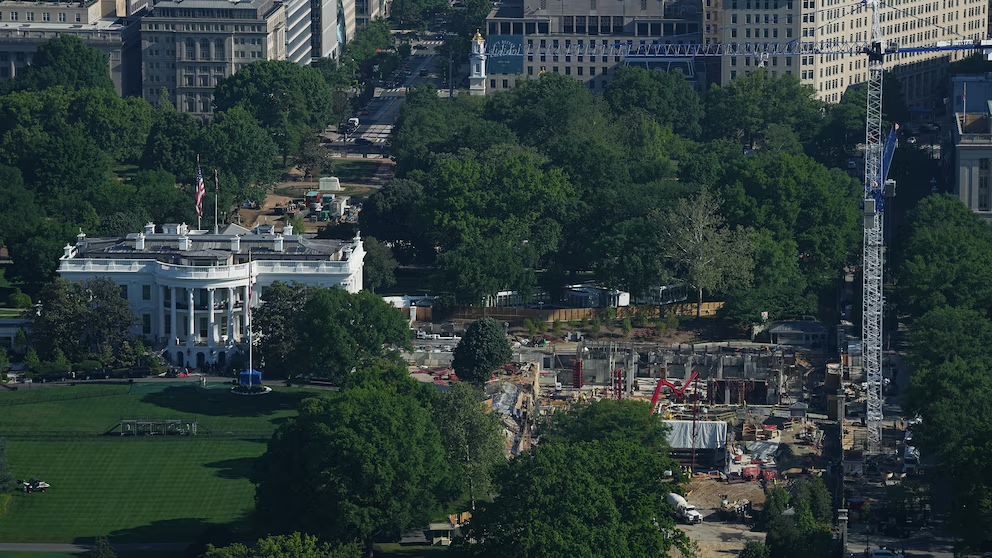
The construction site for a grand ballroom is pictured adjacent to the White House, on April 27, 2026, situated in Washington. Matt Rourke/AP
Across the nation, Americans are largely against President Donald Trump’s proposal to demolish the East Wing of the White House to erect a ballroom, opposing it by a ratio of 2-to-1. There’s even greater opposition to a colossal 250-foot monument, and disapproval exceeds 5-to-1 concerning the idea of adding Trump’s signature to U.S. currency, according to results from an ABC News/Washington Post/Ipsos survey, which was administered using Ipsos’ KnowledgePanel.
Trump’s ballroom
The Trump administration made public its plan to erect a sprawling 90,000-square-foot ballroom back in July 2025, with Trump vowing that “it won’t impact the existing structure.” By October, work had begun to tear down the East Wing of the White House, originally constructed in 1902 and refurbished in 1942.
Data from the ABC News/Washington Post/Ipsos poll reveals that over half the U.S. population, specifically 56%, disapproves of demolishing the East Wing in order to accommodate a 90,000-square-foot ballroom, while 28% are in favor, and 15% remain undecided. These results closely resemble those from aprior ABC News/Washington Post/Ipsos survey, which occurred in October.
Presently, strong disapproval (47%) markedly outweighs strong approval (16%) by an approximate ratio of 3-to-1.
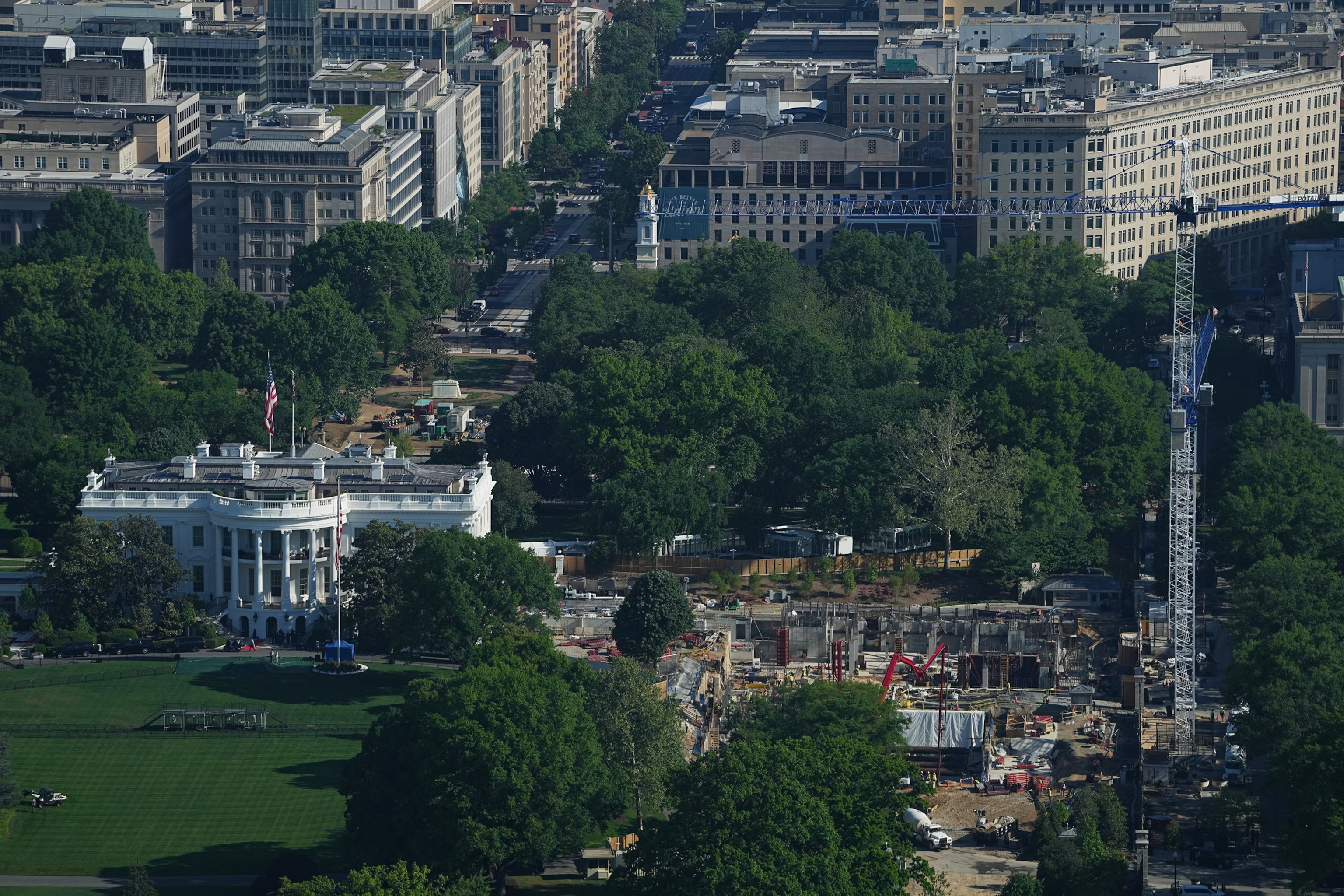
The construction site for a grand ballroom is pictured adjacent to the White House, on April 27, 2026, situated in Washington.Matt Rourke/AP
In December, the National Trust for Historic Preservation – a nonprofit, supported by private funds and recognized by Congress to safeguard historic places – initiated a legal challenge seeking to halt the ballroom’s construction until the administration fulfilled the federal assessment procedure required for federal building projects. Earlier this month, an appellate court committee permitted the continuation of the ballroom project, granting a stay of enforcement on a previous injunction.
Trump has reiterated his aspiration for the ballroom following the shooting incident at the White House Correspondents’ Association Dinner on Saturday night, asserting that the hotel’s ballroom did not offer sufficient security protocols for an event attended by the president.
The survey took place both before and after the Saturday night dinner. Overall, there was no notable variance in sentiment before and after the White House correspondents’ dinner; however, backing from Republicans for the ballroom increased from 62% before the dinner to 72% afterward.
Despite GOP appeals for erecting the ballroom in light of the attempted attack on Saturday night, the proposed ballroom, according to a report from the National Capital Planning Commission, would hold approximately 1,000 individuals. In contrast, roughly 2,600 individuals attended this year’s White House correspondents’ dinner. A White House hosted function would fall under the administration’s purview, whereas numerous events that the president attends – including the correspondents’ dinner – are managed by outside, autonomous entities.

Armed Secret Service agents stand on stage during a shooting incident at the annual White House Correspondents Association Dinner at the Washington Hilton, April 25, 2026 in Washington.Andrew Harnik/Getty Images
Republicans have put forward a bill earmarking $400 million for the structure. This action follows Trump’s statement in October that the ballroom would be "100% financed by me and some friends," alluding to donors. "The government is contributing absolutely nothing." Democratic legislators have introduced measures to oversee the undertaking and place controls on donations – designed to prevent graft.
Approximately 9 in 10 Democrats oppose the ballroom undertaking, in tandem with nearly 6 in 10 independents. Among Republicans, 65% are in favor of demolishing the East Wing of the White House to make space for a ballroom. Support rises to 77% among MAGA-Republicans (including Republican-leaning independents who support the MAGA movement) yet declines sharply to merely 31% among non-MAGA Republicans.
An arch
Alongside Trump’s substantial revisions to the White House layout, the president has put forth a plan for a towering 250-foot arch to be erected at Memorial Circle, which is located directly before the gateway to Arlington National Cemetery, situated at the opposite end of the Arlington Memorial Bridge. The arch’s height would be more than double that of the Lincoln Memorial located on the bridge’s other side.
“I’d like it to be the greatest [arch] of all,” even surpassing the 164-foot-tall Arc De Triomphe in Paris, as Trump declared.
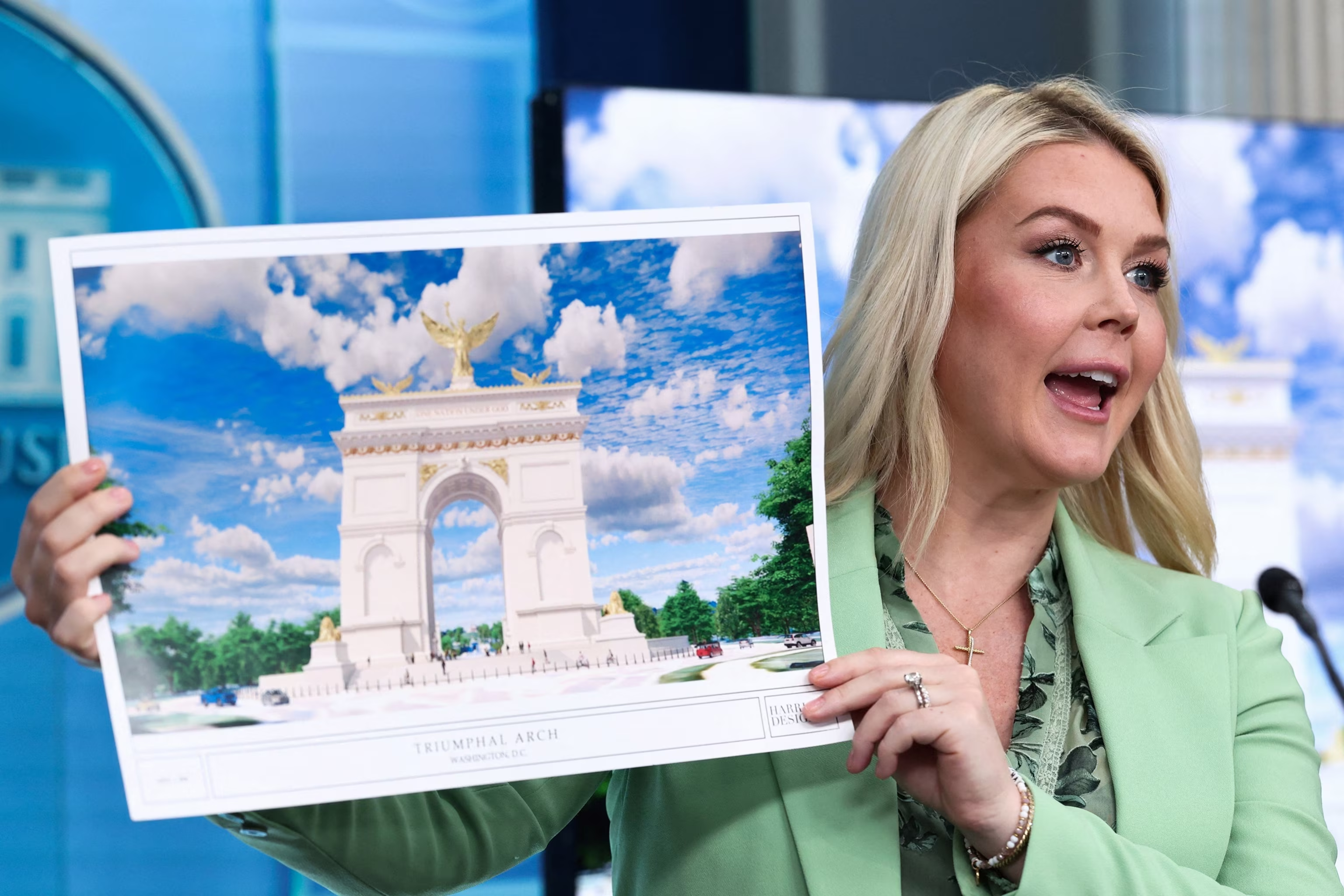
White House press secretary Karoline Leavitt holds up an artist rendering of the new triumphal arch as she speaks with reporters in the James Brady Press Briefing Room at the White House, April 15, 2026, in Washington.Kevin Lamarque/Reuters
By a margin surpassing 2-to-1, Americans are against (52%) as opposed to in favor (21%) of the Trump administration’s intention to build the arch. An additional 26% express uncertainty.
Strong disapproval (41%) outweighs strong approval (9%) by a ratio exceeding 4-to-1.
A coalition of Vietnam War veterans has launched legal action aimed at stopping the arch’s construction, asserting that Congressional authorization is necessary before construction commences. They also contend that the arch would obstruct the line of sight connecting Arlington National Cemetery and the Lincoln Memorial. The veterans have come to an accord with the administration, temporarily halting the lawsuit, on the promise that the administration will abide by the lawful procedure for erecting the arch.
Taxpayer funds would finance at least part of the initiative: specifically, $2 million from special initiative allocations and $13 million through matching grant schemes.
Majorities among Democrats (78%) and independents (57%) oppose the arch. A narrow 51% of Republicans endorse erecting an arch, comprising 59% of MAGA Republicans, contrasted with just 23% of non-MAGA Republicans.
Trump’s signature on money
In March, the U.S. Department of the Treasury disclosed that Trump’s signature will be incorporated onto future issues of U.S. paper currency. This event would mark the first occurrence for a sitting president, as no preceding U.S. president’s name has ever been featured on currency. Earlier in March, the federal Commission of Fine Arts endorsed Trump’s likeness on commemorative gold coins, and during October, the administration floated the possibility of a $1 coin themed around Trump.
Americans show greater disapproval of printing Trump’s signature on paper currency, in lieu of that of the treasury secretary, than they do of either the ballroom or the arch: 68% object to it, whereas only 12% support it. Another 19% report uncertainty. Over half, standing at 55%, strongly disapprove of printing Trump’s signature on paper currency; conversely, a mere 5% register strong approval.
An amendment dating back to 1866 prohibits living individuals from being depicted on government securities, and a U.S. statute prescribes that “only the image of a deceased person is permitted to appear on U.S. currency and securities.” A living president has been featured on currency on one prior occasion: Back in 1926, President Calvin Coolidge was depicted on a coin commemorating the 150th anniversary of the Declaration of Independence’s signing, alongside a portrait of President George Washington.
The majority of Americans across a wide spectrum of demographic groups are in opposition to printing Trump’s signature on paper currency, including 9 out of 10 Democrats and over 7 out of 10 independents. Slightly under 3 in 10 Republicans support it, including just over a third of MAGA Republicans (35%) – which constitutes the highest level of support across the various demographic groups.
The poll did not examine adding Trump’s photograph to national park passes or renaming the Kennedy Center. The survey was conducted prior to the revelation that Trump's image would be featured on limited-edition passports.
Methodology – This ABC News/Washington Post/Ipsos survey involved 2,560 U.S. adults in total, although these inquiries were posed to a half sample of 1,292 U.S. adults, yielding a margin of error of +/- 2.8 percentage points. Error margins are broader among smaller groups.
Refer to the PDF for comprehensive findings and a detailed description of the method used.
Liz Schreier from ABC News played a role in compiling this report.
Reach out to [email protected] to join ABC News’ polling distribution list.
More ABC News polls are accessible at abcnews.com. Media inquiries: Jeannie Kedas and Van Scott.
Sourse: abcnews.go.com