
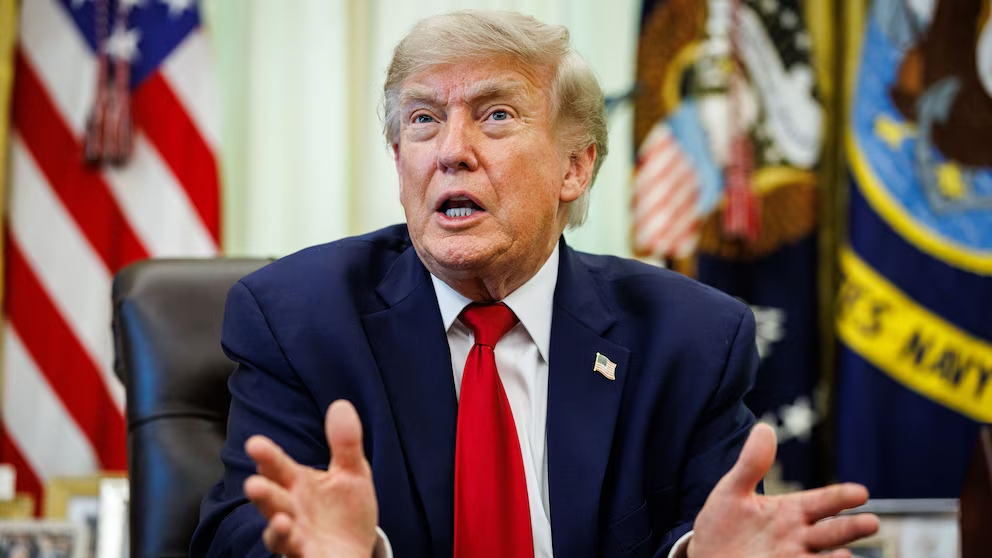
President Donald Trump addresses reporters as he signs an executive directive concerning vehicle maintenance in the Oval Office at the White House in Washington on June 29, 2026. Samuel Corum/EPA/Shutterstock
The United States and Iran are conveying opposing messages regarding the likelihood of a meeting between principal negotiators in Qatar this week, intensifying the ambiguity surrounding a peace initiative ostensibly aimed at addressing Iran’s atomic program, yet thus far overshadowed by tensions in the Strait of Hormuz.
Discussions between the two nations were initially slated for Switzerland this week, with a focus on nuclear matters. However, the location and agenda for the planned high-level and technical engagements were altered subsequent to a new series of retaliatory strikes between the U.S. and Iran concerning the crucial maritime route, according to a U.S. official and another informed source.
Although the Trump administration is advocating for direct dialogue, it remains uncertain whether Iranian and American representatives will convene in person or communicate exclusively through Qatari intermediaries, they further indicated.
President Trump announced on Monday that a meeting was scheduled to occur in Qatar’s capital on Tuesday, at Tehran’s request.
“IRAN HAS REQUESTED A MEETING. IT WILL TAKE PLACE TOMORROW IN DOHA!” Trump declared in a social media dispatch on Monday morning.
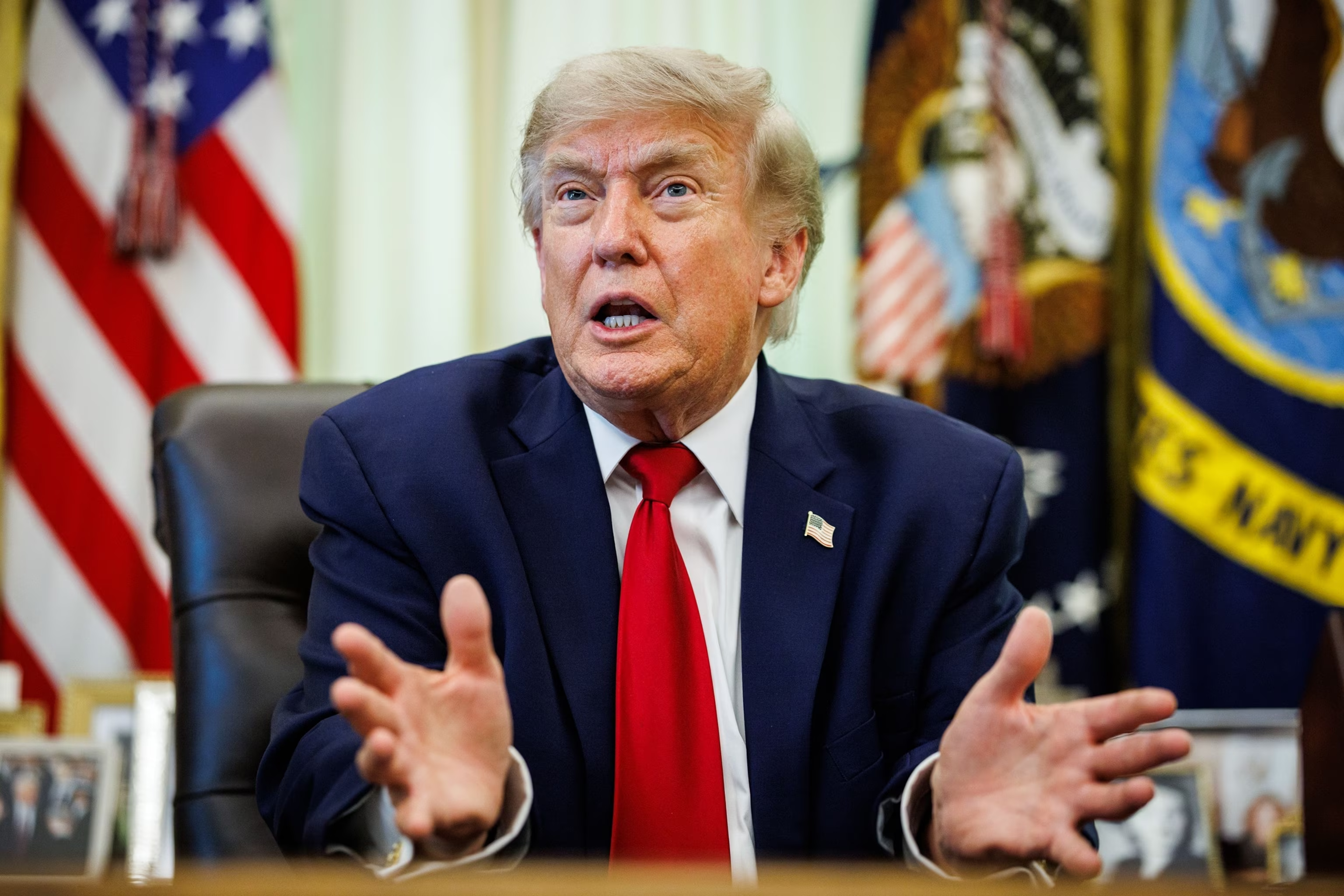
President Donald Trump speaks as he signs an executive order on vehicle repairs in the Oval Office at the White House in Washington, June 29, 2026. Samuel Corum/EPA/Shutterstock
White House Press Secretary Karoline Leavitt subsequently stated that the U.S. would be represented by Special Envoy Steve Witkoff and the president’s son-in-law, Jared Kushner, adding that both senior-level and technical discussions with Iran were anticipated.
Esmail Baghaei, a spokesperson for Iran’s foreign ministry, presented a contrasting view of the forthcoming gatherings. He indicated that while an Iranian delegation would travel to Doha to confer on the execution of the provisional accord between the U.S. and Iran, their excursion was unrelated to the visit by Kushner and Witkoff.
“There are no negotiation sessions with the U.S. side at any level planned in the upcoming days,” Baghaei affirmed.
The Iranian government’s apparent reluctance to resume direct talks represents a notable step backward from the high-level discussions held in Switzerland earlier this month, following the signing of a memorandum of understanding between the nations. After that meeting, Vice President JD Vance reported that extensive dialogues with senior Iranian officials had yielded a “good foundation for a successful final accord,” and mentioned progress toward establishing a “mechanism” to guarantee the Strait of Hormuz remained accessible.
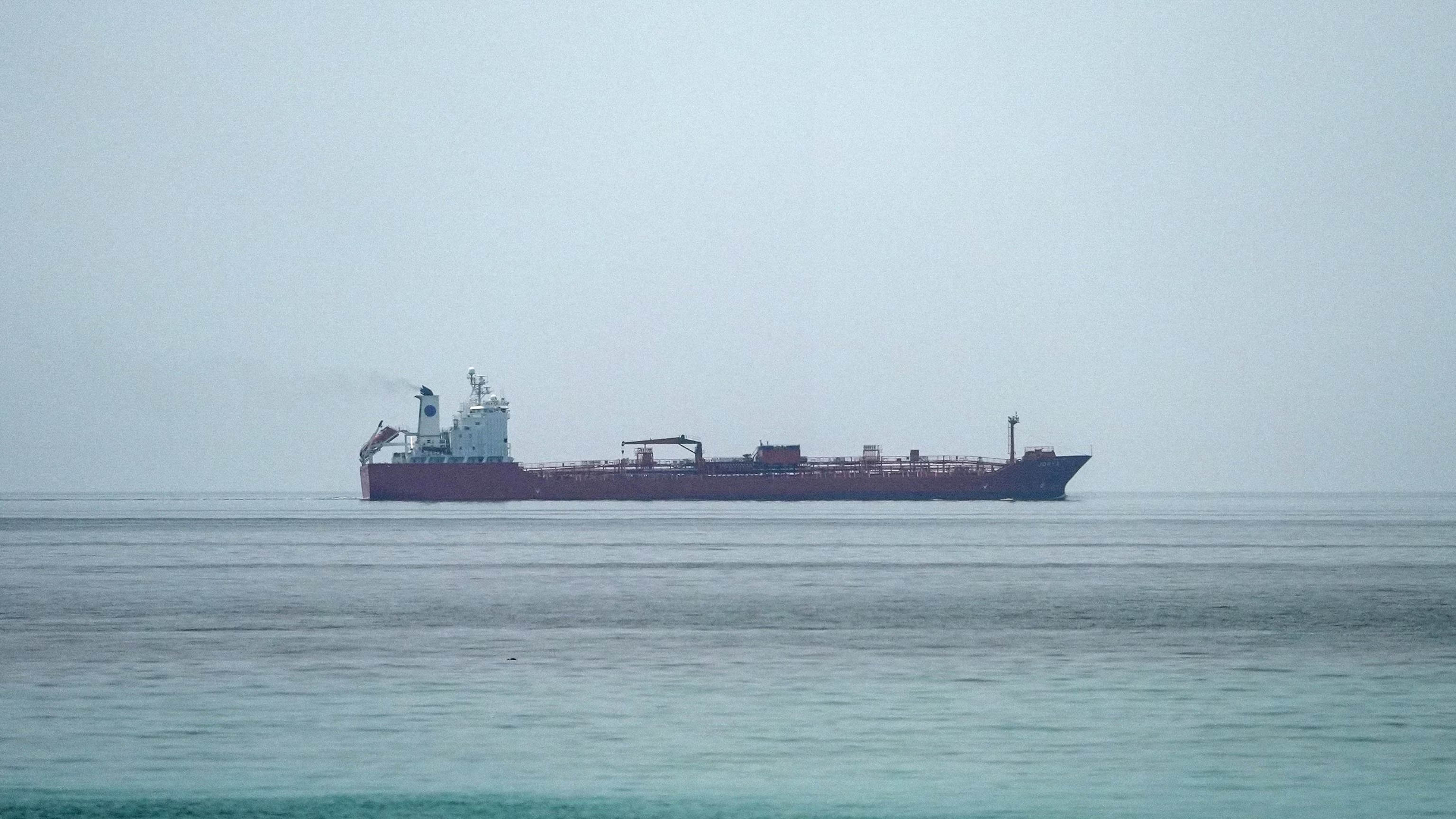
Oil tanker JORYA navigates the sea near the Omani coast, as observed from Musandam, Oman, on June 25, 2026. Stringer/Reuters
The interim agreement stipulates that Iran is to “make arrangements using its best efforts for the safe passage of commercial vessels with no charge for 60 days only from the Persian Gulf to the Sea of Oman and vice versa.”
However, Iran has consistently menaced to obstruct the strait, and on Thursday, it assaulted a cargo vessel transiting the waterway, triggering a four-day exchange of hostilities with the U.S. that hindered maritime traffic.
Trump administration officials are keen to revert the conditions in the Strait of Hormuz to their pre-conflict state, but sources informed ABC News that recent intelligence assessments forecast Tehran will persist in threatening to re-establish its stranglehold on the waterway — a circumstance that grants Iran considerable influence over the global economy.
The memorandum of understanding also mandates that Iran and the U.S. finalize a comprehensive agreement within 60 days. Nearly a quarter of that period has now elapsed.
While the provisional accord states that this duration can be prolonged by mutual consent, Trump has repeatedly declared his refusal to permit Iran to prolong the negotiations.
“We’re negotiating from a position of pure strength, pure strength. They know that,” Trump stated on Thursday.
Sourse: abcnews.go.com