
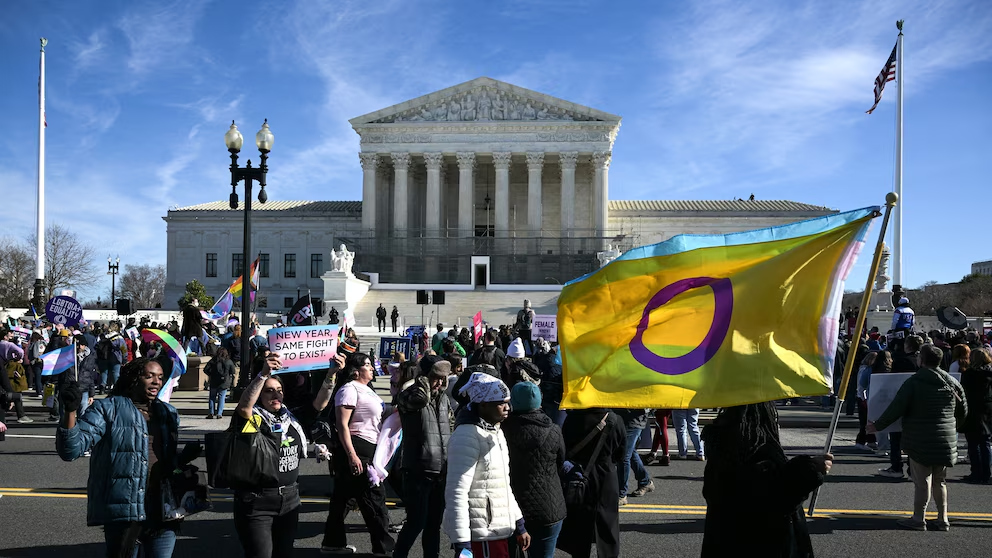
6:15LGBTQ+ rights supporters gathered outside the US Supreme Court as justices deliberated on challenges to state prohibitions against transgender athletes participating in women’s sports, on Jan. 13, 2026, in Washington, D.C. Oliver Contreras/AFP via Getty Images
On Tuesday, the Supreme Court seemed inclined to maintain two state laws that bar transgender girls from joining girls’ sports teams, as a majority of conservative justices expressed doubt regarding claims that such exclusions violate Title IX and the U.S. Constitution.
"Both sides present compelling arguments about equality interests," remarked Justice Brett Kavanaugh, a father and coach of two daughters involved in athletics. However, "with half of the states permitting … transgender girls and women to participate and the other half not, why should we at this juncture … intervene and attempt to establish a nationwide constitutional rule amid ongoing uncertainty and discussion?"
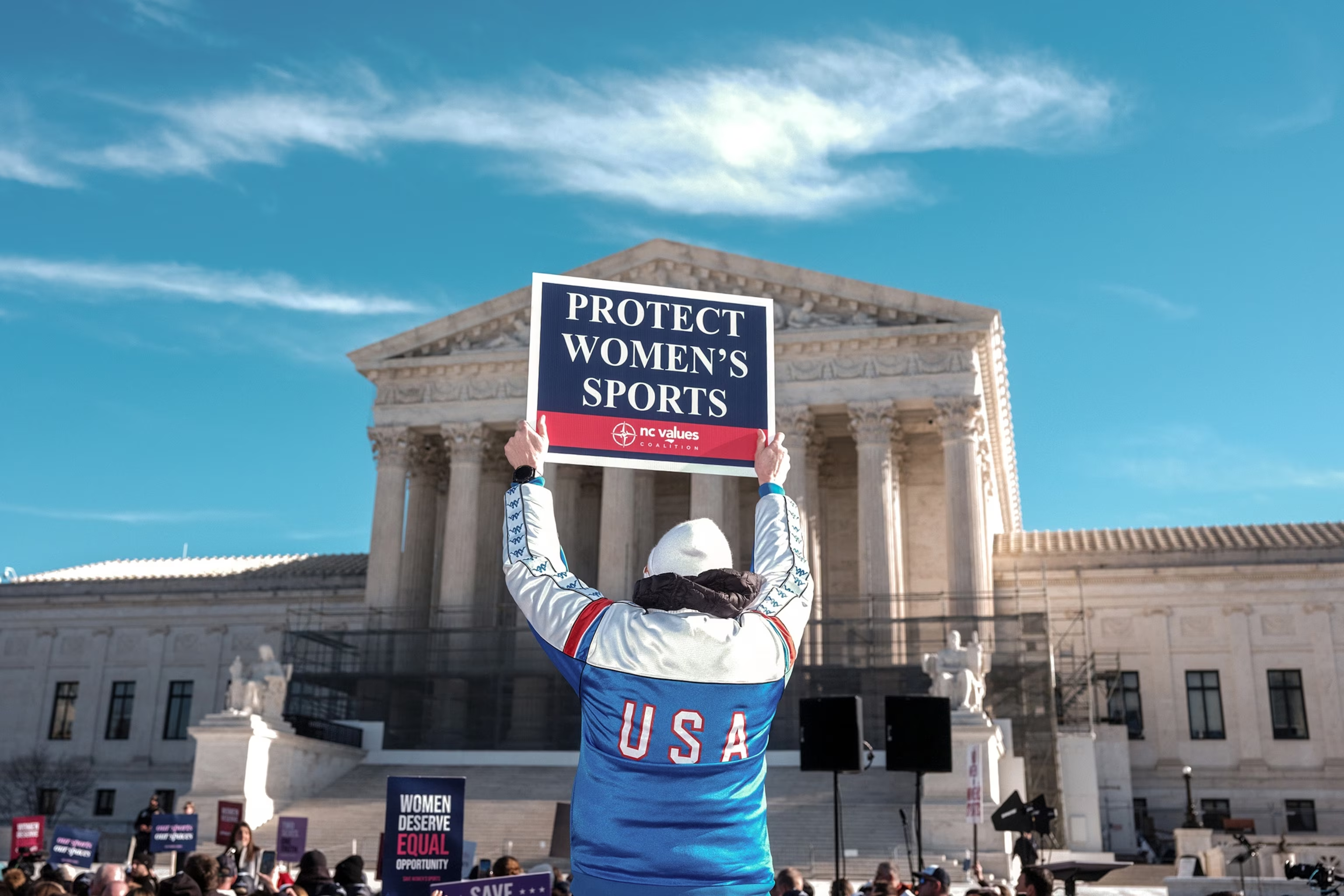
A protester displays a sign outside the US Supreme Court in Washington, D.C., on Jan. 13, 2026.Kent Nishimura/Bloomberg via Getty Images
These two cases represent the first instance of the court engaging in the culture wars discourse and pertain to laws from Idaho and West Virginia, both of which were previously blocked by lower courts for discriminating based on sex, violating federal law and the equal protection clause of the Constitution. Twenty-seven additional states have similar regulations.
Twenty-one states, including California and New York, permit transgender girls to compete on girls’ sports teams, with laws that explicitly safeguard the rights of trans girls to participate. The court was not reviewing whether these policies should be abolished.
"Do you believe that it is up to each state to determine, and that the Constitution grants states the discretion to permit or deny it?" Kavanaugh queried Idaho Solicitor General Alan Hurst.
They cannot "impose our policy on other states regarding this issue," Hurst responded.
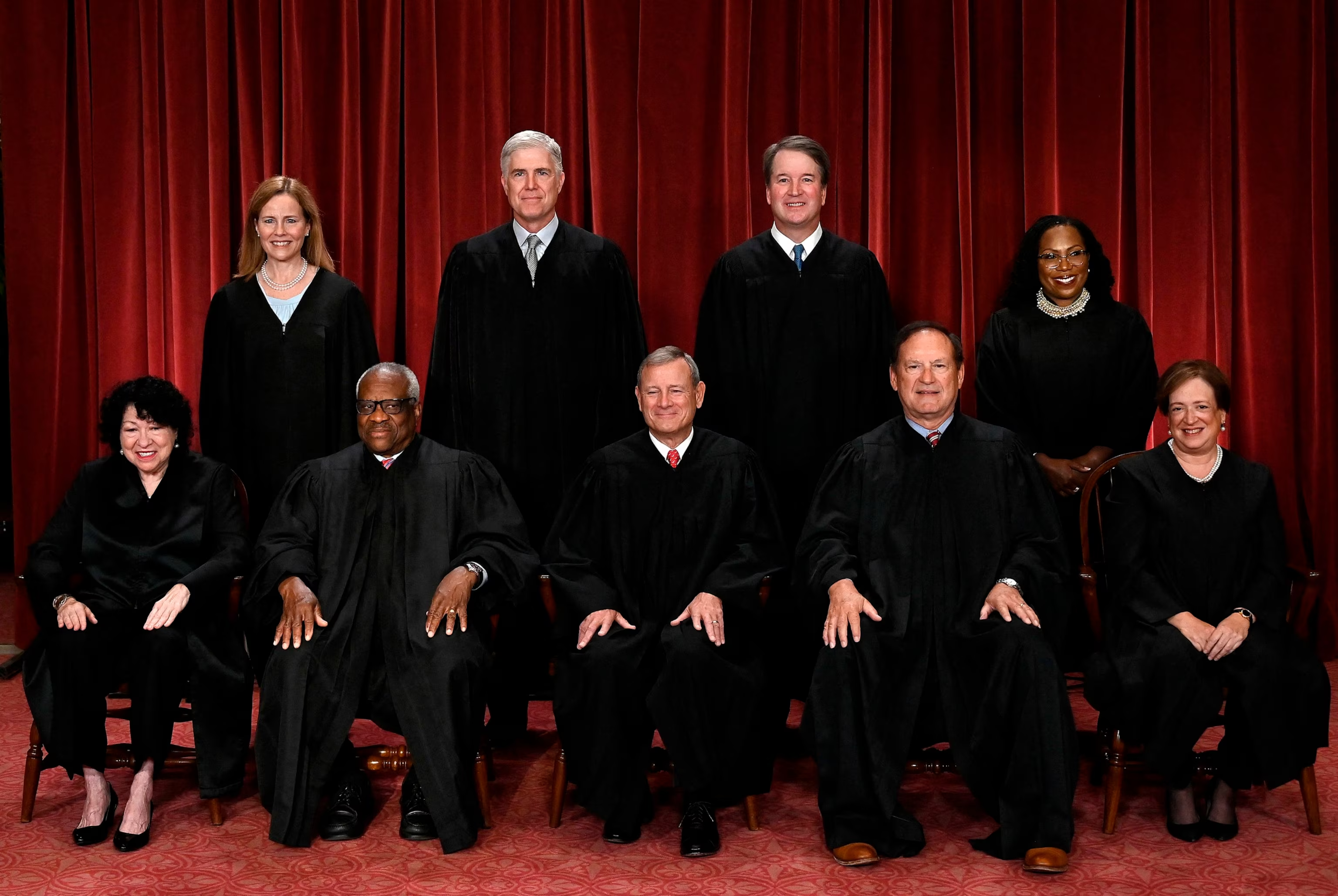
Justices of the US Supreme Court pose for their official photo at the Supreme Court in Washington, DC on October 7, 2022.Olivier Douliery/AFP via Getty Images, FILE
Throughout more than three hours of discussions, Kavanaugh and the other conservative justices appeared satisfied to adopt a state-by-state strategy, implying that Title IX’s prohibition against discrimination "on the basis of sex" does not inherently encompass gender identity, and that transgender individuals do not represent a "distinct" group deserving of greater legal protections.
“The pertinent question is, is a classification based on sex indeed a classification based on transgender identity?” Chief Justice John Roberts inquired skeptically of ACLU attorney Josh Block. He replied that the court need not address this issue to resolve the case.
Block and attorney Kathleen Hartnett, who represented two transgender athletes contesting the state laws, contended that their clients, who undergo puberty-blocking medication and hormone treatments, form a unique subset of transgender individuals who do not possess testosterone levels that would provide them an athletic edge over cisgender counterparts.
"Having a larger physique but lacking the muscle and testosterone to utilize it could actually place [the trans athlete] at a disadvantage," stated Hartnett.
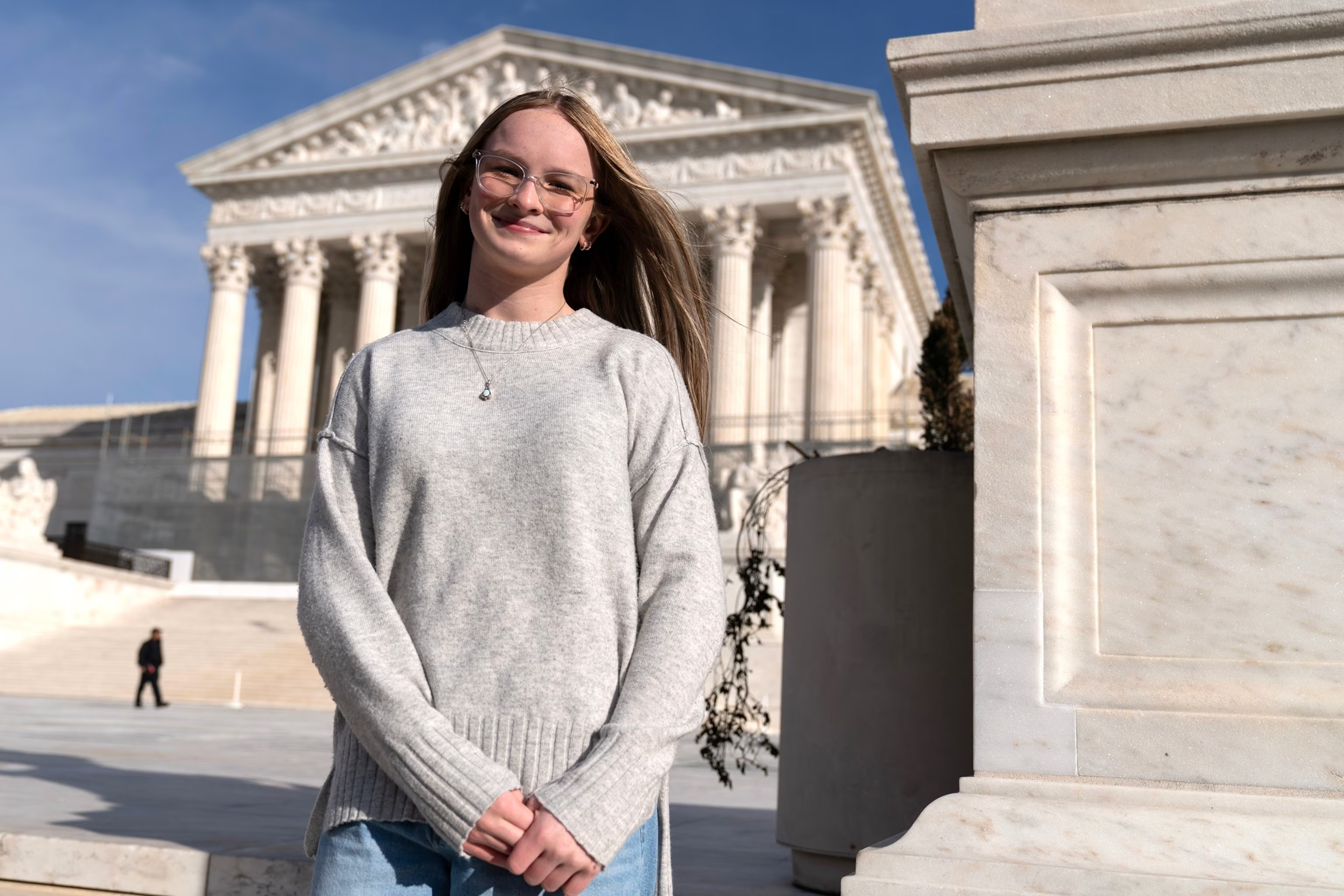
Becky Pepper-Jackson poses for a photograph outside of the U.S. Supreme Court in Washington, D.C., on Jan. 11, 2026.Jose Luis Magana/AP
The court’s three liberal justices appeared sympathetic towards the plaintiffs, indicating a search for a way to reach a narrow ruling. Focusing closely on the particulars concerning Lindsay Hecox of Idaho and Becky Pepper-Jackson of West Virginia, several justices proposed that it may be prudent to return the case to lower courts
Sourse: abcnews.go.com