
Republicans in the Senate continued their progress on Wednesday with a budget package for immigration enforcement, which had been halted before the Memorial Day recess due to concerns regarding President Donald Trump’s “anti-weaponization fund.”
Senators voted along party lines to move forward with the legislation that allocates billions of dollars for ICE and Customs and Border Patrol, initiating up to 20 hours of discussion, followed by an anticipated marathon of votes—termed a “vote-a-rama”—as early as Wednesday evening.
Although the package has advanced, several potential obstacles remain to be addressed.
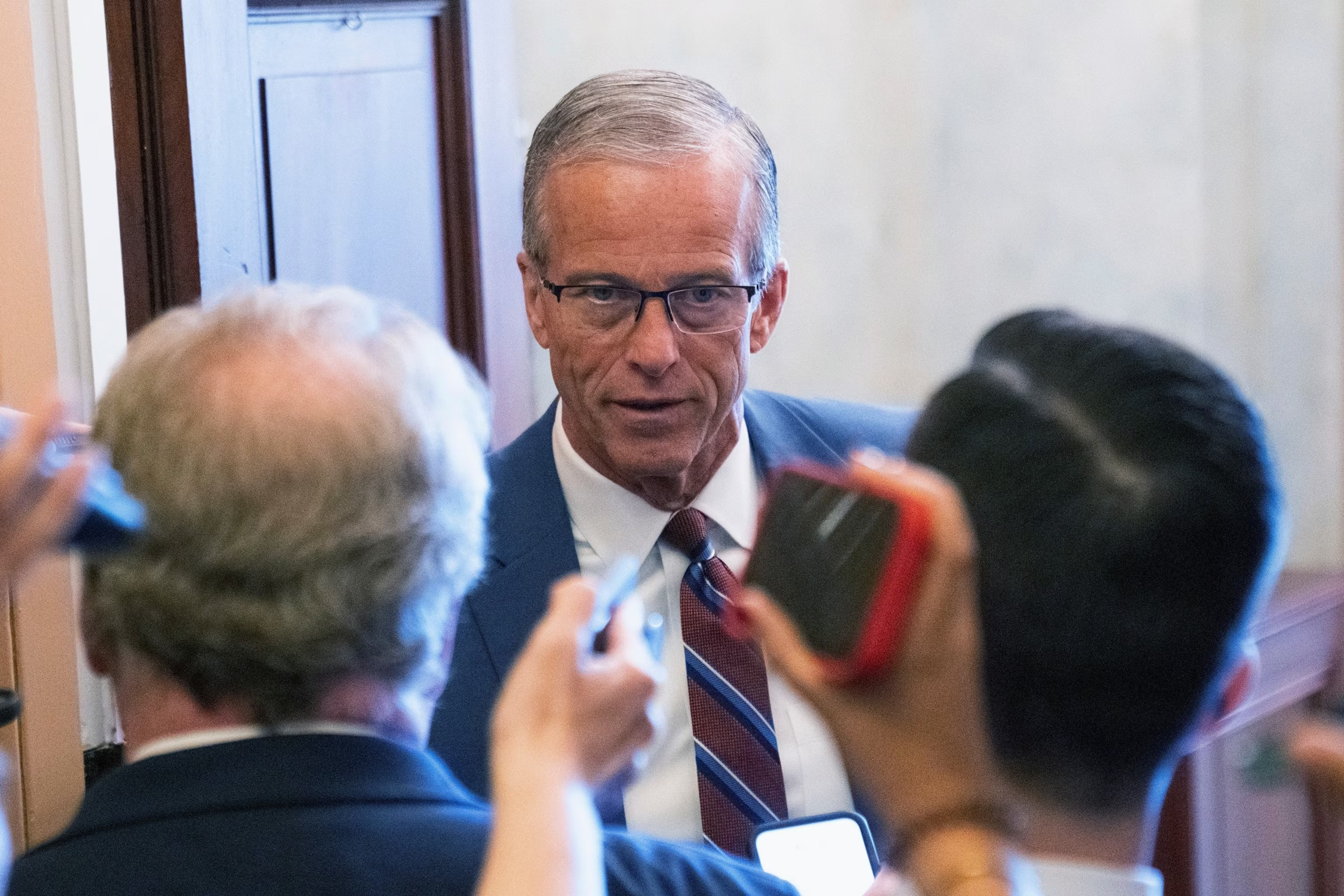
Senate Majority Leader John Thune speaks with reporters at the Capitol on June 3, 2026. Allison Robbert/AP
The breakthrough occurred after Senate Republican leadership indicated that Acting Attorney General Todd Blanche’s statement to a House subcommittee on Tuesday, asserting that the administration was “not moving forward with the fund. Period,” was a sufficient assurance to alleviate much of the hesitation from apprehensive members.
“I believe most of our colleagues are quite satisfied with his remarks, especially since they were made in a public hearing under oath,” Majority Leader John Thune informed ABC News on Wednesday. “I think, for the most part, his comments were extremely beneficial.”
The administration’s shift in stance on the fund followed a rare display of dissent from Republicans during a meeting with Blanche two weeks prior. Blanche had been summoned to Capitol Hill to convince senators that the $1.776 billion fund, established by the Justice Department to compensate individuals alleging wrongful targeting under the Biden administration, was not a cause for concern.
However, within the meeting, Blanche received significant criticism from Republicans regarding how the fund had disrupted their legislative schedule for funding ICE and CBP. Frustrated senators declared they would withhold their votes until the specifics of the fund, particularly concerning who would be eligible for compensation, were clarified.
Ultimately, senators could not reach a consensus on a way forward, prompting Thune to send them home early to allow for continued discussions during their Memorial Day recess last week.
Consequently, while Blanche’s statements on Tuesday and the procedural advancement on Wednesday signal Thune’s confidence in securing the necessary support for the reconciliation package, potential challenges still loom.
Under reconciliation, a measure requires only a simple majority to pass, as opposed to the usual 60 votes, but this process is exclusively applicable to spending and tax legislation.
During the Senate’s “vote-a-rama,” both parties have the opportunity to propose an unlimited number of amendments, and Democrats are anticipated to introduce several politically sensitive amendments for Republicans to consider.
Democrats have explicitly stated that Blanche’s assurances are insufficient and have indicated their intention to propose amendments that would permanently abolish the anti-weaponization fund or impose significant restrictions on it, potentially garnering some support from Republicans.
While Blanche seemingly persuaded some hesitant senators about the fund’s merits, a number of Republicans remain skeptical of the DOJ’s commitments and are seeking explicit, written confirmation that the administration will not proceed with the fund now or in the future before voting on final approval.
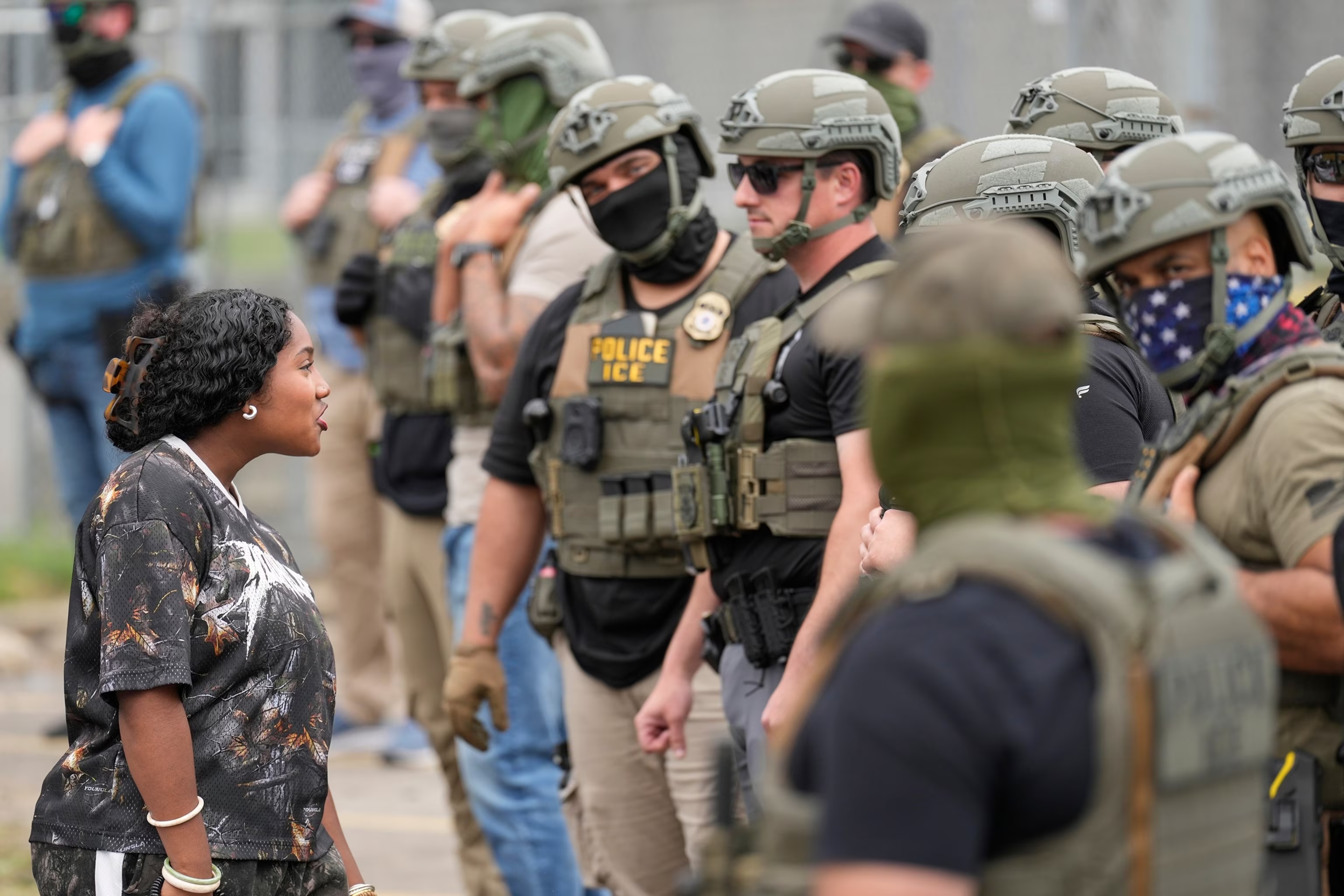
A protester addresses masked federal agents outside the Delaney Hall detention center during a demonstration against detainee transfers on May 27, 2026, in Newark, N.J. Seth Wenig/AP Photo/Seth Wenig
During Tuesday’s hearing, Blanche declined to commit in writing that the fund was defunct, but stated he would “take it under advisement.”
Retiring Republican Senator Thom Tillis commented to ABC News on Wednesday before the procedural vote, “I believe even the DOJ recognizes this was a poor decision, and we need to establish finality. They have stated they have suspended the program, so why can’t we take the step of legislatively eliminating the possibility, thereby preventing any future decision to reinstate it?” He further indicated his intention to introduce an amendment aimed at definitively ending any prospects for the fund.
This development comes after senators have already discarded another proposal from the White House: a $1 billion request for security enhancements related to the White House’s East Wing renovation project, which included millions for Trump’s White House ballroom project. The Senate parliamentarian informed Republicans over the weekend that this $1 billion allocation was ineligible for inclusion in the bill under Senate regulations. Several Senate Republicans had already publicly expressed opposition to this funding.
Even without its inclusion in the final package, it is highly probable that Democrats will propose amendments to formally prohibit funding for the ballroom.
Should any amendments be approved, the legislation will be modified before a final passage vote in the Senate, subsequently being sent to the House before reaching Trump’s desk.
Congress has already appropriated funds for the remainder of the Department of Homeland Security’s budget; however, funding for ICE and CBP was segregated during negotiations concerning immigration enforcement reforms aimed at concluding the extensive partial government shutdown.
Sourse: abcnews.go.com