
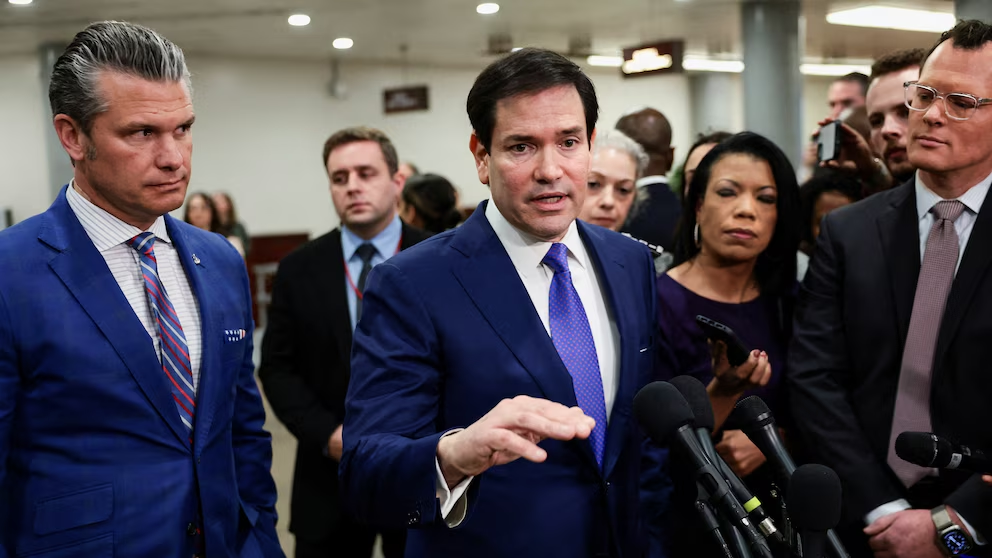
9:52Secretary of State Marco Rubio, alongside Defense Secretary Pete Hegseth, addresses the media on the day of a briefing for the House of Representatives regarding the situation in Venezuela, on Capitol Hill in Washington, January 7, 2026. Evelyn Hockstein/Reuters
On Wednesday, Secretary of State Marco Rubio outlined what he referred to as a three-step approach for Venezuela’s future, with the White House asserting it possesses “maximum leverage” over the South American country for the time being.
Following the dramatic apprehension of dictator Nicolas Maduro by U.S. forces, uncertainties have arisen regarding who is managing Venezuela and in what manner.
President Donald Trump stated earlier this week that the U.S. was “in charge.” However, Venezuela’s interim President Delcy Rodriguez countered on Tuesday, asserting that the Venezuelan government is in command and “no one else.”
ABC News Senior Political Correspondent Rachel Scott questioned White House press secretary Karoline Leavitt on Wednesday, asking, “Which one is it?”
"We clearly have maximum leverage over the interim authorities in Venezuela at this moment," Leavitt stated. "And the president has made it abundantly clear that this country, situated within the United States’ sphere in the Western Hemisphere, will no longer export illegal drugs to the United States of America. It will cease sending and trafficking illegal individuals and criminal cartels that have harmed American citizens in the past. The president is fully implementing his peace-through-strength foreign policy agenda."
"Therefore, we are maintaining close coordination with the interim authorities. Their decisions will continue to be guided by the United States of America," Leavitt added.
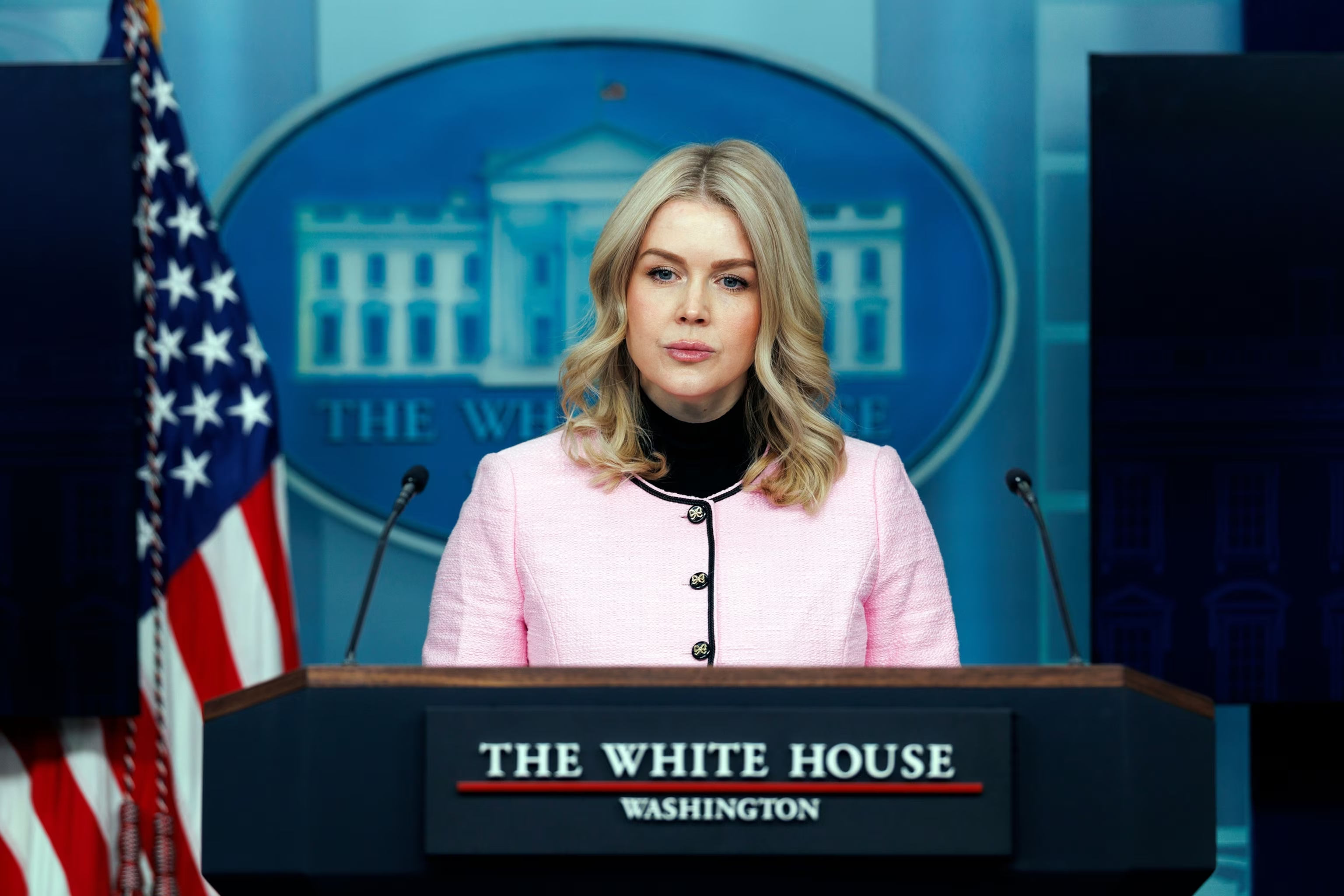
White House Press Secretary Karoline Leavitt speaks during a briefing at the White House in Washington, January 7, 2026.Will Oliver/EPA/Shutterstock
Leavitt also highlighted what she referred to as a “historic energy agreement” between the U.S. and Venezuela, following Trump’s announcement on Tuesday night that Venezuela will transfer 30 to 50 million barrels of sanctioned oil to the U.S.
According to sources, these barrels are the initial batch to be given to U.S. control. The Trump administration plans to oversee the sale of Venezuela’s oil indefinitely, and some sanctions against Venezuela will be eased, two sources informed ABC News.
Rubio, addressing reporters on Capitol Hill after a classified briefing with senators regarding Venezuela, reiterated what he described as “tremendous leverage and control” that the U.S. now wields over Caracas.
"We are currently in the process of executing a deal to acquire all the oil — they possess oil that is trapped in Venezuela, which cannot be moved due to our quarantine, as it is sanctioned," he stated.
Rubio pointed to a tanker seized in the Caribbean on Wednesday by U.S. forces and noted that Venezuela’s interim leaders are cooperating because they wish to profit from it.
"They desire for the seized oil to be part of this agreement. They recognize that the only method for them to transport oil and generate revenue without facing economic collapse is to collaborate and work with the United States. That is what we anticipate will occur," Rubio remarked.
Rubio also outlined a three-step process for the U.S. involvement in Venezuela moving forward.
The first phase, he indicated, involves stabilizing the nation.
The second phase includes “recovery,” ensuring that American, Western, and other oil companies have equitable access to the Venezuelan oil market, Rubio explained. He added that this phase would encompass offering amnesty to opposition factions in Venezuela, permitting individuals to be released from prisons and reintegrated into their homeland to “rebuild civil society.”
The third phase pertains to the “transition” of the Venezuelan government, Rubio stated. He did not provide specifics on what this would entail but mentioned that he had conveyed the administration’s thoughts to senators in “great detail.”
Sourse: abcnews.go.com