
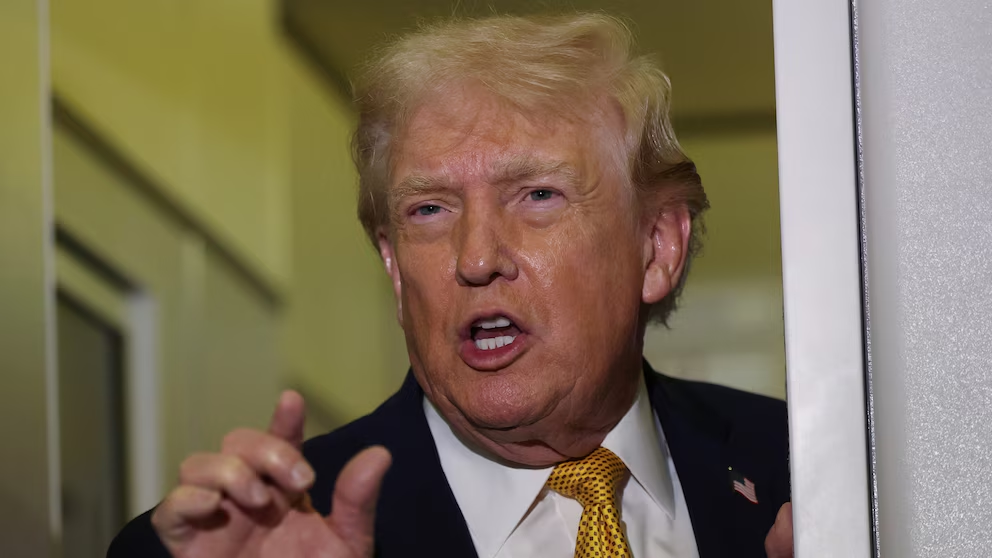
3:14President Donald Trump addresses the press aboard Air Force One on his way to Washington, January 4, 2026. Joe Raedle/Getty Images
Who is governing Venezuela and how?
Confusion persisted on Monday following seemingly conflicting statements from President Donald Trump and Secretary of State Marco Rubio regarding the U.S. approach to the country after American forces apprehended dictator Nicolas Maduro over the weekend.
On Sunday evening, Trump reiterated his claim that the U.S. was "in charge" of the South American nation, having previously stated on Saturday that the U.S. would "run the country until such time as we can ensure a safe, proper, and judicious transition."
"We're engaging with the people. We're engaging with those who just took office. And don't ask me who's in command, because I'll provide an answer that will be quite controversial," Trump informed reporters on Sunday as he returned to Washington from Florida.
"What does that entail?" a reporter inquired.
"It signifies we're in control," Trump replied, who mentioned extracting oil wealth and possibly deploying troops.
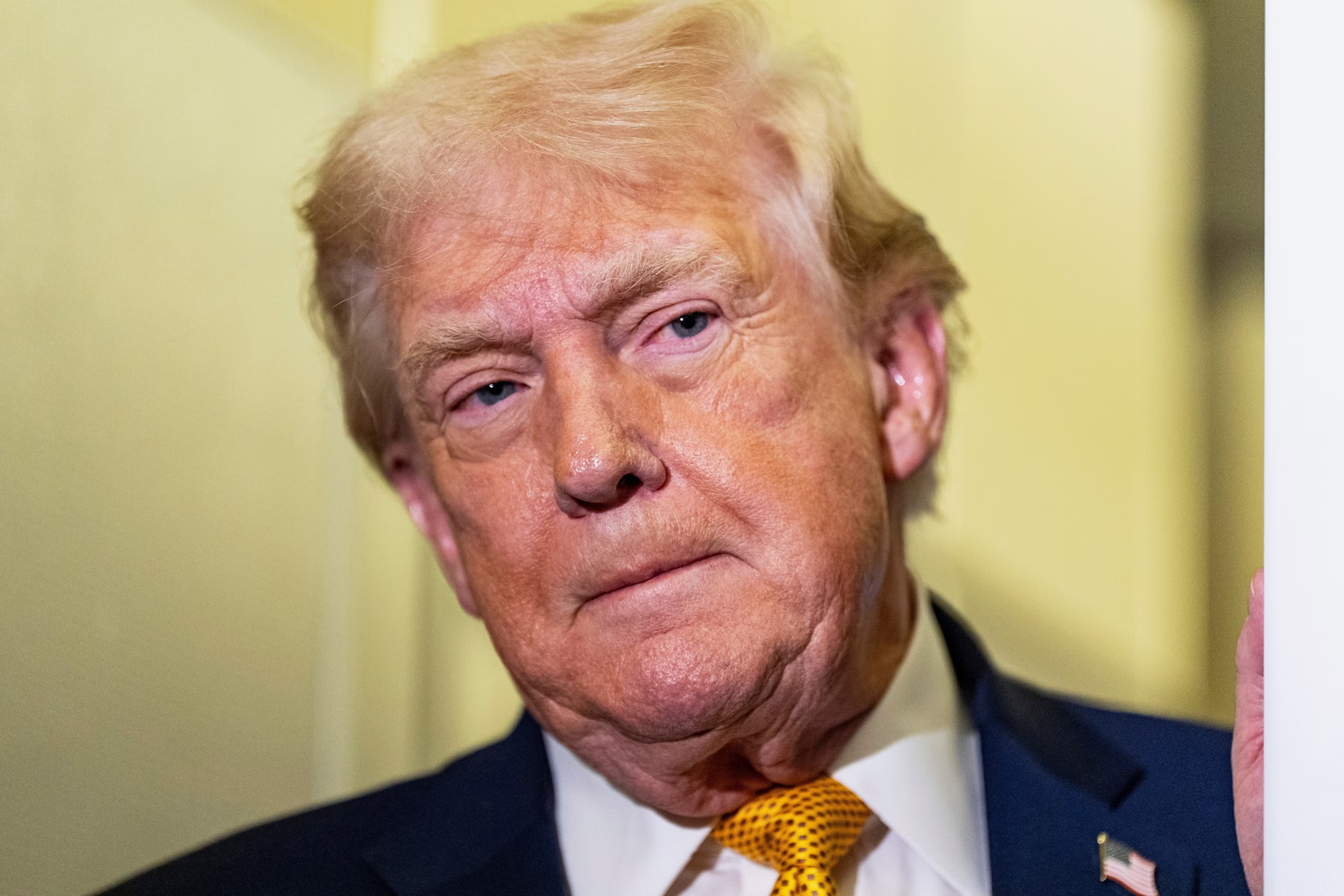
President Donald Trump addresses the press aboard Air Force One on his way to Washington, January 4, 2026.Alex Brandon/AP
The president's remarks seem to contradict the less definitive assessment provided by Secretary of State Marco Rubio earlier on Sunday during an appearance on ABC's "This Week." Rubio is among the Cabinet members Trump mentioned would "run" the nation.
While Trump explicitly stated that his administration was in control and managing affairs in Venezuela, Rubio took a more cautious approach, indicating that the U.S. would leverage economic power to assert its influence.
"What we are directing is the trajectory that this will take moving forward. And that is, we possess leverage. We are utilizing this leverage. And we plan to continue using it. We have already begun to do so," Rubio told ABC's George Stephanopoulos, referring to the U.S. blockade on sanctioned oil tankers.
On NBC's "Meet the Press" that Sunday, Rubio stated that the Trump administration’s control strategy pertains to policy adjustments.
"But it is about managing this policy. And the objective of the policy is to secure beneficial changes in Venezuela that primarily serve the interests of the United States, because they are our priority, but we also believe it will benefit the Venezuelan people who have endured immense hardship. We aspire for a brighter future for Venezuela," Rubio expressed.
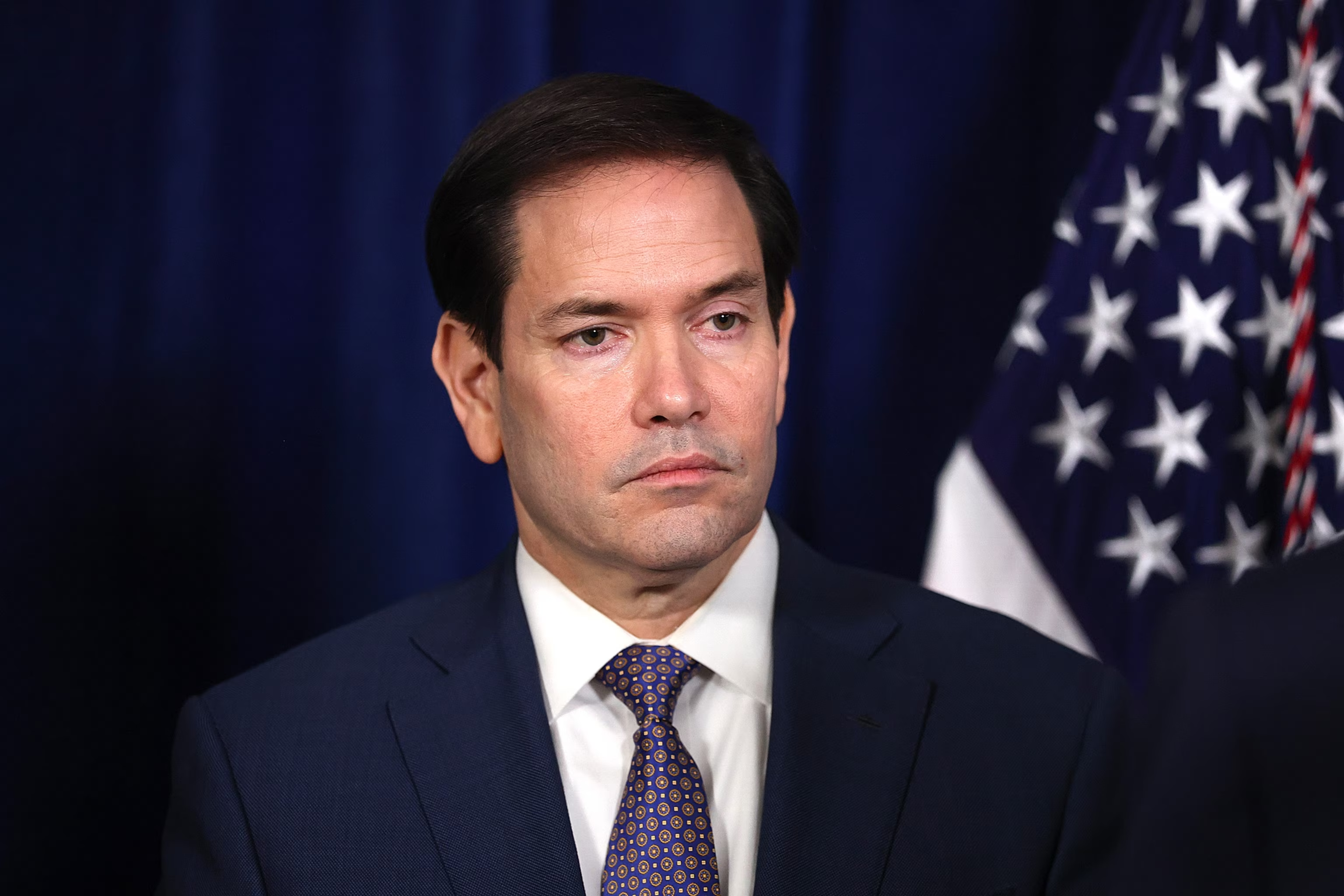
Secretary of State Marco Rubio listens as President Donald Trump addresses the media during a press conference at his Mar-a-Lago club on Jan. 3, 2026, in Palm Beach, Fla.Joe Raedle/Getty Images
U.S. Ambassador to the United Nations Mike Waltz supported Rubio’s statement on Monday, informing the United Nations Security Council that the U.S. is "not occupying a country."
"As Secretary Rubio has articulated, there is no conflict against Venezuela or its populace. We are not occupying a nation. This was a law enforcement action aimed at lawful indictments that have been in place for decades. The United States apprehended a narco-trafficker who will now face trial in the U.S. under the rule of law for the crimes he has committed against our citizens for 15 years," Waltz stated.
Waltz and other officials from the administration have characterized the capture of Maduro as a law enforcement operation supported by the U.S. military.
Sourse: abcnews.go.com