
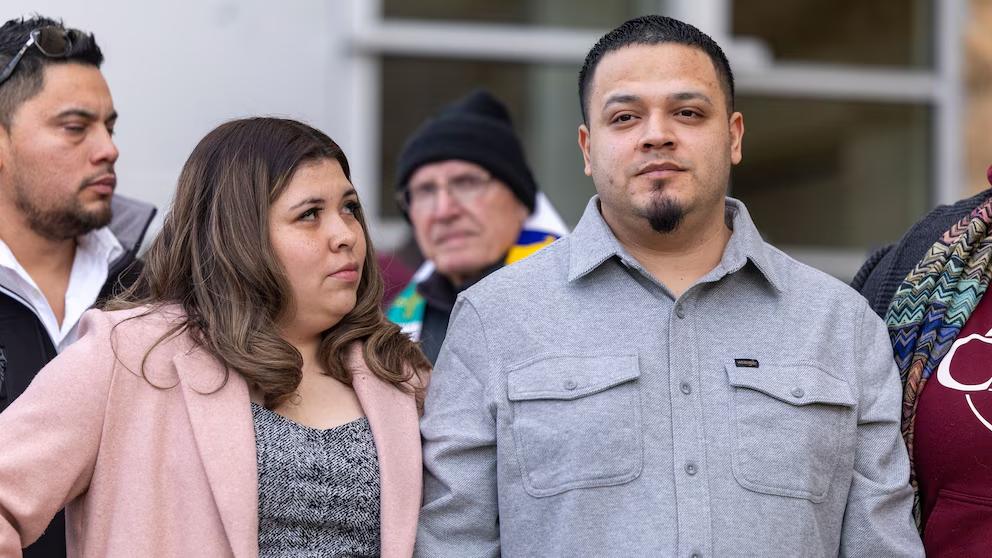
0:41Kilmar Abrego Garcia, accompanied by his spouse Jennifer Vasquez Sura, exits following a Temporary Restraining Order hearing at the federal courthouse in Greenbelt, Maryland, on December 22, 2025. Shawn Thew/EPA via Shutterstock
A newly revealed order in Kilmar Abrego Garcia’s criminal proceedings discloses that a senior Department of Justice official labeled his prosecution as “a top priority” shortly after his erroneous deportation — potentially contradicting the assertions made by the Trump administration that the choice to prosecute Abrego Garcia was solely made by local prosecutors, according to a federal judge.
Following his deportation to El Salvador, Abrego Garcia was subsequently returned to the U.S. and indicted in Tennessee on federal human smuggling charges.
Earlier this month, Abrego Garcia was released from immigration custody and is now attempting to have the criminal case dismissed, asserting that he is a victim of selective and retaliatory prosecution.
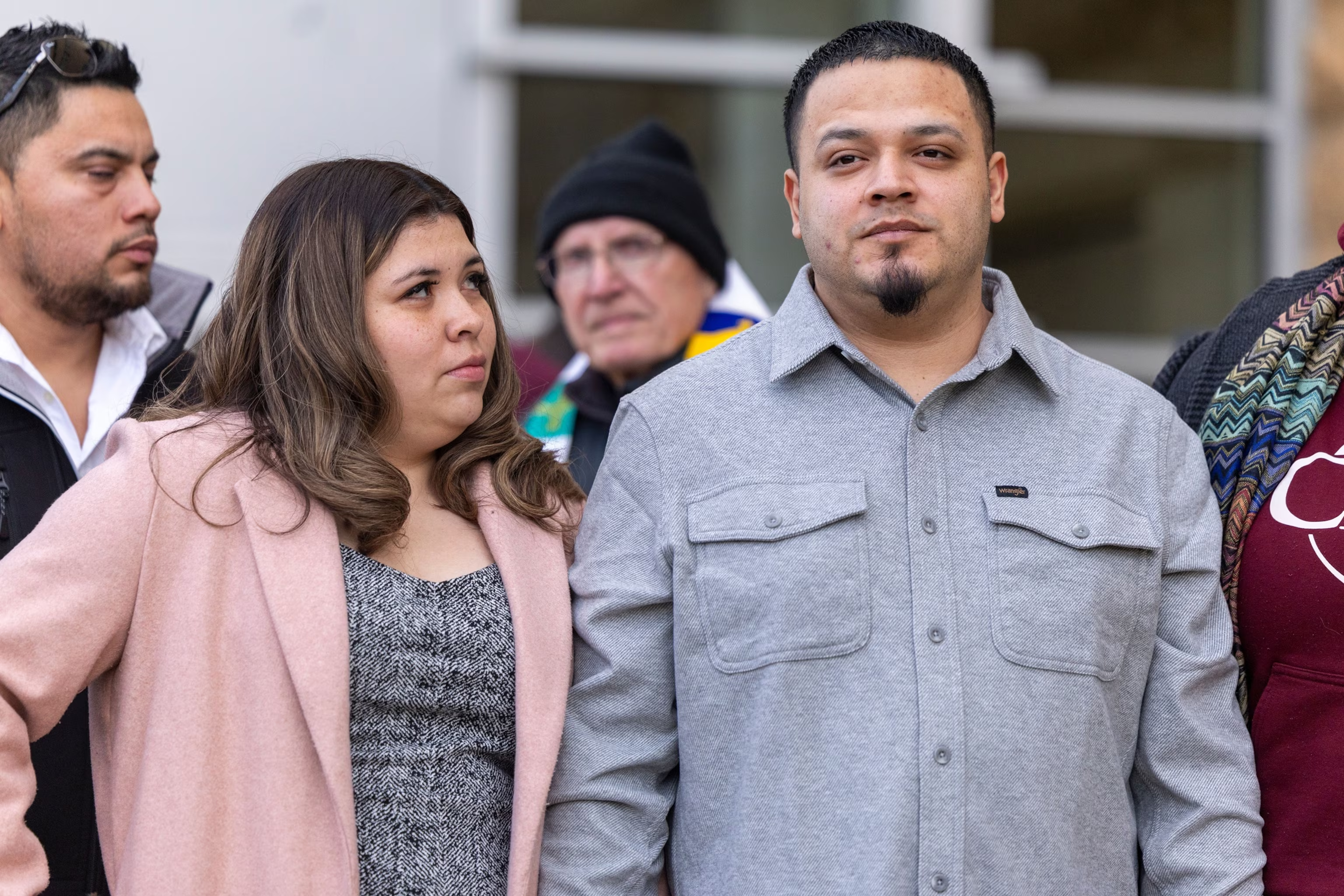
Kilmar Abrego Garcia, accompanied by his spouse Jennifer Vasquez Sura, exits following a Temporary Restraining Order hearing at the federal courthouse in Greenbelt, Maryland, on December 22, 2025. Shawn Thew/EPA via Shutterstock
U.S. District Judge Waverly Crenshaw, who is presiding over the Tennessee smuggling case, has arranged a hearing on the matter for next month.
In the unsealed order, Judge Crenshaw indicated that some documents provided by the government “suggest” that the prosecutor in Tennessee “was not the sole decision-maker” regarding the office’s choice to file human smuggling charges against Abrego Garcia.
The documents, according to Crenshaw, reveal that Acting U.S. Attorney Robert McGuire “reported to others within the DOJ, and the decision to prosecute Abrego [Garcia] might have been a collective decision, involving others who may or may not have acted with improper motivations.”
The judge mandated that the government provide these documents to Abrego Garcia’s legal team for examination.
“The Court acknowledges the government’s claim of privileges, but Abrego’s due process right to a non-vindictive prosecution supersedes the broad evidentiary privileges claimed by the government,” Judge Crenshaw remarked.
The federal judge noted that the documents might undermine the government’s position that the decision to prosecute Abrego Garcia “was made locally and that there were no external influences.”
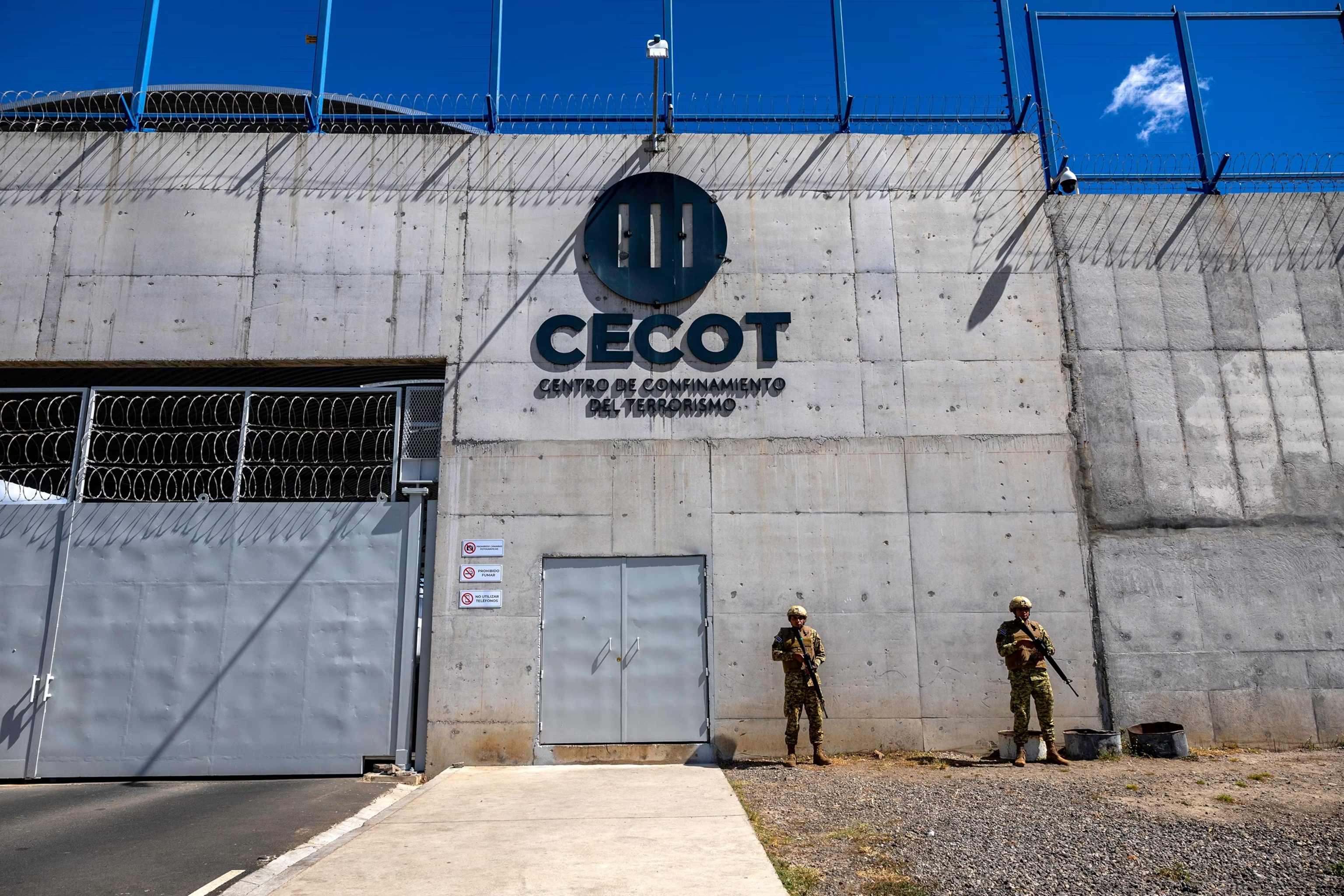
Salvadorian troops secure the outside of CECOT (Counter Terrorism Confinement Center) where numerous accused gang members are incarcerated, on December 15, 2025, in Tecoluca, El Salvador. John Moore/Getty Images
Multiple emails involving Associate Deputy Attorney General Aakash Singh were mentioned in the unsealed order, including one where the senior DOJ official “made it clear” that Abrego Garcia’s criminal prosecution was a “top priority” for the department.
These emails were sent in April — one month after Abrego Garcia, who had been residing in Maryland with his wife and children, was deported to El Salvador’s CECOT mega-prison, despite a 2019 court order prohibiting his removal to that country.
The Trump administration alleged that he was affiliated with the criminal gang MS-13, a claim Abrego Garcia denies.
A series of legal disputes followed, during which the Trump administration consistently stated that it was unable to facilitate his return, until the Supreme Court unanimously ruled that the government was obligated to enable his return.
Abrego Garcia’s legal representatives contend that the government is utilizing the criminal case as a means to retaliate against their client for “successfully contesting his unlawful removal.”
Last week
Sourse: abcnews.go.com