
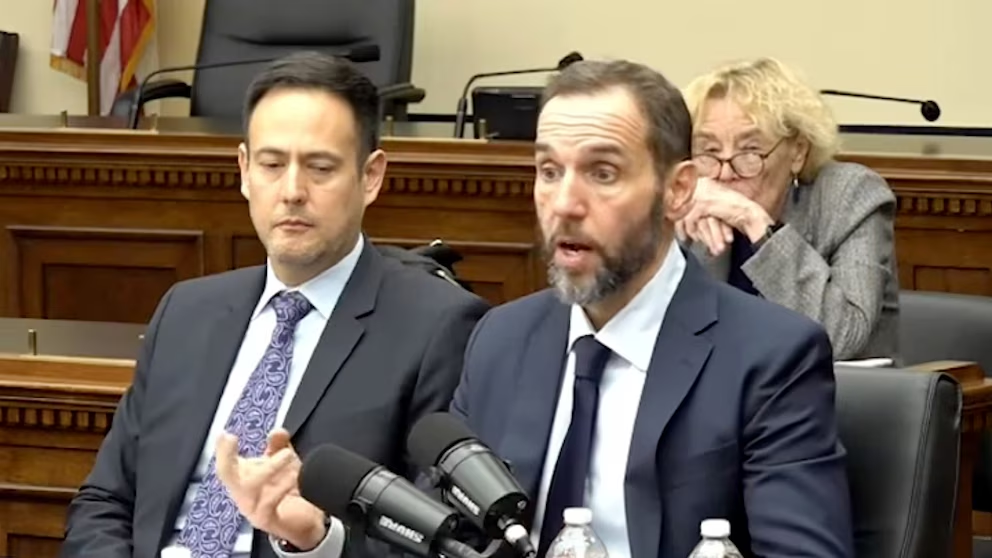
3:31In this image from video released by the House Judiciary Committee, former special counsel Jack Smith speaks during a deposition, on Dec. 17, 2025, at the U.S. Capitol in Washington D.C.House Judiciary Committee via AP
Former special counsel Jack Smith justified his choice to file charges against President Donald Trump on two occasions, stating to lawmakers in a private deposition earlier this month that his team “had proof beyond reasonable doubt in both instances” that Trump was culpable in the cases concerning the 2020 election interference and classified documents.
Furthermore, Smith emphatically rejected any allegations of political motivation behind his actions — contradicting claims made by House Judiciary Committee Republicans who requested the testimony — including suggestions of pressure from then-President Joe Biden or Attorney General Merrick Garland.
"No," Smith consistently replied.
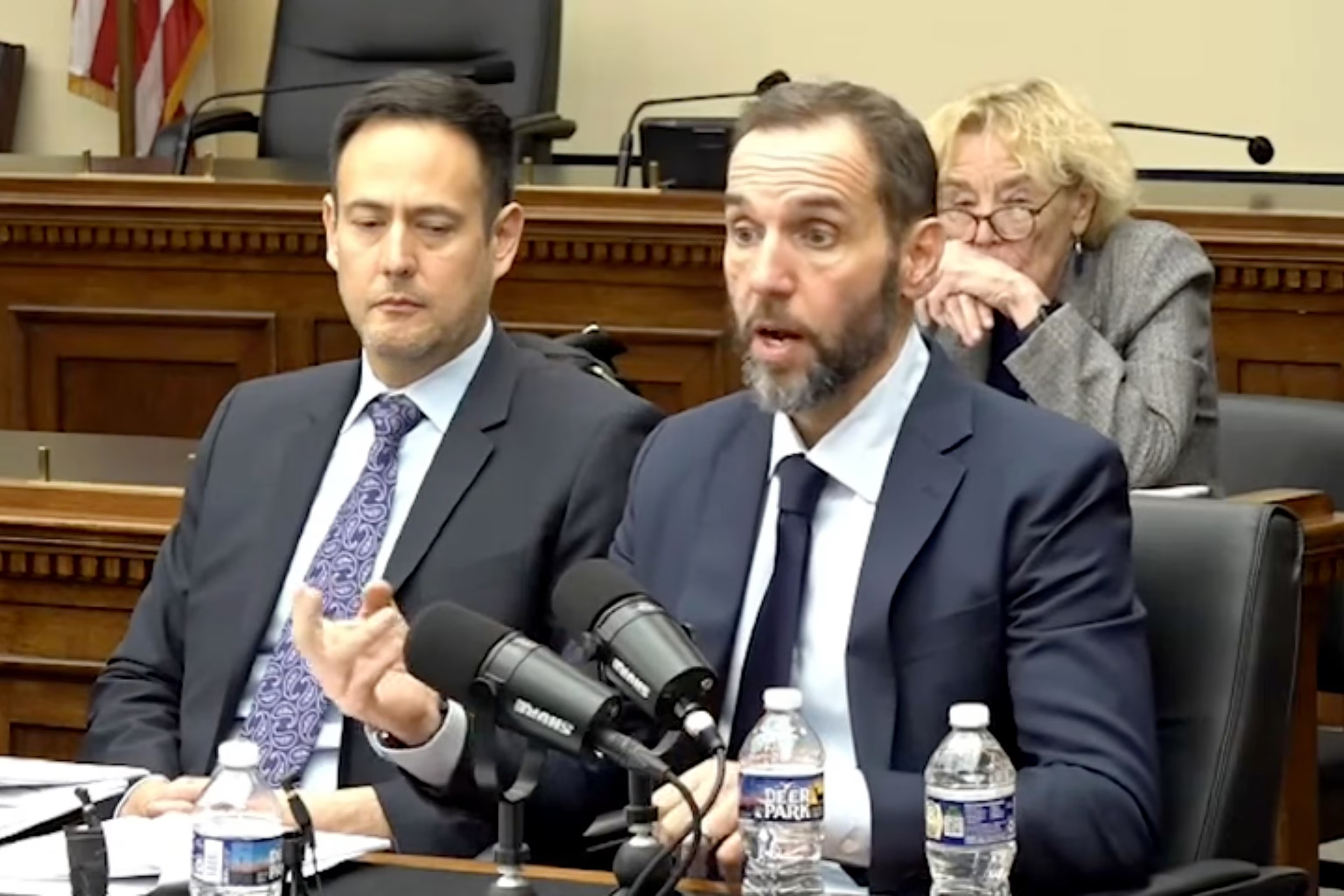
In this image from video released by the House Judiciary Committee, former special counsel Jack Smith speaks during a deposition, on Dec. 17, 2025, at the U.S. Capitol in Washington D.C.House Judiciary Committee via AP
Just over an hour prior to the closed testimony on Dec. 17, the Department of Justice sent an email to Smith’s attorneys instructing him not to discuss the classified documents case, as per the 255-page transcript of the deposition released Wednesday by the Judiciary Committee along with a video of the hearing.
This effectively prevented Smith from responding to most inquiries regarding that case, and the deposition — intended to explore the alleged weaponization of the DOJ against Trump and his associates — primarily concentrated on the 2020 election case instead.
According to the deposition, Smith’s counsel mentioned that the DOJ also declined to send an attorney to guide Smith on whether his comments aligned with their stipulations regarding what he could or could not state about the cases. However, Smith did assert that Trump “obstructed” the classified documents investigation “to conceal his ongoing retention of those documents.”
Trump repeatedly refuted the accusations in both felony cases, which were unprecedented against a sitting American president, labeling them as a “witch hunt.” Smith, frequently targeted by Trump on social media, ultimately dropped the cases following Trump’s reelection, citing a constitutional prohibition against prosecuting a sitting president.
In his final report, Smith claimed that “but for Mr. Trump’s election and imminent return to the Presidency, the Office assessed that the admissible evidence was sufficient to obtain and sustain a conviction at trial.”
During the deposition, Smith contended, as he had before, that Trump “President Trump engaged in a criminal scheme to overturn the results of the 2020 election and to prevent the lawful transfer of power.”
When queried about Trump’s accountability for the violence at the Capitol on Jan. 6, Smith stated, “Our view of the evidence was that he caused it and that he exploited it and that it was foreseeable to him.”
Smith argued that Trump’s assertions of winning the 2020 election were not protected free speech since they were aimed at undermining a government function.
"There is no historical precedent for what President Trump did in this matter. As we stated in the indictment, he was free to express his belief that he won the election. He was even permitted to falsely claim that he won the election," Smith remarked. "However, what he was not permitted to do was violate Federal law and use knowingly — knowingly false statements about election fraud to target a lawful government function. That was not allowed, and that distinguishes this case from any historical context."
Additionally, Smith noted that Trump tweeted something that "without question in my mind endangered the life of his own Vice President" during the Jan. 6 Capitol assault.
Smith stated that several witnesses, including the Speaker of the House in Arizona and the Speaker of the House in Michigan, who claimed they voted or campaigned for Trump, formed the basis of the case.
"We had an elector in Pennsylvania who is a former Congressman who was set to be an elector for President Trump who asserted that what they were trying to do was an attempt to overthrow the government and was illegal. Our case was constructed, frankly, on Republicans who prioritized their allegiance to the country over the party," Smith stated.
Sourse: abcnews.go.com