
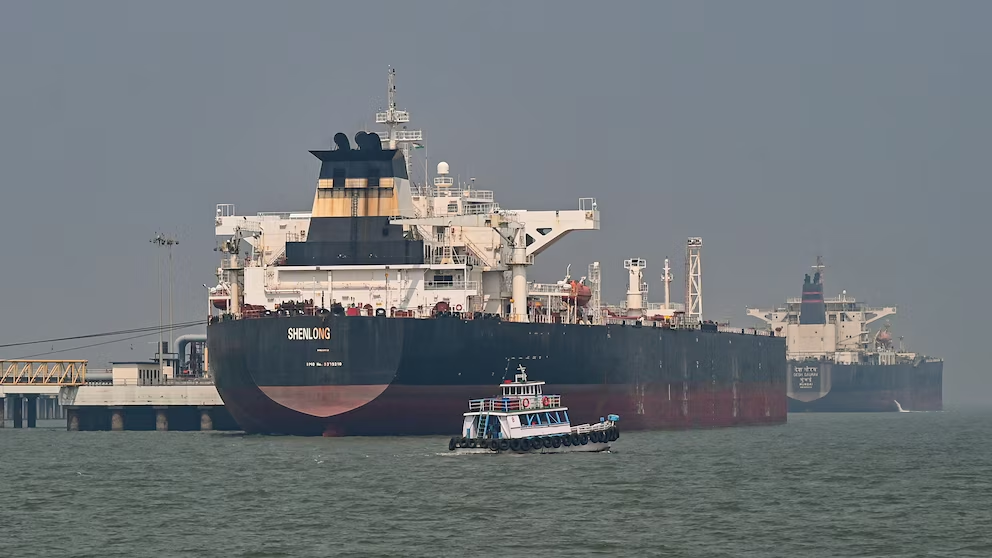
The Shenlong Suezmax, a crude oil tanker sailing under the Liberian flag, arrived at Mumbai Port after traversing the Strait of Hormuz, March 11, 2026, in Mumbai, India. Raju Shinde/Hindustan Times via Getty Images
President Donald Trump is scheduled for a critical conference in Beijing this Wednesday, as the United States suggests it is open to Beijing taking a diplomatic role in current discussions to conclude the conflict in Iran.
Key U.S. figures, notably Secretary of State Marco Rubio and Treasury Secretary Scott Bessent, part of the presidential delegation to China, have stated that China should urge Iran toward a resolution. Bessent encouraged the Chinese to “escalate their involvement.”
China, being Iran’s primary oil purchasing nation, possesses substantial diplomatic sway over Tehran, ABC News learned from specialists. This factor could cast a shadow over dialogues on crucial mutual concerns between the U.S. and its foremost international competitor, such as innovations in artificial intelligence, commerce, and the safeguarding of Taiwan, as Trump prioritizes settling the dispute in the Middle East.
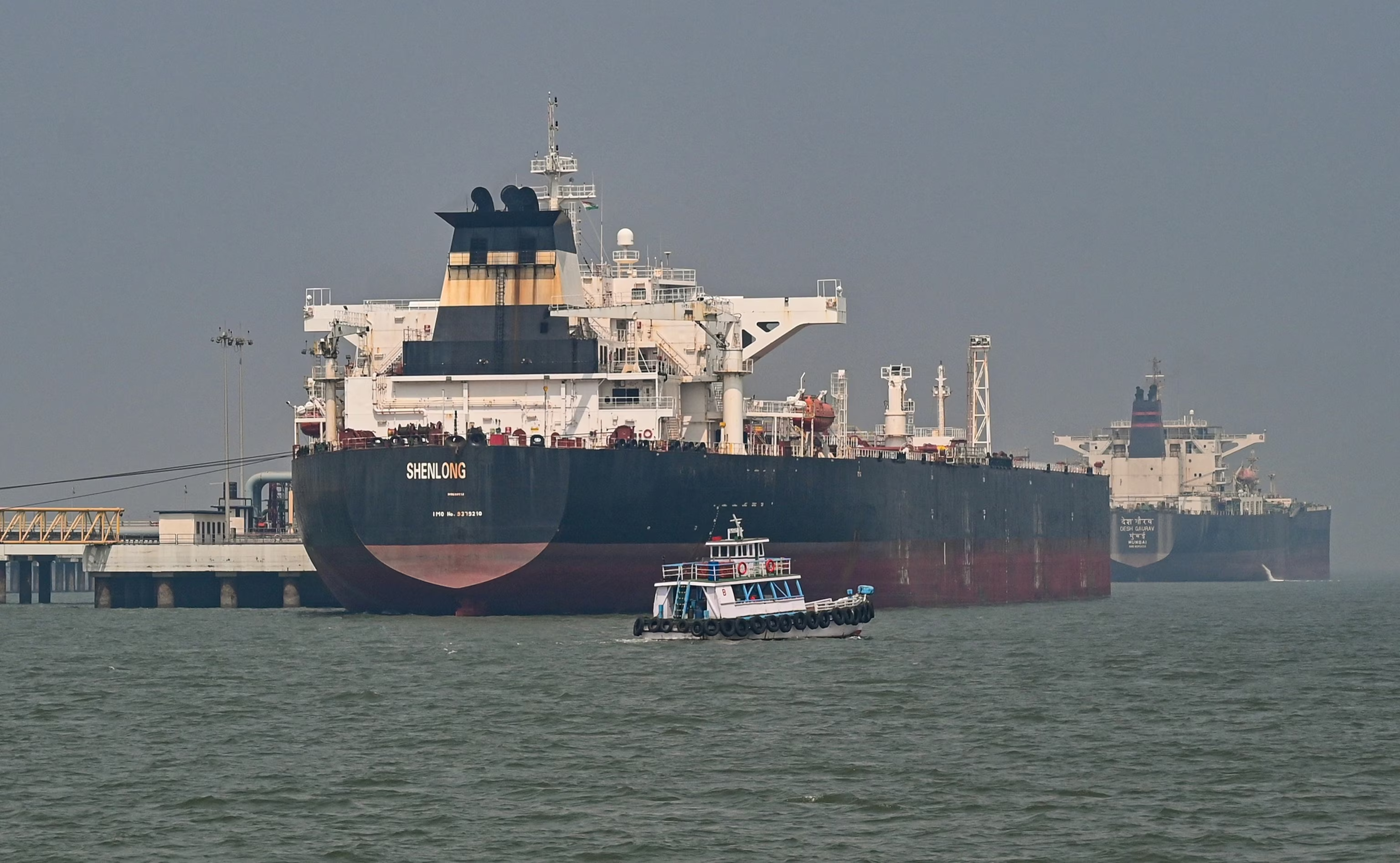
The Liberia-flagged crude oil tanker Shenlong Suezmax docked at Mumbai Port after navigating the Strait of Hormuz, March 11, 2026 in Mumbai, India.Raju Shinde/Hindustan Times via Getty Images
The U.S. will probably attempt to persuade Beijing to put diplomatic influence on Iran, these experts suggested. Yet, China will likely approach involvement in Iran talks with caution and subtlety, and its control over Tehran has its limits, they further noted.
The war, on hold since Trump announced a cessation of hostilities over a month prior, implies Trump “will require China’s aid,” according to a former high-ranking U.S. government official who spoke with ABC News.
“He’ll need assistance from China to pressure the Iranians into achieving the arrangement he envisions,” the former official expressed. “So, he’ll basically be… entering the summit essentially begging, because of the situation we’re facing.”
However, later, as Trump departed the White House for Joint Base Andrews, he fluctuated regarding utilizing that leverage.
When asked whether the Chinese should get involved, Trump dismissed the question, stating, “I don’t believe we require any assistance with Iran.”
Nevertheless, moments later, when inquired if Xi could assist in revitalizing the ceasefire, Trump responded, “He could. I mean, possibly. I don’t think we need any help with Iran, frankly, they are militarily defeated, and they’ll either act correctly or we’ll finalize the task.”
Subsequently, he appeared to imply Iran wasn’t a central discussion point.
“We have numerous subjects to discuss. To be honest, I wouldn’t consider Iran one of them, because we have Iran largely under control. We’ll either reach an agreement or they’ll face destruction, in one way or another. We’ll prevail. We’re going to discuss, we’re going to confer with President Xi.”
China possesses sway over Iran, ‘yet it has limits’
Xi will probably prioritize the blockaded Strait of Hormuz, where China has energy and financial interests, over a broader deal Trump desires with Iran, as per expert opinion.
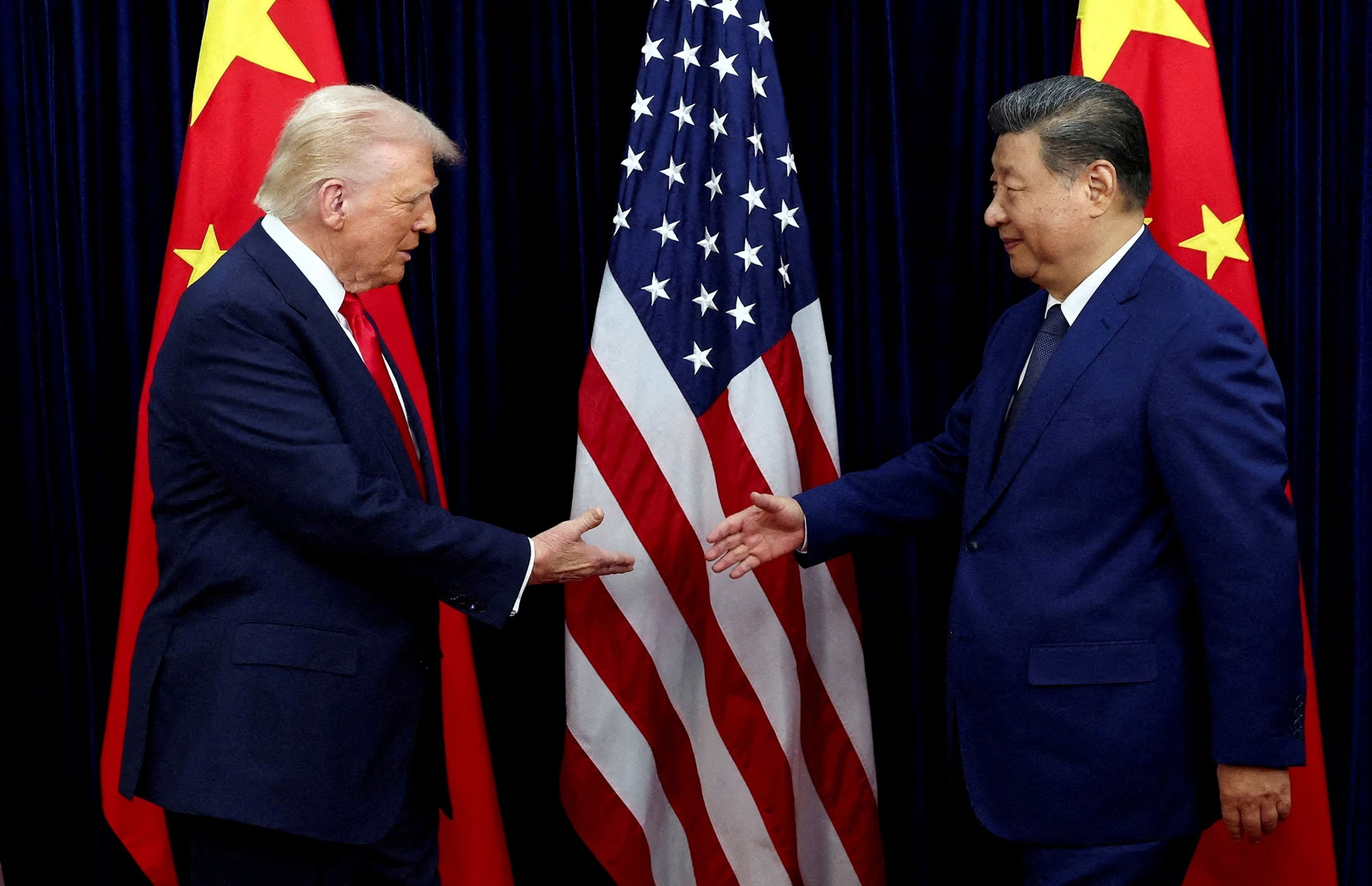
President Donald Trump shakes hands with Chinese President Xi Jinping as they hold a bilateral meeting at Gimhae International Airport, on the sidelines of the Asia-Pacific Economic Cooperation summit, in Busan, South Korea, October 30, 2025.Evelyn Hockstein/Reuters
“China does have substantial sway [over Iran], but it’s not without boundaries,” remarked Craig Singleton, leading the China program at the Foundation for Defense of Democracies (FDD), a politically neutral research institute. Singleton pointed out that China could back U.S. initiatives to open the strait, provided it doesn’t appear to be “acting at Washington’s behest.”
“I predict they’ll simply continue to advocate for peace and comprehensive de-escalation, because I suspect Beijing won’t risk involvement in a conflict it didn’t initiate or control.”
Washington and Beijing have already exchanged blows over Iran. Last week, the U.S. Treasury Department imposed sanctions on currency exchange firms, alleging they aid Iran in funding its military, thereby breaching U.S. sanctions. China instructed companies to resist the new U.S. enforcement, an unprecedented move.
Since the U.S. and Iran commenced hostilities, Chinese officials have publicly demanded renewed navigational freedom in the crucial waterway, as well as a lasting ceasefire in the region. Iran dispatched its foreign minister to Beijing for critical dialogues following the initial ceasefire. Pakistan, the primary mediator between Washington and Tehran, followed suit.
The U.S. and Iran have deliberated on a preliminary arrangement, structured as a memorandum of understanding, wherein both sides would withdraw from the strait – with the U.S. removing its naval blockade and Iran clearing mines and other threats to shipping lanes there.
A former senior U.S. official suggested that China could potentially facilitate such an agreement.
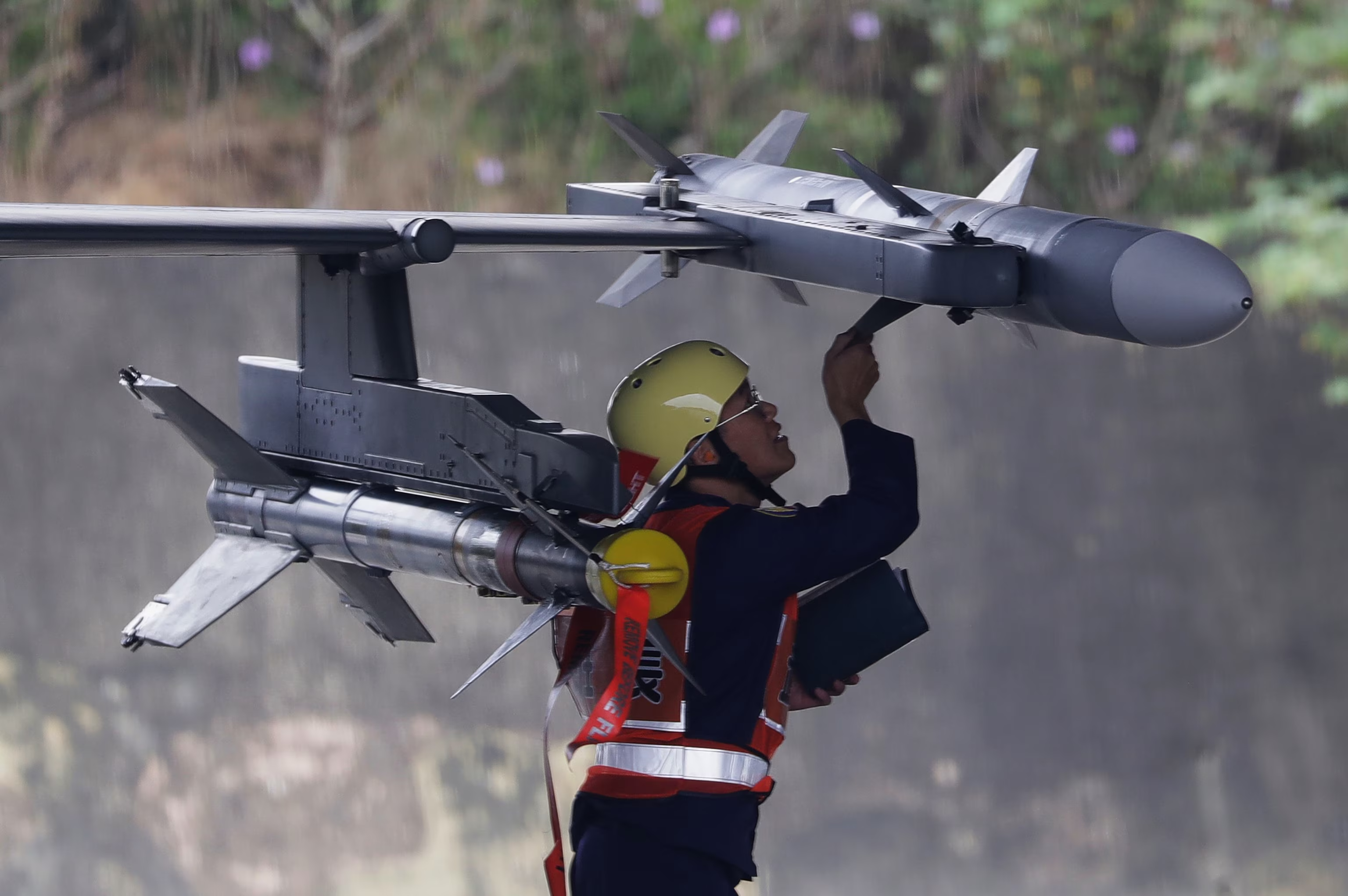
Taiwanese air force ground personnel check an AIM-120 air-to-air missiles, right, and an AIM-9M air-to-air missiles for a F-16V fighter jet during a military exercise in Chiayi County, Taiwan, Jan. 28, 2026.Chiang Ying-ying/AP
The “primary request” the U.S. will likely put forth to Beijing involves Chinese “exertion of influence on [Iran] to uphold any negotiated terms,” they stated.
“I believe…we’re going to request the Chinese to abstain from certain actions,” the former official mentioned, including securing a pledge from Beijing to prevent the transfer of Chinese weaponry or targeting systems to Iran.
Trump has minimized worries about Chinese support for Iran, including reports of Beijing supplying weapons and Iran utilizing commercial technology and satellite information purchased from China to enhance its combat capabilities.
“I suggest the president confront Xi and inquire if he provided intelligence assistance to the Iranians, just to unsettle him,” suggested Retired Rear Adm. Mark Montgomery, a high-ranking director at FDD. “That aligns with Trump’s character.”
Deadlock in US-Iran discussions
Trump indicated on Monday that the ceasefire was “barely surviving” after Iran declined the most recent U.S. proposition, but on Tuesday, he forecast that Iran would reach an agreement and surrender its enriched uranium.
“Absolutely. They’re going to halt. And they informed me — the Iranians themselves tell me, and I engage with them. And they conveyed that we’re going to obtain the dust,” Trump told WABC Radio.
He reiterated his assertion that Iran had consented to transfer its enriched uranium reserve to the U.S. but reneged on its commitment.
Iran’s Foreign Ministry spokesperson, Esmaeil Baghaei, affirmed on Tuesday that Tehran wouldn’t accept the U.S. dictating its terms to Iran. In an interview with India’s TV Today, Baghaei asserted that discussions necessitated “give and take” and criticized the U.S. for pushing “excessive demands.”
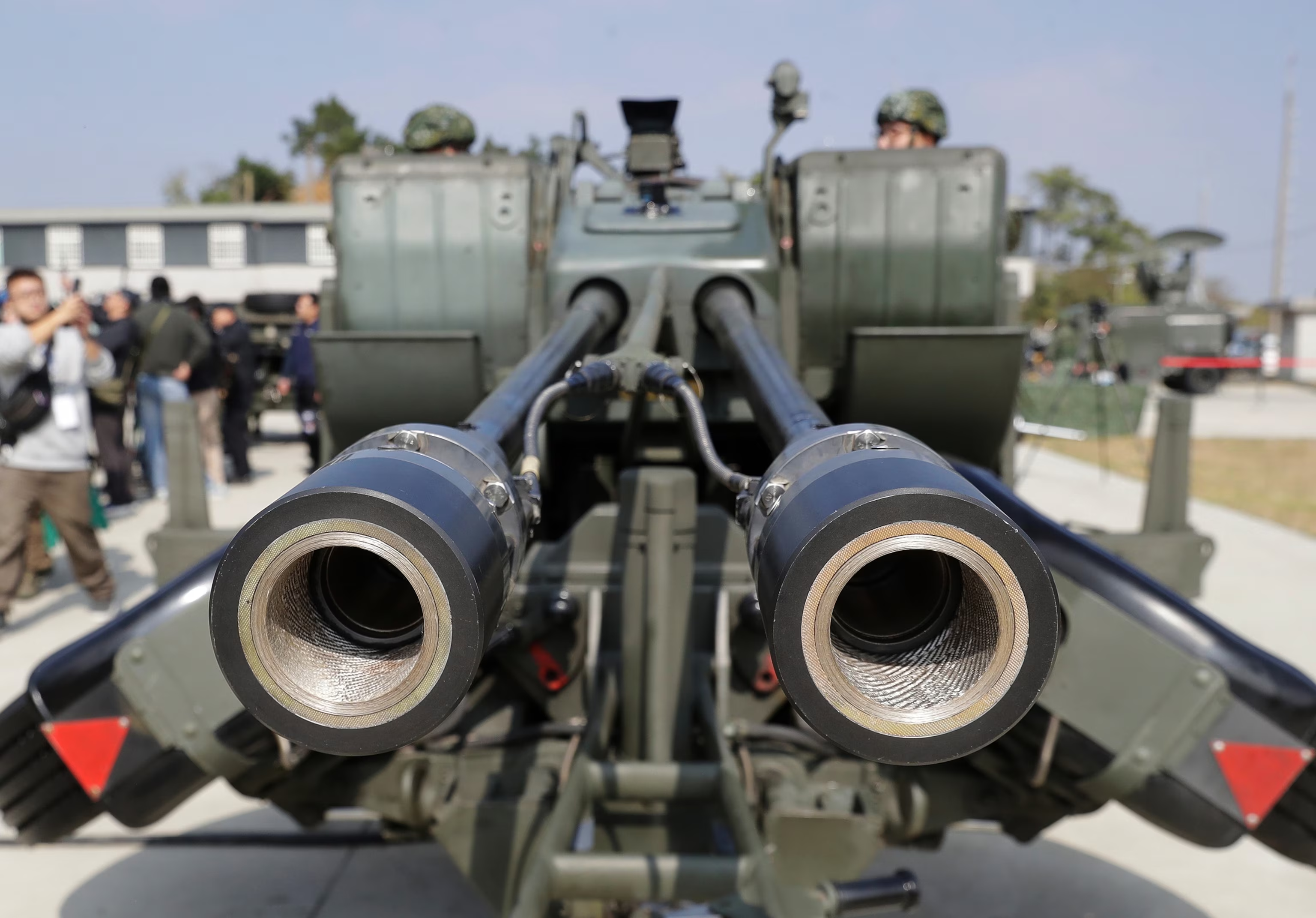
Soldiers stand by to conduct a practice operation of a GDF-006 AHEAD 35 mm twin cannon during a military exercise in Chiayi County, Taiwan, Jan. 28, 2026.Chiang Ying-ying/AP
Experts were not optimistic that the Chinese would facilitate the development of a larger “comprehensive agreement” to resolve the conflict. Trump has repeatedly stated that any final settlement must involve Iran abandoning its nuclear initiative, either through a diplomatic accord or force.
China is unlikely to provide assistance in that crucial objective, according to Elaine Dezenski, another senior director at FDD.
“I don’t discern any indication from Beijing suggesting they would be willing to endorse Trump’s genuine request concerning Iran, which is the absence of nuclear capability,” she remarked. “We’re not hearing that from Beijing. I believe they’re comfortable aligning with the Iranian perspective on that matter.”
The US-China rivalry has evolved
Negotiations with Iran aren’t the exclusive concern overshadowing the summit: the relocation of military assets – and expenditure of critical ammunition from America’s stockpiles – have transformed the essence of U.S.-China competition itself, some experts suggest.
Xi perceives that the landscape has been redefined in his favor, largely due to the Iran conflict, according to China analysts, citing a decline in U.S. assets within the region and what Beijing interprets as a weakening framework of American partnerships globally.
“I think one of the critical aspects that China monitors is our capacity to collaborate effectively with other nations,” stated Dr. Kurt Campbell, who previously served as deputy secretary of state under former President Joe Biden.
“And I believe, in private, when we engage with Chinese strategists, they’re feeling quite optimistic presently. They sense that the United States is largely operating autonomously” in the Iran conflict, he explained, where American allies have addressed Trump’s appeal for aid in clearing the Strait of Hormuz with “resounding silence.”
“They interpret this as greatly reinforcing Chinese power,” Campbell noted, who is chairman and co-founder of The Asia Group, a consulting firm located in Washington.
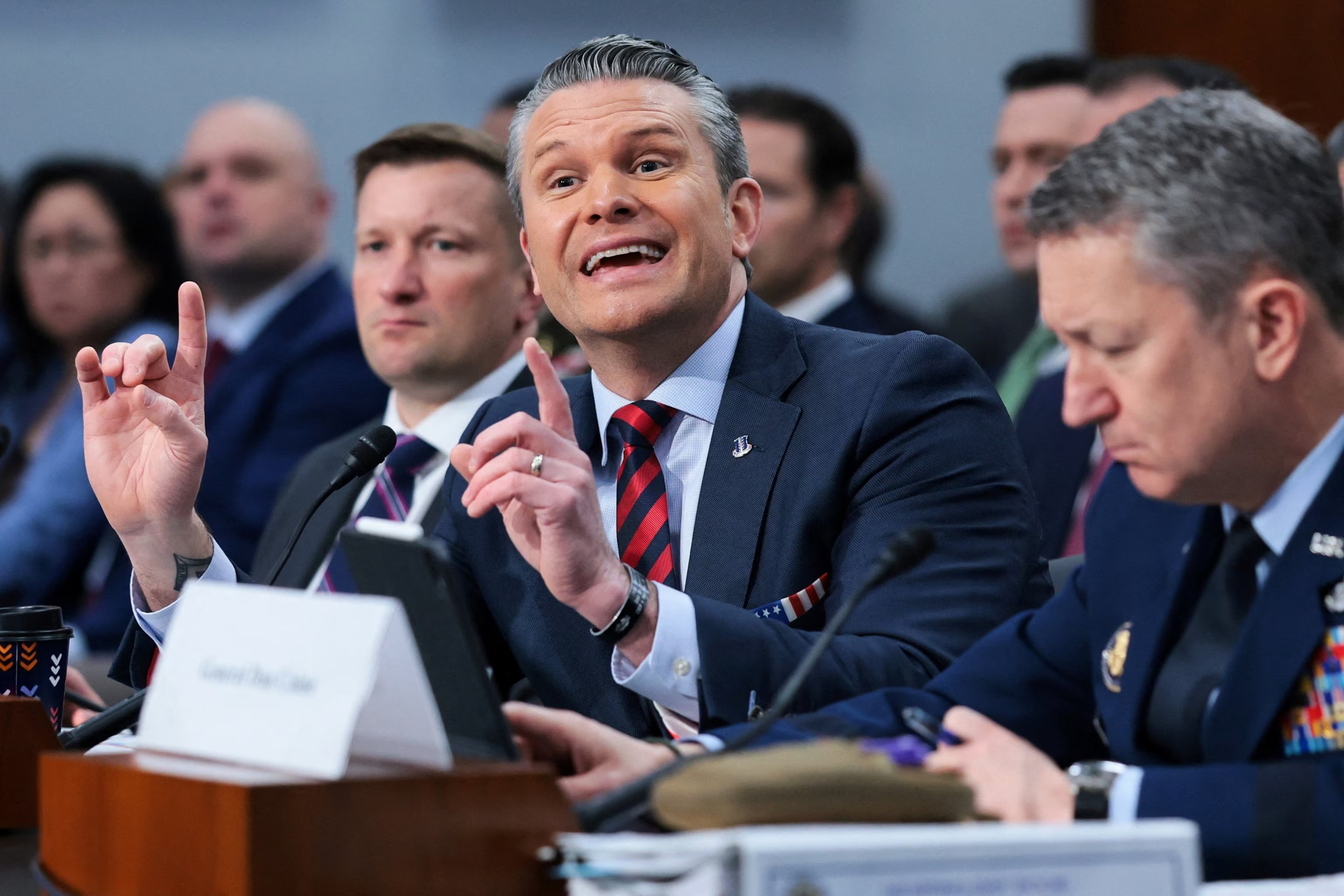
Defense Secretary Pete Hegseth, Chairman of the Joint Chiefs of Staff Gen. Dan Caine and Chief Financial Officer Jules Hurst testify at a House Appropriations subcommittee budget hearing for the Department of Defense, May 12, 2026, in Washington.Jonathan Ernst/Reuters
Defense Secretary Pete Hegseth informed lawmakers on Capitol Hill at the end of April that it would require “months and years” for the U.S. to replenish certain munitions depleted in Iran.
Retired Col. Mark Cancian, a senior fellow at the Centers for Security and International Studies, examined the war’s repercussions on the U.S. stockpile, estimating that the military utilized half of its critical munitions, such as Tomahawk missiles.
“The United States possesses adequate munitions to engage in this war, should it reignite,” Cancian assured ABC News. “However, the looming risk pertains to a future conflict with China, where inventory levels are significantly below what war planners would ideally prefer.”
U.S. commanders in Asia have privately voiced concerns about the reduction of assets and munitions, according to an official familiar with the discussions who spoke with ABC News.
The U.S. upholds a presence in the Indo-Pacific as a component of its endeavors to deter China from undertaking offensive measures in its vicinity.
The designated “equilibrium of deterrence” assigns particular attention to Taiwan, which China regards as a breakaway island that must be “re-integrated” under Beijing’s communist regime.
Trump has conveyed his anticipation that Taiwan will arise during the summit. Certain experts posit that Xi views the gathering as an opportunity to secure public proclamations from the U.S. concerning Taiwan that China would deem critical for its overarching political strategy concerning the island.
Sourse: abcnews.go.com