
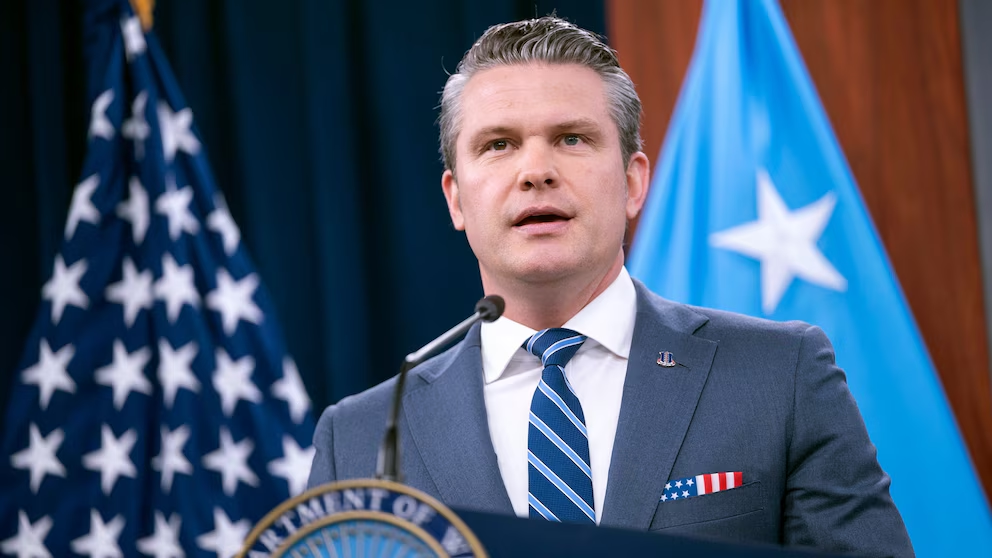
Defense Secretary Pete Hegseth addresses journalists during a news conference at the Pentagon on April 16, 2026, in Washington. Kevin Wolf/AP
On Tuesday, Defense Secretary Pete Hegseth declared that the yearly influenza shot will now be voluntary for all members of the U.S. armed forces, encompassing both active duty and reserve personnel.
In the past, the influenza vaccine was compulsory. The updated regulation aligns with a prior modification that rendered the COVID-19 vaccine optional.
Hegseth communicated the alteration through a video shared on social media.
“The concept that an influenza vaccination must be mandated for each and every service member, everywhere, in every situation, at all times, is simply excessively encompassing and illogical,” Hegseth stated.
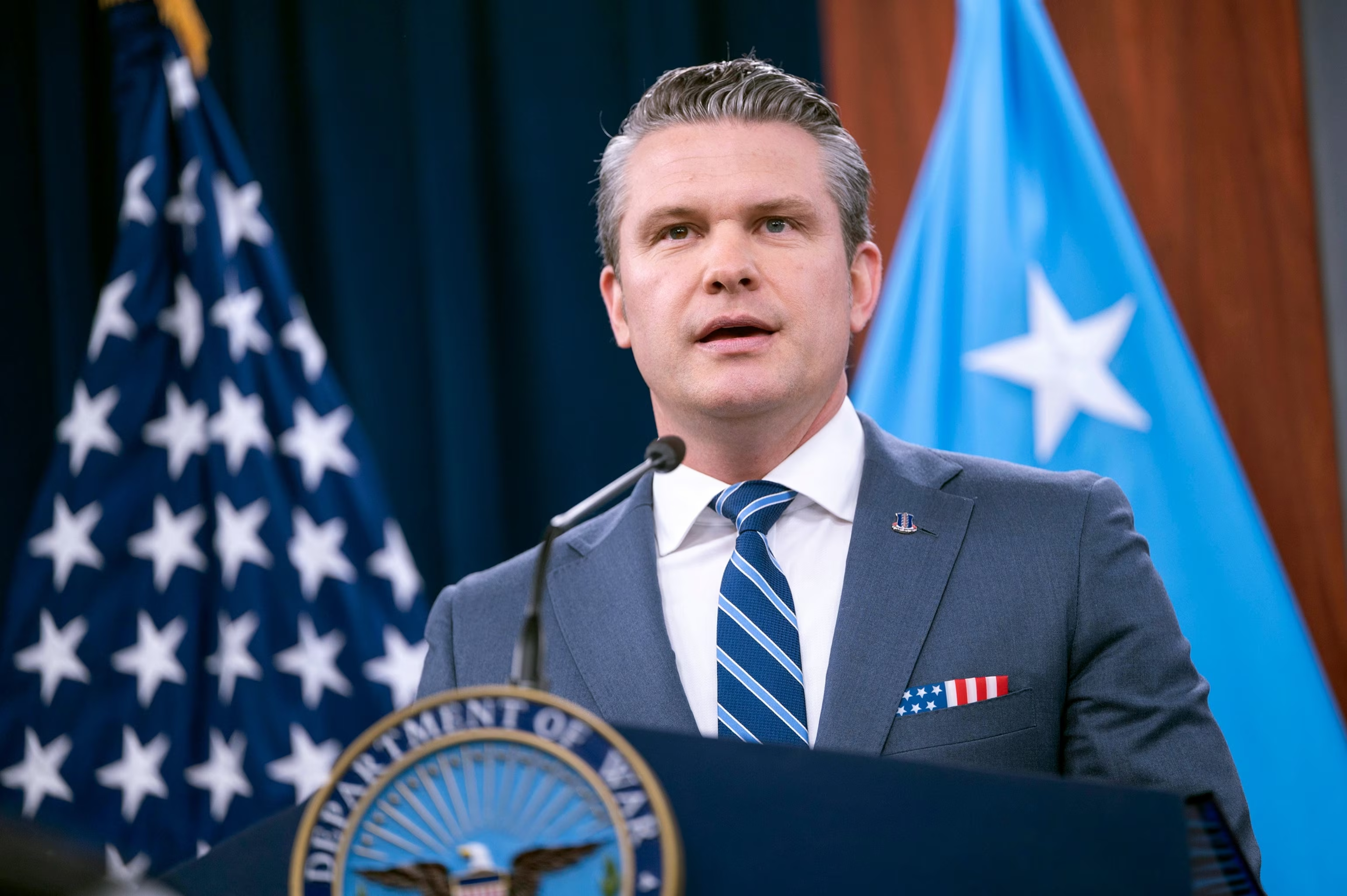
Defense Secretary Pete Hegseth speaks to members of the media during a press briefing at the Pentagon, April 16, 2026 in Washington.Kevin Wolf/AP
“Our revised policy is straightforward: If you, an American soldier entrusted with the protection of this nation, consider the influenza vaccine to be beneficial for you, then you are welcome to receive it; you should. However, we will not compel you,” Hegseth further mentioned.
Referencing the COVID-19 vaccine, which resulted in the discharge of 8,000 service members who declined to take it, Hegseth remarked, “Our uniformed personnel were forced to pick between their beliefs and their homeland, even when those choices presented no danger to our military effectiveness.”
“That period of disloyalty has concluded,” Hegseth asserted.
The influenza vaccine has been a requirement for the military since 1945, at the end of the Second World War, partly due to the risk of biological weapon deployment by opposing countries, as well as the devastation that the 1918 influenza pandemic caused among U.S. troops, according to a 2022 examination from Wright State University in Ohio and the U.S. Air Force.
Estimates suggest that between 20% and 40% of Army and Navy staff became sick, leading to over 26,000 fatalities among American soldiers.
Following the discovery by researchers of the vaccine’s diminishing efficacy, the mandate was rescinded in 1949. This was later attributed to sudden and substantial alterations in the influenza virus — and the mandate was reinstated in the early 1950s after the modifications became “clearer and more manageable,” according to the study.
Adherence among military health care workers has surpassed 95% in previous years, in contrast to under 75% among civilian health care workers.
Hegseth stated that soldiers can receive the vaccination if they opt to, describing it as an endeavor to “restore liberty and strength to our combined force.”
While the action is presented as broadening individual choice, health specialists caution it could gradually weaken military readiness.
“As a military veteran and nurse practitioner, I contend that Defense Secretary Pete Hegseth’s choice to discontinue the yearly influenza-vaccine requirement for U.S. soldiers is a significant error in judgment,” expressed Dr. Richard Riccardi, a professor and executive director of the Center for Health Policy and Media Engagement at The George Washington University, in a released statement.
Riccardi, who served on active duty in the U.S. Army for 31 years, communicated that not requiring the influenza vaccine will create more sicknesses and, as a result, more missed duty days and increased hospitalizations.
“In the military, vaccination isn’t political showmanship. It represents force protection. Soldiers reside and operate in close proximity, where influenza can spread rapidly and incapacitate otherwise healthy service members, Riccardi stated. “The CDC persists in advocating annual influenza vaccination for everyone 6 months and older as it continues to be the prime approach to mitigating the risk of influenza and severe health issues.
Up to now during the 2025-26 season, the Centers for Disease Control and Prevention approximates that there have been a minimum of 31 million illnesses, 380,000 hospitalizations, and 23,000 deaths attributed to influenza.
Of those deaths, 143 have affected children, 85% of whom were not completely immunized against influenza, as per the CDC.
Sourse: abcnews.go.com