
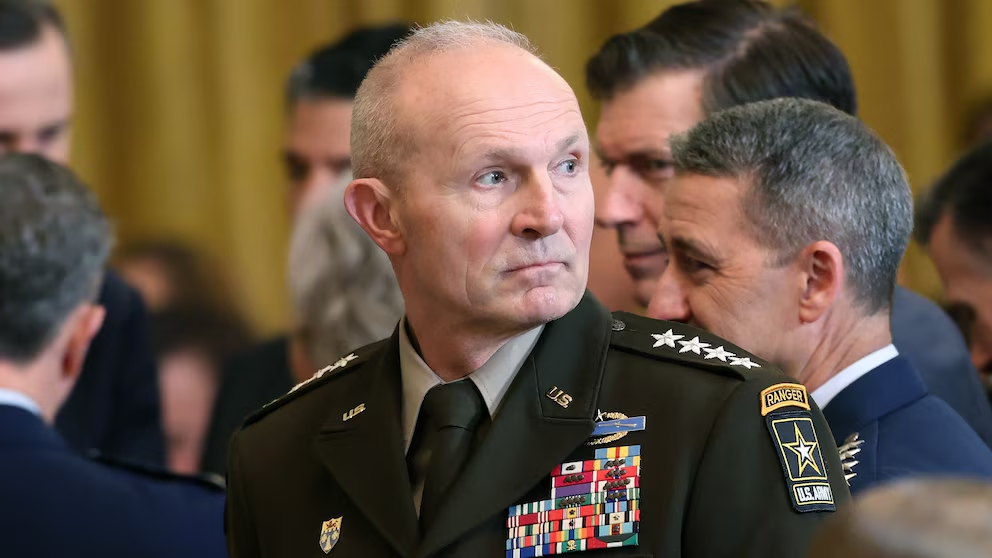
Chief of Staff of the Army General Randy George is present at a Medal of Honor Ceremony in the East Room of the White House, March 2, 2026, Washington.Win Mcnamee/Getty Images
Secretary of Defense Pete Hegseth has requested that General Randy George, the Army’s chief of staff and highest-ranking uniformed leader, resign from his post and retire promptly, the Pentagon announced Thursday.
“General Randy A. George will be concluding his service as the 41st Chief of Staff of the Army with immediate effect,” Pentagon press secretary Sean Parnell stated. “The Department of War expresses its gratitude for General George’s decades of dedication to our country. We extend our best wishes to him in his retirement.”
The Army chief of staff typically serves a four-year term. George assumed the position in 2023, having been nominated by then-President Joe Biden, and his tenure was projected to last until 2027.
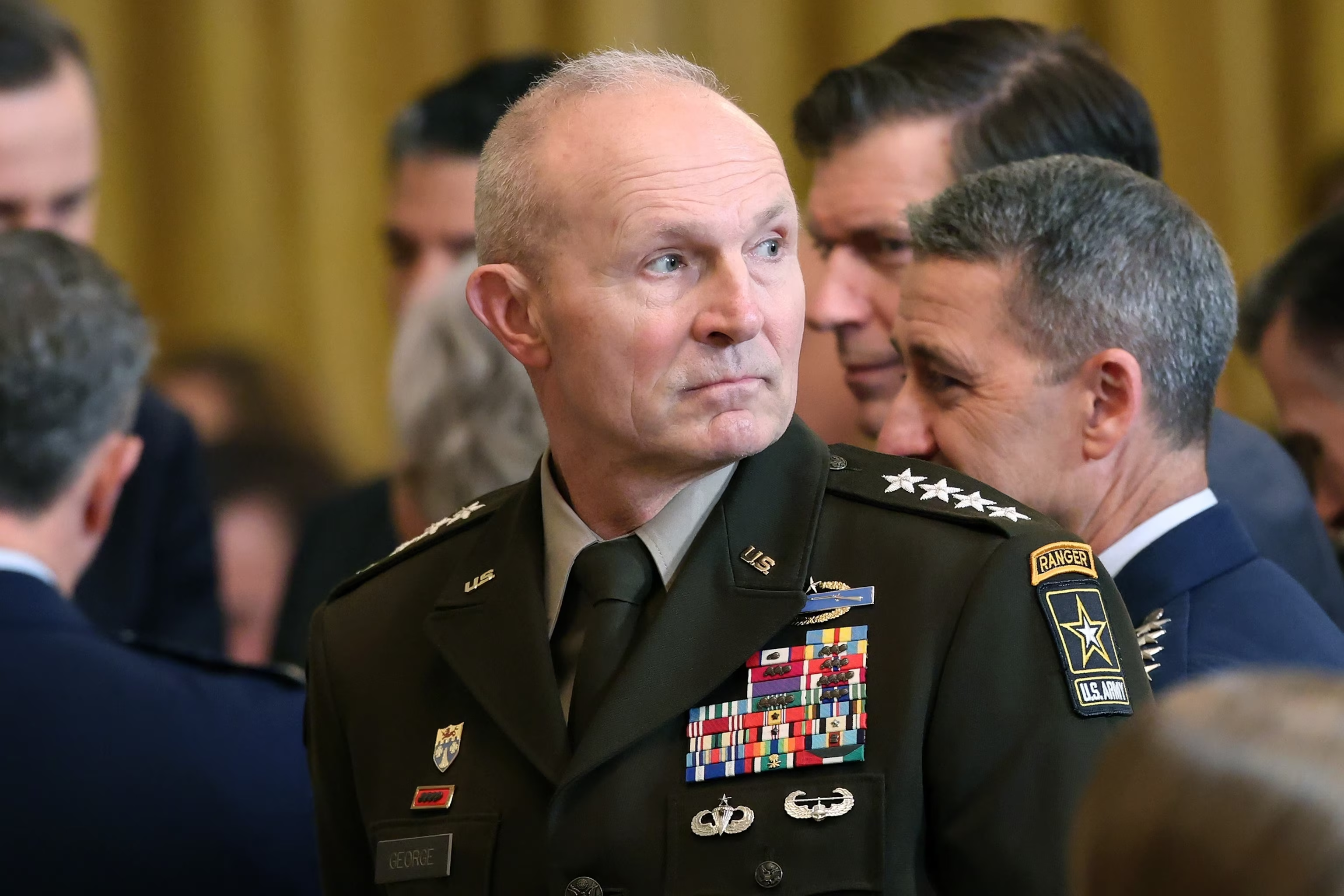
Chief of Staff of the Army General Randy George is present at a Medal of Honor Ceremony in the East Room of the White House, March 2, 2026, Washington.Win Mcnamee/Getty Images
His exit signifies yet another modification by Hegseth regarding the senior officials who were members of the Joint Chiefs of Staff when he took office as Defense Secretary. Hegseth has either dismissed or sidelined over a dozen admirals or generals.
Previously, Hegseth had ousted Gen. CQ Brown as the chairman of the Joint Chiefs of Staff and Adm. Lisa Franchetti as the Chief of Naval Operations.
Hegseth also dismissed Gen. David Hodne, who headed the Army’s Training and Doctrine Command, as well as Maj. Gen. William Green, the Army’s chief of chaplains, according to a U.S. official.
Prior to this, George served as the senior military aide to then-Secretary of Defense Lloyd Austin, and rumors of his potential removal had been circulating for over a year, according to U.S. officials.
A defense official informed ABC News that Vice Chief of Staff of the Army Gen. Christopher LaNeve will assume the role of acting chief of staff, which is the standard order of succession and the justification for having two four-star generals in the Army’s two highest positions. This succession is activated when the chief of staff is either unable to fulfill their duties or is removed from their position.
“The vice chief of staff taking on that responsibility is the anticipated and suitable course of action,” the defense official commented.
LaNeve previously served as Hegseth’s senior military aide.
George is an infantry officer who initially enlisted in the Army in 1982 before receiving his commission from West Point in 1988. He has held command positions in some of the Army’s most prominent ground combat organizations, including the 173rd Airborne Brigade Combat Team and the 4th Infantry Division.
Throughout his time as Army chief of staff, he directed endeavors to transform the Army from its focus on the Global War on Terrorism to a force designed for engagement in large-scale conflicts, particularly against nations such as China, and significantly invested in drone technology, long-range weaponry, and the Army’s industrial manufacturing base.
He also streamlined various components of the Army, reduced staff, and decreased the number of generals in the service, with the objective of creating a more agile force.
George received a reprimand, which amounts to a public censure within the Army, during his time as a brigade commander in Afghanistan in 2009 for his oversight of Combat Outpost Keating—a small, isolated American base that was nearly overrun by the Taliban and subsequently destroyed by U.S. forces.
Eight American soldiers died in the assault, and two soldiers received the Medal of Honor. The battle was depicted in the film “The Outpost.”
CBS News was the first to report on George’s removal.
Sourse: abcnews.go.com