
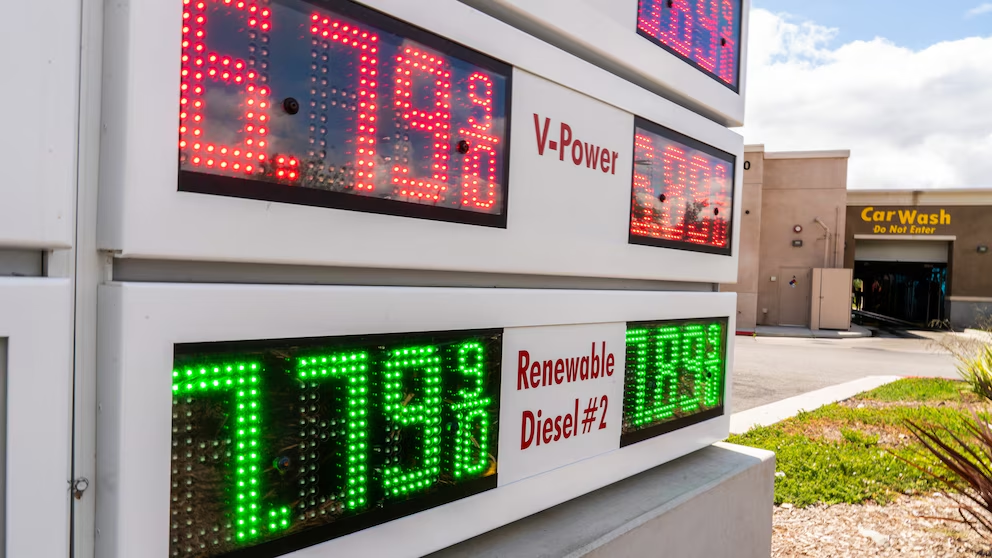
A sign indicates the costs of regular gasoline and diesel at a Shell station in Upland, California, on May 4, 2026. Kyle Grillot/Bloomberg via Getty Images
The ongoing hostilities in Iran are creating financial difficulties across the nation, with numerous Americans stating that they are grappling with increased expenses, notably the unprecedented surge in fuel costs.
A survey by ABC News/Washington Post/Ipsos that was published recently revealed that half of the populace anticipates gasoline prices to climb further in the year ahead, and 40% of Americans feel they are not as prosperous as they were when President Donald Trump commenced his second term in January 2025.
Almost a fourth indicated that their financial standing is deteriorating.
In follow-up discussions with several participants in the survey, individuals stressed their difficulty in affording essential items and voiced their discontent with the nation’s leadership.
Speaking with ABC News, Jacob Olson, 28, of Beebe, Arkansas, remarked that escalating gas and food prices have complicated life. After losing his job as a warehouse supervisor for a solar energy company that declared bankruptcy, Olson became a self-employed craftsman of bespoke wood creations, such as storage units. He noted that he spends considerably on fuel while traveling to visit his clientele.
"One day at a time," Olson stated. "Putting one foot in front of the other. … That’s about the best way to summarize it."
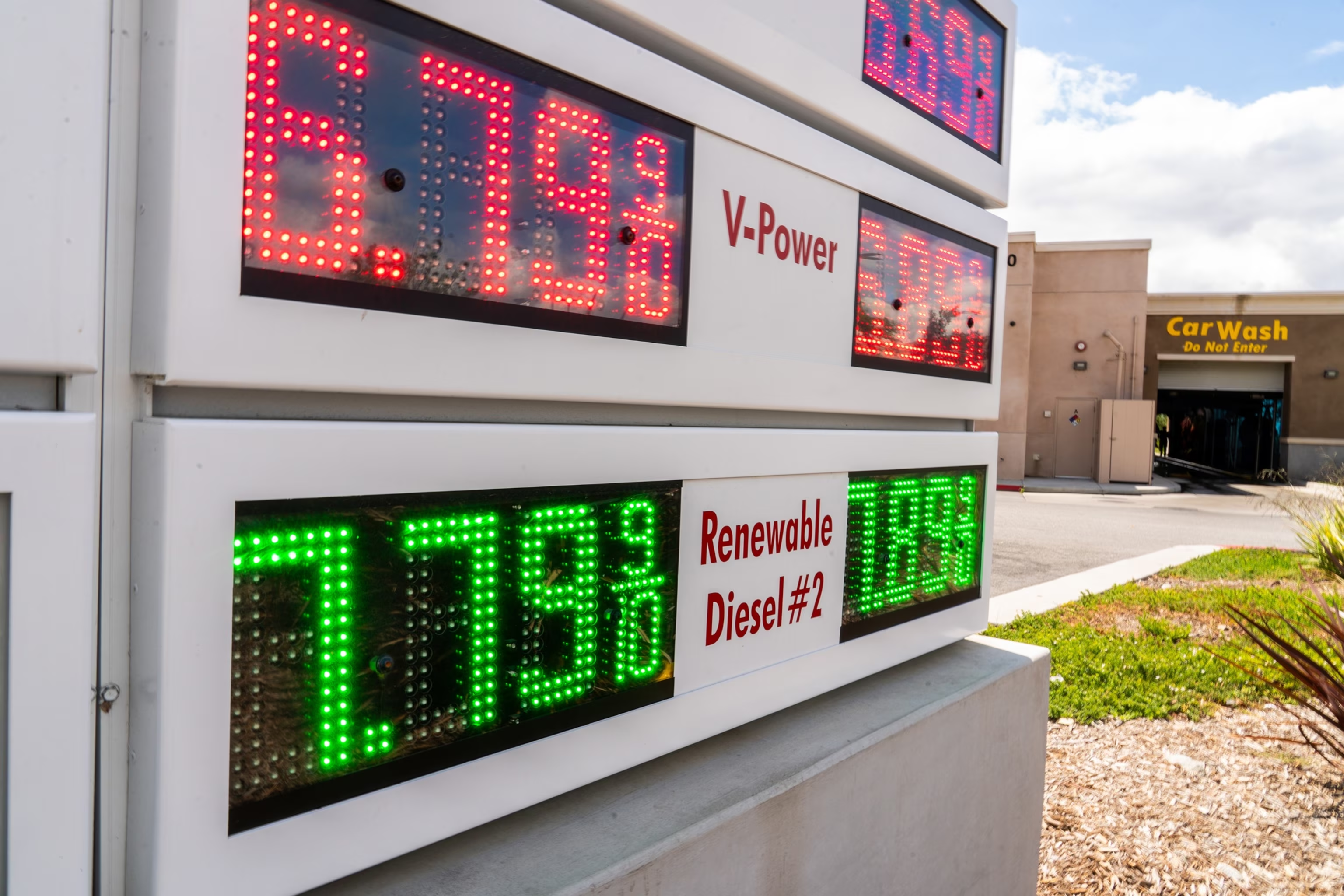
A sign indicates the costs of regular gasoline and diesel at a Shell station in Upland, California, on May 4, 2026.Kyle Grillot/Bloomberg via Getty Images
The ABC/Post/Ipsos survey also revealed that in addition to the 50% of Americans who believed gas costs would worsen in the upcoming year, another 15% predict gas costs to remain relatively stable.
Olson concurred that the prices of gas and other commodities would continue to rise.
"I don’t really participate in any recreational or luxury activities anymore," Olson mentioned. "It’s primarily about covering the essential bills… I have a 1-year-old, and I recently had another baby approximately a month ago, so I have two small children, and it is becoming increasingly challenging each day."
Brenda Howard, 66, of Lubbock, Texas, commented that she also cannot afford luxuries, like vacations or dining out, and because she lacks personal transportation, she relies on ride-sharing services like Uber and Lyft for conducting errands and traveling to her employment as a cleaner.
She stated that using Uber or Lyft for a roundtrip to the grocery store amounts to around $30.
"This isn’t how I envisioned my retirement unfolding," Howard expressed. "I never imagined it would involve a constant struggle, often on an hour-by-hour basis."
The survey indicated that a segment of Americans reported adjusting their habits due to elevated fuel costs. Over 40% have lessened their driving (44%) or reduced household expenditures (42%). An additional 34% stated they have modified their vacation or travel plans.
Those in lower income brackets have been disproportionately impacted by the fuel cost escalation. Over half of individuals with annual household incomes below $50,000 indicated they have curtailed driving and household expenses.
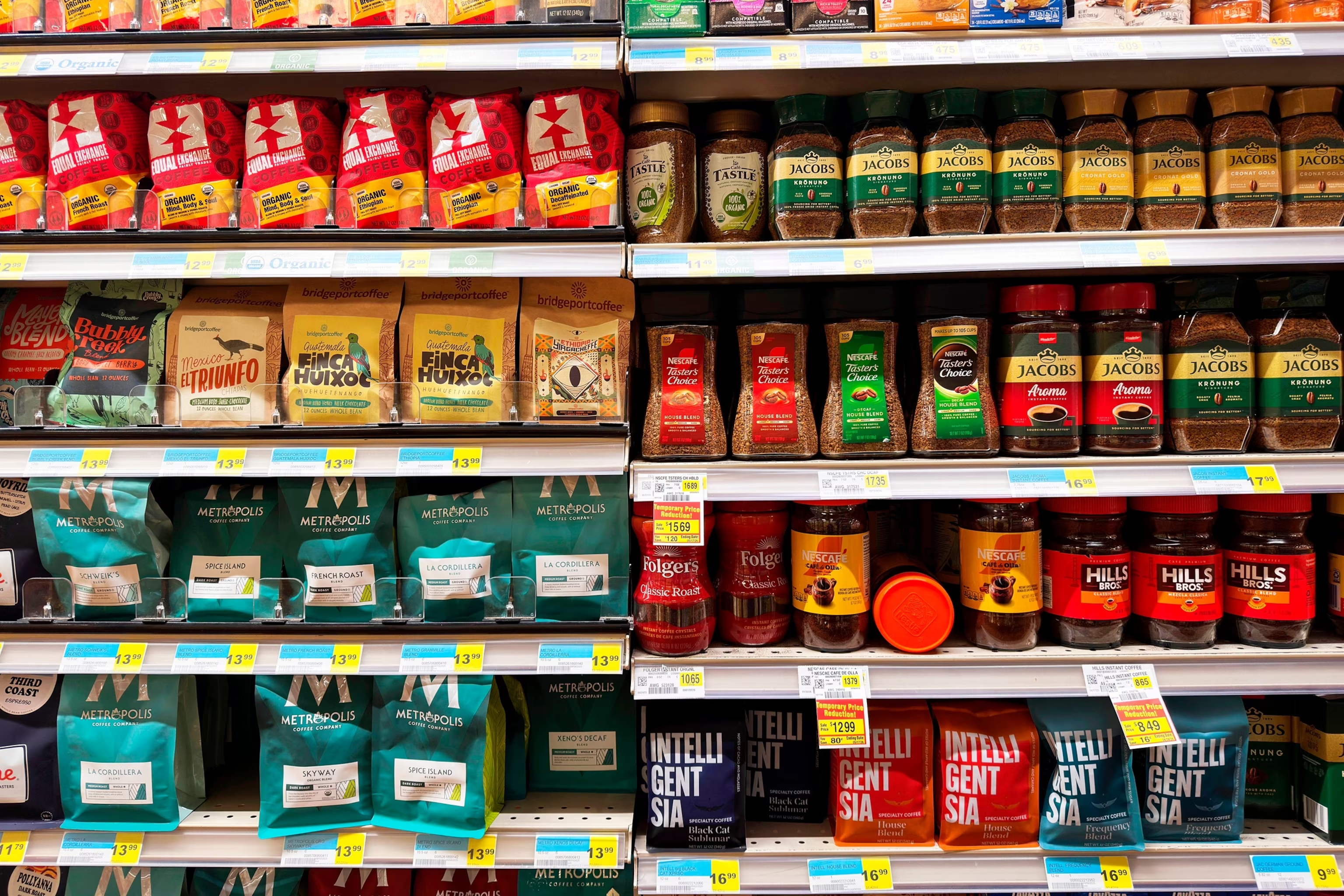
Coffee is displayed for sale at a grocery store, on April 29, 2026, in Chicago.Erin Hooley/AP
Martha Davis, a 66-year-old Texan who works as a caregiver for her son, who has a disability, said she is having difficulties paying for necessities, including gasoline and rent. She is required to commute, sometimes as far as 60 miles from her residence in Tool, Texas, to attend medical appointments.
"I previously used to travel back and forth for around $20 or $25, but now it amounts to nearly 70 dollars," Davis stated.
According to the ABC News/Post/Ipsos survey, four in ten Americans stated that they are financially worse off compared to the start of Trump’s second presidential term. Some of those who indicated that they are faring worse continue to support the president.
Andy Breedlove, 51, from West Virginia, shared his belief that Trump is performing well in his second term while also stating that gasoline prices are excessively high.
"But considering the prices of everything else, it somewhat balances out," Breedlove said, noting he is currently unemployed due to a disability. Breedlove anticipates that gas costs will continue to climb due to the conflict with Iran.
The retaliatory blockade of the Strait of Hormuz by the Iranian administration, a critical shipping lane for the oil market, has caused serious interruptions in global commerce. Typically, about 20% of globally traded petroleum passes through this strait.
A 61% majority of Americans said in the ABC/Post/Ipsos survey that the Trump administration’s decision to engage in war with Iran was a misjudgment.
"He hasn’t clearly stated the reason… why we’re even involved," said Olson, the woodworker with a young family. "From what I can tell, there’s been a great deal of dishonesty and lack of transparency, and … a significant absence of professionalism, which I find disagreeable coming from the president."
Christopher Mosley, 43, an ex-Walmart employee residing in Fort Smith, Arkansas, characterized Trump as "reckless" regarding foreign policy.
Trump’s messaging concerning gasoline prices has been contradictory. When queried in early April about whether he expected prices to fall before the forthcoming midterm elections, Trump suggested they might remain stable or increase. On May 1, Trump predicted that gasoline prices would "plummet" after the conflict ended. A spokesperson for the Iranian foreign ministry disclosed that Iran is assessing the newest proposal from the U.S. government aimed at resolving the conflict.
The financial hardship experienced by voters has the potential to have a significant influence on the midterm elections, a cycle in which Democrats are already positioned to make gains. Trump has portrayed the possibility of a shift in the power balance in Congress as an existential peril to his presidency.
Jim Piper, a 36-year-old from Portage, Indiana, expressed that he wishes Trump had more leeway to pursue his policy objectives. Since the commencement of the second Trump administration, Piper said he has been doing worse financially, yet he attributes rising prices to political gridlock between Democrats and Republicans. Considering Piper is disabled and depends on a fixed income, inflation places a burden on his finances.
"I have to pay extra, despite not earning extra," Piper stated.
Sourse: abcnews.go.com