
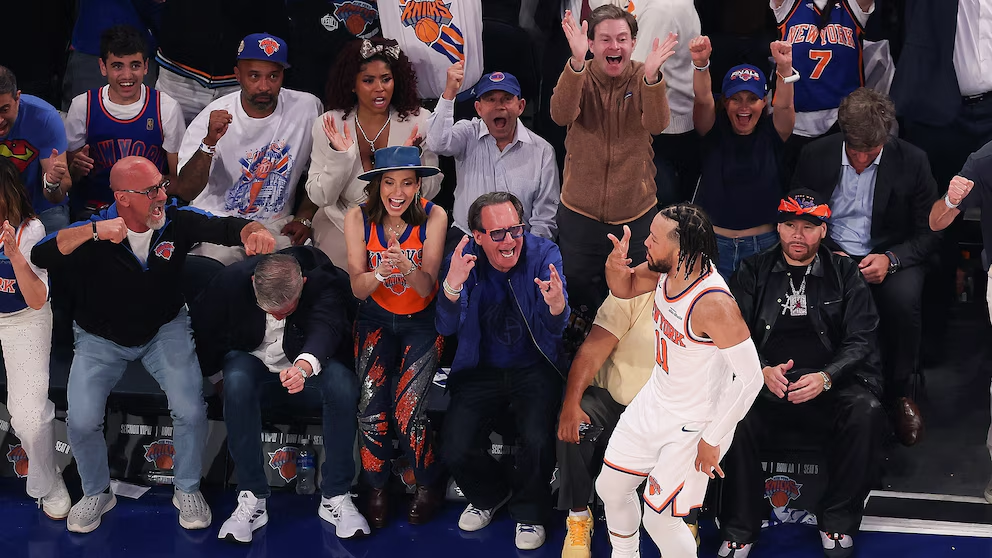
Jalen Brunson of the New York Knicks celebrates a three point basket during the second quarter against the San Antonio Spurs in Game Three of the 2026 NBA Finals at Madison Square Garden, on June 8, 2026, in New York.Dustin Satloff/Getty Images
Fans of the Knicks descended upon Madison Square Garden, experiencing a devastating defeat in Game 3 of the NBA Finals — and they forked over a substantial sum for the opportunity.
The least expensive ticket for the game approached $4,000, according to Vivid Seats. The typical ticket cost exceeded $7,000.
Those astonishing prices — which positioned Monday’s game as one of the priciest in NBA Finals history — brought attention to an ongoing inquiry: Where does all this money actually go?
The majority of the millions generated from ticket sales flows into the coffers of the home teams, with a portion directed to the league, industry experts informed ABC News. Furthermore, a segment of the earnings goes to secondary-market vendors who collect fees for resold tickets, they stated.
Analysts at J.P. Morgan projected that each Knicks playoff contest would yield approximately $12 million in revenue, according to a report shared with ABC News, which was published by the firm last month. This projection would amount to a total of roughly $108 million in sales throughout the playoffs, should the Knicks participate in two NBA Finals home games.
Approximately 75% of the revenue derived from championship ticket sales is allocated to the home team hosting a particular Finals game, some analysts advised ABC News.
Madison Square Garden Sports Corp. (MSGS), the parent entity of the Knicks and Rangers, has likely incurred some increased expenses for staffing and upkeep due to hosting the additional home games, but these costs are minor compared to the ticket revenue, Victor Matheson, a sports economist at the College of Holy Cross, told ABC News.
“The expenses as a proportion of revenue become negligible when ticket prices escalate this significantly,” Matheson remarked. “It represents a considerable financial gain for the teams.”
In sum, each postseason home game is expected to generate about $5 million in profit, J.P. Morgan indicated, or $45 million over the anticipated duration of the playoffs.
Addressing analysts in February, MSGS Chief Operating Officer Jamaal Lesane highlighted the potential for a playoff run by one or both of the company’s franchises, emphasizing the prospect of “valuable, additional home games.” At that juncture, the NBA Finals were still months away.
“We are, naturally, keeping an eye on the standings,” Lesane stated.
The stock value of MSGS has surged by over 13% since the Knicks commenced their playoff journey on April 18, standing at approximately $71 per share as of Tuesday. During the same interval, the Dow Jones Industrial Average has seen an increase of merely 1.5%.
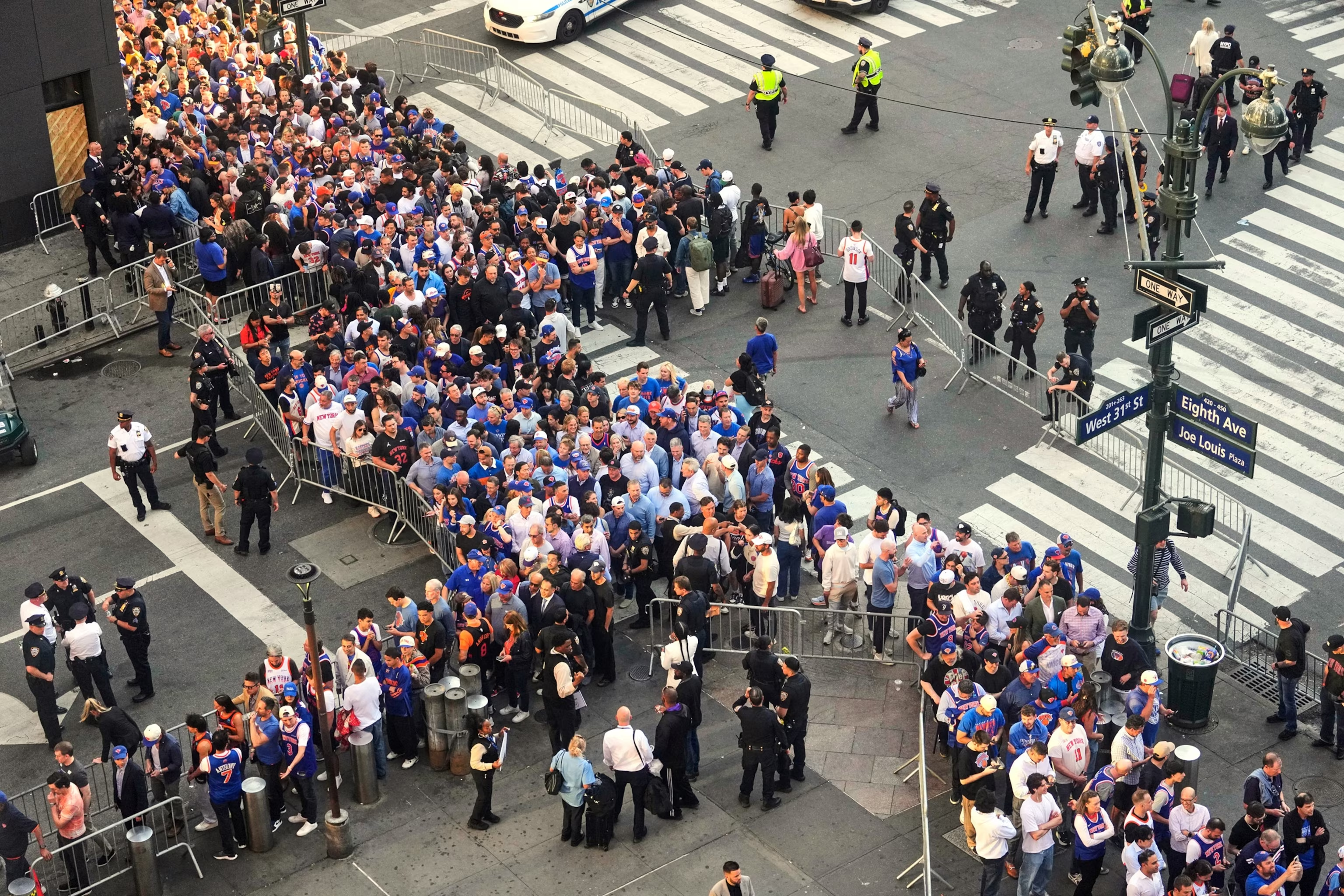
Fans arrive prior to Game 3 of the NBA Finals basketball series between the San Antonio Spurs and the New York Knicks, June 8, 2026, in New York.Yuki Iwamura/AP Photo
While the Knicks’ success has undoubtedly provided a financial boon for MSGS, the playoff participation has also elevated revenue for secondary ticket vendors, according to Michael Leeds, a professor of sports economics at Temple University.
The most exorbitant ticket prices for Game 3 at Madison Square Garden were discovered on the resale market, he noted. These transactions have generated substantial fees for the ticketing intermediaries.
Once the team secures 75% of the revenue from primary ticket sales, the remaining 25% of proceeds are directed to the NBA, analysts explained. This revenue assists the league in covering expenses incurred during the postseason.
Total ticket revenue also contributes to “basketball-related income,” a term encompassing league earnings directly associated with the sport. NBA players receive approximately half of all basketball-related income, while team owners receive the other half. Consequently, a portion of the NBA Finals ticket revenue will be pooled and distributed among the league’s approximately 450 players, primarily in the form of their salaries, Matheson elaborated.
The exceptionally high prices, Matheson further commented, stand to benefit “every player from the most accomplished to the least skilled in the NBA. It has a widespread positive impact.”
Given that the volume of ticket sales partly depends on the number of postseason matches, the Knicks’ ownership might have a minor grievance, Matheson suggested: The Knicks emerged victorious in all their games in the preceding two rounds, meaning each series concluded before the team could play its full slate of potential home games.
“They have been overly successful for their own benefit,” Matheson concluded.
Sourse: abcnews.go.com