

STOCK PHOTO/Getty Images
The influence of the Iranian conflict on petroleum costs is now impacting your finances beyond the filling station. Due to the Iran war, diesel costs are generating close-to-record overland shipping fees, with the United States Postal Service (USPS) instituting package levies for the first time.
According to discussions with ABC News, East Coast transporters are levying an extra 30 to 40 cents for each mile due to diesel fees since the war’s commencement, signifying approximately a 50% to 93% escalation in per-mile fee percentages.
One firm’s oil expert depicted it as an “unprecedented rise,” remarking that such levels have not been observed since the period following Russia’s invasion into Ukraine in 2022.
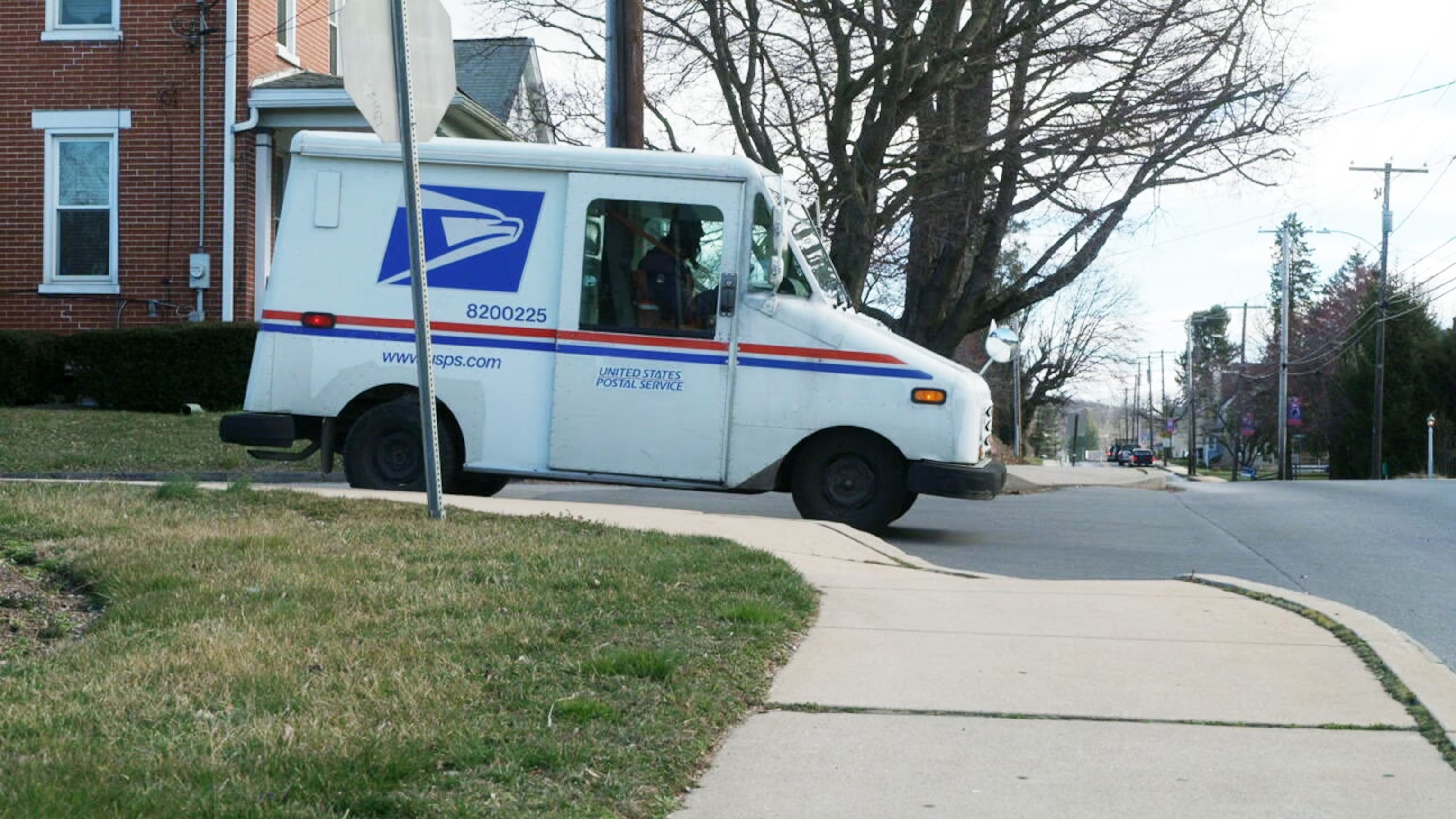
The U.S. Postal Service delivers mail 6 days a week, except Sundays, but in 2015 the agency contracted with online giant Amazon to deliver some of its packages on Sundays.ABC News
ABC News scrutinized weekly fee indexes from a couple of entities, both of which concentrate on conveying lumber, building materials, gardening equipment, and substantial machinery. To safeguard their pricing arrangements and clientele, they both sought confidentiality.
Transporters diverge in how they administer fuel fees. As shared with ABC News, certain entities charge per mile, whereas others implement a proportion of overall transport expenditures. USPS, for instance, is getting ready to enforce an approximate 8% fee on packages for the first time ever, structured upon the comprehensive transport price, as per their fee notification.
The fee on particular merchandise will commence on April 26 and persist until Jan. 17, 2027, USPS stated.
“Transportation expenses have been climbing, and our rivals have countered with a variety of fees,” USPS mentioned in a statement on March 25, publicizing the fees. “We have resolutely abstained from fees, and this charge is less than a third of what our competitors impose solely for fuel.”
Martha Johnson, a USPS representative, contradicted the assertion that the price escalation was a “fuel fee,” explaining in a statement to ABC News that it signifies “"the reality of overall transportation related costs (which is inclusive of fuel).”
According to their records, USPS conveyed roughly 6.8 billion packages in fiscal year 2025.
Iran has practically sealed off the Strait of Hormuz, a vital maritime trade path along the Iranian shoreline, facilitating the transit of around 20% of the world’s petroleum supply. That, in turn, has pushed fuel costs up worldwide.
The median rate for a gallon of diesel as of April 1 stood at $5.46, ascending by over a dollar from the start of March, according to GasBuddy statistics.
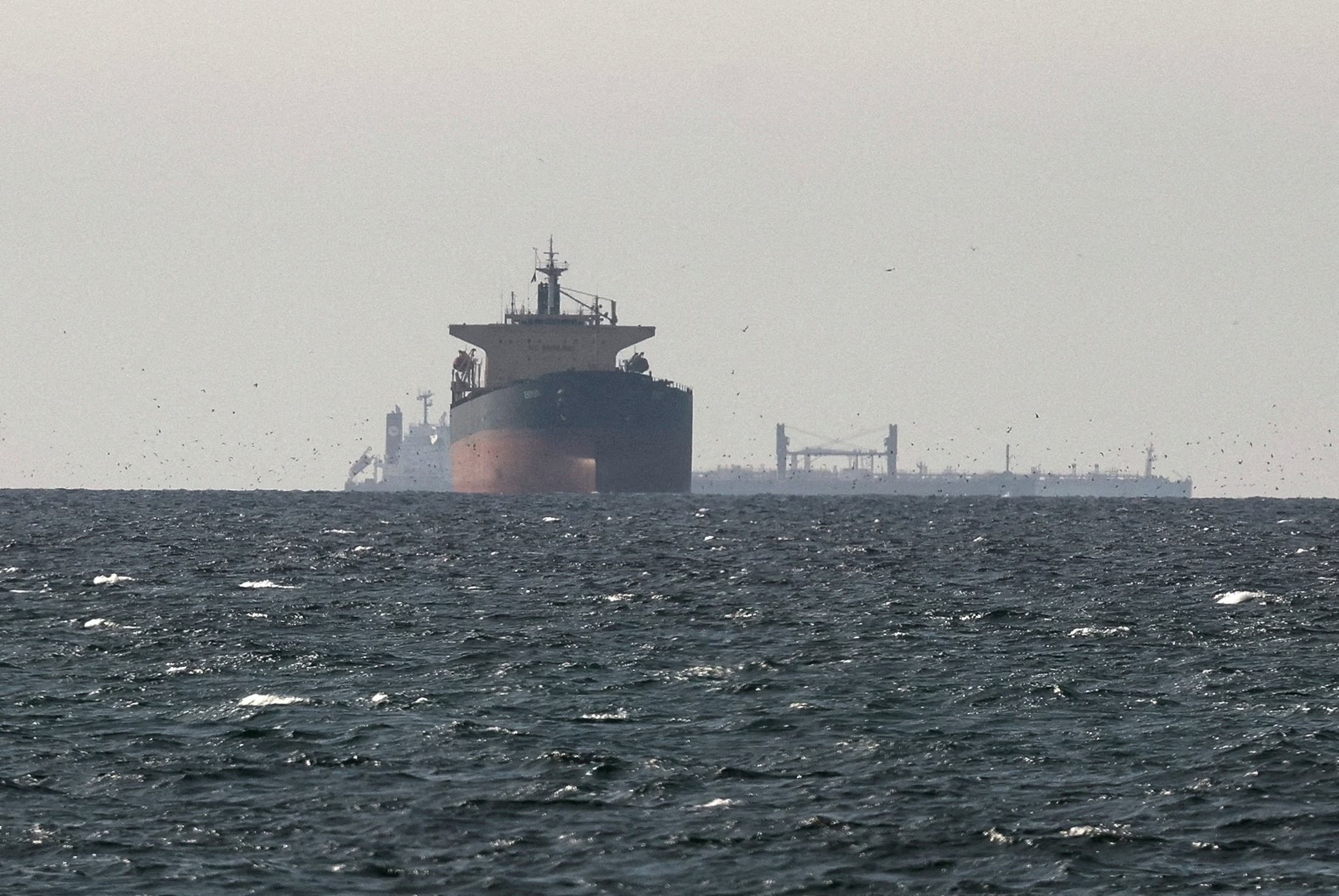
Tankers sail in the Gulf, near the Strait of Hormuz, as seen from northern Ras al-Khaimah, near the border with Oman’s Musandam governance, amid the U.S.-Israeli conflict with Iran, in United Arab Emirates, March 11, 2026.Reuters
Emily Stausbøll, a senior shipping analyst at freight intelligence platform Xeneta, conveyed to ABC News that the Iranian war is leading freight shipments to become considerably more costly across the globe.
“Typical instant prices from the Far East to North Europe and the Mediterranean have mounted by 28% and 30%, respectively, since February 28. Further increments are projected for April,” Stausbøll stated.
“No commerce is entirely shielded from the reverberations of this dispute, with transporters worldwide administering the economic and operational cost on supply systems,” she appended.
This surge in per-mile fees corresponds with the observations of specialists at FreightWaves, a global freight market price reporting entity. According to FreightWaves editor John Kingston, the majority of shipping enterprises establish their fuel fees on weekly diesel price statistics from the Department of Energy, as opposed to everyday metrics.
"The fundamental figure that the majority of fuel fees employ is the Energy Information Administration average, Kingston informed ABC News. "That's overwhelmingly the number that gets used."
Sourse: abcnews.go.com