
STOCK PHOTO/Getty Images
On Monday, President Donald Trump expressed his backing for a pause on the federal levy on gasoline, as the White House explores avenues to alleviate the spike in fuel costs triggered by the conflict with Iran.
An elimination of the levy – which totals 18.4 cents for each gallon of regular gasoline and 24.4 cents for each gallon of diesel – would necessitate a congressional vote.
The prospective assistance surfaces as the stock market achieves new pinnacle levels and some oil firms declare escalating earnings. Simultaneously, households are feeling the strain of elevated fuel expenses, flight costs, and other expenditures. Inflation is at a three-year zenith, according to fresh figures released on Tuesday.
In the meantime, fuel costs are approximately 50% greater than their levels prior to the onset of hostilities two and a half months prior.
Pausing the federal gasoline levy could diminish expenses by almost 20 cents per gallon for standard gasoline, but it would represent only a minor offset to the price escalation resulting from the Iran conflict, as explained by certain analysts to ABC News.
As of Tuesday, the average price for a gallon of gasoline was $4.50, as indicated by AAA data – a surge of $1.52 per gallon from when the conflict commenced on Feb. 28.
Should filling stations transfer the complete tax concession to consumers, it would mitigate around 11% of the price surges witnessed since the conflict’s initiation.
“The average consumer would experience fairly limited respite,” stated Dominic Pappalardo, chief multi-asset strategist at Morningstar Investment Management, in conversation with ABC News.
Assuming an 18-gallon fuel reservoir, the expense of replenishing a depleted reservoir has risen from $53.71 on Feb. 28 to $81 as of Tuesday. Expressed differently, refilling a vacant reservoir now incurs approximately $27 more than it did before the conflict, according to an assessment imparted to ABC News by Omair Sharif, founder of Inflation Insights.
If a vehicle proprietor were to replenish their reservoir weekly, the aggregate annual escalation in fuel outlay would approximate $1,419.
A suspension of the gasoline levy would yield savings of approximately $3.24 for a driver each time they replenish an empty reservoir, presupposing that filling stations elect to pass along the entire tax concession to consumers. Throughout a year, suspending the levy would save drivers approximately $168.
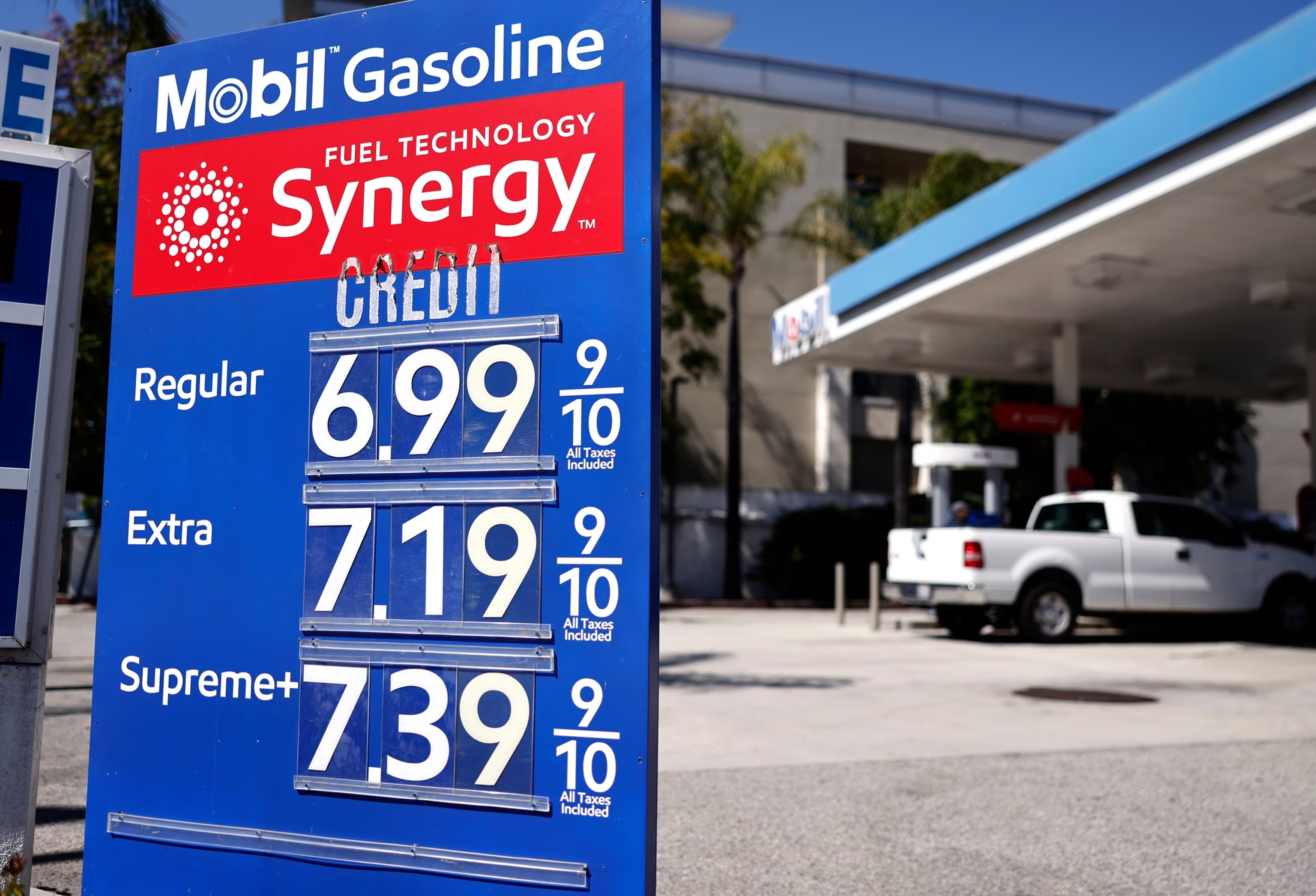
High gas prices are displayed at a Mobil gas station on May 11, 2026, in Pasadena, Calif.Mario Tama/Getty Images
On Monday, Trump conceded that a pause in the gasoline levy would not notably curtail costs for Americans.
“It represents a modest fraction, yet it is still money, you know,” Trump commented within the Oval Office.
Suspending the gasoline levy could also diminish the expense of diesel fuel, thereby providing some respite from wholesale outlays for victuals, furniture, and essentially every other commodity conveyed via diesel-fueled trucks and container vessels, Ramanan Krishnamoorti, a petroleum engineering professor at the University of Houston, communicated to ABC News.
Home food costs experienced a 0.7% increase in March relative to February, reversing a 0.2% reduction from the preceding month, as unveiled by government data on Tuesday. The prices for fresh fruits and vegetables — which exhibit particular susceptibility to diesel expenditures — escalated by 2.3% in April relative to March.
As of Tuesday, the average price for a gallon of diesel amounted to $5.64. A pause on the gasoline levy would diminish the price by 24.4 cents per gallon, granted that filling stations elect to transfer the complete savings to consumers. This would translate to a 4% diminution in the expense of diesel.
The savings would be “quite minimal,” Krishnamoorti observed, while also highlighting the potential for the price reduction to extend some assistance to patrons at grocers and shopping centers.
Substantial relief at the gas pump will materialize solely if tanker traffic resumes within the Strait of Hormuz, alleviating a record oil deficit, Krishnamoorti asserted. He further noted that this outcome would likely hinge upon a resolution to the hostilities.
“The paramount measure to curtail fuel expenses is to facilitate the cessation of this conflict,” Krishnamoorti concluded.
Sourse: abcnews.go.com