
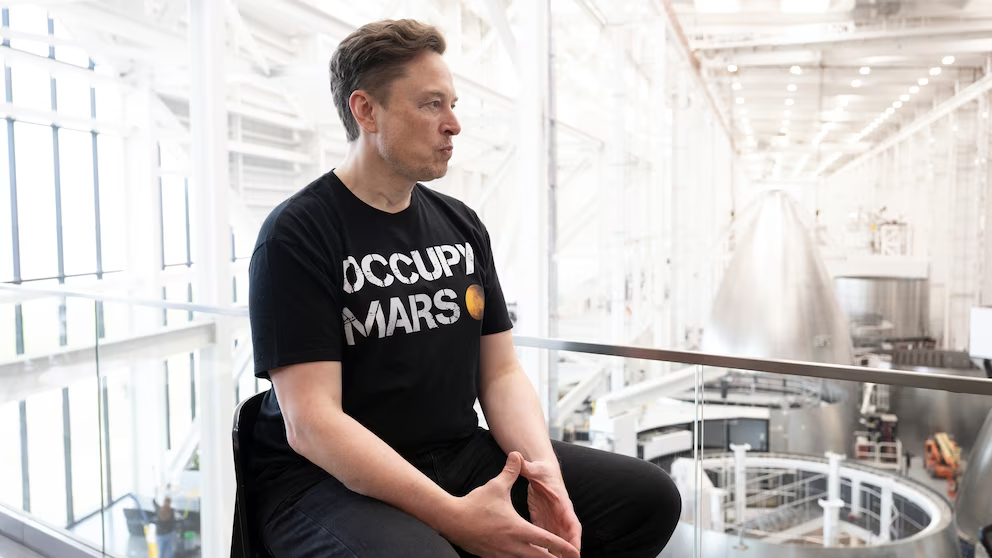
Elon Musk is photographed at Space X in Brownsville, Texas, May 27, 2025.Marvin Joseph/The Washington Post via Getty Images
Elon Musk, the most affluent individual globally, might become the inaugural trillionaire upon SpaceX’s public debut on Friday.
The company’s originator and chief executive is slated to possess approximately four out of every ten SpaceX shares post-initial public offering (IPO). Should SpaceX achieve its projected valuation of $1.75 trillion, Musk would gain hundreds of millions of dollars in fresh wealth, at least notionally.
SpaceX is involved in the construction and operation of aerospace vehicles, including a multitude of satellites deployed to support its Starlink satellite internet service. Earlier this year, the Texas-based enterprise unified with xAI, an artificial intelligence firm spearheaded by Musk that provides the chatbot Grok.
The prospective financial bonanza would elevate Musk even further above other financial magnates. Musk presently holds an estimated net worth of around $780 billion, according to Forbes. The second-wealthiest individual worldwide, Google co-founder Larry Page, possesses a net worth of $291 billion.
If Musk were to attain trillionaire status, his net worth would surpass the combined wealth of the lowest-earning 46% of the global population, approximating 3.8 billion individuals, based on a report released by the non-profit organization Oxfam on Thursday.
This milestone would signify that Musk’s fortune has expanded by approximately $550 billion over the past year, translating to an average of over $1 million daily, Oxfam indicated.
Following the IPO, Musk could hold a substantial interest in two of the world’s ten largest companies by market capitalization: Tesla and SpaceX.
Musk’s affluence primarily originates from the significant holdings he maintains in these two corporations, as communicated to ABC News by Jason Schloetzer, a Georgetown University professor of accounting specializing in executive compensation.
His prosperity, in essence, will be largely contingent on the share prices of these entities.
The SpaceX IPO has created a divergence among stock analysts, with some championing its profit potential within the highly profitable aerospace and AI sectors, while others express reservations about what they perceive as overly ambitious, speculative endeavors like data centers in space.
The company’s revenue escalated to $18.7 billion in 2025, marking a 33% surge from the preceding year, according to a financial disclosure. Close to a quarter of that revenue was generated by Starlink, which had millions of subscribers. Nevertheless, SpaceX did not achieve profitability, recording a deficit of $4.9 billion last year.
The company aims for a launch price of $135 per share, which would equate to a $1.75 trillion valuation and a considerable benefit for Musk. Under such circumstances, Musk’s net worth would significantly exceed $1 trillion. This would represent the most substantial IPO on record.
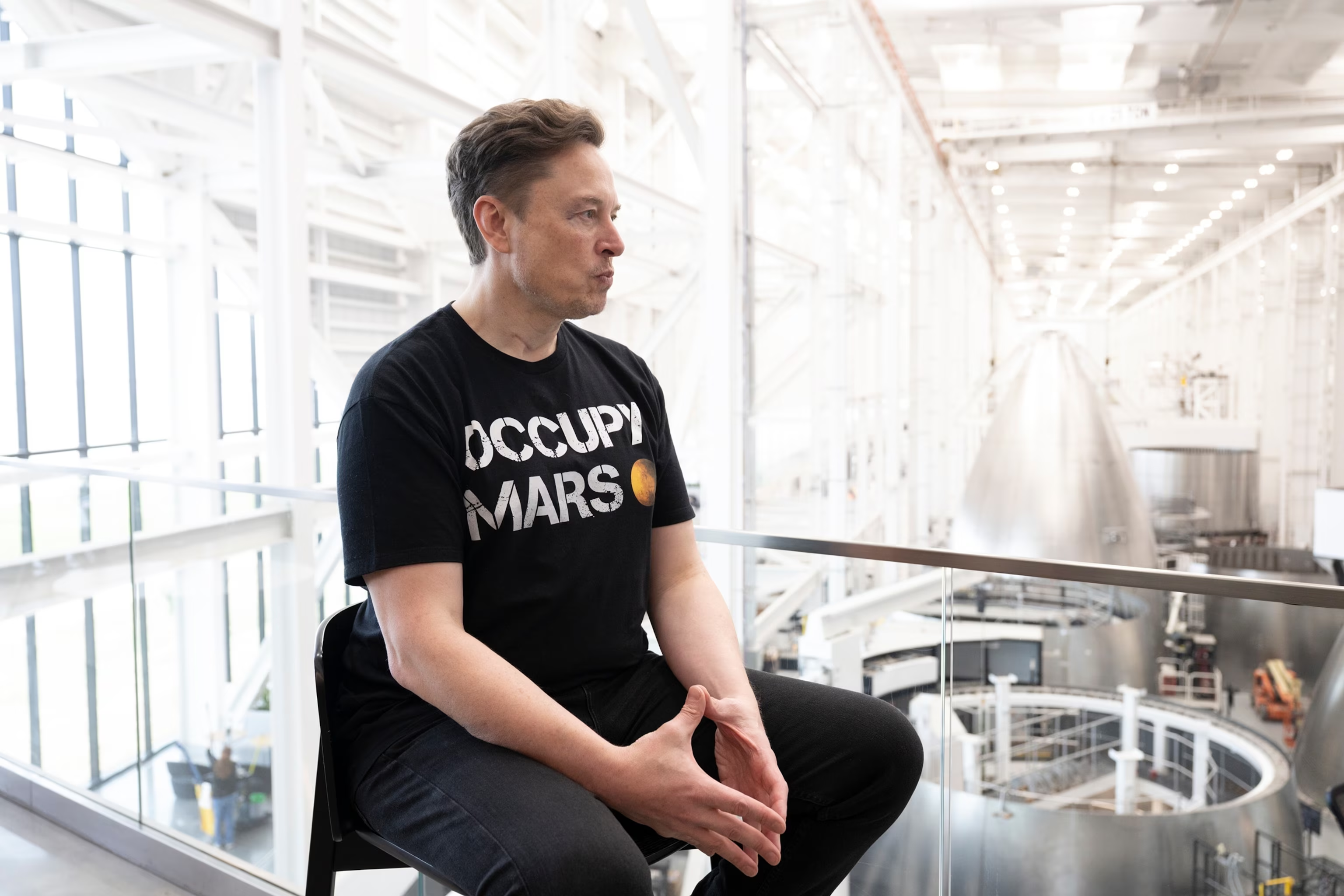
Elon Musk is photographed at Space X in Brownsville, Texas, May 27, 2025.Marvin Joseph/The Washington Post via Getty Images
Some analysts, however, have voiced skepticism regarding that target valuation. Nicolas Owens, an analyst at Morningstar, circulated a memo this week criticizing the anticipated share price. Citing the technological hurdles encountered by the company’s AI initiatives, Owens estimated the stock’s value at approximately $63 per share, less than half of the projected price.
Post-IPO, SpaceX will face heightened scrutiny from the investment community and regulatory bodies, which could challenge the company’s long-term objectives, Schloetzer noted.
"It remains to be determined whether SpaceX’s valuation can be sustained or if it will decrease once subjected to the public markets’ examination," Schloetzer added.
Individuals seeking indicators of potential shareholder returns can observe Musk’s own Tesla. Over the last five years, Tesla’s stock value has surged by 90%, outperforming the S&P 500’s 71% increase during the same period. However, Tesla’s share prices have also been propelled by ambitious projects such as autonomous taxis and robotic humanoids.
"Evidently, fundamental value is significant in the long term," Schloetzer stated. "But it appears Musk has managed to transcend fundamentals historically, and he might achieve this again."
Irrespective of its magnitude, the potential influx of wealth from the SpaceX IPO comes with a stipulation. Musk is prohibited from divesting any of his SpaceX shares for a period of one year following the IPO, as per a financial filing. Thereafter, any attempt to sell shares would diminish Musk’s ownership stake in the company and curtail his influence over strategic decisions.
"Disposing of shares would dilute his ownership control and voting authority, yet he desires to preserve these," Schloetzer commented. "On paper, one might be affluent, but it represents an asset one is disinclined to liquidate."
Concurrently, Tesla shareholders approved a compensation plan for Musk last year that could yield him upwards of $1 trillion in the forthcoming years, suggesting he might ultimately approach a net worth of $2 trillion.
"The figures are so immense that comprehension is challenging," Schloetzer remarked.
Sourse: abcnews.go.com