
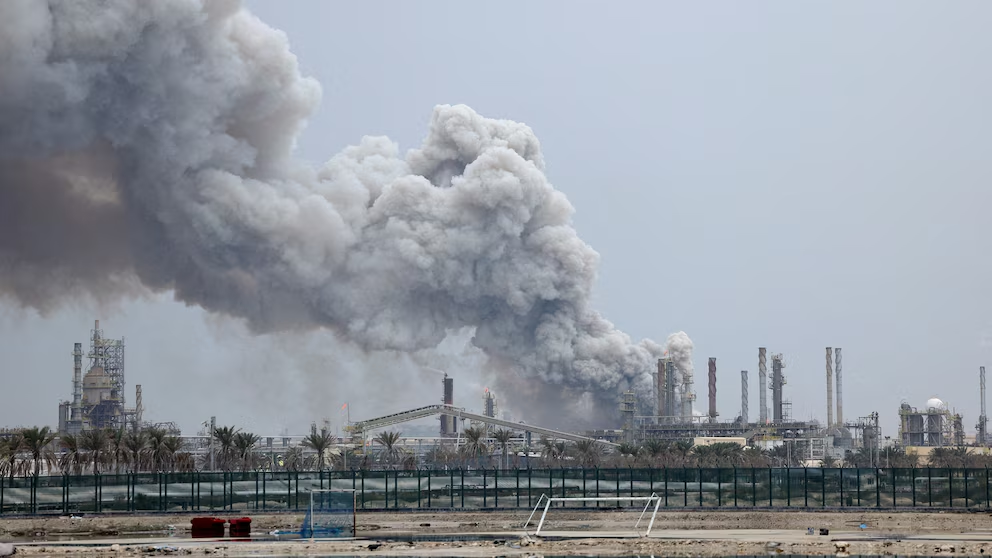
Fumes billow after an assault on the Bapco Oil Refinery, amid the U.S.-Israeli dispute with Iran, on Sitra Island Bahrain, March 9, 2026.Reuters
The U.S.-Israeli conflict with Iran triggered a spike in fuel costs as combat hampered a vital channel for worldwide petroleum transport. Nevertheless, consumers remained optimistic for a reopening of the Strait of Hormuz and a fairly quick turnaround.
Reciprocal strikes on petroleum and natural gas installations across the Middle East in recent days have practically excluded that simple resolution, given that repairs could last for months and decrease fuel accessibility in the intervening time, industry experts conveyed to ABC News.
The anticipation of a drawn-out petroleum crisis heightens the hazard encountered by the U.S. economy, they noted, posing a danger for families already burdened by heightened inflation and an almost stagnant employment sector.
"Both parties have escalated their tactics concerning strikes on infrastructure — and that's simply unfavorable for all involved," Severin Borenstein, a professor specializing in business administration and public policy at the University of California, Berkeley, remarked to ABC News.
Iran initiated a sequence of retaliatory assaults targeting essential energy infrastructure in nearby Gulf nations after Israel attacked its primary natural gas reserve a day prior.
Notably, among the counterstrikes, Iran impacted the planet’s largest liquefied natural gas (LNG) hub at Ras Laffan in Qatar — the gravest assault on the country's energy resources since the conflict commenced.
In a move to alleviate petroleum prices, the Trump administration has declared a disbursement from the strategic petroleum stockpile, loosened restrictions on Russian oil, and halted a crucial regulation concerning domestic petroleum shipment, among supplementary actions.
The recent strikes on energy sites propelled international raw petroleum costs as elevated as $119 per barrel on Thursday, before petroleum relinquished some of those gains, lingering around $109 per barrel by Friday afternoon. Even subsequent to their decline, petroleum prices registered an extraordinary surge of over 50% in the preceding month.
U.S. fuel costs are at $3.91, soaring 98 cents from the previous month, AAA figures indicate.
Simultaneously, a swift escalation in diesel prices poses a threat to elevate expenses for food items, garments, and nearly every alternative commodity, given that diesel comprises the central element of the U.S. supply network.
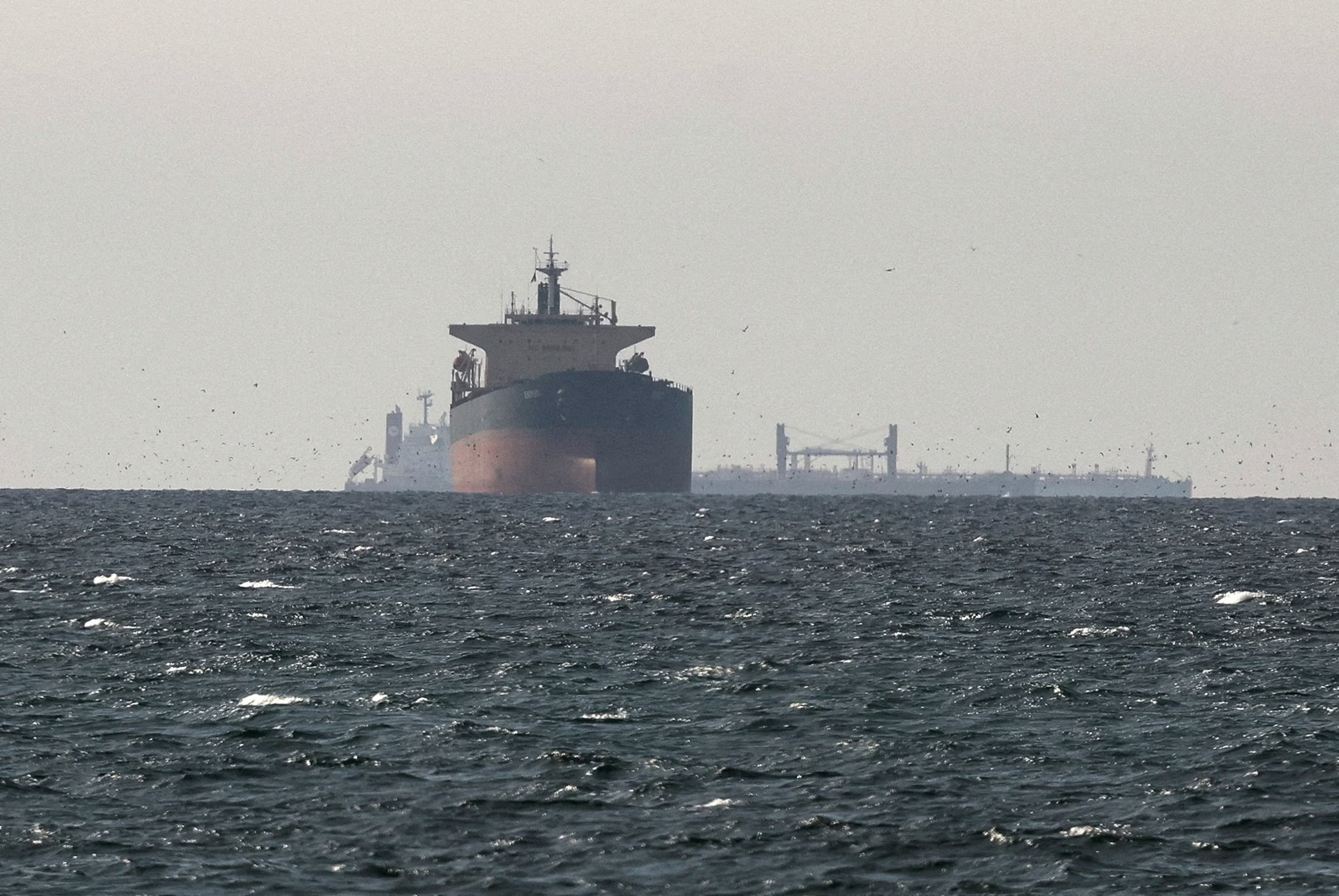
Vessels navigate in the Gulf, adjacent to the Strait of Hormuz, observed from northern Ras al-Khaimah, near the boundary with Oman’s Musandam governance, amid the U.S.-Israeli dispute with Iran, in United Arab Emirates, March 11, 2026.Reuters
Strikes on petroleum infrastructure endanger prolonging the fuel deficit and extending a prospective bout of inflation, which could burden family finances and diminish economic output, some analysts mentioned.
"Even assuming a prompt cessation of hostilities, restoring these facilities to full functionality would still require time," Timothy Fitzgerald, a business economics professor at the University of Tennessee specializing in the petroleum sector, informed ABC News. "Extended periods of elevated key input expenditures intensify the strain on the entire economy."
Inflation is at 2.4%, signifying a decrease from prior months yet remaining marginally exceeding the Federal Reserve’s intended rate of 2%.
Iran's assault on Qatar's LNG hub at Ras Laffan jeopardized a facility responsible for the conveyance of a fifth of the world’s liquefied natural gas, as per the U.S. Energy Information Administration.
In a declaration, the Qatari Foreign Ministry denounced the assault, labeling it a "perilous escalation."
The assault curtailed Qatar's LNG export aptitude by 17% and inflicted an estimated $20 billion in forfeited yearly earnings, according to QatarEnergy, the state-run petroleum enterprise. The business projected that repairs could span as long as five years.
Iran also assaulted energy installations in Israel, Kuwait, and the United Arab Emirates, among additional countries in the region.
Borenstein cautioned that the energy deficiency might impede economic productivity globally.
"Diminished petroleum and natural gas reserves curtail the global economy’s capacity to generate goods. The economy decelerates," he conveyed. "Heightened devastation escalates the challenge of reinvigorating the global economy."
Indisputably, the U.S. economy preserves a greater aptitude to withstand a global petroleum crisis compared to other nations, given its status as a net petroleum exporter, signifying its oil production surpasses consumption. Nonetheless, petroleum is traded on a worldwide market, rendering U.S. petroleum and fuel costs susceptible to variations in international supply and demand.
Restorations at energy installations likely cannot commence until the conclusion of hostilities and the safeguarding of work environments, some analysts indicated. They likewise warned that lingering political tensions might amplify prices subsequent to the war’s conclusion and the restoration of energy installations.
"Even with the reconstruction of these facilities, there's no certainty against future attacks," Robert Weiner, an international economics professor at George Washington University, communicated to ABC News. "In the future, this will intensify the degree of unpredictability."
Sourse: abcnews.go.com