
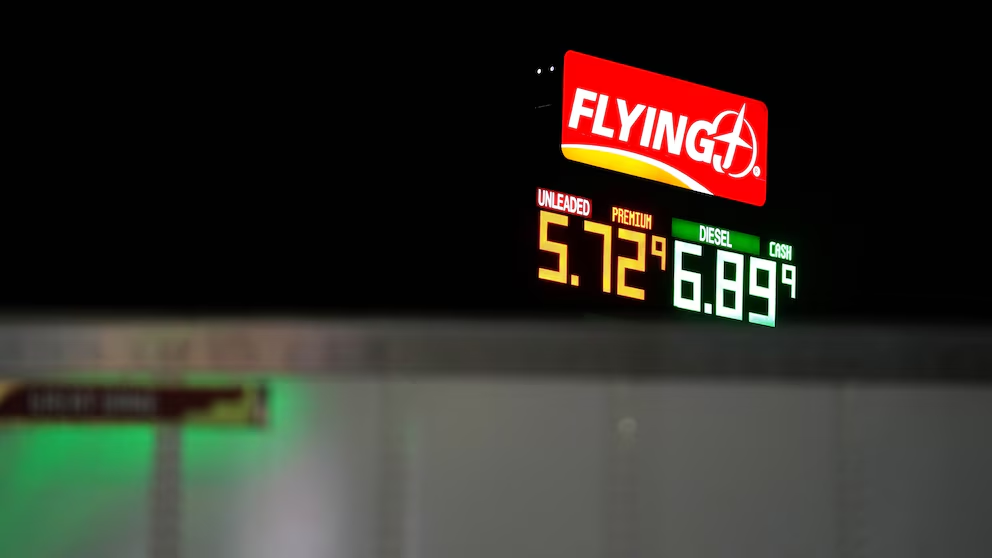
Fuel costs are shown at a service station on April 7, 2026, in Aurora, Ore.Jenny Kane/AP
An account of inflation scheduled for release this Friday will offer the preliminary glimpse at cost escalations following an oil crisis stemming from the U.S.-Israeli conflict with Iran.
The government statistics from the Bureau of Labor Statistics (BLS) — which itemizes consumer costs in March — is projected to reveal an uptick in inflation largely fueled by charges for vehicle fuel, plane tickets, and other items impacted by the petroleum shortfall.
Forecasters anticipate total costs to have increased by 3.3% in March compared to the prior year, representing a notable escalation from the prior year’s inflation number of 2.4% from the previous month. This potential figure would signify the biggest yearly inflation jump in a couple of years.
"The consequences of the most substantial energy supply interruption since the 1970s will certainly be in plain sight," Deutsche Bank Research stated in an advance summary of the inflation report shared with ABC News.
The BLS gathered cost figures over the whole month of March. The inflation report, in sequence, will portray costs for 31 of the initial 32 days of battle, not counting the commencement of hostilities on Feb. 28. The halt in fighting declared on Tuesday occurred after 40 days of combat.
A quick surge in cost growth could present difficulties for interest rate strategy at the Federal Reserve, which might be unwilling to decrease borrowing expenses amid escalating inflation.
The Middle East clash resulted in Iran's de facto shutdown of the Strait of Hormuz, a pivotal waterway that enables the transit of roughly one-fifth of the world's oil and gas offerings.
That energy scarcity caused oil and gasoline costs to surge around the globe. Fuel prices in the U.S. averaged $4.16 per gallon as of Thursday, representing an increase of $1.18 from when the conflict began, per AAA figures.
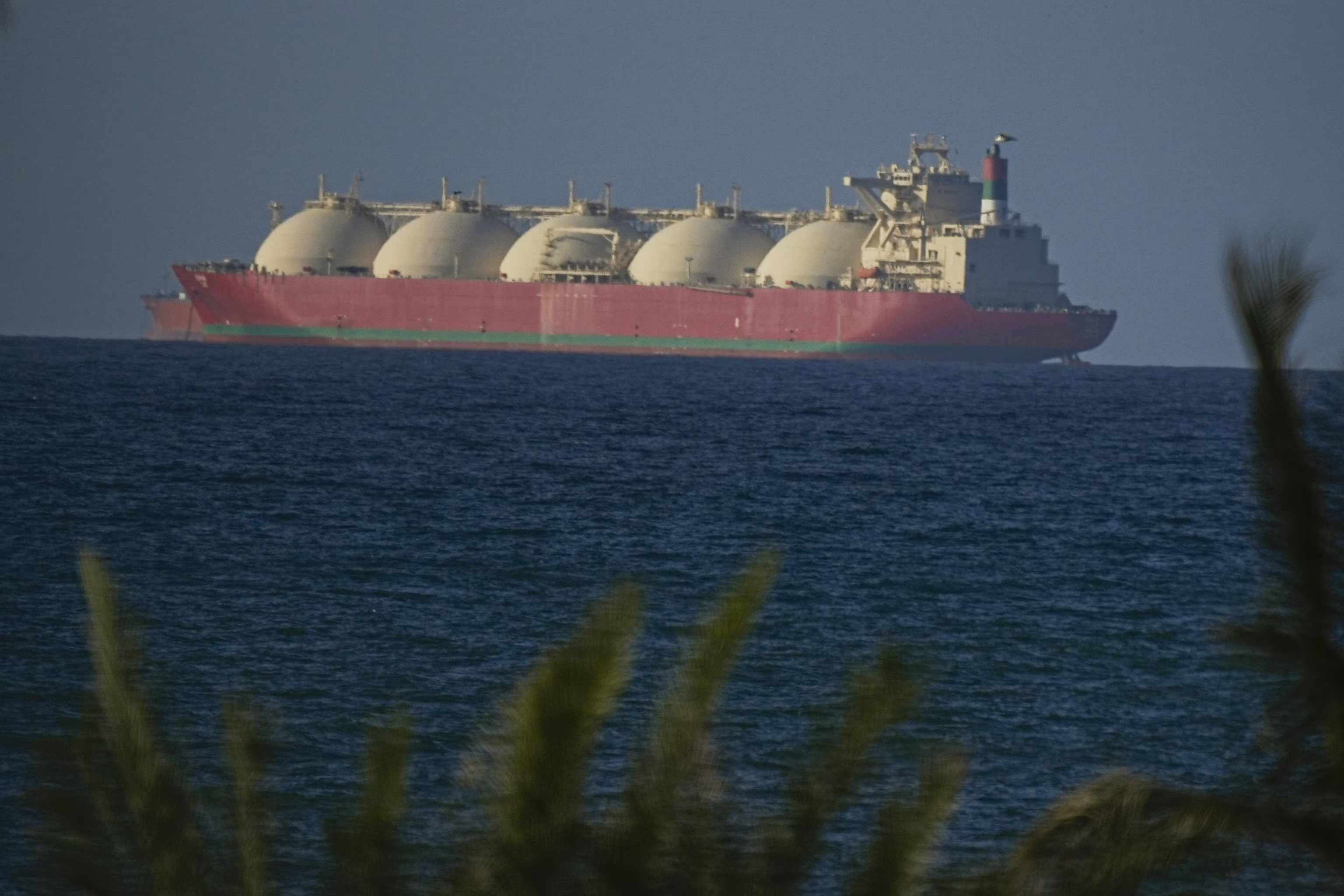
A view of ships traversing the Strait of Hormuz in the wake of the temporary two-week cessation of hostilities reached between the United States and Iran with the stipulation that the strait be reopened, observed in Oman, April 8, 2026.Anadolu via Getty Images
As part of a temporary two-week U.S.-Iran truce announced on Tuesday, Iran indicates it will permit tankers to pass through the Strait of Hormuz provided they coordinate with the nation's military forces.
Nevertheless, the restarting of tanker movement remains uncertain. Tanker passage was halted on Wednesday following Israeli assaults on Lebanon, according to a report from Iran's quasi-official Fars News Agency.
Crude values dropped subsequent to the declaration of the ceasefire but remained considerably elevated. U.S. oil values reached over $97 a barrel as of Thursday, sitting roughly 50% higher than their pre-war mark.
A spike in consumer costs could create a challenge for the Fed as it navigates a reduction in economic output in recent months.
If the Fed chooses to decrease borrowing expenses, it may stimulate expansion but take the chance of higher inflation. Conversely, the determination to elevate interest rates could curb cost increases but amplify the chance of a slowing in economic activity.
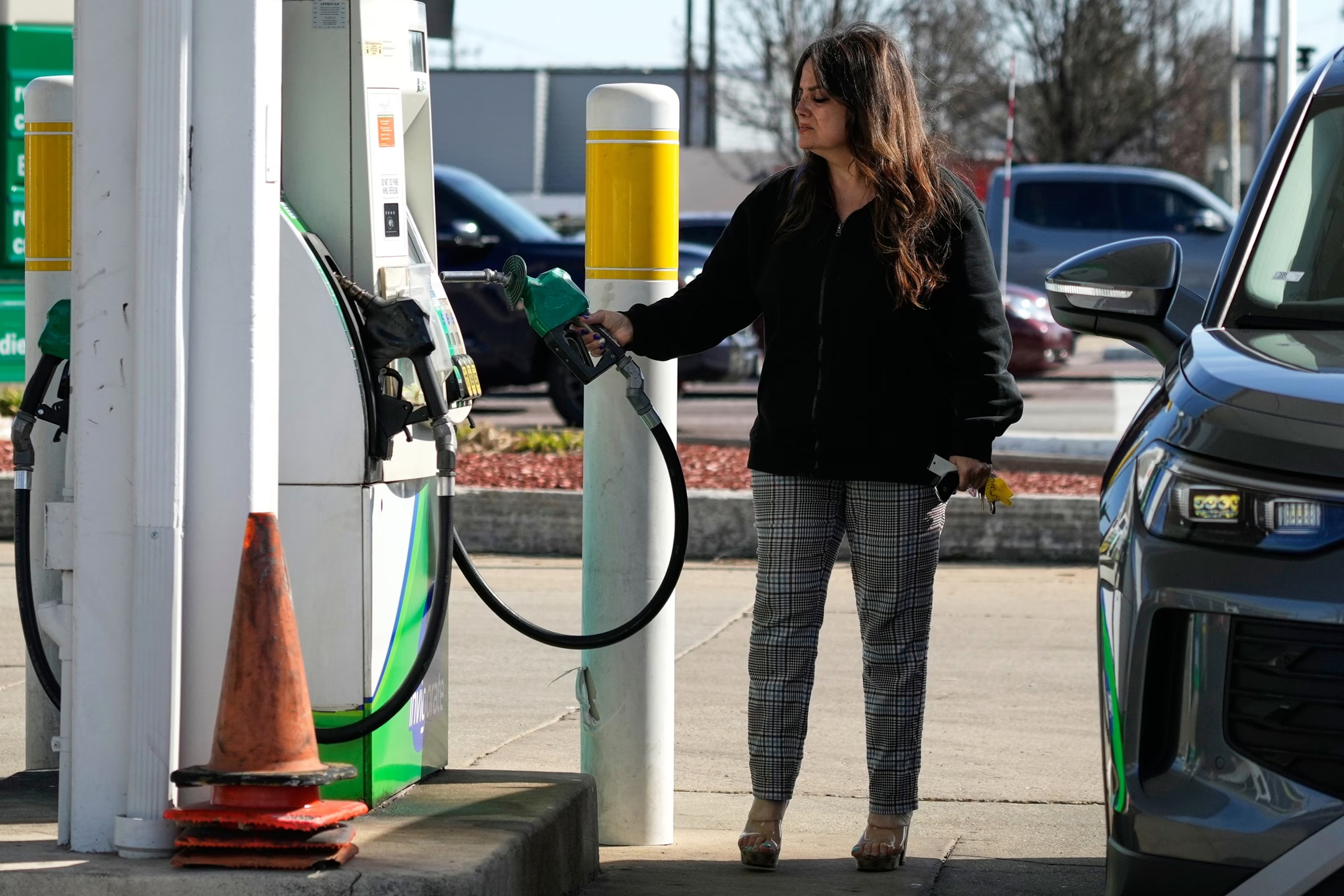
A person assesses gasoline costs ahead of replenishing their vehicle’s fuel at a filling station, in Morton Grove, Ill., on April 7, 2026.Nam Y. Huh/AP
The previous month, Federal Reserve Chairman Jerome Powell expressed that despite increasing energy costs and their potential effect on inflation, he does not believe the central bank requires an increase in interest rates.
Powell noted that central bankers frequently disregard shocks — such as abrupt surges in oil prices — because the upward force on consumer costs tends to be short-lived.
"We think our strategy allows us room to pause and assess the eventual results," Powell mentioned.
The standard interest rate hovers around 3.5% to 3.75%. That sum signals a notable decrease from a recent high reached in 2023, though borrowing expenses remain far above a 0% rate put in place at the start of the COVID-19 health crisis.
The Fed will disclose its forthcoming rate determination on April 29. Market participants largely expect the Fed to maintain rates at the same level, according to the CME FedWatch Tool, an indicator of market views.
The tool assesses about a 70% likelihood that the Fed will keep interest rates at existing positions through the end of the year.
Sourse: abcnews.go.com