
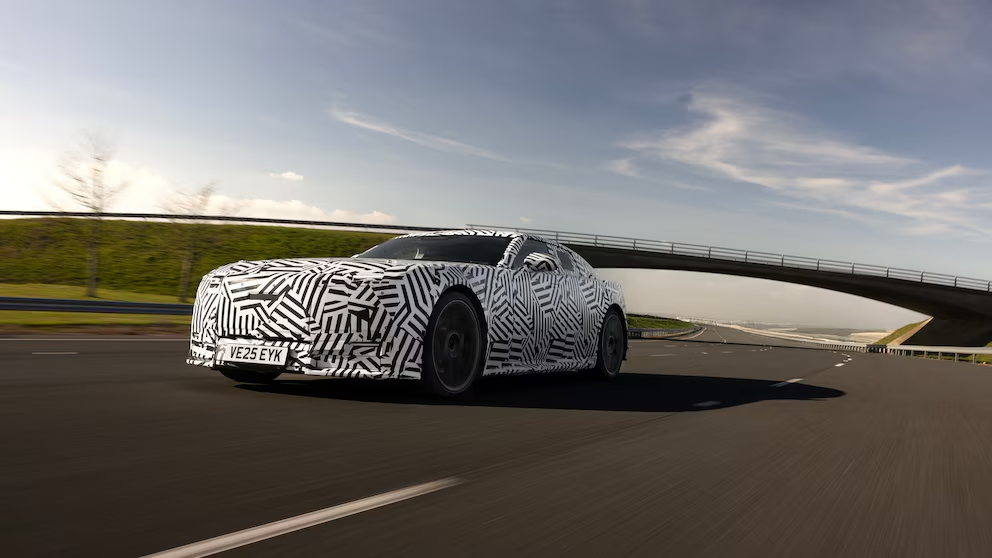
LiveThe Jaguar GT, slated for an official debut in September, operates solely on electric power and boasts a range of approximately 400 miles.Jaguar
Dave Doody of Jaguar imparted a clear instruction to his engineering personnel: "Craft the finest Jaguar ever conceived."
This forthcoming electric Jaguar aspires to embody "thrill and spectacle," while concurrently revitalizing the esteemed British automotive name. Anticipation runs deep; the organization suspended manufacturing of its preceding models, channeling all endeavors toward this venture.
The vehicle’s aesthetic departs significantly from Jaguar’s current offerings. The most recent prototype, showcased in March, bears a strong resemblance to the divisive Type 00 concept initially revealed in December 2024. Its form is substantial and imposing, featuring four doors and exaggerated dimensions — precisely as envisioned by its creators.
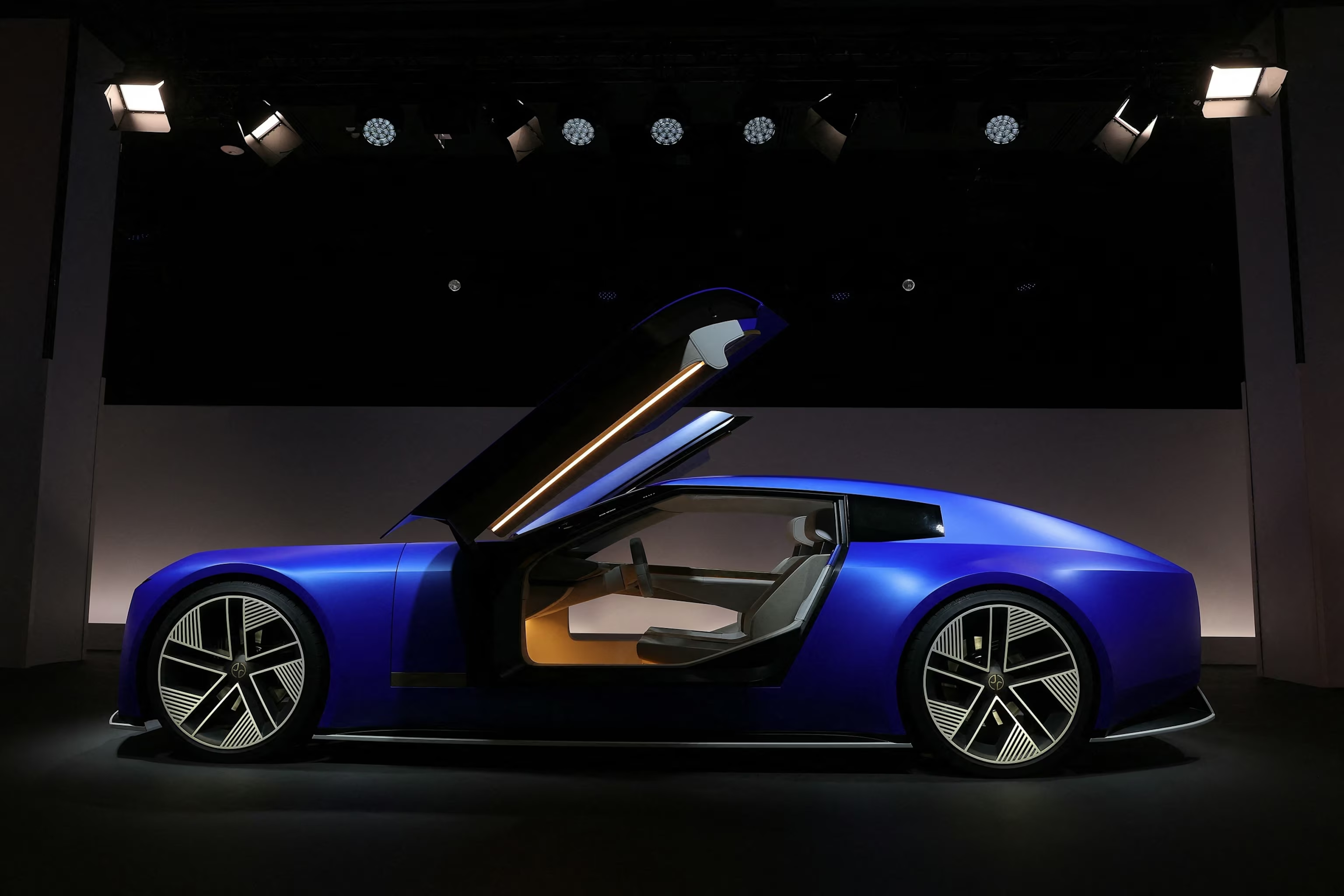
The Jaguar Type 00 concept car is displayed during its Europe presentation event in Paris, March 21, 2025.Thomas Samson/AFP via Getty Images
The grand unveiling of the "Jaguar GT" is scheduled for late September. It will be available for purchase in 2027, carrying a price tag of $120,000. As per company declarations, the range approximates 400 miles, and the vehicle is compatible with Tesla Supercharger stations.
Doody expressed that this project, on which he has dedicated the past five years, resulted from genuine collaboration involving his engineers and the design team. He noted, however, that the intensity of pressure has been unremitting.
"Failure to deliver on that promise signifies our failure," he communicated to ABC News.
Doody test-drove and scrutinized competing EVs. He played a role in Jaguar’s pioneering EV, the i-Pace, distinguished by its futuristic appearance. Nevertheless, the engineering impetus behind the GT ultimately emanated from the brand’s revered classic sports vehicles. Doody recounted how he and his team dedicated considerable time to driving “the most celebrated vehicles in our heritage” to refine the GT.
The driver assumes a low seating position, akin to that of a sports coupe, which fosters a seamless, focused, and stable driving experience. The mass and considerable proportions of the GT are scarcely noticeable from behind the wheel; the GT surges forward on demand, executes corners with precision, and navigates smoothly upon request. The attainment of supercar specifications was not the goal. The actual objectives, according to Doody, centered on engineering an EV designed for comfort and efficiency.
"You can maintain comfortable speeds, requiring minimal steering input. The car displays exceptional stability even at elevated velocities," he remarked.
ABC News engaged with Doody to discuss the extensive development process of the GT, the engineering obstacles he addressed, and the initial feedback received from devoted Jaguar patrons.
The following interview has been condensed and edited for improved clarity.
Q: Why did Jaguar opt for a four-door GT design rather than an SUV?
A: The launch of the four-door GT transcends the mere introduction of a product. It symbolizes the brand itself. When reflecting on Jaguar and its historical product line, the focus gravitates toward two-door sports models and four-door GTs. Consequently, venturing into the realm of SUVs diverges from Jaguar’s established identity. Moreover, the design ethos harmonizes exceptionally well with the four-door GT configuration.
An SUV remains a potential avenue for future exploration.
Q: The current market landscape features a limited selection of electric, luxury GTs. Did you evaluate vehicles like the Lucid Air or the Rolls-Royce Spectre, and if so, what insights did you glean from these competitors?
A: We did indeed evaluate them. We experienced them firsthand, engaging with models such as the Lucid and Porsche, among numerous others. However, these did not shape our creative path. Our commitment centered on delivering an authentic Jaguar experience; as such, our focus remained rooted in Jaguar’s heritage. This heritage deeply influenced the design of the new vehicle.
While it is advantageous to recognize the landscape of potential rivals and understand customer expectations, [the competition] exerted minimal sway over our design process. They primarily served as benchmarks for contextualizing our position within the marketplace.
Q: Elaborate on the importance of having your team operate classic Jaguars and how this impacted the engineering of the GT.
A: We commenced with a relatively small cohort and posed the question, “How shall we introduce this new Jaguar?” Some team members were relatively new to the brand, while others possessed extensive tenure. Nonetheless, we recognized the imperative of achieving a collective comprehension of our ambitions and the fundamental essence of Jaguar.
We drove numerous vehicles. Certain more contemporary Jaguars deviated from our perception of what a Jaguar should represent. Consequently, we turned to earlier models, thereby discerning the reasons for their appeal and the characteristics that set Jaguar apart. These vehicles shared commonalities, spanning not only design aesthetics but also driving dynamics. The facets we chose to emphasize were ride quality, comfort, and stability — considerations that overshadowed pure sportiness.

Jaguar’s engineers said the marque’s classic sports cars were inspiration for the GT.Jaguar
Many recent Jaguars prioritize steering precision and sportiness, whereas the earlier models, when regarded as luxury vehicles, lacked these characteristics. This served as the impetus for our desired shift.
Q: Given that all EVs are inherently quiet and deliver instantaneous torque, how do you engineer an EV to distinguish itself? The traditional avenue of tuning an engine is no longer available.
A: Modifying the perception arises from the mode of power delivery. The subtle adjustments to the suspension and steering system exemplify the expertise of our engineering staff. Electric vehicles often exhibit remarkable, forceful acceleration that can border on overwhelming. We sought to avoid this sensation, instead aiming for an experience akin to being propelled by a commanding surge of power. Initial acceleration is followed by progressively greater levels of acceleration, with seemingly inexhaustible reserves of performance.
The calibration is pivotal. Our creation of the 120 kWh battery was not solely to extend range but to augment power output. Furthermore, we de-emphasized the 0-60 mph benchmark. This vehicle achieves quicker acceleration than other EVs — notably, a twofold advantage over the Porsche in the 60 to 100 mph range. This range constitutes the typical scenario for overtaking, thereby providing drivers with enhanced acceleration capabilities. Our concentration lay on the real-world utility of an electric vehicle.
Three motors are integrated — two in the rear and one in the front — with the majority of power directed to the rear wheels. While possessing a sizable appearance, the vehicle handles with an unexpected sense of agility.
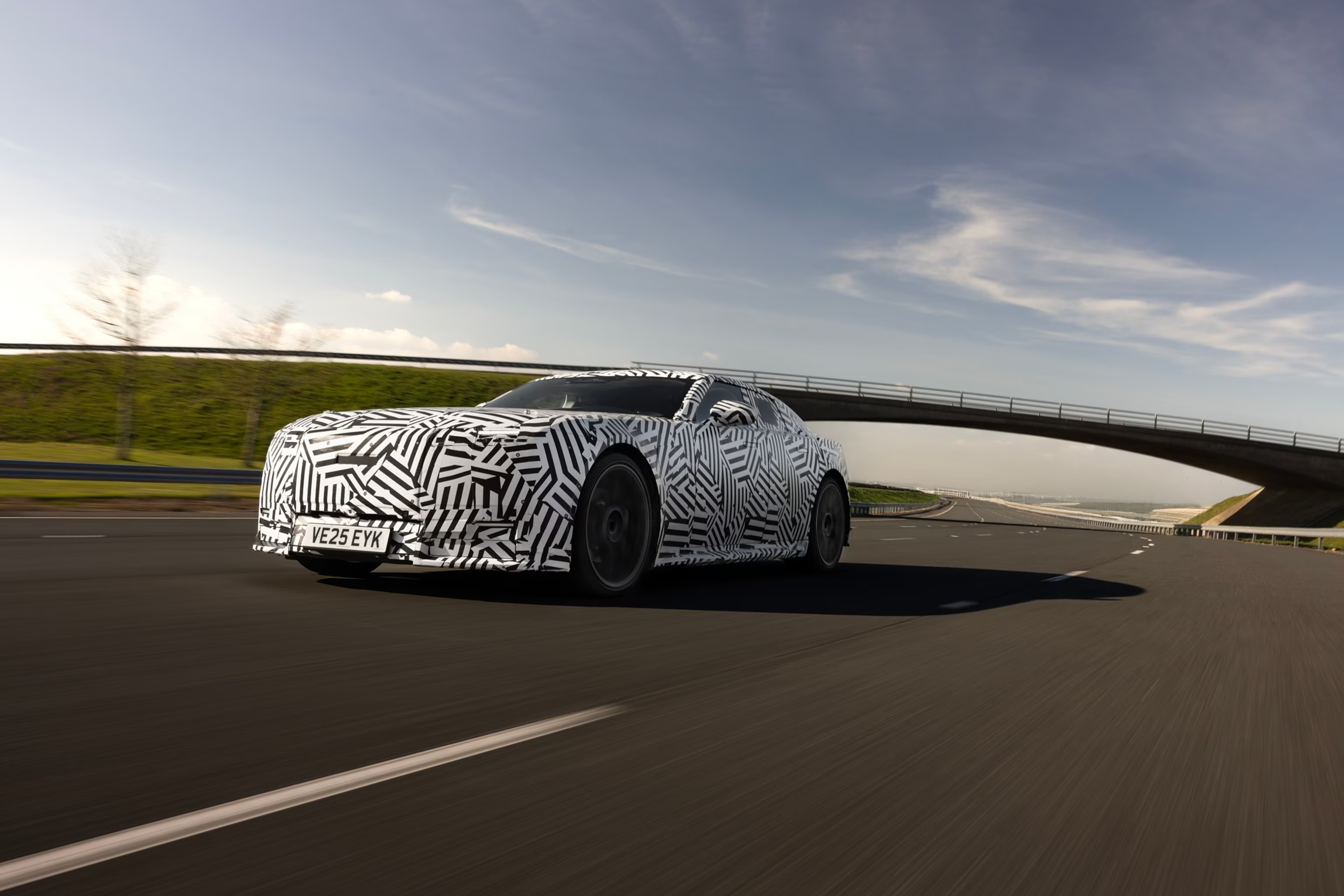
The Jaguar GT, which will be formally unveiled in September, is fully electric with about 400 miles of range.Jaguar
Q: What about horsepower? Does that metric retain its relevance for consumers?
A: One thousand horsepower represents a substantial figure, which has the potential to intimidate. Our objective involved imbuing the driver with a sense of control rather than being overwhelmed by the raw power. The vehicle features four distinct driving modes, enabling users to select a lower power setting, such as comfort mode, for enhanced manageability. Options also include normal mode, dynamic mode, and performance mode. Although devoid of conventional gears, a kickdown mode enables seamless transition into the next performance tier. This allows drivers to customize the vehicle’s behavior to suit their preferences.
Q: The vehicle lacks a rear-view mirror. Why was this design decision implemented?
A: This point triggered considerable debate, with significant hesitation regarding the omission of the rear screen. The rationale becomes evident upon observing the vehicle; it deviates considerably from conventional expectations. Consequently, we undertook an in-depth analysis of the rear screen’s practical advantages. A sizable panoramic roof, featuring adjustable UV, sun, and heat filtering, is incorporated. Consequently, we identified no compelling reasons for retaining the rear screen, and its removal offers advantages such as maximizing the usable height of the rear hatch for loading purposes.

The four-door GT, seen here in camouflage, will be priced at $120,000 and go on sale later this year.Jaguar
Q: Will this GT employ artificial sounds projected into the cabin?
A: Legal mandates necessitate the inclusion of a sound. We will incorporate a distinctive sound exclusive to Jaguar, diverging from generic offerings. The sound is currently undergoing refinement. While the concept of incorporating a V8 or V12 engine soundtrack holds appeal, it does not currently form part of our development plans.
Q: You indicated the importance of realizing the designers’ vision. Does this principle apply universally to all new Jaguars?
A: This vehicle epitomizes the imperative of fulfilling that vision. We are redefining Jaguar and reshaping its market perception. This is not merely another car; it signifies a repositioning of the brand. The vehicle distinguishes itself through its unique and distinctive nature, and all these elements coalesce to form a cohesive whole. Delivering this comprehensive package was of paramount significance, a commitment made at the project’s outset. Failure to uphold that commitment would represent a failure on our part.
The engineers faced formidable challenges, as this is not a standard vehicle. Innovation was crucial. We filed a greater number of patents for this vehicle than for any previous creation. Despite integrating the necessary hardware, the vehicle achieved a five-star crash safety rating. The battery, analogous to a fuel tank, demands robust protection. I devised safety mechanisms, designs, and structures to safeguard the battery, an endeavor of considerable difficulty.
Q: This vehicle emerges at a time — particularly in the U.S. — when EV sales are underperforming. Are you apprehensive about this trend? The GT is not scheduled for release until late 2027.
A: Our conversations with prospective customers indicated a desire for a statement vehicle aligning with their aspirations. The presence of an electric motor instead of a V8 or hybrid engine holds lesser significance. Their appreciation lies in the vehicle’s aesthetics, interior design, and the significance it holds for them, along with the brand’s associated connotations. It imparts a sense of exclusivity.
Q: Would you characterize this as the most challenging vehicle you have undertaken?
A: I believe so. I have contributed to numerous vehicle projects in the past. The primary challenge revolves around pioneering something entirely novel. While Jaguar’s history encompasses exceptional vehicles, some have not achieved the desired market success or the intended impact.
To establish desirability and secure Jaguar’s ongoing prosperity, the creation of something distinct is imperative. That has been our guiding principle.
Sourse: abcnews.go.com