
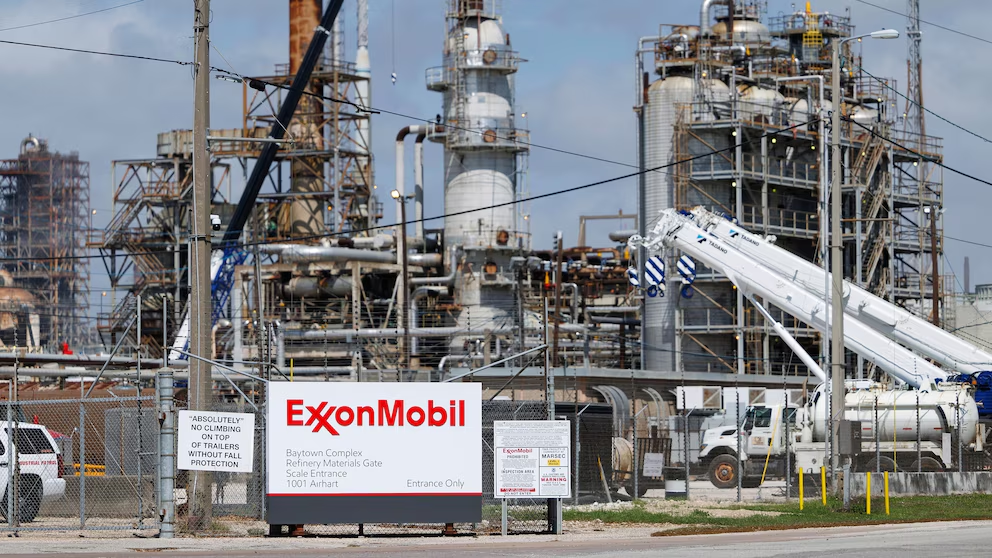
The Exxon oil refinery located in Baytown, Texas, March 5, 2026. Bloomberg via Getty Images
The Iran conflict sparked an unprecedented petroleum crisis, causing fuel costs to surge and severely impacting motorists at gas stations. These elevated costs should have, in theory, resulted in substantial gains for entities within the oil sector.
However, income figures revealed by some of the globe’s leading energy conglomerates in recent days depicted a more intricate scenario, as certain companies celebrated unexpected gains while others registered a startling decrease in profitability.
The clash, which commenced on Feb. 28, resulted in Iran’s de facto blockade of the Strait of Hormuz, a pivotal maritime route that handles approximately a fifth of the planet’s total oil supply. Consequently, worldwide petroleum costs have escalated by upwards of 50%.
The British petroleum giant BP more than amplified its profits across the initial trimester of 2026 relative to the corresponding timeframe the prior year, describing its results as “exceptional.” TotalEnergies, a Paris-based organization, publicized an approximate 30% ascent in earnings over that duration, prompting stock repurchases and amplified shareholder dividends.
Conversely, Chevron observed its earnings diminish by over a third during the first three months of this annum as compared to the previous year, whereas Exxon’s income plummeted by 45% over that period.
While escalating prices favor petroleum organizations, inconsistencies in performance have revolved around a specific company’s capability to capitalize on the cost increase by distributing oil into the marketplace, concurrently circumventing costly shipping insufficiencies stemming from the conflict, according to some analysts consulted by ABC News.
Certain enterprises absorbed losses from monetary safeguards designed to protect them from a potential cost reduction, they noted. As prices unexpectedly climbed, these entities experienced detriments.
Generally, elevated expenses present a notable opportunity for petroleum corporations, some analysts stated.
“You are able to record significantly greater revenues without necessarily having incurred increased costs,” Timothy Fitzgerald, a business economics professor at the University of Tennessee who researches the petroleum sector, informed ABC News.
Regardless, Fitzgerald elaborated: “Should your enterprise rely on transporting merchandise through the Strait of Hormuz, your operational activities have been severely hindered.”
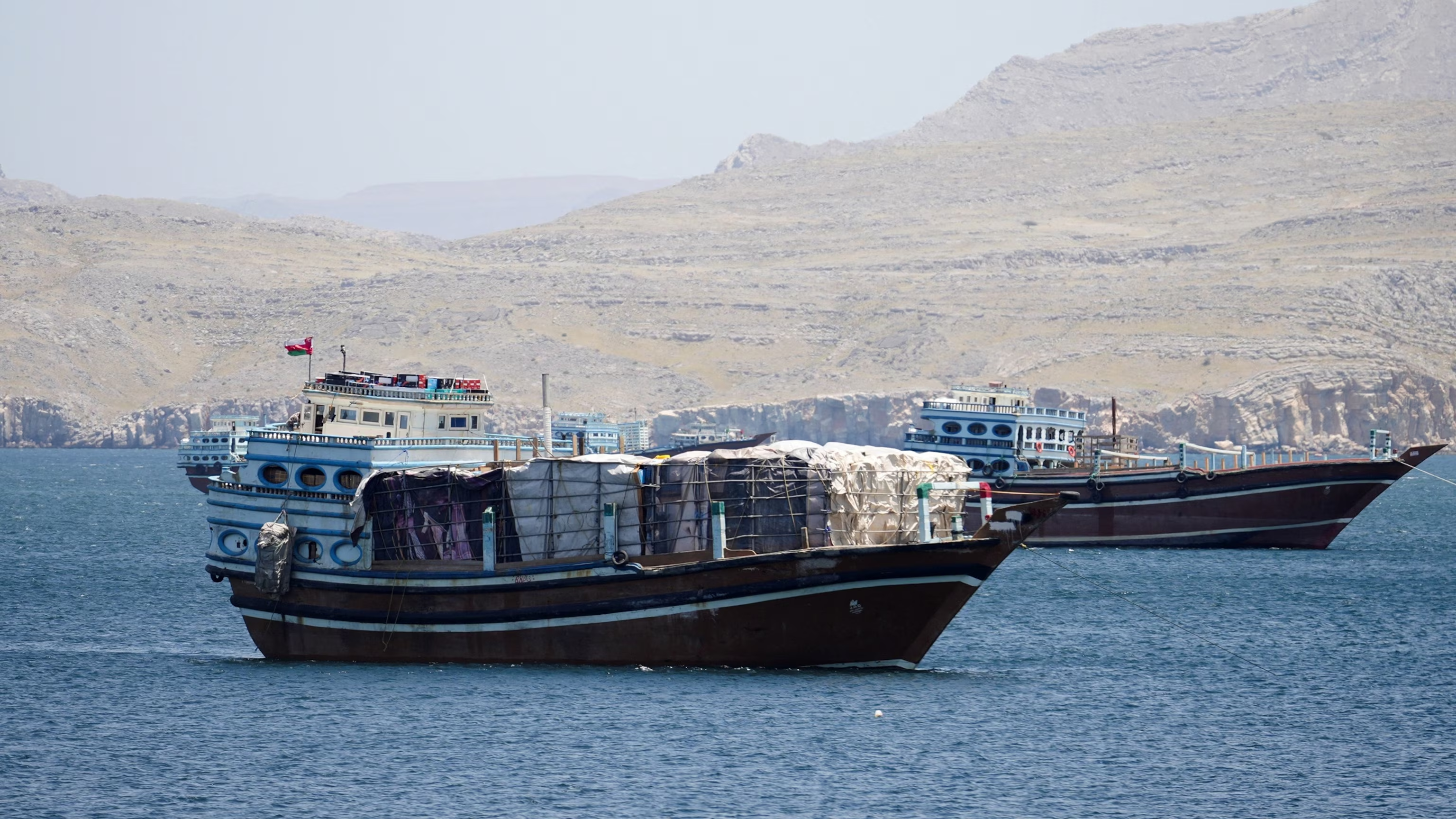
Vessels navigating the Strait of Hormuz, Musandam, Oman, April 27, 2026.Reuters
The majority of crude moving via the strait is intended for Asian marketplaces. Given that petroleum costs are determined within a global framework, rates amplified for nearly everyone as purchasers pursued a diminished quantity of crude barrels.
A U.S.-Iran armistice has entered its fourth week, precluding a recommencement of comprehensive hostilities while sustaining the strait beneath Iran’s effective jurisdiction. The U.S. has initiated a barricade of Iranian seaports within the strait, diminishing a vital origin of Iranian governmental funds originating from petroleum disseminations, but intensifying the worldwide petroleum deficiency.
Exxon exemplified certain of the dynamics presented by the commencement of the Iran conflict.
The Texas-based petroleum giant documented $4.2 billion in income throughout the initial trimester of this annum, signifying a 45% contraction from $7.7 billion over the same duration the prior year, as indicated by earnings unveiled on Friday.
The corporation benefited from “amplified costs and margins,” but those were “partially negated by elevated expenditures,” Exxon articulated in a declaration, citing an interruption of petroleum deliveries.
“This quarter demonstrated that ExxonMobil is a fundamentally more robust entity than it was only several years prior, constructed to operate through disruption and across marketplace cycles. Incidents in the Middle East assessed that fortitude with the safety of our personnel remaining our chief precedence,” Exxon CEO Darren Woods conveyed in a statement.
Roughly 15% of Exxon’s output has been impacted by the Iran war, Woods revealed to CNBC on Friday.
“Should you be obliged to curtail the volume of merchandise that you are marketing, you will be unable to leverage the escalated costs,” Tom Seng, an energy finance professor at Texas Christian University, stated to ABC News.
Exxon additionally temporarily forfeited billions in income as a consequence of “timing effects” associated with monetary safeguards, the organization divulged.
Petroleum enterprises occasionally adopt such monetary positions to secure a purchaser at a minimal expense and avert suffering from potentially erratic cost reductions. The methodology, however, jeopardizes detriments in the scenario of an unforeseen surge in expenses.
“It’s analogous to remitting a surcharge on an insurance policy and you don’t ultimately need to lodge a request,” Fitzgerald remarked.
The inauspicious tactic proved expensive in the initial quarter in part owing to the war-induced interruption of deliveries denied the corporation a $3.9 billion counterbalance from correlated petroleum yields, the enterprise declared. If Exxon were to have accrued that amount, it would have registered an ascent in earnings during the quarter as compared to the antecedent year.
Ultimately, the corporation will obtain those billions in income once it disseminates the petroleum in question, Exxon confirmed.
On Friday, Woods declared that it would necessitate the firm up to a period of two months to intensify petroleum flow were the Strait of Hormuz to reopen.
Sourse: abcnews.go.com