
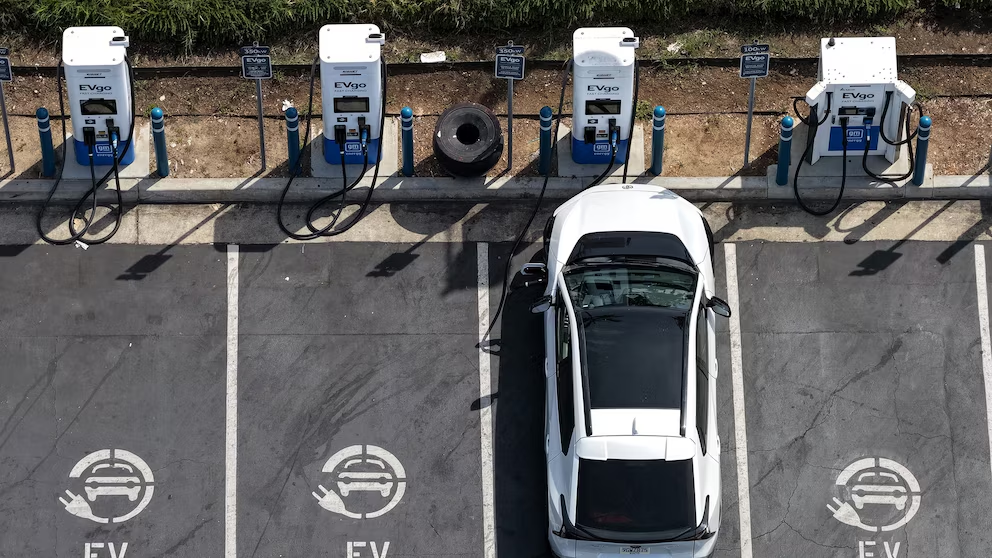
An electric vehicle is being charged at an EVgo charging station on March 30, 2026, in Monrovia, California.Justin Sullivan/Getty Images
American drivers are spending considerably more to fuel their vehicles presently, and the surge in gasoline costs has prompted a debate: Is an electric car the right option for me?
The nationwide average for a gallon of regular fuel increased by almost 30 cents over the prior week, reaching $4.43, as reported by AAA. Costs will probably climb further while the Strait of Hormuz remains blockaded.
According to a new ABC News/Washington Post/Ipsos survey, 15% of American consumers are contemplating purchasing an EV because of soaring fuel costs.
Robby DeGraff, product and consumer insights manager at AutoPacific, suggested that this is an opportune moment for consumers to exchange their current rides for an EV, especially one that has recently completed its lease.
"It is possible to locate a gently driven, fairly new Chevrolet Bolt, Nissan Leaf, or even a Tesla Model 3 for a reasonable price," he conveyed to ABC News. "Even a slight elevation of one’s budget can introduce you to used Hyundai Ioniq 5, Kia EV6, Ford Mustang Mach-E models, all of which are strikingly compelling offerings."
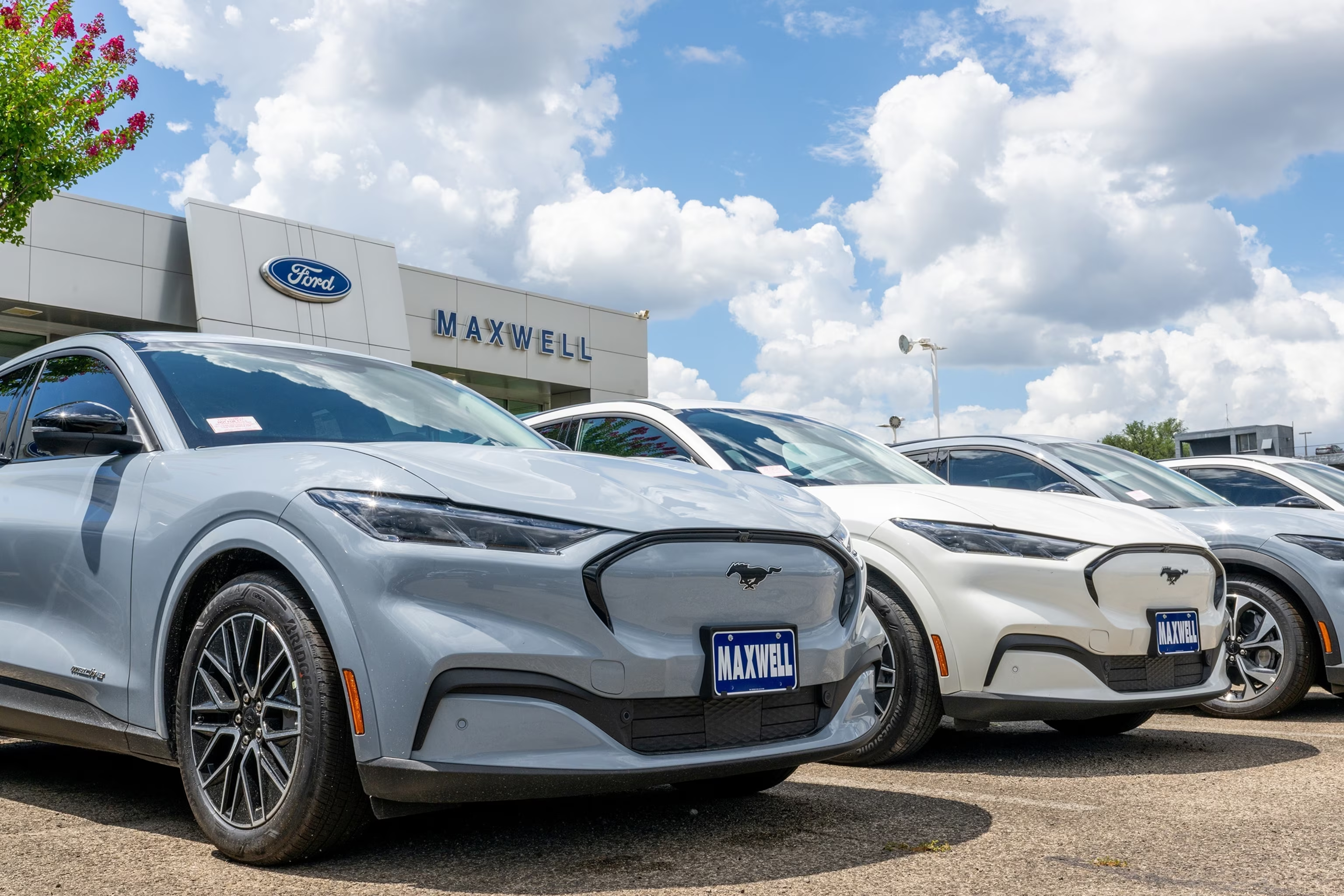
Ford Mustang Mach-E vehicles are displayed for purchase at a dealership lot on June 24, 2025 in Austin, Texas.Brandon Bell/Getty Images
Significant fluctuations in fuel prices have, in the past, encouraged drivers to seek vehicles with improved fuel efficiency, DeGraff noted.
"Historically, during major geopolitical events causing gasoline costs to spike, we observe two typical consumer reactions: shifting to a different vehicle class — something smaller, more efficient, and more economical — and transitioning to a cleaner alternative powertrain," he articulated. "The price jump that truly motivates powertrain consideration is roughly a $2-per-gallon increase from current levels."
With the expiration of the federal EV tax incentive, consumers will probably need to cover the full MSRP of a new EV. Furthermore, deals and savings on EVs are becoming rare; automakers have substantially decreased inventory since last fall, and certain brands are diverting production away from EVs altogether.
Tesla, the leading EV seller in the U.S., is attracting buyers with 0% APR on its popular Model Y model. Lucid, manufacturer of the premium electric Air sedan, is offering 0.99% APR for 60 months.
"It's a critical juncture for Tesla … the company requires available inventory," Tyson Jominy, data and analytics vice president at J.D. Power, informed ABC News. "Tesla lacks a legacy ICE [internal combustion engine] lineup to rely on."
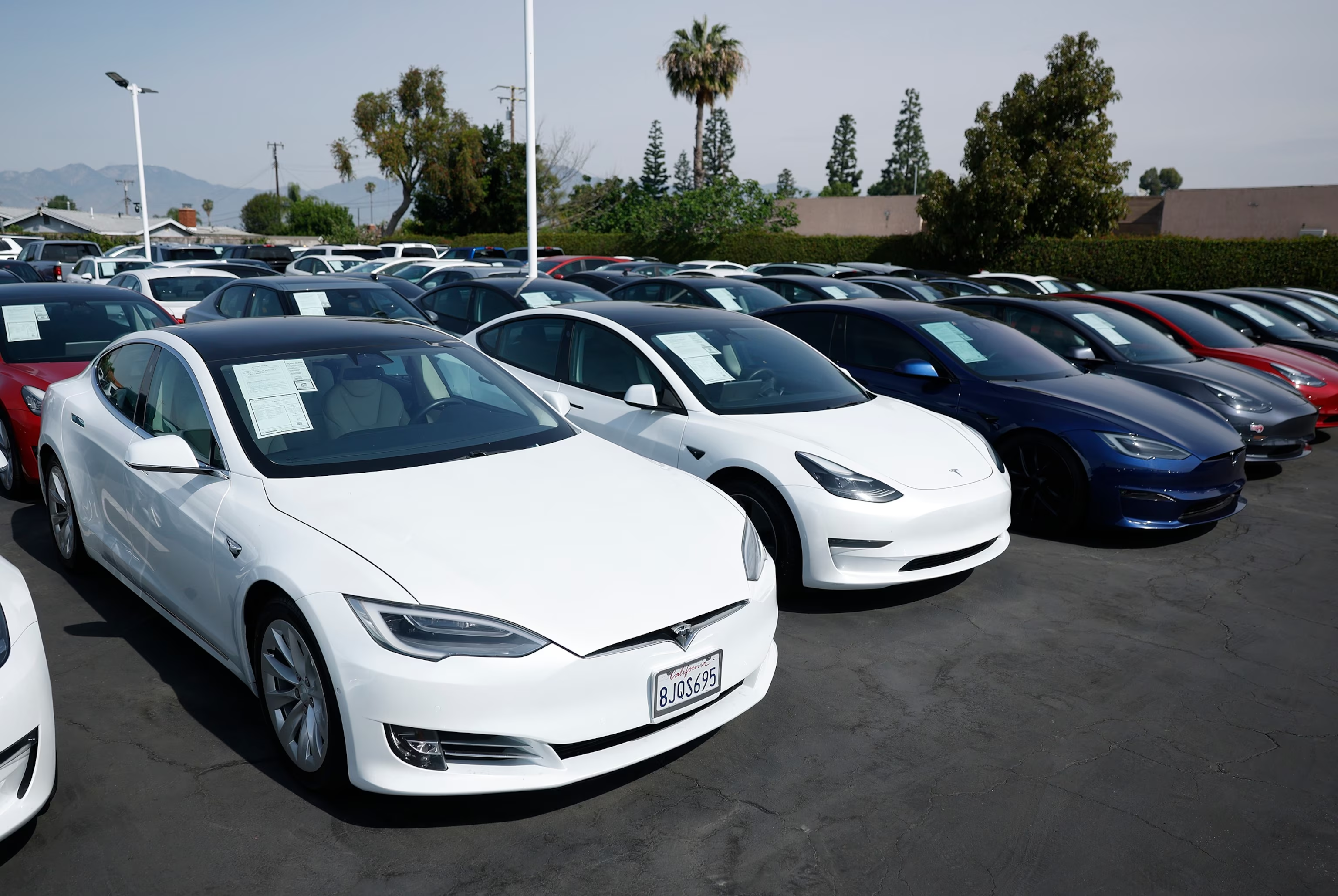
Pre-owned Tesla electric cars are presented on the lot at Plug-In Auto on March 30, 2026, in West Covina, California.Justin Sullivan/Getty Images
Jominy noted that new EV stock is down by 80,000 units compared to last year. While used electrics may be significantly more affordable, a good number do not include the NACS charging port, which has emerged as an industry standard.
"The key challenge with EVs persists — they don't suit everyone, specifically those who drive long distances or lease their residence," he stated.
He suggested that consumers keep their existing vehicles and endure the price variations and related worries: "Fuel economy should not be the main impetus for acquiring a new car."
Ivan Drury, the director of consumer insights at Edmunds, concurred with this perspective, emphasizing that fuel efficiency alone shouldn’t dictate a new car purchase.
"If your decision is driven solely by fuel economy, you might end up with a vehicle that isn't suitable for your needs," he communicated to ABC News.
These elevated fuel costs have "sparked renewed EV interest," he observed, yet these pump prices haven’t yet translated into substantial sales. "Primarily, we’re seeing a lot of EV window shopping," he explained, adding, "The $7,500 federal incentive substantially boosted sales."
Similarly to DeGraff, Drury noted that pre-owned EVs are the optimal choice for buyers; several older models are priced 40% to 60% below their original MSRP. As per Drury’s data, the median price for a new EV in the first quarter of 2026 was $57,099, in contrast to $31,153 for a 3-year-old EV.
"The used market should be the focus of attention," he advised. Furthermore, he contended that concerns about a used EV’s battery are unjustified.
"Research indicates that batteries last longer, and EVs come with an eight-year/100,000 mile warranty," he stated.
Columbia Business School professor Gernot Wagner predicts that more Americans will ultimately embrace EVs despite the challenges obstructing ownership.
"The present U.S. administration does not particularly facilitate the transition," he mentioned to ABC News. "We have essentially priced the most affordable EVs out of reach, in an effort to safeguard local car manufacturers. Charging infrastructure still trails behind much of Europe, China, and other regions. These obstacles, naturally, are only temporary."
He continued, "It's evident that EVs represent a more efficient, improved, and increasingly cost-effective technology. By their intrinsic nature, technologies can only evolve to become even better and more affordable over time."
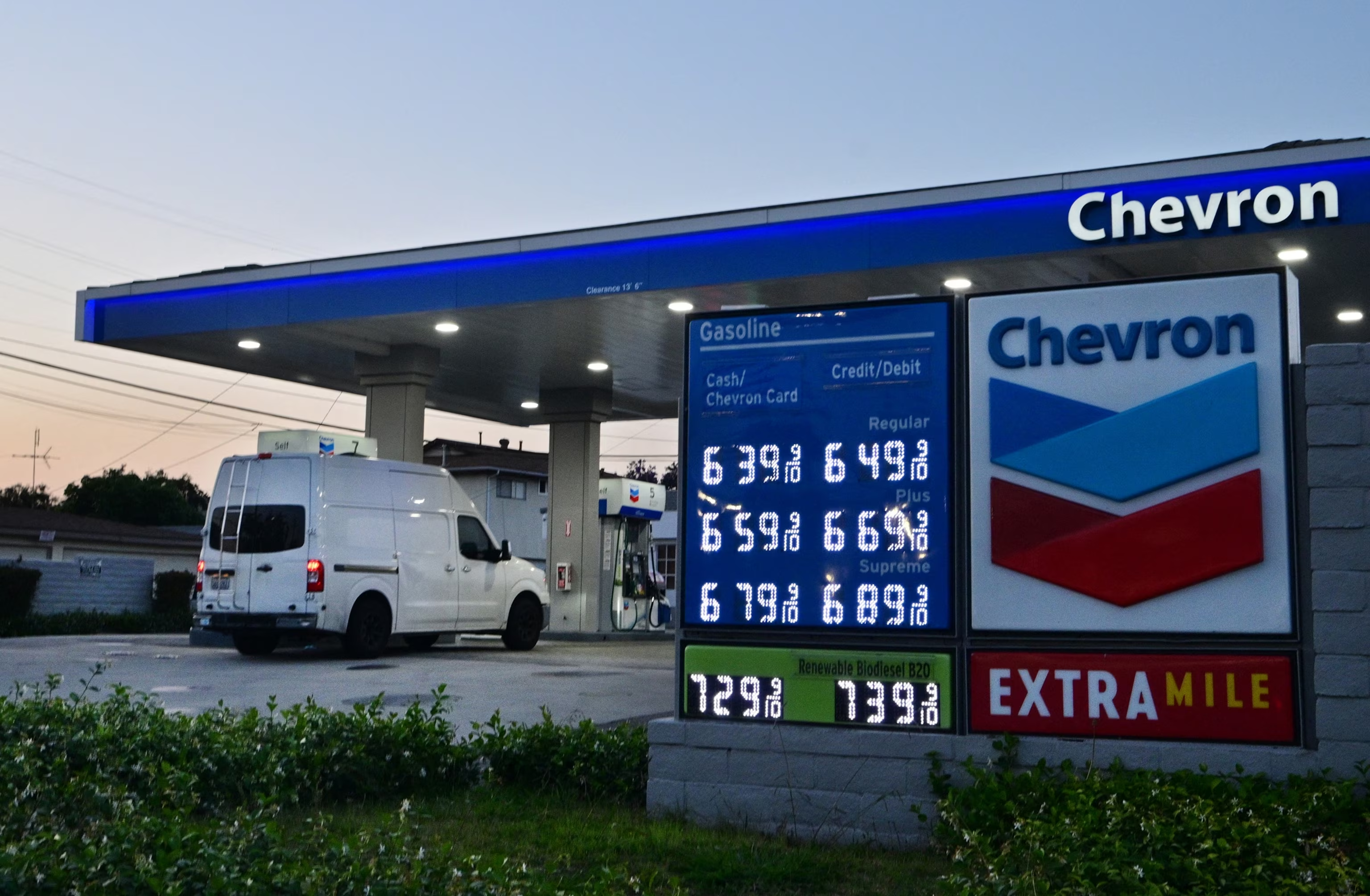
Gas prices exceeding $6 per gallon are advertised at a Chevron station in Monterey Park, California, on April 30, 2026.Frederic J. Brown/AFP via Getty Images
Should fuel prices remain at elevated levels for more than a year, consumers may ultimately find themselves with little choice but to investigate alternative solutions.
"Price pressure has the greatest influence on choices when it endures long enough to coincide with a natural replacement trigger — lease ending, an older vehicle, or increasing upkeep costs," she conveyed to ABC News. "Weekly data indicates that EV shopping interest grew from one week to the next in mid‑April, with the week concluding April 19 showcasing the highest EV shopping level observed year‑to‑date. Nevertheless, the pattern still resembles short‑lived curiosity, rather than a substantial shift in buying intention."
She elaborated, "With consumer confidence under stress, many households that don’t have an immediate need to purchase will likely remain patient."
Sourse: abcnews.go.com