
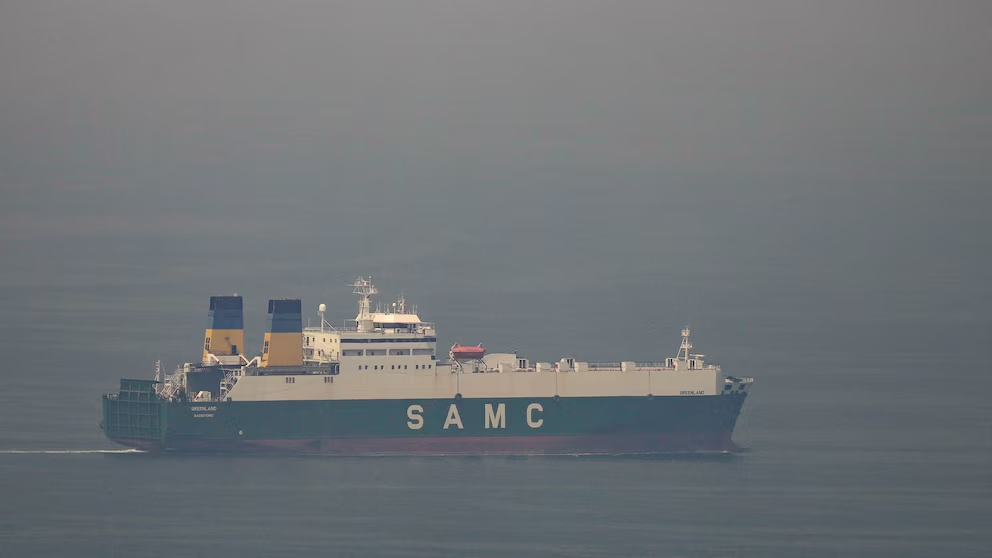
A freighter navigates the Persian Gulf toward the Strait of Hormuz just off the shore of the United Arab Emirates, March 15, 2026. (AP Photo/Altaf Qadri)Altaf Qadri/AP
The Hormuz Strait presents a difficult challenge for the Trump administration's combat strategies against Iran, even with the United States being among the world's leading oil producers and importing only a small percentage of crude via the Strait in contrast to other nations.
As a response to the joint U.S.-Israel military actions on Iran that commenced on Feb. 28, Iran has tightened its control over the strait, mandating that international oil tankers secure consent from the Islamic Republic before being authorized to transit the crucial maritime route for oil and trade shipments.
By blockading the strait — the important constricted seaway positioned between Iran’s southern boundary and Oman’s northern shoreline that connects to the Arabian Sea — Iran is exerting significant strain on the international oil marketplace that American individuals are already experiencing at the filling station.
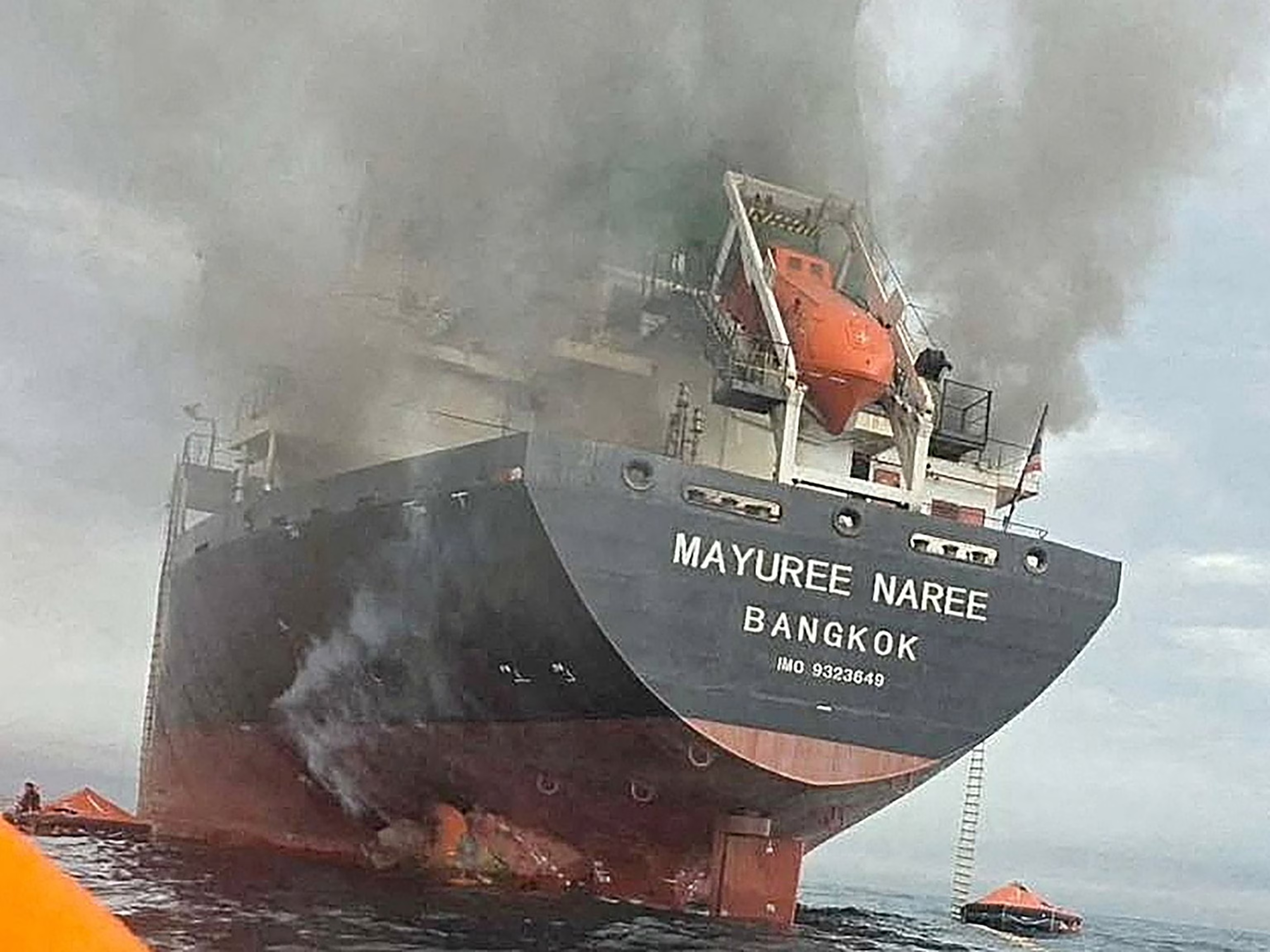
Smoke emanates from the Thai bulk carrier ‘Mayuree Naree’ in proximity to the Strait of Hormuz in the aftermath of an attack, March 11, 2026.Royal Thai Navy/Reuters
Since the onset of the armed conflict, U.S. gasoline costs have increased by 81 cents, averaging $3.79 per gallon as of Tuesday, based on AAA data.
Specialists have indicated that prices at the pump are anticipated to rise further as the strife persists.
The U.S. serves as a net exporter of petroleum products, implying the nation generates more oil than it utilizes. Nonetheless, because oil prices are established within a worldwide market, U.S. prices fluctuate contingent upon shifts in global supply and demand, Dominic Pappalardo, head multi-asset strategist at Morningstar Wealth, communicated to ABC News.
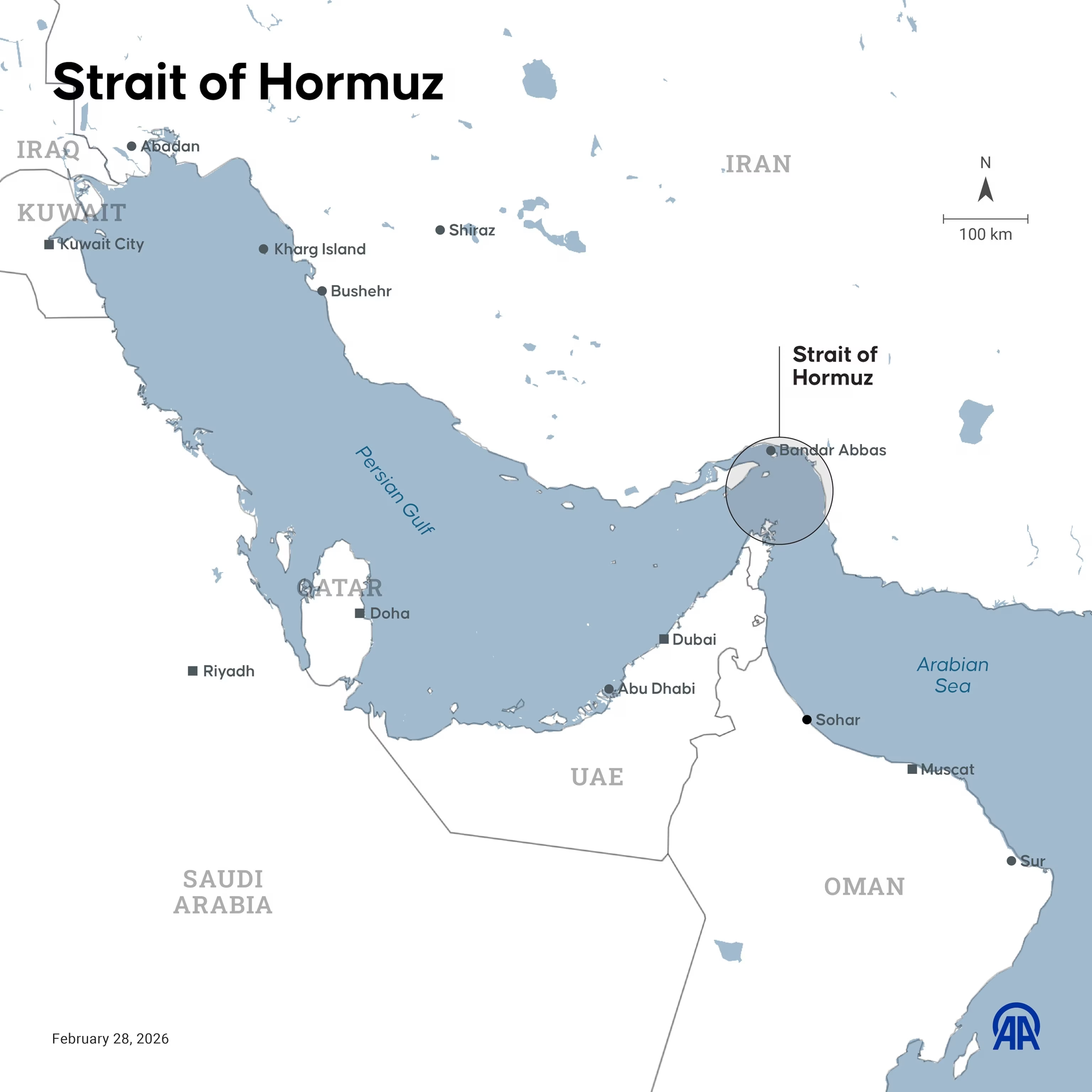
Map of the Strait of HormuzAnadolu via Getty Images
"Regrettably, although the U.S. isn’t reliant on that specific locale for transit and procurement, domestic buyers in the U.S. still experience the impact from the counterbalance in worldwide supply and demand momentum," Pappalardo stated.
Anxieties continue to intensify in the Strait of Hormuz. During the prior week, the Iranian military acknowledged responsibility for assaulting oil tankers in the Persian Gulf and is suspected of targeting various other merchant vessels struck in or around the Strait.
On Tuesday morning, an oil tanker situated offshore of the United Arab Emirates near the Strait was affected by falling fragments stemming from the interception of a launched object, the U.K. Maritime Trade Operation (UKMTO) communicated in an advisory to maritime traffic. The tanker experienced minor harm while at anchor roughly 23 nautical miles from the UAE port city of Fujairah on the Strait’s southern flank, the UKMTO indicated.
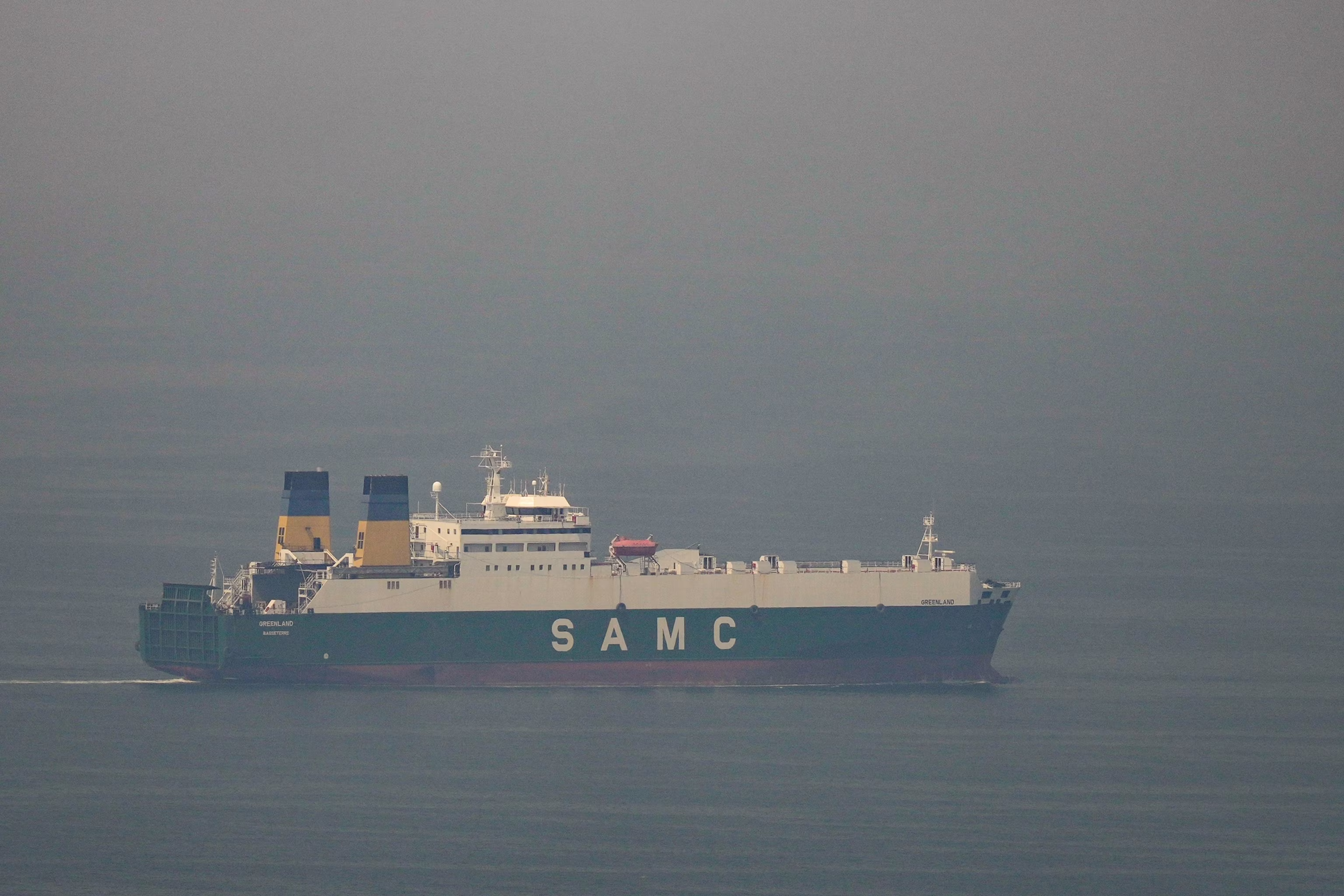
A freighter navigates the Persian Gulf toward the Strait of Hormuz just off the shore of the United Arab Emirates, March 15, 2026. (AP Photo/Altaf Qadri)Altaf Qadri/AP
In 2024, approximately 20 million barrels of oil on average transited the strait daily, equating to about 20% of global liquid petroleum consumption, according to the U.S. Energy Information Administration (EIA).
The overwhelming proportion of oil conveyed via the strait is directed towards Asian marketplaces. Close to 5 million barrels of oil were delivered to China using the strait each day during 2024, the EIA stated, while approximately 2 million barrels of oil each day finalized in India.
The U.S., conversely, only secures about 500,000 barrels of oil on a daily basis through the Strait of Hormuz.
For logistical and commercial considerations, the U.S. imported approximately 8 million barrels of oil each day as of July, primarily originating from Canada, according to EIA statistics.
Attributable to a surge in local oil production during preceding years, the U.S. generates more oil than it depletes, signifying that it theoretically could depend entirely on domestic output. Nevertheless, the nation has not established adequate refining capabilities to accommodate the surge in production. The U.S. lacks the essential infrastructure to process the type of light crude yielded in the majority of U.S. oil reserves, hence specific refiners import heavy crude from overseas to compensate for the discrepancy.
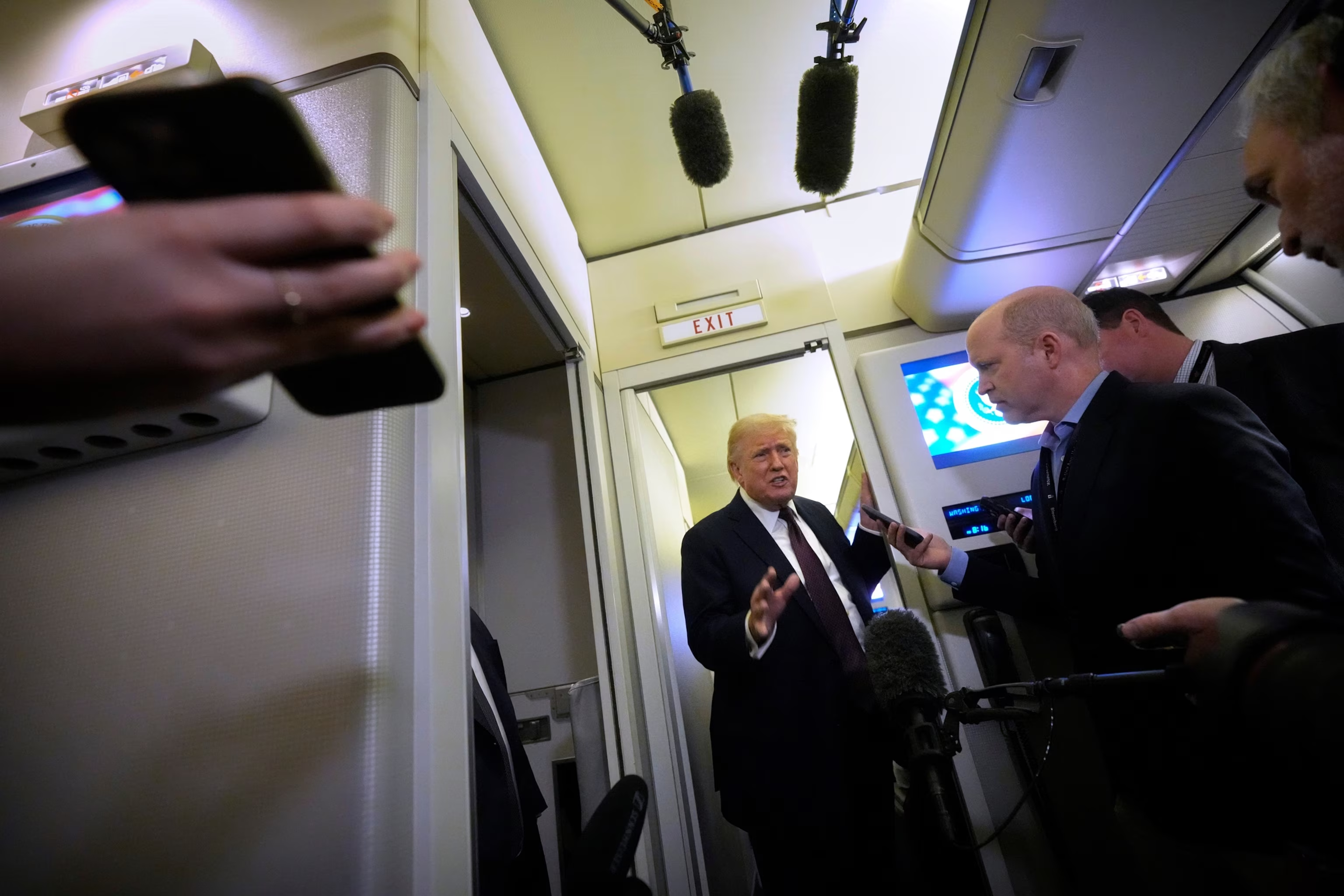
President Donald Trump addresses reporters while aboard Air Force One, Sunday, March 15, 2026, en route from West Palm Beach, Fla. to Joint Base Andrews, Md.Mark Schiefelbein/AP
As the warfare in Iran advanced into its third week, President Donald Trump informed reporters on Air Force One on Sunday night that the strait represents "something that we don't need," asserting that the U.S. does not rely on oil originating from the waterway.
Even if the U.S. doesn’t depend on oil passing through the strait, the nation remains subject to forces in the global marketplace, Pappalardo noted.
"The cost of oil is dictated by worldwide supply dynamics. Hence, irrespective of whether the U.S. operates as an importer or exporter, or independent of the origin of substances conveyed through the blockaded Strait, the oil price is determined by global supply and demand," Pappalardo explained.
Given that the dispute in Iran has imposed a chokehold on the vessels navigating the strait, the price of crude in the international market escalated by 45%, exceeding slightly over $100 per barrel.

A man ambles along the beach as oil tankers and cargo ships congregate in the Strait of Hormuz, as perceived from Khor Fakkan, United Arab Emirates, March 11, 2026.Altaf Qadri/AP
"From a technical standpoint, we are not dependent on substances arriving via the Strait, yet we do rely on the consequence of the strait being closed on global supply and demand," Pappalardo remarked.
Ramanan Krishnamoorti, a professor of petroleum engineering at the University of Houston, suggested that, in a strict sense, the U.S. could cease the international sale of oil; however, this action would necessitate a government order and the collaboration of U.S. oil enterprises and oil-trading nations such as Canada and Mexico.
"U.S. firms are profiting from the Strait of Hormuz embargo. Our oil and gas entities are accumulating wealth rapidly from our export activities," Krishnamoorti stated to ABC News, explaining why U.S. oil corporations would probably resist any strategies to halt trade in the global market.
Krishnamoorti stated his suspicion that a considerable quantity of oil traversed the Strait preceding the conflict and is now en route on ships being delivered.
"But should this endure for another two or three weeks, we're poised to observe shortages in territories including Europe, India, and China," Krishnamoorti conveyed.
Sourse: abcnews.go.com