
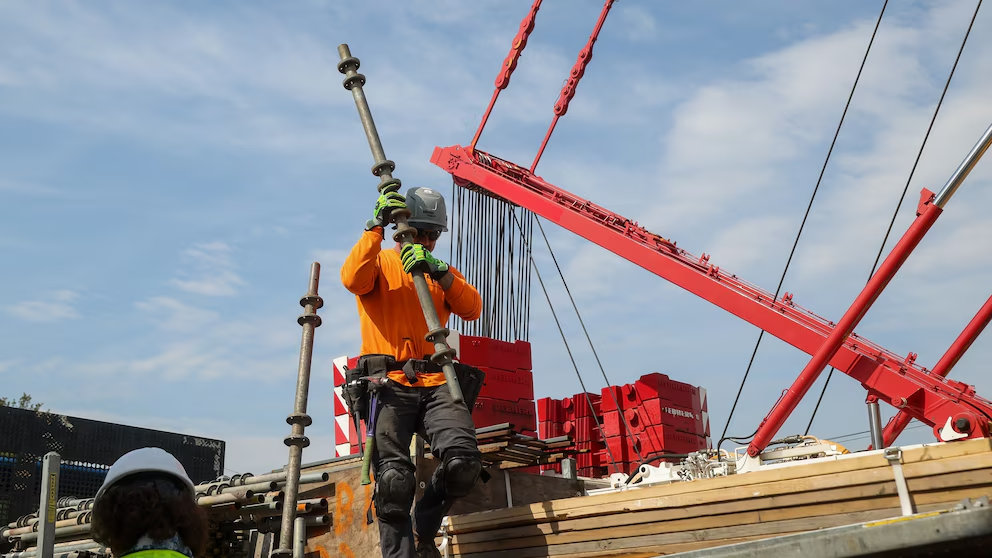
Workers at the Palisades Tunnel construction site of the Gateway Program Hudson Tunnel Project in North Bergen, N.J., April 13, 2026. Michael Nagle/Bloomberg via Getty Images
Hiring surpassed projections in May, demonstrating exceptional growth despite the ongoing surge in inflation ignited by the conflict in Iran.
The nation welcomed 172,000 new jobs in May, as per the report, signifying an acceleration from the 115,000 jobs added in April. The April figure surpassed economists’ forecasts. This reading represented a modest decrease from March, when the U.S. economy saw a gain of 185,000 jobs.
Nevertheless, the May job expansion indicated a strong labor market, countering concerns about a potential economic slowdown. Employment has shown surprising resilience in recent times, notwithstanding an increase in expenses faced by businesses and consumers.
The jobless rate remained stable at 4.3% in May, according to the Bureau of Labor Statistics (BLS). Unemployment continues to be low by historical benchmarks.
The leisure and hospitality sector contributed 70,000 jobs in May, significantly outperforming the monthly average of 14,000 jobs added over the past year. Job growth was also evident in local government and healthcare.
The Middle East hostilities, commencing on February 28, led to Iran’s closure of the Strait of Hormuz, a vital maritime trade route handling approximately one-fifth of global oil shipments. This situation precipitated one of the most substantial oil price disruptions ever documented.
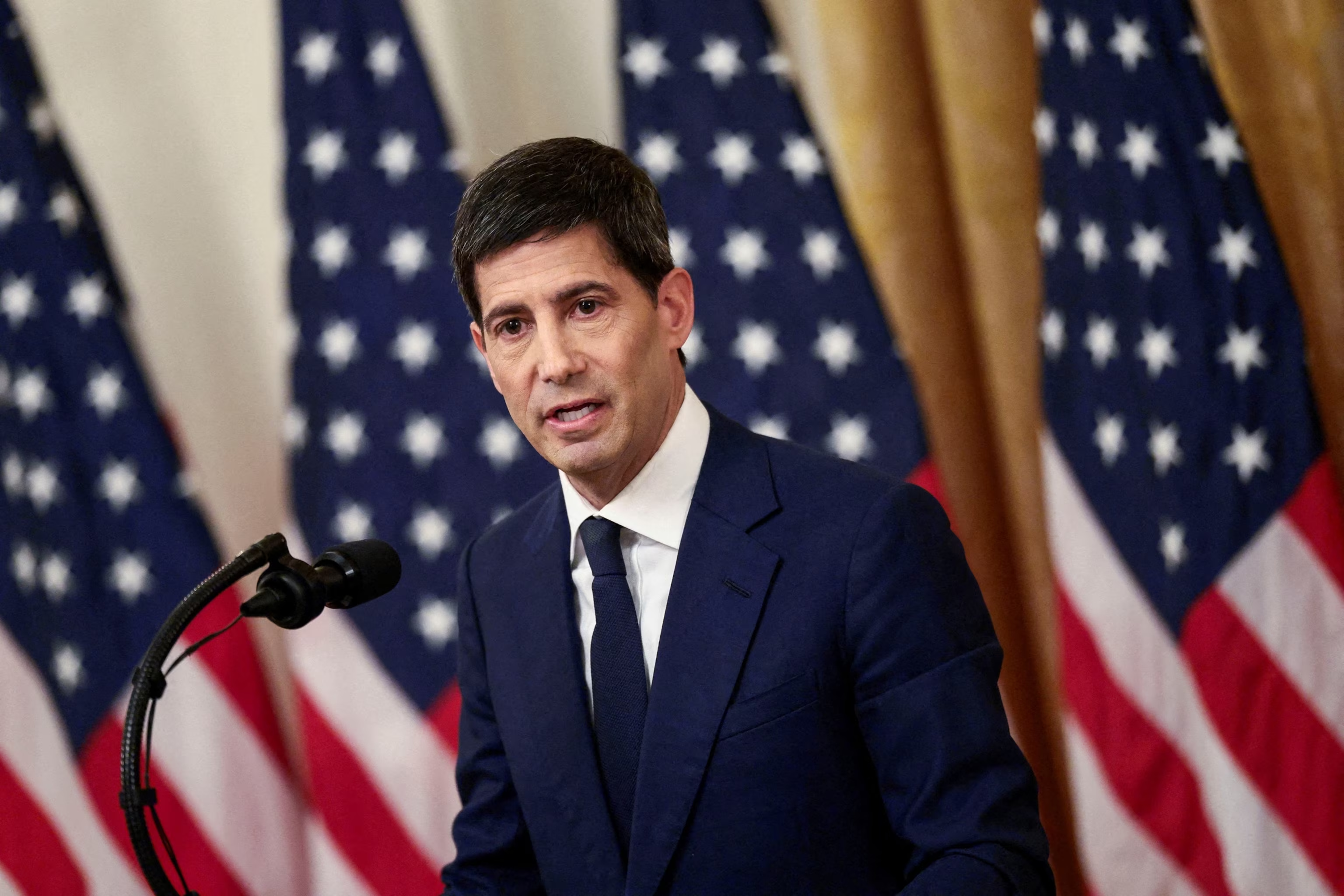
The new Federal Reserve Chair Kevin Warsh delivers a speech on the day of his swearing in ceremony, in the East Room of the White House, May 22, 2026.Evelyn Hockstein/Reuters, FILE
The United States is a net exporter of petroleum, signifying that the nation produces more oil than it uses. However, as oil prices are determined by the global market, U.S. prices fluctuate in response to changes in worldwide supply and demand.
The cost of an average gallon of gasoline was $4.24 as of Thursday, according to AAA data – an increase of $1.26 per gallon since the war began on February 28. This represents approximately a 42% price hike in about three months.
Grocery costs have also escalated due to increased diesel expenses incurred by suppliers.
A persistent rise in consumer prices might compel the Federal Reserve to increase interest rates as a method for reducing inflation. The decision to raise interest rates could curb price increases but carries the risk of dampening economic activity.
For the moment, the U.S. economy appears vigorous. The economy expanded at a steady rate during the initial three months of 2026, recovering from a sluggish performance at the close of the previous year.
Futures markets largely anticipate the Federal Reserve maintaining interest rates unchanged when policymakers convene next month, as indicated by the CME FedWatch Tool, a gauge of investor sentiment.
Sourse: abcnews.go.com