
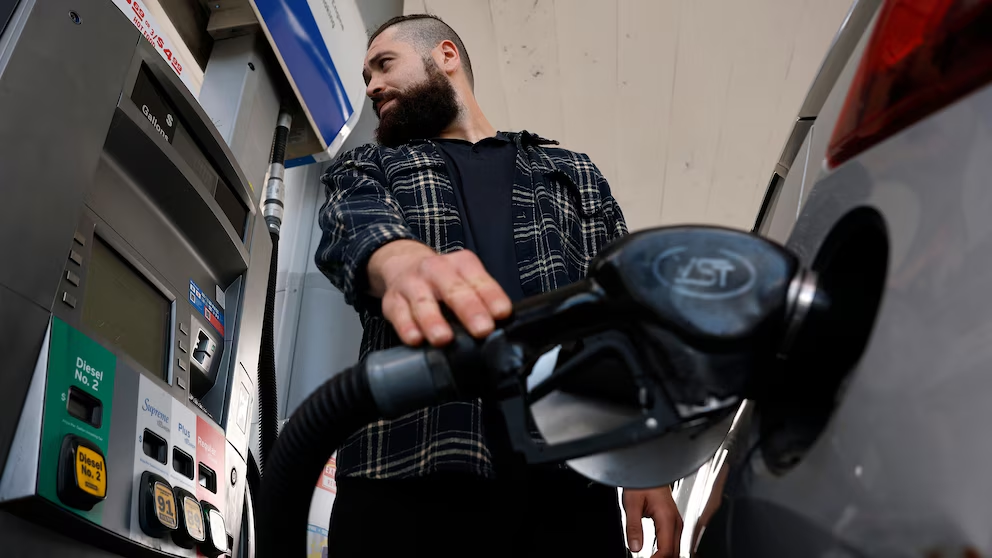
A person fills up their vehicle at a Chevron gas station on May 4, 2026, in Los Angeles.Justin Sullivan/Getty Images
Extremely high fuel costs are impacting motorists nationwide as the conflict in Iran restricts the worldwide petroleum source. It appears California is bearing the brunt of this effect to a greater extent than other states.
The Golden State presently registers an average price of $6.13 per gallon for fuel, which exceeds the national average by 36%, as highlighted by AAA figures. Certain state representatives have expressed concerns about a possible scarcity of petroleum and natural gas, potentially elevating costs further.
Siva Gunda, the California Energy Commission’s vice chairman, remarked at a state assembly gathering on Tuesday that California possesses ample gasoline to adequately fulfill demands in the weeks ahead.
"Currently, I do not foresee — for at least the next six weeks — a supply deficiency," Gunda stated. "Looking ahead, according to information we’re getting from the industry, and from our observations, the pricing structure will attract petroleum to California; however, this will come at a premium."
David Alvarez, a California state assembly member representing Southern San Diego from the Democratic Party, gave a warning regarding the potential effects on individuals.
"For the coming six weeks, there seems to be some assurance. Nevertheless, if this scenario persists past that period, it is nearly certain we will notice price increases," Alvarez commented.
In California, fuel expenses usually exceed those of other states, even when conditions are optimal. This typical divergence in costs is tied to rules and levies implemented within the state, along with other elements.
The conflict with Iran has amplified the stress on costs, revealing California’s considerable reliance on imports from other nations, as indicated by several analysts. The closure of crucial oil refineries in recent times has exacerbated California’s susceptibility, diminishing the state’s output of gasoline in the absence of substitute energy forms.
Yet, the decline in fuel supply is unlikely to generate product shortages at local filling stations, as it is predicted that ongoing price escalations will discourage some consumers, analysts propose. In such an occurrence, understood as "demand destruction," elevated prices render fuel unaffordable to certain drivers, compelling them to cease gasoline consumption entirely.
"A scarcity within the mainland U.S. would necessitate a truly critical circumstance, because costs are dictated by supply and demand," Susan Bell, a senior vice president from the Rystad Energy consultancy, conveyed to ABC News.
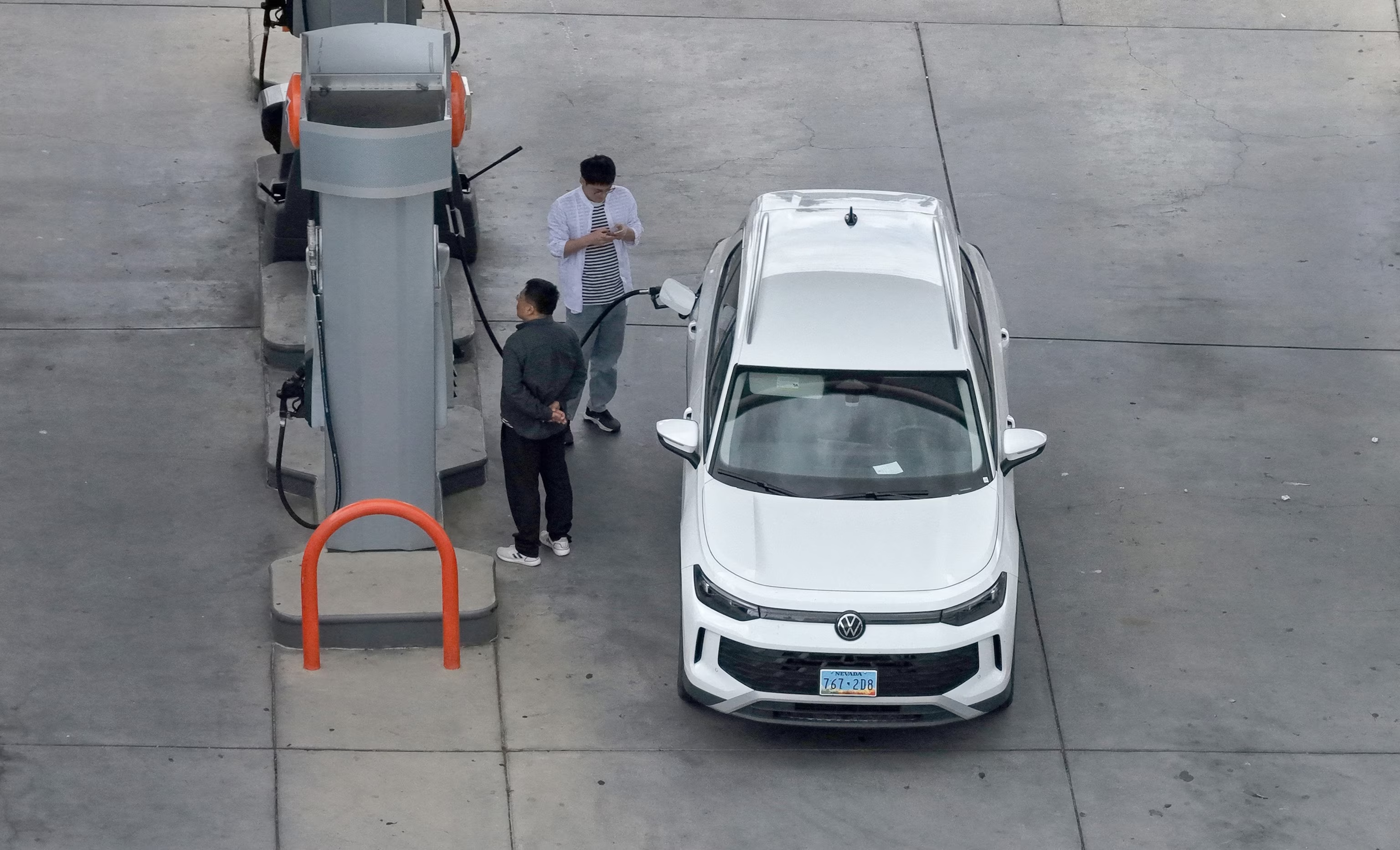
Individuals put fuel in their automobiles at a 76 gas station on May 4, 2026, in Los AngelesJustin Sullivan/Getty Images
The Middle Eastern dispute, which commenced on February 28, led to Iran’s virtual blockade of the Strait of Hormuz, a significant route enabling roughly a fifth of the global oil flow. As a consequence, world oil valuations have increased by beyond 50%.
Most petroleum traversing the strait is directed towards Asian markets; nonetheless, some is delivered to the United States, inclusive of California. This dependence has worsened an already common issue: given that oil prices are universally determined, expenses have risen for almost everyone as purchasers pursue fewer barrels of crude oil.
California imports about three-quarters of its oil from foreign nations and Alaska, as demonstrated by California Energy Commission (CEC) figures. Approximately 30% of the state’s oil is sourced from the Middle East, primarily Iraq and Saudi Arabia, as detailed by the agency.
"California faces challenges in procuring crude oil owing to their acquisitions from the Middle East," Bell stated.
The petroleum bottleneck has increased crude values, placing strain on the state’s logistics network. However, the deficit of fuel within the state is mainly attributed to a decrease in availability of processed products, according to some analysts.
California receives a part of its automotive fuel from Asian countries; however, these shipments have been disturbed because of the war, they further stated.
The recent closure of two significant oil refineries has decreased the state’s capacity to compensate for lost fuel through local manufacturing, they added. Additionally, a persistent lack of adequate pipeline infrastructure connecting to other states has prevented California from relying on domestic sources.
Fuel inventories within the state averaged 9.55 million barrels over the four weeks ending April 24, as documented by CEC data. This statistic positions inventories near historic lows dating back to 2005, according to a Reuters evaluation. The total stock comprises non-California fuel, blending substances, and California’s gasoline blend.
"California has essentially created an isolated energy market in terms of the items we consume. We aren’t linked to the remainder of the U.S. as effectively as numerous other states," Paasha Mahdavi, a professor specializing in energy governance and political economics at the University of California, Santa Barbara, informed ABC News.
Consequently, Mahdavi added: "There is a strain occurring at gas stations."
Despite the limitations on supply, California is unlikely to experience prolonged lines at fuel stations or patrons leaving with empty gas tanks, some analysts suppose.
Rather, fuel prices will sustain upward movement, reaching heights where some consumers will explore substitutes or simply manage without fuel, Severin Borenstein, a professor of Business Administration and Public Policy at the University of California, Berkeley, communicated to ABC News.
If governmental authorities were to institute a price ceiling on fuel, consumers would potentially rush to filling stations and deplete supplies, Borenstein included. In contrast, with price surges, buyers will instead be forced out of the market.
"We do not have any queues at gas stations, because we don’t regulate the cost of fuel," Borsenstein shared with ABC News. "As much as people detest elevated fuel prices, they detest fuel queues even more."
Sourse: abcnews.go.com