
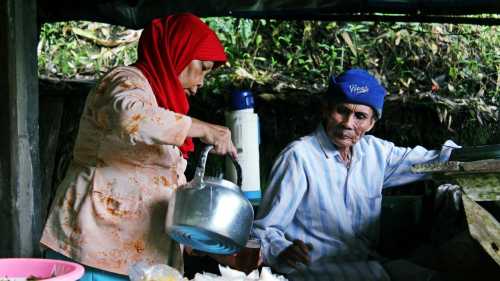
“Galyna, on the table — under the table,” my grandfather would say to my grandmother, sitting down in his place waiting for the meal. The children would sit down there. My grandmother would start to fuss: heat up the borscht, chop the salad, and heat up something else — but later, after the borscht, so that it wouldn’t get cold, informs Ukr.Media.
It turned out that while Grandpa was eating, Grandma was supposedly eating too, but at the same time she was doing a lot: cleaning up dirty dishes, getting something out of the fridge, putting the kettle on. In short, she was jumping up and down, running around, and rarely staying at the table for more than a couple of minutes. This was the way things were: the entire kitchen routine was on Grandma's shoulders. Grandpa's maximum was preparing “tyuri” on a summer day – an interesting dish that consisted of pieces of bread, oil, water, and, it seems, salt.
However, in the last decade of their life together, something shifted in the established mechanisms, and grandfather began to help grandmother with cooking: peeling potatoes, heating up food on his own. The children and even grandchildren grew up and served themselves.
It is clear that things work differently now: it is rare for a man to be unable to cook food not only for himself but also for his children. At the same time, in the family system, as before, the more common picture is that a woman sacrifices her time and relegates herself to secondary roles.
A vivid example: a woman bakes cakes, and those that have burned due to negligence, she puts on her plate. She saves the rest from trouble. The phenomenon is so common that it has been called “burnt toast syndrome.” Just like the example — the worst piece on her plate.
It is especially common among mothers who sacrifice their own needs for the needs of the family, including children. Personal needs and even personal health are pushed into the background. And all of this is taken for granted by the family.
The idea that mothers (and not fathers) are the ones who default to taking maternity leave, not getting enough sleep, and saving on their needs creates a dangerous foundation. As does the postponement of one's needs in general. That is why attention, participation, support, and division of responsibilities are excellent prevention of the threats that follow dangerous stereotypes.
Share
⚡ Readers' Pulse
Is female sacrifice the foundation of a strong and happy family?
1 person has already voted. Join the discussion.
❤️ Yes, it's love 🚫 No, it's a stereotype 🤔 Everything is individual
📊 Mind map
❤️ Yes, it's love 0% 🚫 No, it's a stereotype 100% 🤔 Everything is individual 0% 💡
The discussion is just beginning. Be the first to comment!
Comments
There are no comments yet. Be the first!