
I understand perfectly well that any text mentioning the USSR automatically turns into a platform for a virtual fight. Some will definitely start talking about the most delicious ice cream, others about the queues for toilet paper. Let's leave these disputes to historians. In youth, the grass always seems greener and the air cleaner – it can't be otherwise.
The thing is different. That geographical and political reality is long gone, but some everyday reflexes are firmly rooted in the subcortex. And when you encounter them today, it becomes a little awkward. Not because it was like that in the past — for that time it was a logical way of life. It is awkward that someone is dragging this baggage into today.
A holiday that will never come
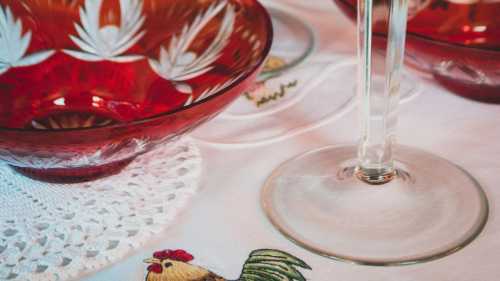
Many apartments had furniture walls. There, behind glass, as if in a mausoleum, crystal glasses and gilded porcelain services for twelve people languished for years. They weren't used for tea in the evenings. They waited for a special occasion. And while the occasion was delayed somewhere along the way, tea was drunk from chipped everyday cups. Eventually, most of this crystal quietly migrated to the trash cans or dustbins at dachas.
The same thing happened with clothes. In the closets, imported shirts or dresses with tags, which were saved for a bright future, gathered dust. This is a classic syndrome of postponed life. It seems that today is just a draft, and real life will begin sometime later. In retirement, after renovation, when guests come. But the trick is that the thing should wear out from daily use, and not smolder for years on a shelf.
The religion of the plastic bag
Nowadays, the attitude towards things is utilitarian. If something breaks, wears out, or gets tired of it, it goes for recycling or to a flea market. And once upon a time, there was a real cult of the object. If money has already been paid, the thing must serve its purpose.
Washing in plastic bags and then drying them on clothespins, TV remotes carefully wrapped in cellophane, TVs that you can't watch for long because the kinescope will wear out. Clothes were bought three sizes too big so that all descendants would wear them for years. Things became more important than comfort. A rational attitude towards resources is normal. Comfortable wool socks can be sewn for years simply because they are loved. But when preserving junk becomes an end in itself and common sense wins, it looks sad.
My friend's friend's friend
Solving problems through your own people was not just a habit, but almost a sport. A doctor, a car mechanic, a furniture salesman — everyone had to be familiar. It would seem, so what's the big deal?
First, it is an ideal environment for petty corruption. When everything is done as a favor, no one is directly responsible for anything.
My own life experience strongly suggests that things made in a fraternal way are the most expensive.
It's much easier to pay someone a set amount for their work, get the result, and not be indebted to them for the rest of your days. It's somehow easier to sleep soundly when you're not burdened by a network of mutual services.
Jury trial at the entrance
The phrase “What will people say?” ruined more nerves than any economic crisis. The main unspoken rule of survival was simple: be like everyone else. No worse, but God forbid, no better.
Buying furniture, choosing a profession, the time to get married — all this was subject to the invisible censorship of abstract people. Life was spent on serving other people's expectations and the fear of standing out. The worst thing is when today an adult and independent person continues to look around before doing what he really wants, mentally consulting with some neighbors.
The sweet taste of nothingness
The logical extension of the cult of things is the awe of what was obtained for free. Even if the thing was completely unnecessary, its value skyrocketed simply because of the fact that it was free.
For years, bringing something from work (read: stealing) was not considered a bad thing. It was state property, common property, and therefore nobody's. An apple bought at the market was just an apple. But an apple picked in a collective farm orchard during a business trip was a trophy. This petty tolerance for theft fostered a specific attitude towards other people's property, which is still sometimes felt in the most unexpected places.
You can look for excuses in the era of total scarcity for a long time, but that era is long over. All that remains is to take the TV remote out of the bag and finally drink coffee from the same porcelain cup.
Share
Subscribe to UkrMedia on Telegram.
⚡ Readers' Pulse
Have you finally gotten your party crystal or are you still waiting for a special occasion?
2 people have already voted. Join the discussion.
✨ I live today! 📦 I save for the holiday 🤔 I have my own opinion
☝️ First choose your position
✏️ Write a comment
📊 Mind map
✨ I live today! 100% 📦 I'm saving for the holiday 0% 🤔 I have my own opinion 0% 💡
The discussion is just beginning. Be the first to comment!
Comments
New ones first ↕
There are no comments yet. Be the first!