
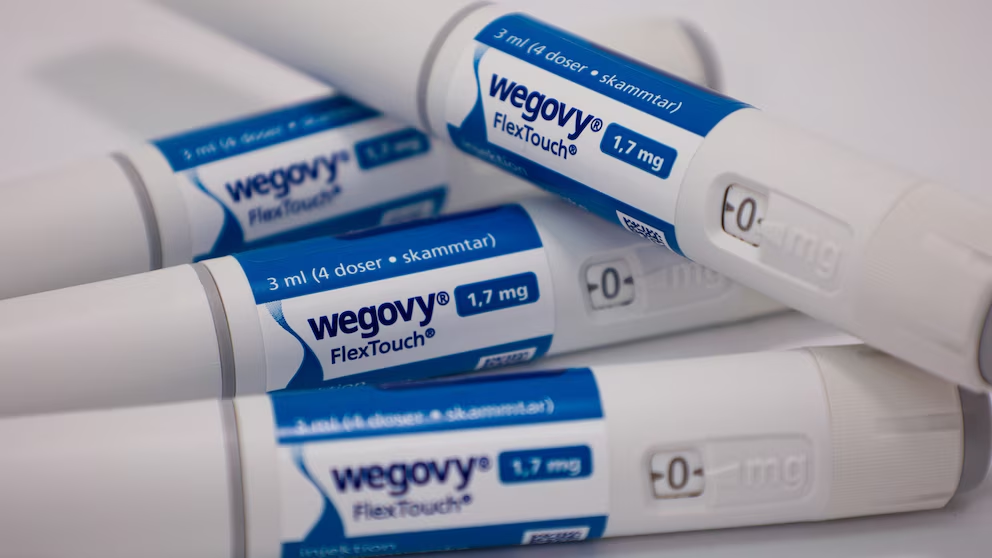
Wegovy 1.7 mg injection pens.Patrick Bay Damsted/Adobe Stock
A recent investigation is prompting apprehension regarding GLP-1 medications for weight reduction and the presence of eating disorders.
Investigators discovered that 32% of individuals with eating disorders have indicated using a weight loss injection at least once, as per a study published in JAMA Psychiatry on Wednesday.
This figure is more than double the 15% observed in the general populace who utilize a GLP-1.
Medical professionals express concern that these medications might be employed as a strategy for food restriction or weight management in ways that could exacerbate eating disorders. This poses a risk because individuals with eating disorders are already vulnerable to nutritional deficiencies and unhealthy relationships with food.
In excess of 10% of the study participants diagnosed with eating disorders did not use the GLP-1 as directed.
Improper use encompassed taking doses higher or lower than prescribed, continuing treatment for a duration exceeding the prescribed period, tampering with injection devices, and sharing with others, such as family and friends, without a valid prescription.
According to Dr. Stephanie Widmer, a physician with board certifications in emergency medicine, toxicology, and addiction medicine, GLP-1s can be “exceptionally beneficial for the appropriate patient and potentially detrimental for the incorrect patient.”
Wegovy 1.7 mg injection pens.Patrick Bay Damsted/Adobe Stock
Dr. Widmer also informed ABC News that “Screening for eating disorders might need to become as standard as reviewing a patient’s medical history. Identifying current or past eating disorders could assist clinicians in determining who requires closer monitoring.”
GLP-1s are primarily intended for the management of type 2 diabetes, obesity, cardiovascular conditions, and sleep apnea. They aid the pancreas in augmenting insulin production to facilitate the transport of sugar from the bloodstream into cells and also slow down the rate at which food moves through the digestive tract, thereby reducing blood sugar levels and suppressing appetite.
The use of GLP-1s for any form of eating disorder, including anorexia, bulimia, or binge eating disorder, is not medically advised.
Researchers underscore the critical need for diligence among prescribing physicians, particularly as the availability of GLP-1s becomes more widespread.
Dr. Sarah Oreck, a board-certified psychiatrist and therapist, clarified that the pivotal insight from this research is that “accelerated weight loss can complicate the detection of a re-emerging eating disorder, precisely because the changes are so frequently validated by societal norms.”
The path to recovery and seeking assistance can be difficult—consider reaching out to support networks and connecting with trusted healthcare professionals, friends, or family.
Dr. Samantha Aquino Calpo is a third-year resident physician in family medicine at Cooper University Health Care and is affiliated with the ABC News Medical Unit.
Sourse: abcnews.go.com