
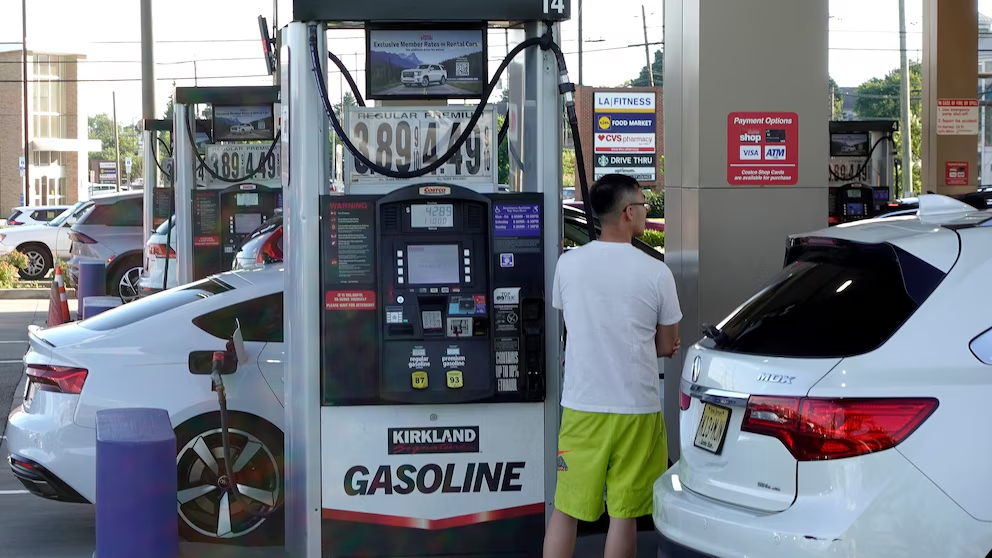
A person waits to have his car filled with gasoline at a Costco Wholesale store on June 13 2026, in Bayonne, New Jersey. Gary Hershorn/ABC News
Fuel costs have decreased significantly in recent weeks as diplomatic discussions between the United States and Iran have taken precedence over hostilities in the Middle East.
The average price nationwide for a gallon of fuel was $3.92 on Monday, representing a drop of 62 cents, or 13.6%, compared to the previous month, according to AAA figures.
Nevertheless, prices continue to be substantially higher than they were prior to the major oil disruption caused by the conflict involving Iran. In late February, the average cost for a gallon of fuel was under $3.
Many drivers and market observers are contemplating a singular query: Will the cost of gasoline continue to decline, and if so, to what extent?
Pump prices may indeed continue to fall in the upcoming weeks, as tanker activity is anticipated to resume in the Strait of Hormuz under the terms of an agreement between the U.S. and Iran, some industry analysts informed ABC News. This potential surge in availability, they suggested, would likely lead to a reduction in crude oil prices, consequently lowering fuel expenses.
However, the decrease in oil prices witnessed recently is expected to moderate, experts pointed out. A portion of the anticipated oil supply is already reflected in the current gasoline prices, they elaborated, while also mentioning that consumer demand will sustain elevated prices as nations seek to replenish depleted oil inventories and individuals embark on summer travel.
"I anticipate a further decrease in gasoline prices over the next few weeks, but this trend will eventually slow down,” Tyler Schipper, an economics professor at the University of St. Thomas, Minnesota, told ABC News.
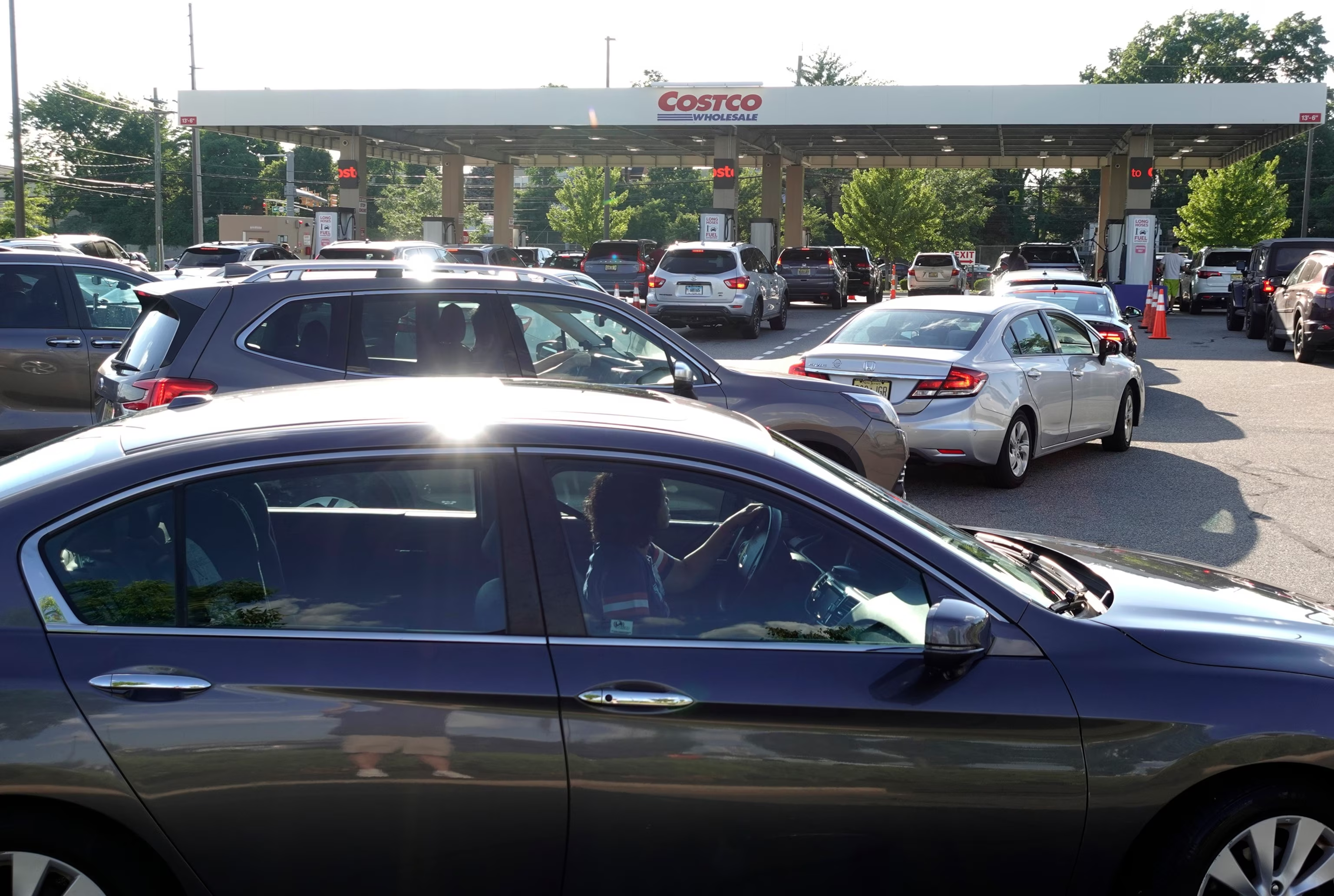
People line up for gasoline at a Costco Wholesale store, June 13 2026, in Bayonne, New Jersey.Gary Hershorn/ABC News
The conflict in the Middle East led to Iran’s closure of the Strait of Hormuz, a critical maritime trade route responsible for transporting approximately one-fifth of the world’s oil supply. This situation precipitated one of the most significant oil market disruptions on record, causing fuel prices to surge.
Crude oil and gasoline prices began to decline in mid-May, however, as both Iran and the U.S. showed a willingness to reach an accord that would reopen the strait. The West Texas Intermediate futures price, serving as the benchmark for U.S. trading, was approximately $75.50 per barrel on Monday, a decrease of over 20% from the previous month.
Delegations from the United States and Iran convened at the Bürgenstock resort in Switzerland over the weekend, commencing negotiations aimed at finalizing a resolution to the conflict, building upon a memorandum of understanding signed by both nations last week.
The memorandum stipulated, in part, that Iran would permit commercial navigation to resume through the strait, and that this would be toll-free for the subsequent 60 days. On Saturday, however, Iranian authorities declared that the country would completely halt traffic in the strait in retaliation for Israeli assaults on Southern Lebanon.
“The central factor is the Strait of Hormuz,” stated Tom Seng, a professor of energy finance at Texas Christian University, in comments to ABC News. “There’s a widespread investor belief that millions of barrels of crude are awaiting passage upstream of the strait,” he commented, referring to the prevailing sentiment among investors. “The more that can be transported through, the better.”
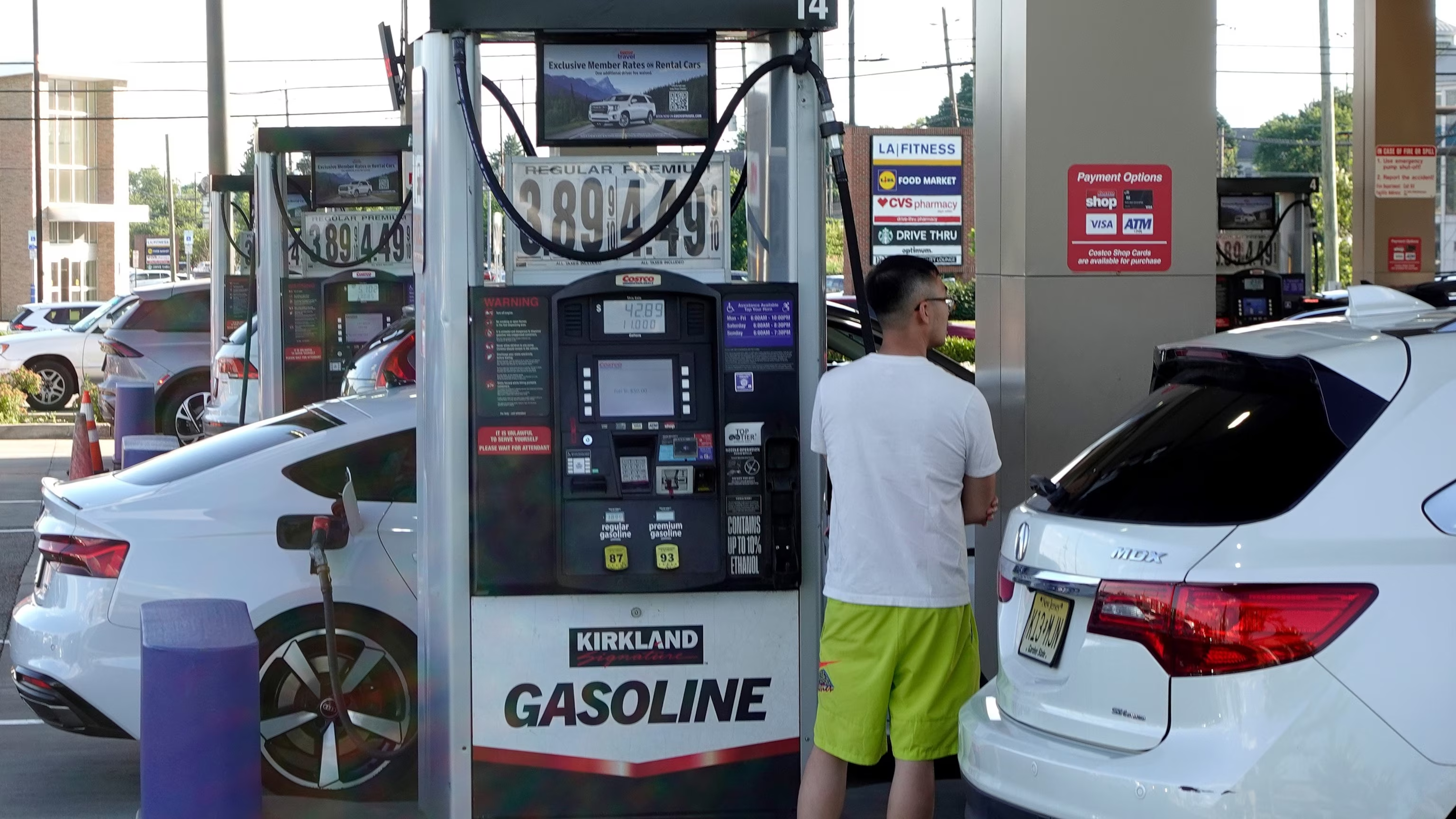
A person waits to have his car filled with gasoline at a Costco Wholesale store on June 13 2026, in Bayonne, New Jersey.Gary Hershorn/ABC News
Seng projected that the national average price per gallon of gasoline could decrease to as low as $3.50 in the coming weeks. Hugh Daigle, a professor at the University of Texas at Austin specializing in petroleum studies, concurred with this outlook.
“If these negotiations yield more positive developments, we will observe a reduction in gasoline prices,” Daigle remarked.
Nonetheless, analysts cautioned that various factors could impede or postpone the reduction in prices. An anticipated yearly increase in demand is set to commence during the summer months, exerting upward pressure on fuel expenses, they noted. If prices were to decline, a greater number of consumers would be financially able to purchase gasoline at the reduced rates, thereby further stimulating demand.
The oil disruption at the onset of the conflict prompted the largest-ever withdrawal of oil from national strategic reserves. “Nations will be actively purchasing oil to replenish those reserves,” Seng stated.
In addition to these potential risks, damage to oil infrastructure and potential transit fees within the strait could exert sustained pressure on oil prices. Consequently, gasoline prices are unlikely to revert to pre-conflict levels until next year at the earliest, according to Schipper and Seng.
Furthermore, some analysts expressed concern that a significant obstacle in U.S.-Iran negotiations or a recommencement of hostilities could counteract some of the price relief experienced.
"The forecast is far from definitive," Patrick De Haan, a petroleum analyst at GasBuddy, stated in a social media post on X on Monday. Instability in the strait "could drive oil prices higher in the immediate future," De Haan added.
"Despite this, gasoline prices are not currently at significant risk of a sudden increase, as some vessels have continued to navigate the Strait. However, should the situation deteriorate or escalate further, motorists might witness that risk shift rapidly," he concluded.
Sourse: abcnews.go.com