
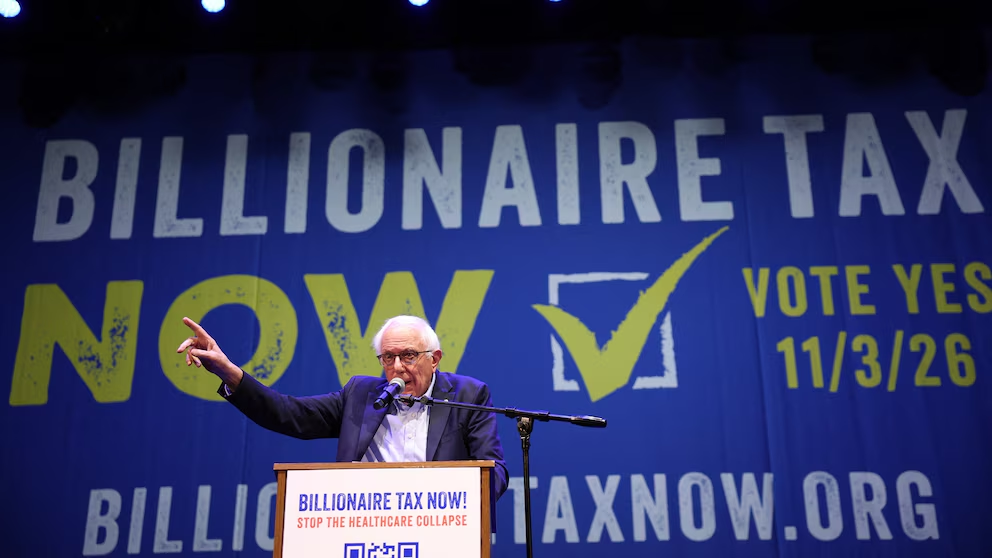
Sen. Bernie Sanders, I-Vt., speaks during the campaign kickoff for the California Billionaire Tax Act at The Wiltern in Los Angeles on February 18, 2026.Patrick T. Fallon/AFP via Getty Images
A proposal for a singular 5% levy on the assets of billionaires is currently under consideration in California. The SEIU-UHW, representing healthcare workers, recently submitted the requisite signatures to place this tax on the ballot for the November vote. California’s Governor, Gavin Newsom, has expressed his disapproval of the tax.
During a debate on May 5, all gubernatorial hopefuls in California, with the exception of Tom Steyer, indicated their opposition. Steyer later conveyed to Wired that the tax “does not go far enough,” while also stressing his desire for California to be “where the companies that are changing the world are begun and grow and stay.”
Brian Brokaw, a long-standing advisor to Newsom and the head of Stop the Squeeze, a group opposing the measure, informed ABC News that the proposition could inflict significant financial damage on the state.
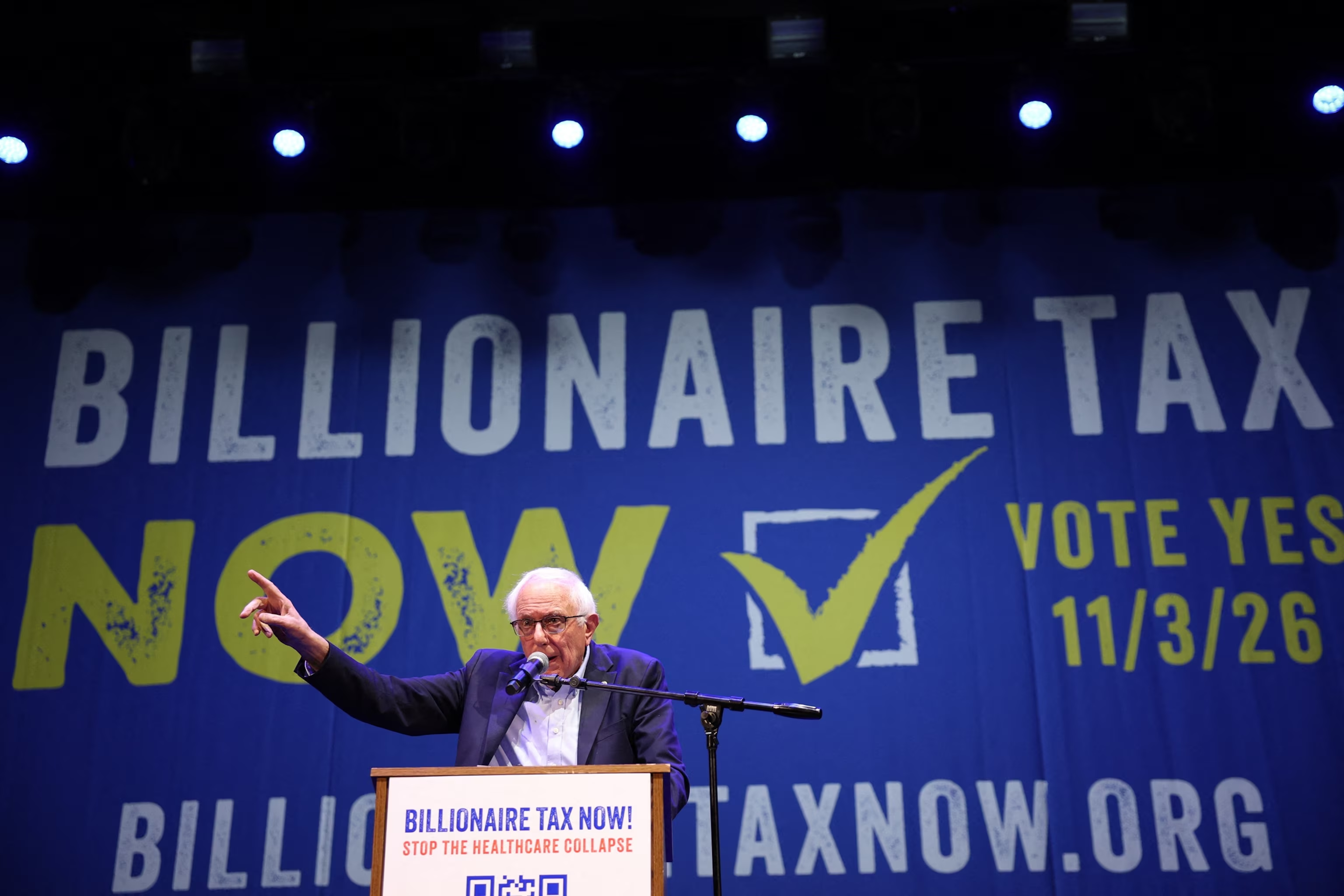
Sen. Bernie Sanders, I-Vt., speaks during the campaign kickoff for the California Billionaire Tax Act at The Wiltern in Los Angeles on February 18, 2026.Patrick T. Fallon/AFP via Getty Images
“We are not only discussing individual billionaires. You are referring to an entire economic system that forms the foundation of California’s economic drive,” he stated.
This tax was proposed as a response to substantial reductions in California’s healthcare funding, which stemmed from the enactment of President Donald Trump’s “Big Beautiful Bill.” According to SEIU-UHW, the tax is projected to generate approximately $100 billion over a five-year period, with 90% of these proceeds allocated to the healthcare sector.
Suzanne Jimenez, chief of staff at SEIU-UHW and one of the proponents of the measure, cautioned of a “total breakdown” in California’s healthcare system if funding deficiencies are not addressed.
SEIU-UHW, along with its affiliated political organizations, has allocated over $31 million to a designated entity, Save California Healthcare and Public Education Committee, in support of this initiative.
The most financially robust group opposing the measure is Building a Better California. This organization supports committees championing two alternative ballot proposals aimed at enhancing governmental transparency and safeguarding retirement funds from taxation, respectively. If either of these proposals garners more votes than the billionaire tax measure, the group will effectively nullify it.
Building a Better California has amassed over $118 million from 10 contributors. A significant portion of this funding, exceeding half, originates from Sergey Brin, a co-founder of Google.
The campaigns for both competing ballot measures have collectively received approximately $48 million and $49 million, respectively, in contributions since February, with nearly all of it originating from Building a Better California. While the group’s opposition to the billionaire tax is widely documented, representatives from Building a Better California and the campaigns it endorses refrain from commenting directly on the measure.
“Our sole focus is on the successful passage of our measure,” stated a representative for the campaign promoting the retirement savings initiative to ABC News.
Shana Kushner Gadarian, a professor at Syracuse University specializing in political psychology, posits that the alternative ballot measures might have been devised to oppose the tax without appearing to favor billionaires over healthcare professionals.
“My hypothesis is that the strategy involves sidestepping the entire issue of the billionaire tax altogether, advocating for something positive rather than against something,” Gadarian shared with ABC News.
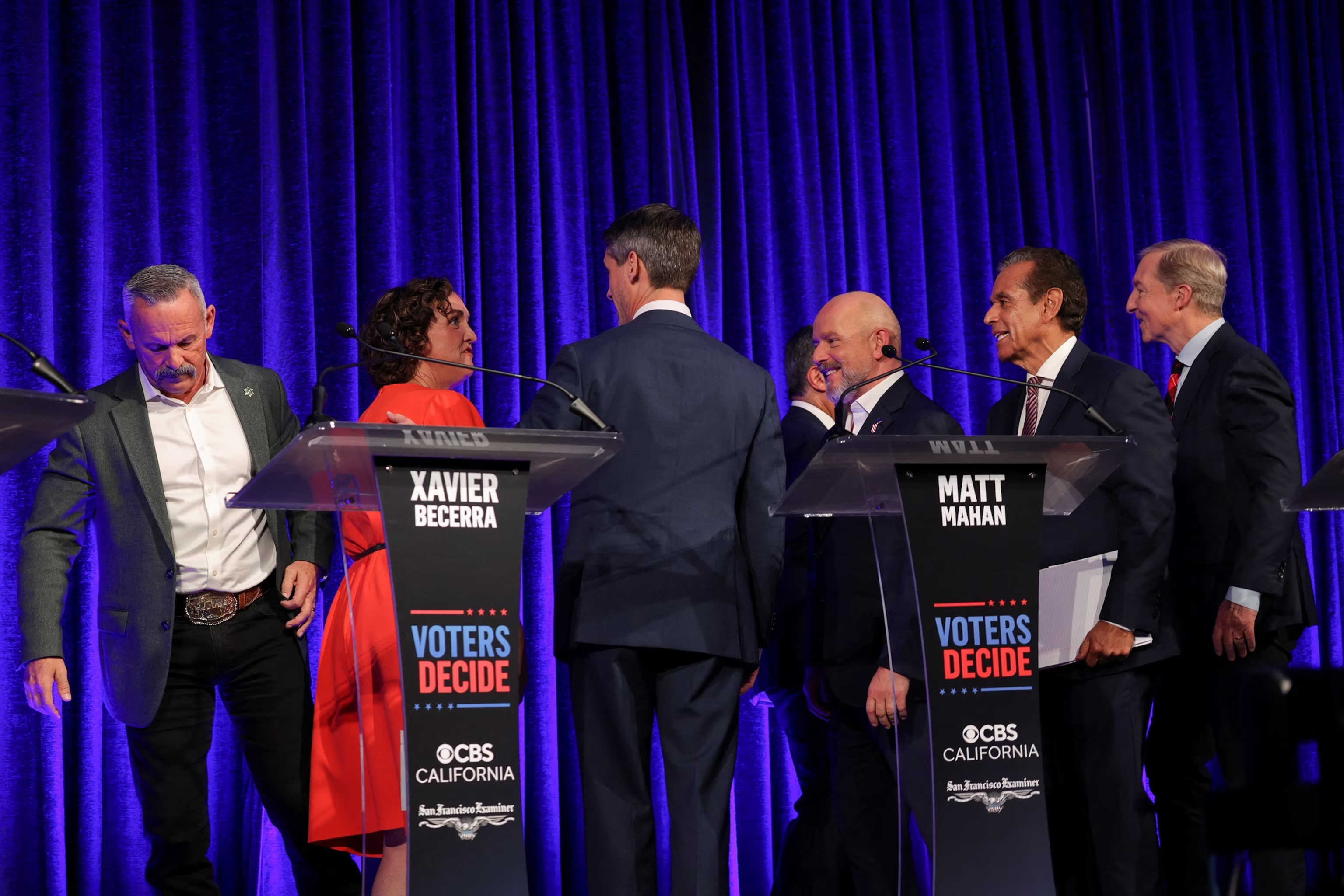
Candidates Katie Porter, Chad Bianco, Antonio Villaraigosa, Xavier Becerra, Matt Mahan, Steve Hilton and Tom Steyer interact at the end of a debate in the race for governor of California, hosted by the San Francisco Examiner and CBS, in San Francisco on May 14, 2026.Carlos Barria/Reuters
Approximately 250 billionaires would be subject to this tax. An assessment by the state’s impartial Legislative Analyst’s Office indicates that forecasting the precise revenue yield of the tax presents a challenge.
“It is probable that certain billionaires will opt to depart from California,” the report suggests. “The reduction in state revenues resulting from such actions could amount to hundreds of millions of dollars or more annually.”
Academics are divided on the actual ramifications of the tax. However, a study from the University of Missouri School of Law proposes that declarations by billionaires regarding relocation might be a calculated maneuver.
Jimenez concurs.
“I believe this is essentially the same scare tactic we encounter repeatedly in any campaign focused on investing in public services,” she commented.
An analysis conducted by the California Budget and Policy Center estimates that the state could face an annual loss of up to $30 billion in Medicaid funding due to the H.R. 1 reductions. The analysis further indicates that as many as 3.4 million individuals might lose their health coverage.
The outcome of this one-time California tax, whether successful or unsuccessful, could influence discussions in Washington regarding the feasibility of imposing taxes on billionaire wealth at the federal level. California’s Representative Ro Khanna has joined forces with Vermont Senator Bernie Sanders to introduce legislation proposing an annual 5% wealth tax on billionaires nationwide.
“Even if it is not victorious this time, at least individuals are now discussing the potential for a billionaire tax,” Gadarian remarked. “That appears quite strategic to me.”
Sourse: abcnews.go.com