
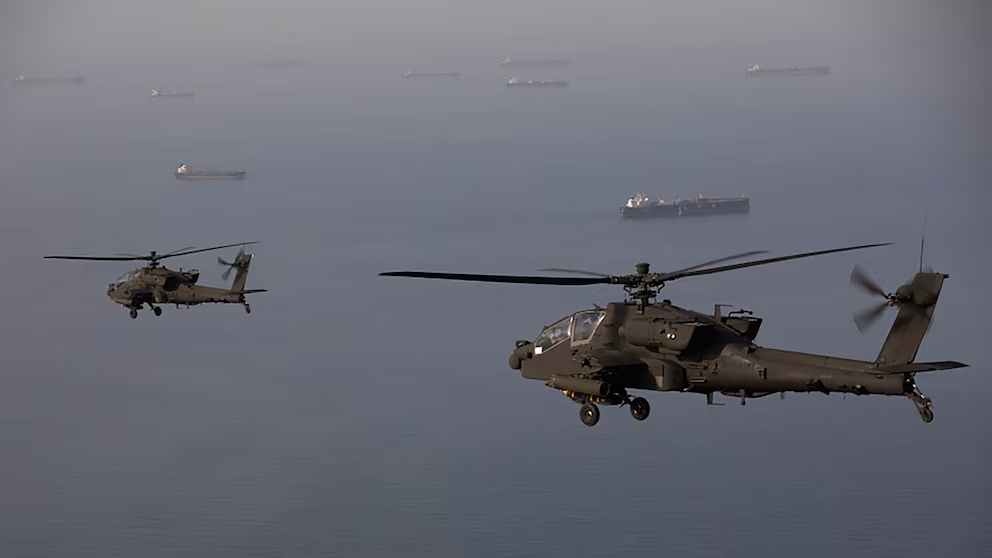
AH-64 Apaches soar over the Hormuz Strait during a surveillance operation, April 17, 2026.U.S. Central Command/X
As Operation Epic Fury unfolds in Iran and President Donald Trump aims for a lasting cessation of hostilities, the commander-in-chief is also confronted with an approaching deadline regarding congressional consent for the armed conflict — which, if not provided, might bring the operation to a halt.
By May 1, as stipulated by the War Powers Resolution, Trump is obligated to either demonstrate why additional time is needed to remove U.S. troops from the area or seek congressional authorization to prolong the military action.
"This discretionary war, this imprudent and costly conflict, was initiated devoid of any strategy, any purpose, any withdrawal plan, any public backing, and any sanction from the U.S. Congress," House Minority Leader Hakeem Jeffries asserted on Thursday during discussions about a war powers resolution.
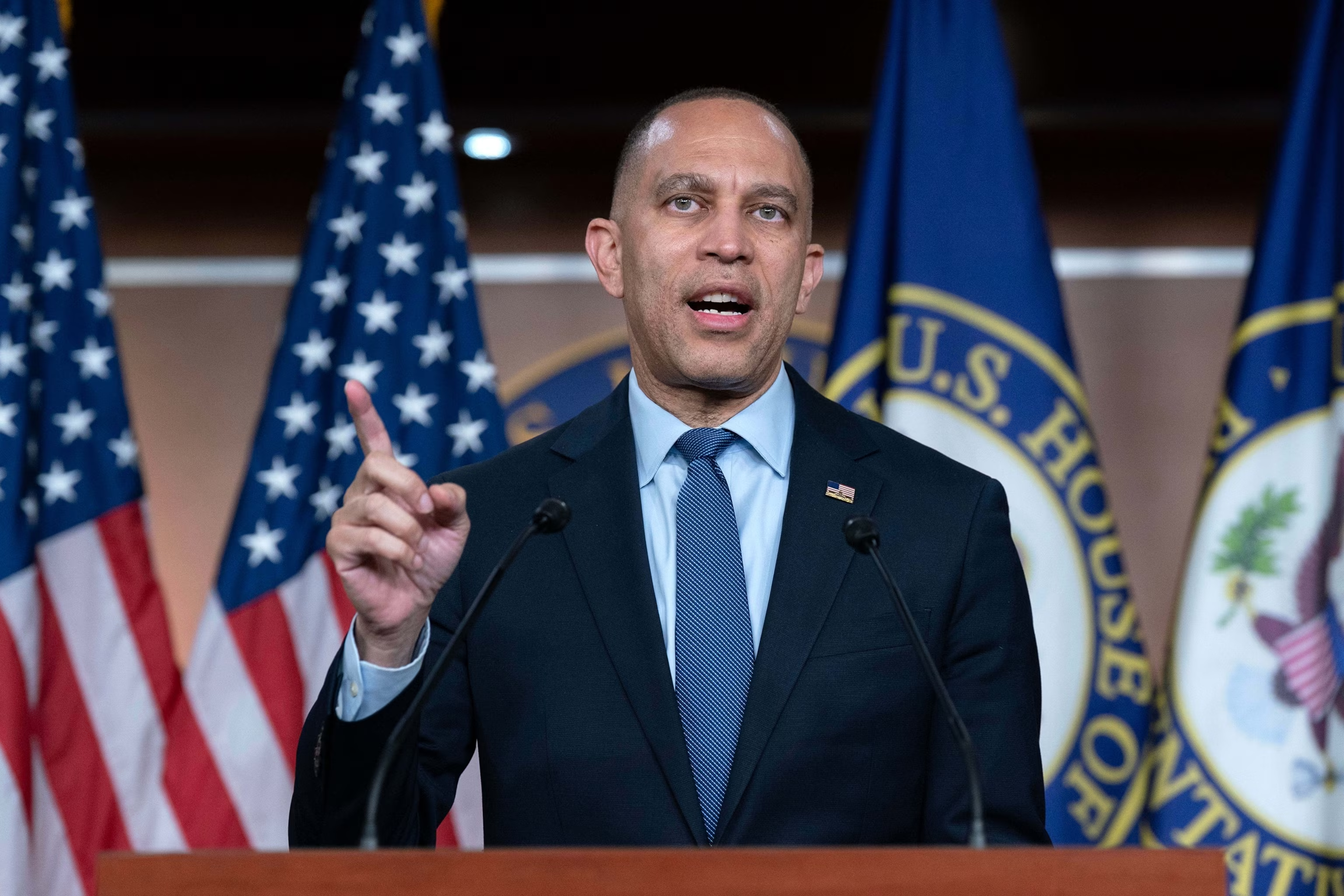
House Minority Leader Hakeem Jeffries delivers remarks during a press briefing on Capitol Hill in Washington, April 16, 2026.Jose Luis Magana/AP
Rep. Brian Mast, who heads the House Foreign Affairs Committee, maintains that the war powers discussion is "entirely political" on the part of Democrats — claiming it's "a mistake to instruct the military to cease a war or a conflict or a battle or anything else."
Democratic leaders suggest that these repeated endeavors — no matter how repetitive they may appear — will likely persist for the duration of the president's operation, thereby extending the political contention on Capitol Hill.
"We intend to keep putting forward War Powers resolutions in the upcoming weeks until we can successfully bring this imprudent and costly war of choice in the Middle East to an end," Jeffries vowed.
Thus, setting aside the turbulence echoing through the halls of Congress, what is the reality underpinning the war powers resolution and its 60-day timeline, and how might it influence the president's actions in Iran?
What is the War Powers Resolution?
The War Powers Resolution of 1973, enacted following the Vietnam War, encompasses multiple stipulations intended to maintain some oversight of the president's military authority and keep Congress informed about the president's military undertakings. To date, the Trump administration seems to have adhered to the law.
Firstly, the War Powers Resolution does not bestow upon the president the power to execute military operations. This authority is rooted in Article II, Section 2 of the U.S. Constitution, which declares, "The President shall be Commander in Chief of the Army and Navy of the United States, and of the Militia of the several States, when called into the actual Service of the United States."
However, the war powers resolution mandates that the president inform Congress within 48 hours of initiating the deployment of military force. Trump fulfilled this requirement on March 2, writing to Sen. Chuck Grassley in his capacity as president pro tempore.
"I am writing to notify you of military action undertaken on February 28, 2026, against the Government of the Islamic Republic of Iran," Trump stated. "I am providing this report as part of my commitment to keep Congress fully informed, consistent with the War Powers Resolution."
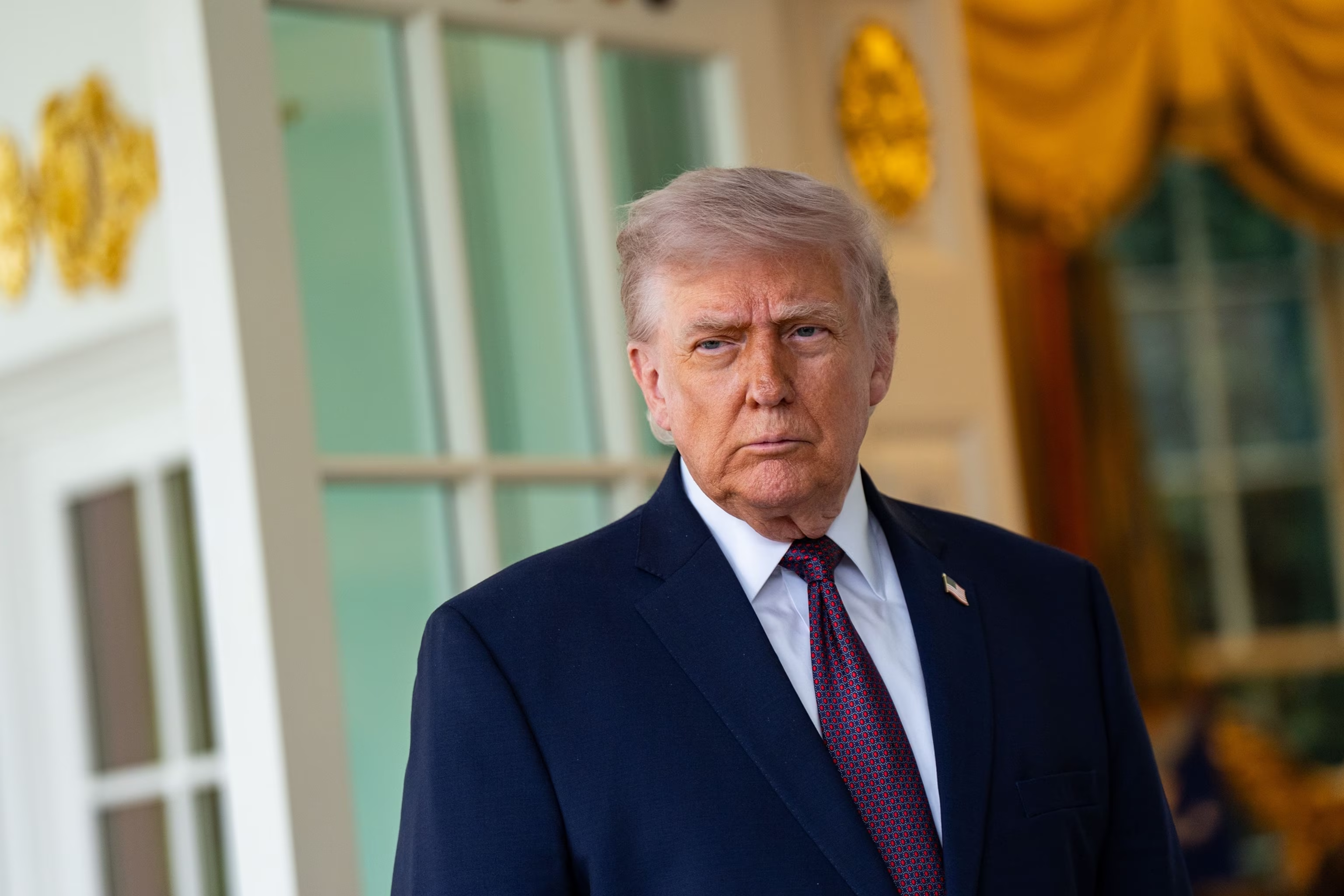
President Donald Trump speaks with journalists outside the Oval Office of the White House, April 13, 2026, in Washington.Salwan Georges/EPA/Shutterstock
That notification triggered a 60-day period during which the president can freely carry out military operations without a congressional declaration of war. Nevertheless, once that period expires, that authority is automatically rescinded — unless Congress declares war or approves legislation authorizing the use of military force before the deadline.
This 60-day timeframe does not represent a grant of power to engage in hostilities but instead functions as a period for legislators to decide whether to address the unauthorized utilization of the military — either by passing an authorization for the use of military force, also known as an AUMF, or by lawmakers choosing to pass a war powers resolution directing the cessation of hostilities.
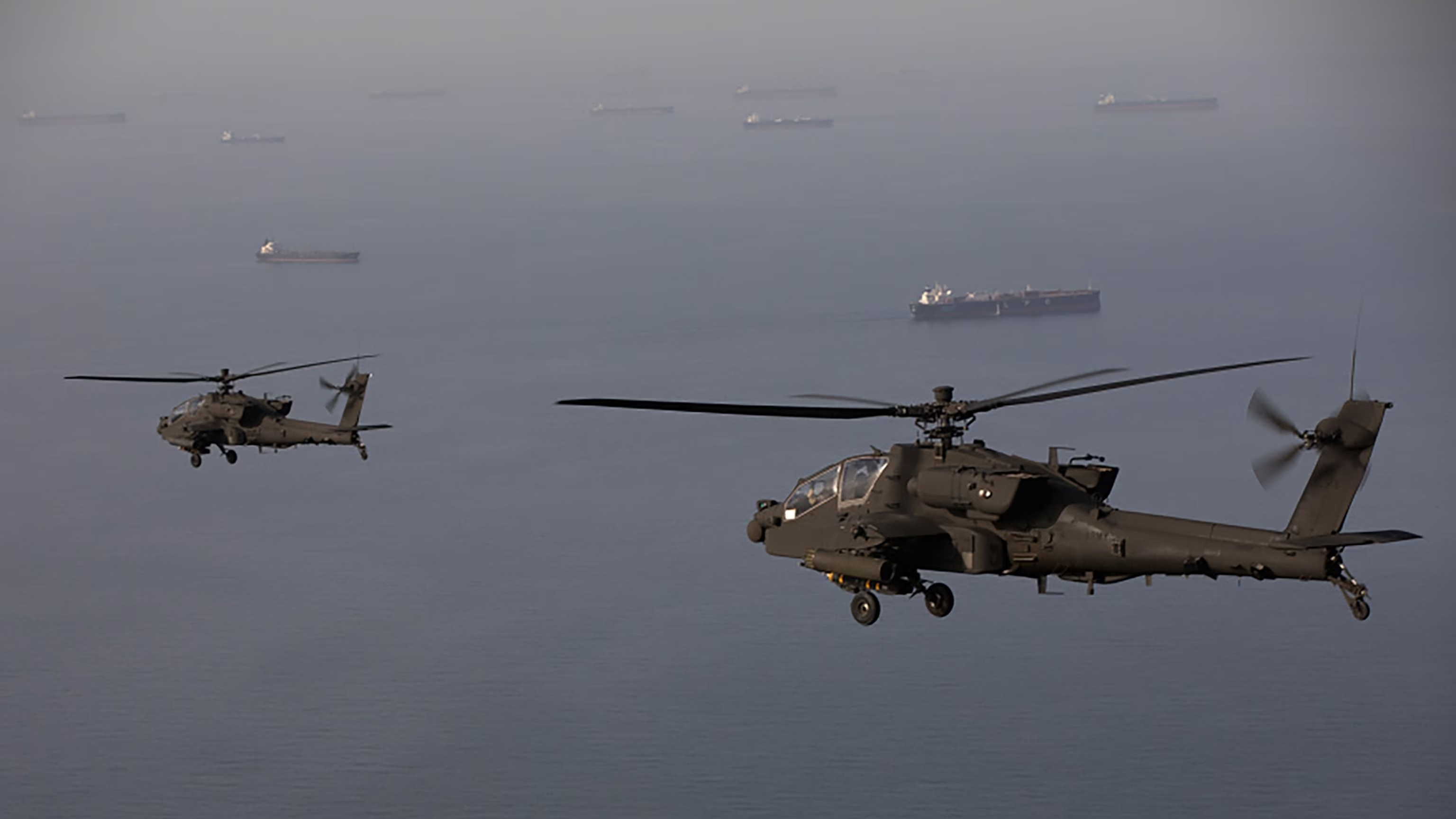
AH-64 Apaches fly above the Strait of Hormuz during a patrol, April 17, 2026.U.S. Central Command/X
What happens after the May 1 deadline?
Even though the deadline falls on May 1, the president retains the option to unilaterally certify in writing to Congress that the continued employment of force is essential to ensure the systematic withdrawal of U.S. forces from the region — adding 30 days to the president's power to wage Operation Epic Fury. While Trump has not deployed any ground forces into Iran, with the exception of conducting a rescue mission, thousands of military personnel are stationed in the area, and the U.S. continues to maintain a naval blockade in the Strait of Hormuz.
Although congressional Republicans have not yet scheduled any open hearings to debate the matter with Trump administration officials, the president's leading advisors have briefed members of Congress in a classified environment on a consistent basis since the operation commenced.
Several members of the president's Cabinet are also present on Capitol Hill this month providing testimony on the president's fiscal year 2027 budget request — presenting opportunities for lawmakers to publicly engage with the administration.
Since assuming the speakership, Mike Johnson has contended that the War Powers Resolution as a whole is unconstitutional.
"This may have been somewhat logical in 1973, but I'm not entirely convinced that this is constitutional," Johnson commented in June after the U.S. bombed numerous nuclear sites in Iran. "Many esteemed constitutional experts argue that the War Powers Act is inherently unconstitutional. I am persuaded by that argument."
Sourse: abcnews.go.com