
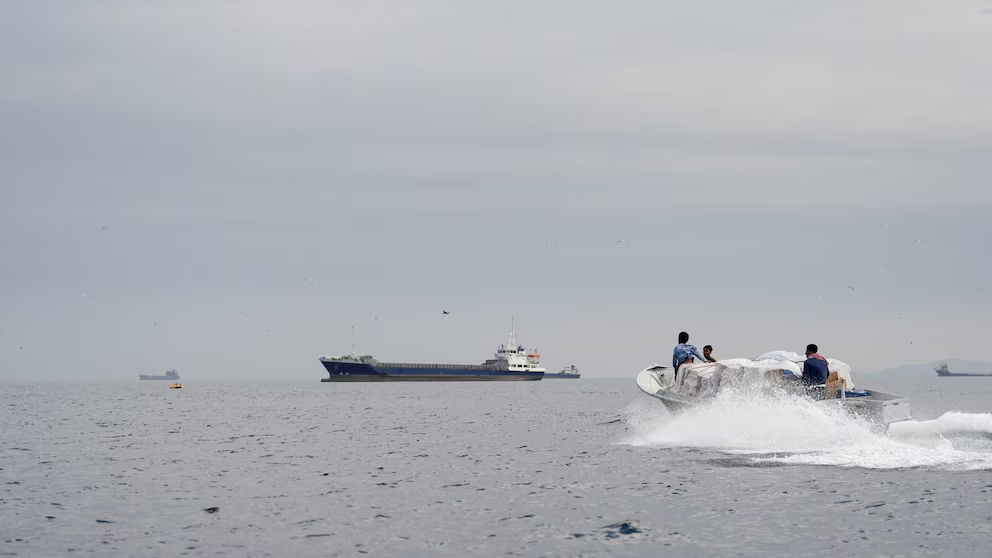
Vessels and a boat in the Hormuz Strait, just off the shore of Oman’s Musandam region, April 12, 2026. Stringer/Reuters
The United States and Iran have both asserted that the vital Hormuz Strait is now "completely accessible," yet substantial doubts linger regarding if and when business-related shipping will return to levels seen before the conflict.
This waterway in the Persian Gulf often sees about a fifth of the planet’s oil and gas supplies moving through it. However, since the beginning of the war in late February, hardly any vessels have passed through the strait.
What the US and Iran are communicating
On Friday morning, both President Donald Trump and Iranian Foreign Minister Abbas Araghchi declared an agreement had been struck to permit the unhindered passage of traffic in the Strait of Hormuz.
The strait was meant to become accessible at the commencement of the U.S.-Iran ceasefire 10 days prior, but the Iranians recanted on the accord, insisting that Israel cease its military actions in Lebanon first.
Following an understanding between Israel and Lebanon materializing overnight, Iran's foreign minister was the first to reveal a fresh agreement concerning the strait.
"In accordance with the ceasefire in Lebanon, the channel for all commercial ships through the Strait of Hormuz is proclaimed fully open for the duration of the ceasefire, via the coordinated path as previously indicated by Ports and Maritime Organisation of the Islamic Rep. of Iran," Araghchi posted on X.
Monetary markets displayed a swift and optimistic response to the developments. The cost of oil in both U.S. and international markets decreased by roughly 9%. U.S. oil is currently being exchanged at values unseen since the early stages of the war.
Nonetheless, there are significant limitations to the announcements made on Friday.
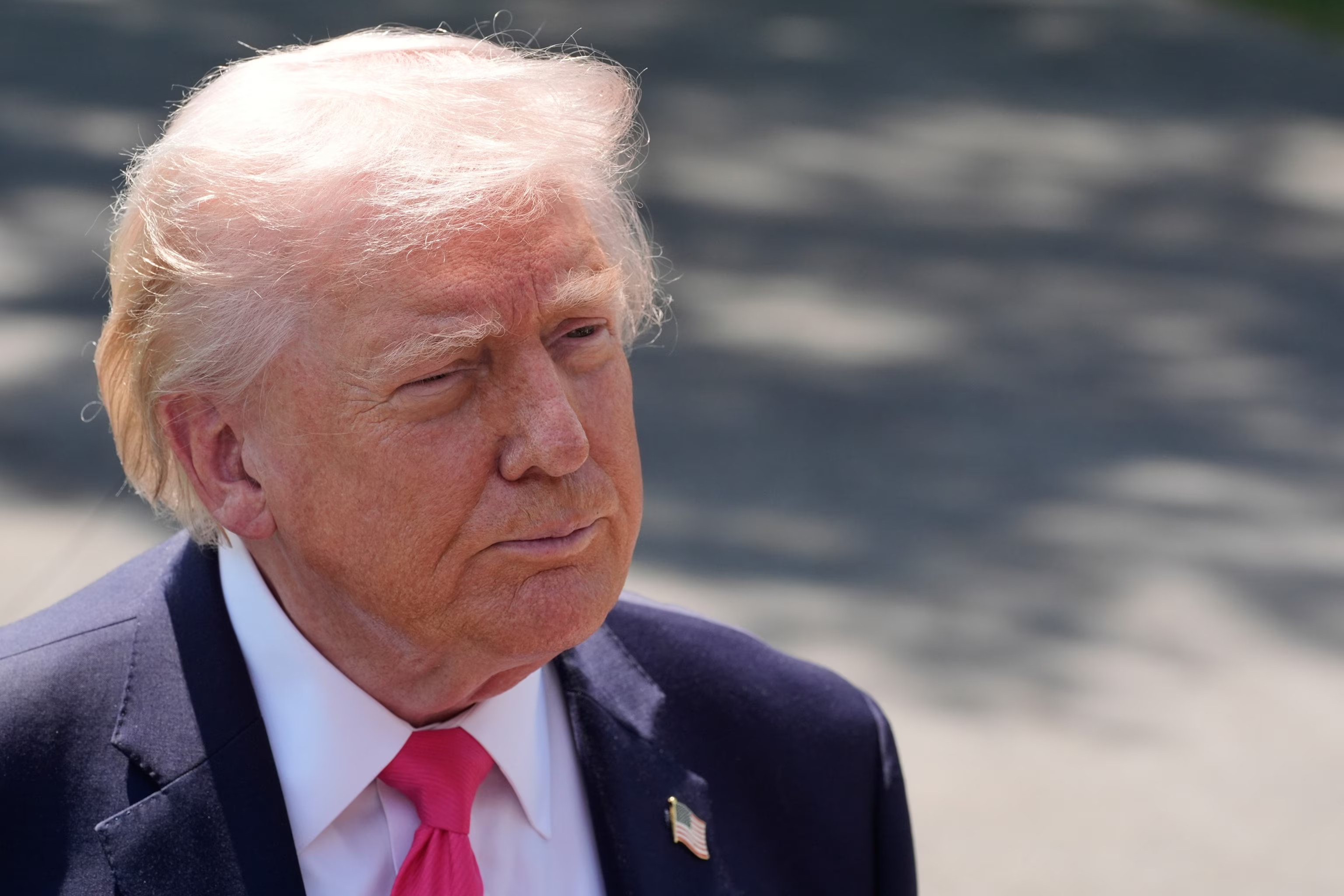
President Donald Trump addresses the press prior to embarking on Marine One on the South Lawn of the White House, April 16, 2026 in Washington.Jen Golbeck/AP
Firstly, President Trump stated that the U.S. naval barricade of vessel movements both to and from Iranian harbors is still in effect. This signifies that Iranian oil tankers are unable to pass through the strait.
On his social media platform, Trump communicated that he will not remove the blockade until a comprehensive nuclear pact with Iran is accomplished.
"THE STRAIT OF HORMUZ IS COMPLETELY OPEN AND READY FOR BUSINESS AND FULL PASSAGE, BUT THE NAVAL BLOCKADE WILL REMAIN IN FULL FORCE AND EFFECT AS IT PERTAINS TO IRAN, ONLY, UNTIL SUCH TIME AS OUR TRANSACTION WITH IRAN IS 100% COMPLETE. THIS PROCESS SHOULD GO VERY QUICKLY IN THAT MOST OF THE POINTS ARE ALREADY NEGOTIATED," Trump posted.
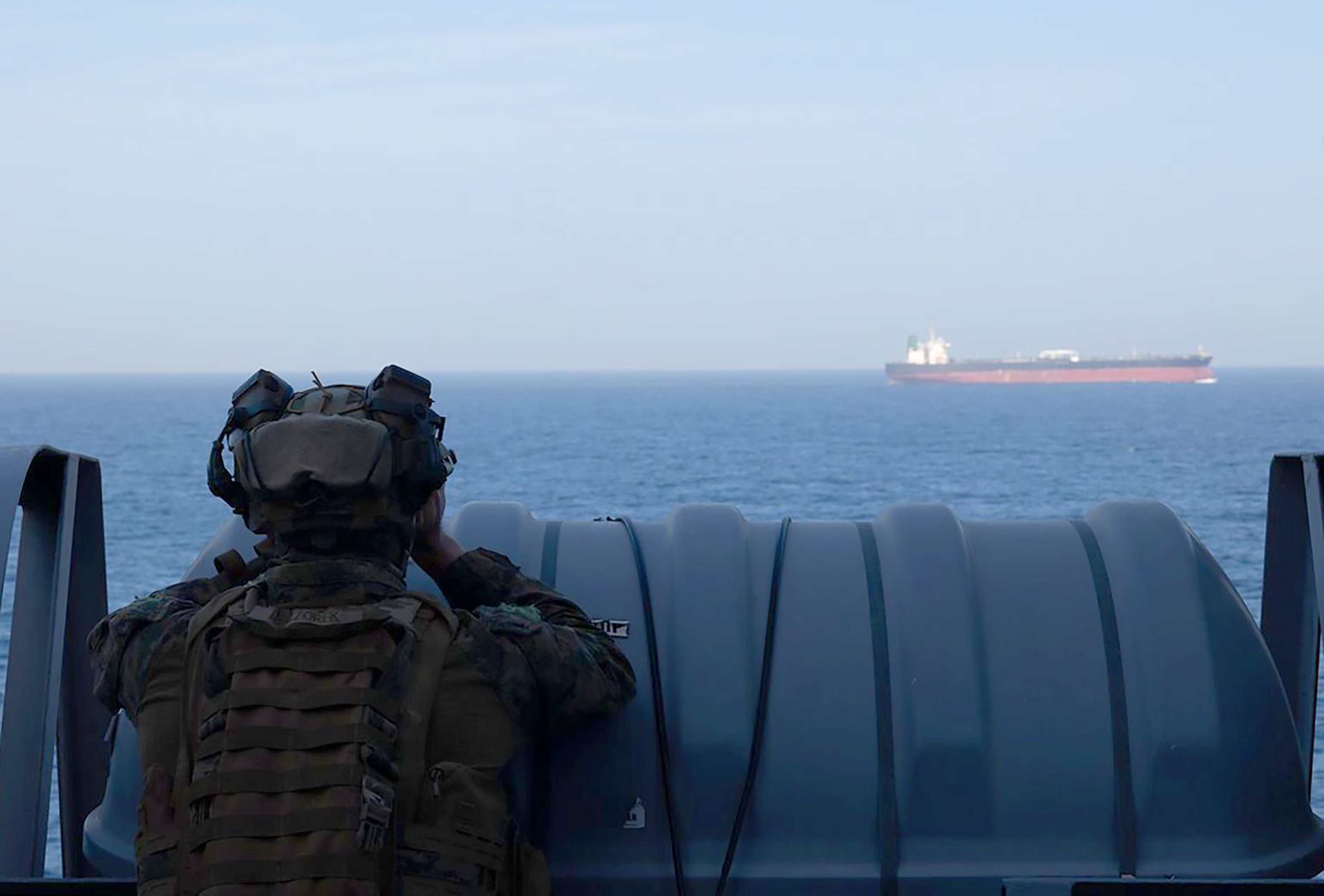
U.S. Marines from the 31st Marine Expeditionary Unit and sailors connected to amphibious transport dock ship USS New Orleans support blockade operations against Iran, April 16, 2026.U.S. Central Command
The Strait of Hormuz is still accessible for vessels heading to and from non-Iranian ports, yet the U.S. is closely observing Iranian ports and is equipped to sustain its blockade for as long as necessary, Adm. Brad Cooper, the commander of U.S. Central Command, mentioned to a limited group of journalists, including ABC News, on Friday.
"It is accessible today, with a couple [of] vessels departing," Cooper noted, in reference to the strait.
Hundreds of vessels remain halted
There are roughly 700 vessels immobilized in the Persian Gulf, as per Matt Smith at Kpler, a maritime data analysis enterprise. Around 250 of these are tankers transporting 165 million barrels of crude and processed materials.
Throughout February, leading up to the war, the strait witnessed between 50 and 100 deliveries of crude oil and liquefied natural gas per day, according to the World Trade Organization. In recent weeks, only a small number of vessels, if any, are passing through daily.
One maritime worker, who requested anonymity for safety considerations, informed ABC News of being marooned on a "fully loaded" tanker in the Persian Gulf near the strait.
"It has been nearly 50 days since the war commenced, and our greatest apprehension is uncertainty, along with not knowing if we will survive this scenario, which is our primary concern, as there is no secure location in the gulf, regardless of your position," they explained.
"We are feeling cornered, as if we are confined in a prison, since we are essentially unable to leave, with the sole exit being through the Strait of Hormuz, which is currently unfeasible," they further stated.
Iran's declaration that the strait is entirely accessible came with its own stipulation that vessels are only allowed to navigate through a "coordinated route" established by Iran. This route compels vessels to maintain a closer proximity to Iranian coastlines.
Confusion also exists regarding Iran’s agreement to permit the U.S. blockade to persist.
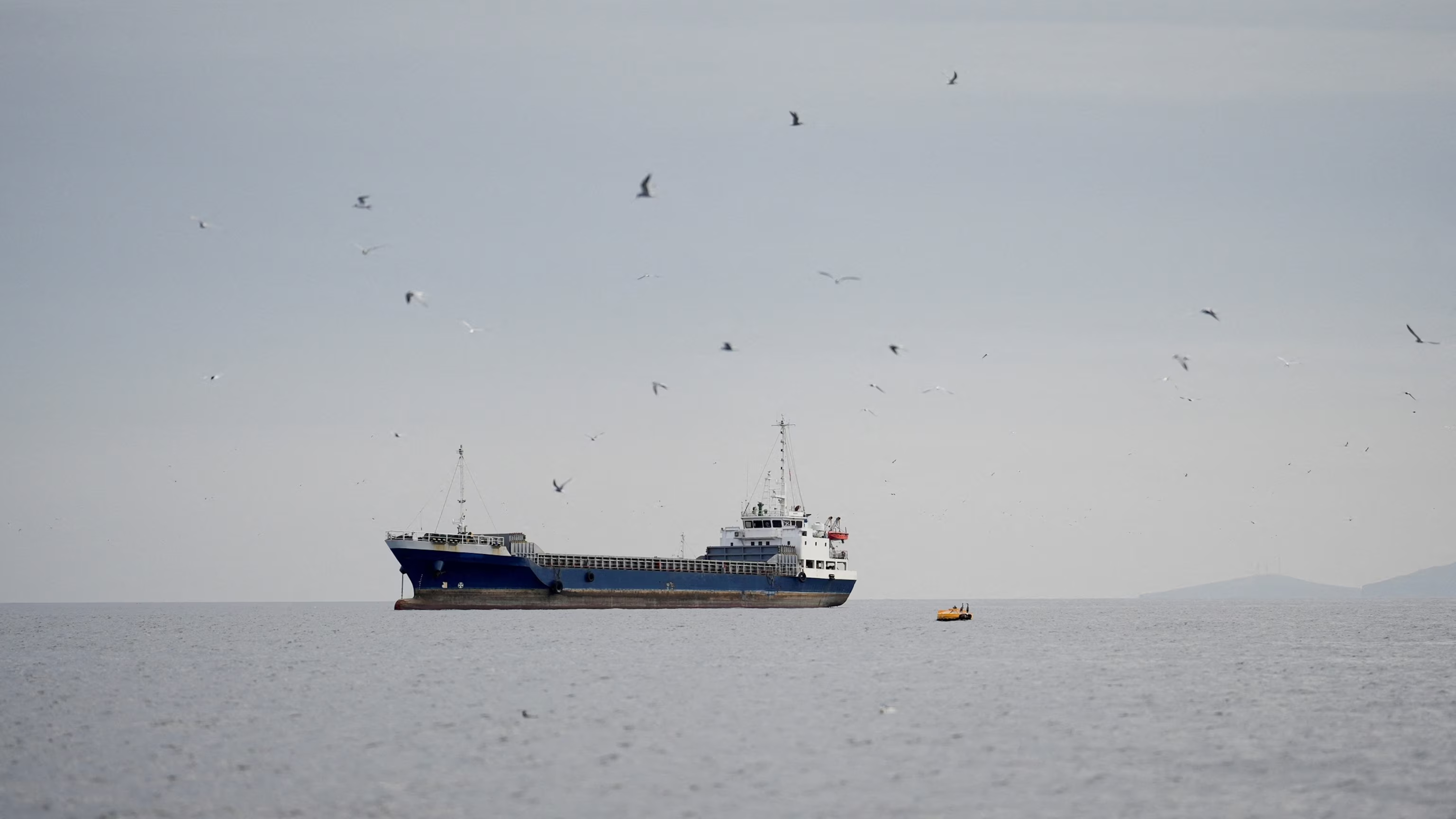
A vessel at the Strait of Hormuz, off the coast of Oman’s Musandam province, April 12, 2026.Reuters
Iranian state media conveyed that the foreign minister’s post was "published without adequate and comprehensive clarification." It specified that Iran maintains complete oversight of ship passages and "any such passage is considered invalid if the purported naval blockade is sustained."
Despite the foreign minister’s statement that the strait is "completely accessible," Iran's Islamic Revolutionary Guard Corps communicated on Friday that the route is limited, military vessels will be prohibited, and "movements are only allowed with the authorization of the IRGC Navy."
However, earlier on Friday, U.S. Central Command revealed that a U.S. Navy guided-missile destroyer directed an Iranian merchant vessel to head back to port. Altogether, 19 vessels have been redirected during the blockade.
MarineTraffic data indicates that the initial passenger vessel to traverse the strait since today's announcement was an unoccupied cruise ship, the Celestyal Discovery. The Malta-registered vessel had been berthed in Dubai for 47 days.
Should traffic be completely reinstated, the speed of that restoration will be contingent upon the shipping firms themselves and whether they determine that the risks have been appropriately minimized.
"Any determination to transit the strait will be predicated on risk evaluations and close surveillance of the security conditions, with recent developments incorporated into the ongoing assessments," the shipping conglomerate Maersk communicated in a statement today.
Similarly, the International Maritime Organization stated today that it is "assessing the recent declaration pertaining to the reopening of the Strait of Hormuz," but did not indicate if it was considered adequately safe for passage.
ABC News' Desiree Adib and Steve Beynon assisted in the creation of this report.
Sourse: abcnews.go.com