
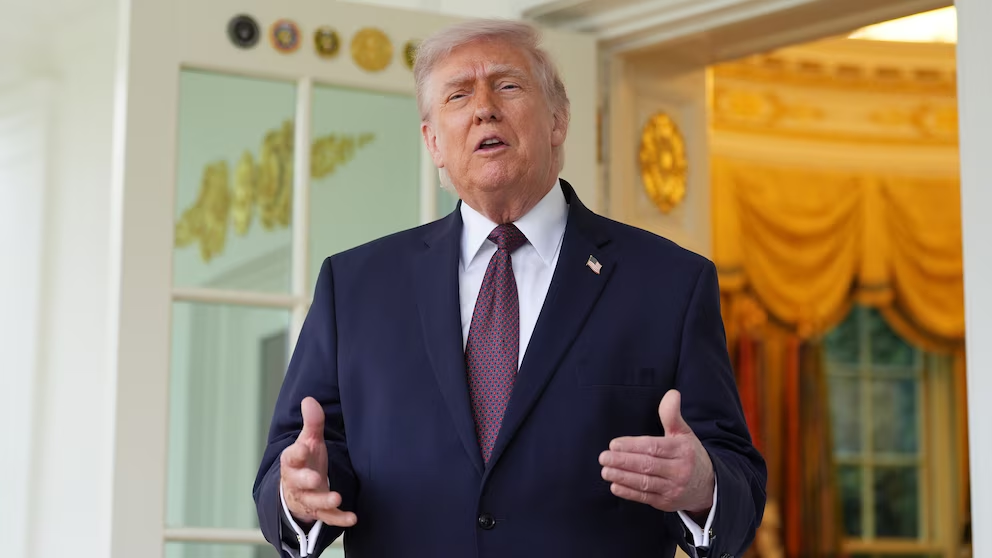
President Donald Trump addressed reporters outside the Oval Office at the White House in Washington, April 13, 2026.Alex Brandon/AP
President Donald Trump stated this Monday that a U.S. naval barricade in the Strait of Hormuz has commenced, a recent turn in the now seven-week conflict after discussions for peace crumbled during the weekend.
Responding to inquiries from the press outside the Oval Office, Trump was questioned concerning his desired outcome from the U.S. blockade of Iranian harbors: Is its purpose to compel Iran back into negotiations or to unblock the crucial sea lane and lower petroleum costs?
"Possibly all of it," Trump answered. "Definitely both of those, and even more."
"We cannot permit a nation to pressure or blackmail the globe, as that is their current conduct," he proceeded. "They are truly extorting the world. We are not going to allow it to continue."
Earlier on Monday, Trump issued a warning to any Iranian vessels nearing the fresh U.S. naval blockade of the Strait of Hormuz, stating that they will be "ELIMINATED."
Trump mentioned that while Iran's marine forces have been "destroyed" by U.S. assaults, any smaller ships approaching the U.S. defense will be annihilated "utilizing the same method of combat employed against drug traffickers on boats at sea."
"It is rapid and merciless," Trump communicated in a message on his social media platform.
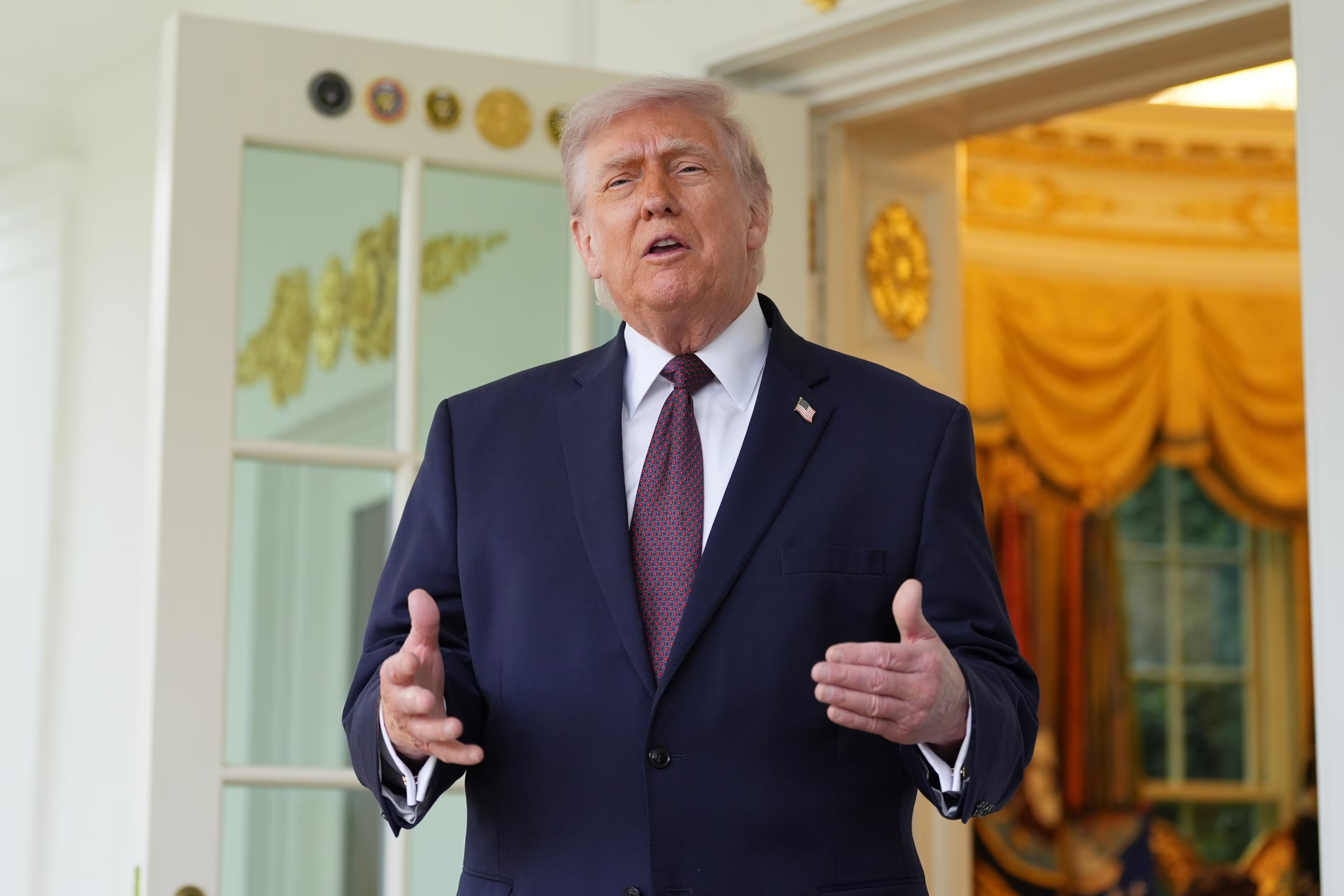
President Donald Trump speaks with reporters outside the Oval Office at the White House in Washington, April 13, 2026.Alex Brandon/AP
Iran has cautioned about the repercussions if the protection of Iranian harbors is jeopardized, with a spokesperson for the nation's combined military leadership asserting that "no harbor in the Persian Gulf and the Sea of Oman will be secure."
Numerous unresolved questions linger concerning the operational aspects of the U.S. blockade and its potential consequences on the dispute.
Trump initially conveyed that the U.S. would impede "any and all vessels" endeavoring to navigate the strait, which typically sees the transit of approximately 20% of the world's petroleum and natural gas resources.
U.S. Central Command, conversely, stated that the blockade would be enforced against any vessels entering Iranian harbors or coastal zones, but made clear that its forces "will not restrict the liberty of transit for ships traversing the Strait of Hormuz bound for or departing from non-Iranian harbors."
Internationally, certain U.S. allies have declared their non-support for Trump’s Hormuz blockade.
"We do not endorse the blockade," British Prime Minister Keir Starmer communicated to BBC radio during an interview on Monday morning.
French President Emmanuel Macron stated that France and the U.K. would instead coordinate a "peaceful, international endeavor" intended to reinstate freedom of passage within the strait.
Trump was questioned this Monday regarding whether he anticipated support from other nations in the U.S. naval blockade.
"We frankly don't require other nations. However, they have proposed their aid," Trump expressed, though when asked, Trump did not specify any particular nations. "We shall announce it, probably tomorrow."
Domestically, Trump is confronted with potential political recoil over increasing gasoline costs. At present, Americans are, on average, disbursing over $4 for each gallon of gasoline, based on data from AAA.
Trump, during a discussion with Fox News on Sunday, conceded that energy costs may not diminish by the November midterm elections, and could potentially be "maybe somewhat elevated."
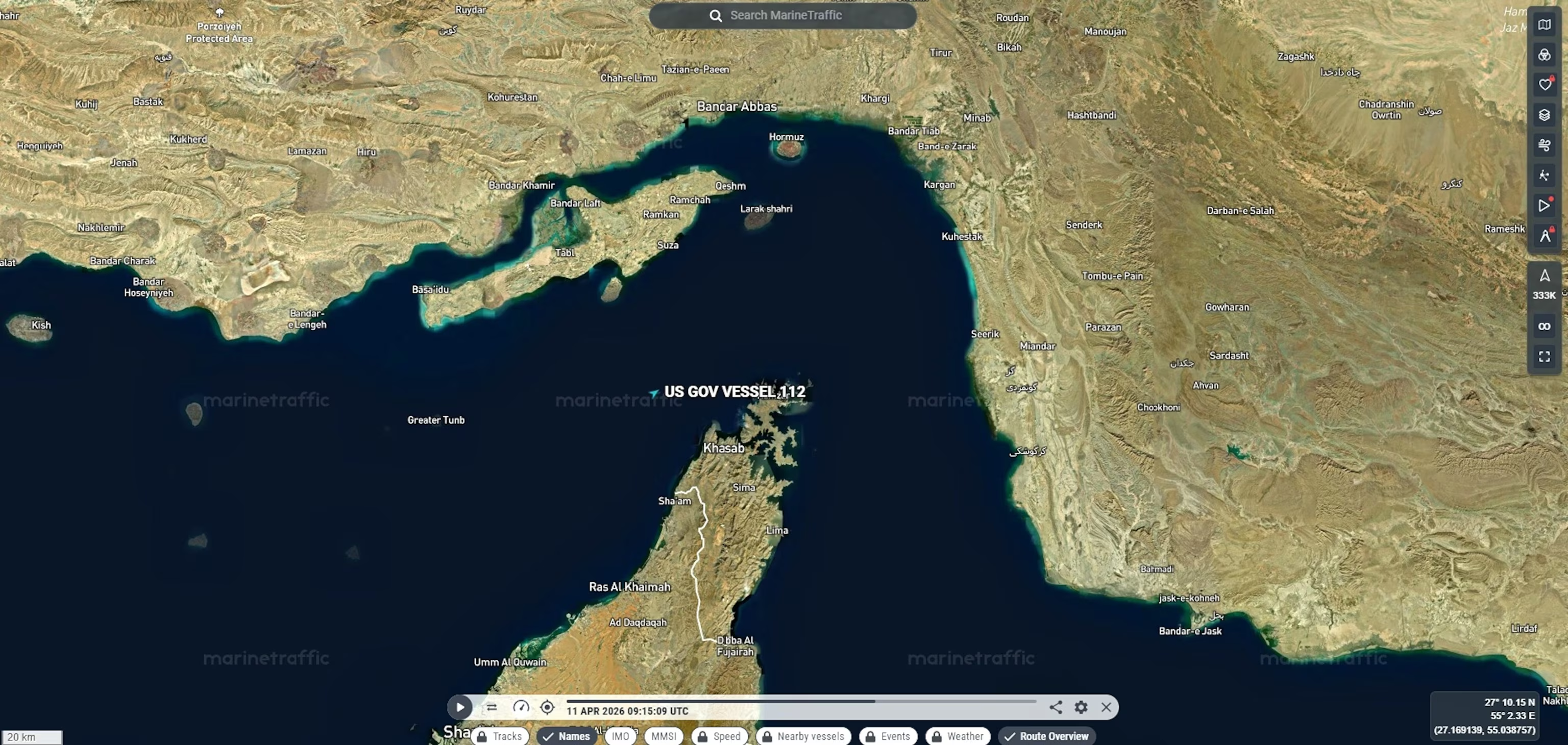
USS Michael Murphy spotted off the coast of Oman on MarineTraffic.MarineTraffic
The U.S. naval blockade of the Strait of Hormuz follows failed peace talks on Saturday between the U.S. and Tehran in Islamabad, which concluded with no accord. Vice President JD Vance, who directed the U.S. delegation, articulated that the U.S. needed an unwavering pledge from Iran confirming they would not seek atomic weaponry.
Trump this Monday echoed that the crucial point of disagreement centered on the enrichment issue.
"Iran will be without atomic arms," Trump asserted. "And we consented to a multitude of matters, but they dissented on that. And I anticipate their consent to it. I am nearly certain of it. Indeed, I am sure of it. Should they not consent, there will be no pact. A pact will never materialize. Iran will be without a nuclear arsenal."
Trump communicated this Monday that the "appropriate figures" in Iran still desire the attainment of a settlement.
"We’ve received calls this morning from the appropriate figures, the suitable figures, with the intent of devising an arrangement," Trump stated.
ABC News' Zoe Magee and Nicholas Kerr assisted in this report.
Sourse: abcnews.go.com