
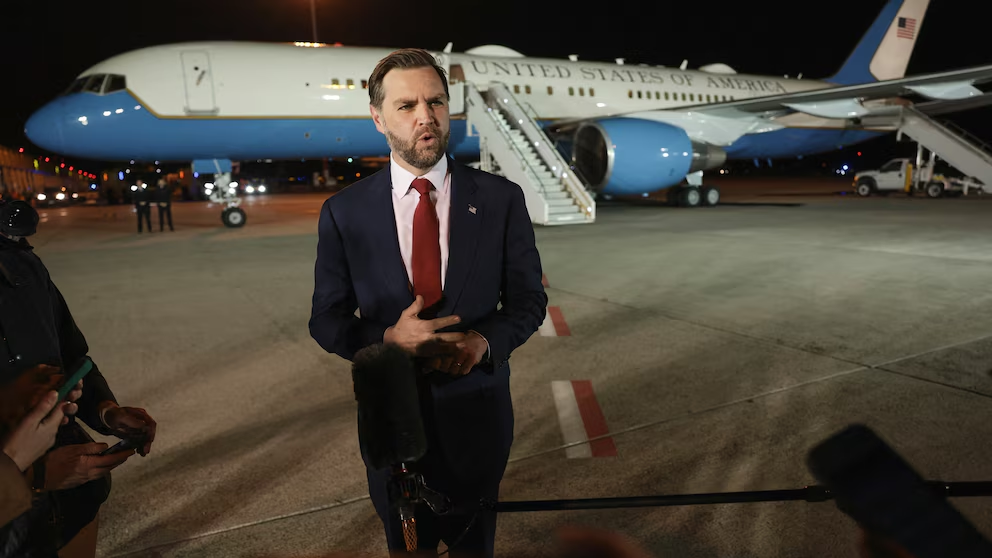
Vice President JD Vance addresses the press prior to embarking on Air Force Two for his return journey to Washington from Budapest, Hungary, April 8, 2026. Jonathan Ernst/Pool/AFP via Getty Images
Negotiators are proceeding with intentions to convene discussions between the U.S. and Iran in Pakistan this weekend, despite indications surfacing on Wednesday that the two-week cessation of hostilities agreement was precarious and that both parties remained significantly divided on fundamental matters.
White House press secretary Karoline Leavitt stated on Wednesday that the talks, geared towards achieving a lasting accord to settle the dispute between the nations, would commence on Saturday morning, local time, in Islamabad. She also noted that the U.S. delegation would be headed by Vice President JD Vance, Special Envoy Steve Witkoff, and President Donald Trump's son-in-law, Jared Kushner.
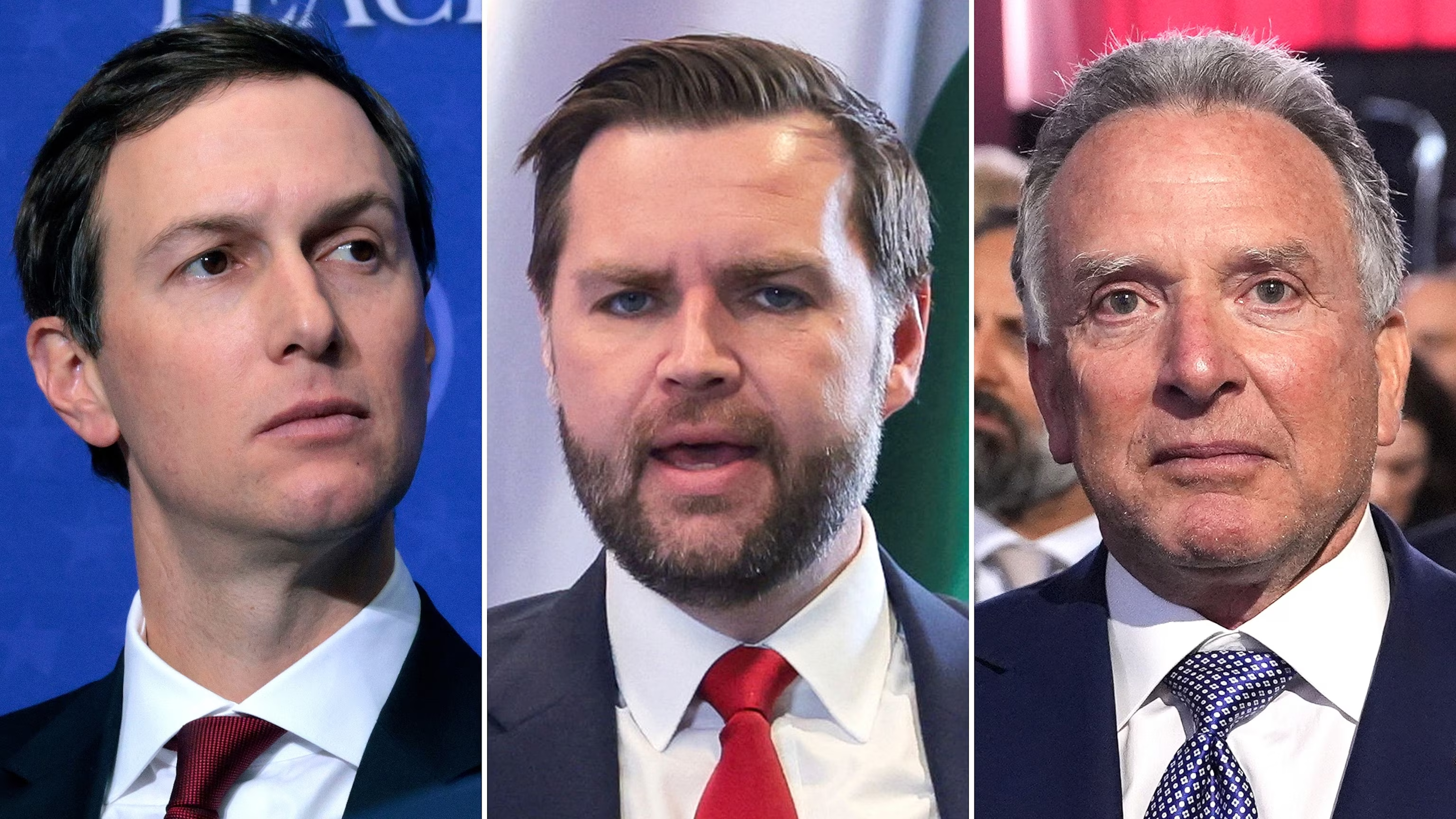
Jared Kushner in Washington, Feb. 19, 2026, Vice President JD Vance in Budapest, Hungary, April 8, 2026, and Steve Witkoff in Miami Beach, March 27, 2026.Getty Images/Reuters/AP
According to officials, the dialogue is expected to initiate as indirect talks — signifying that both the U.S. and Iranian teams will be present in the same location, but communication between them will still be facilitated through mediators.
However, there is a possibility that the Trump administration may advocate for a phase of direct interaction with their Iranian counterparts, similar to what occurred during negotiations prior to the outbreak of war.
The purpose of the discussions is to expand upon the ceasefire agreement that both the U.S. and Iran ratified shortly before Trump's Tuesday evening ultimatum for Tehran to completely open the Strait of Hormuz or face bombardment "back to the Stone Ages."
Nevertheless, before the agreement had been in effect for a full day, Iran threatened to withdraw due to ongoing Israeli military operations in Lebanon targeting Hezbollah — Tehran's most influential proxy in the Middle East.
Mohammad Bagher Ghalibaf, the speaker of Iran's parliament who Trump had previously identified as one of the "more moderate" figures within the country with whom his administration has been in contact, asserted in a statement that the U.S. had contravened the stipulations of the agreement and that a bilateral truce or negotiations would be "unreasonable."
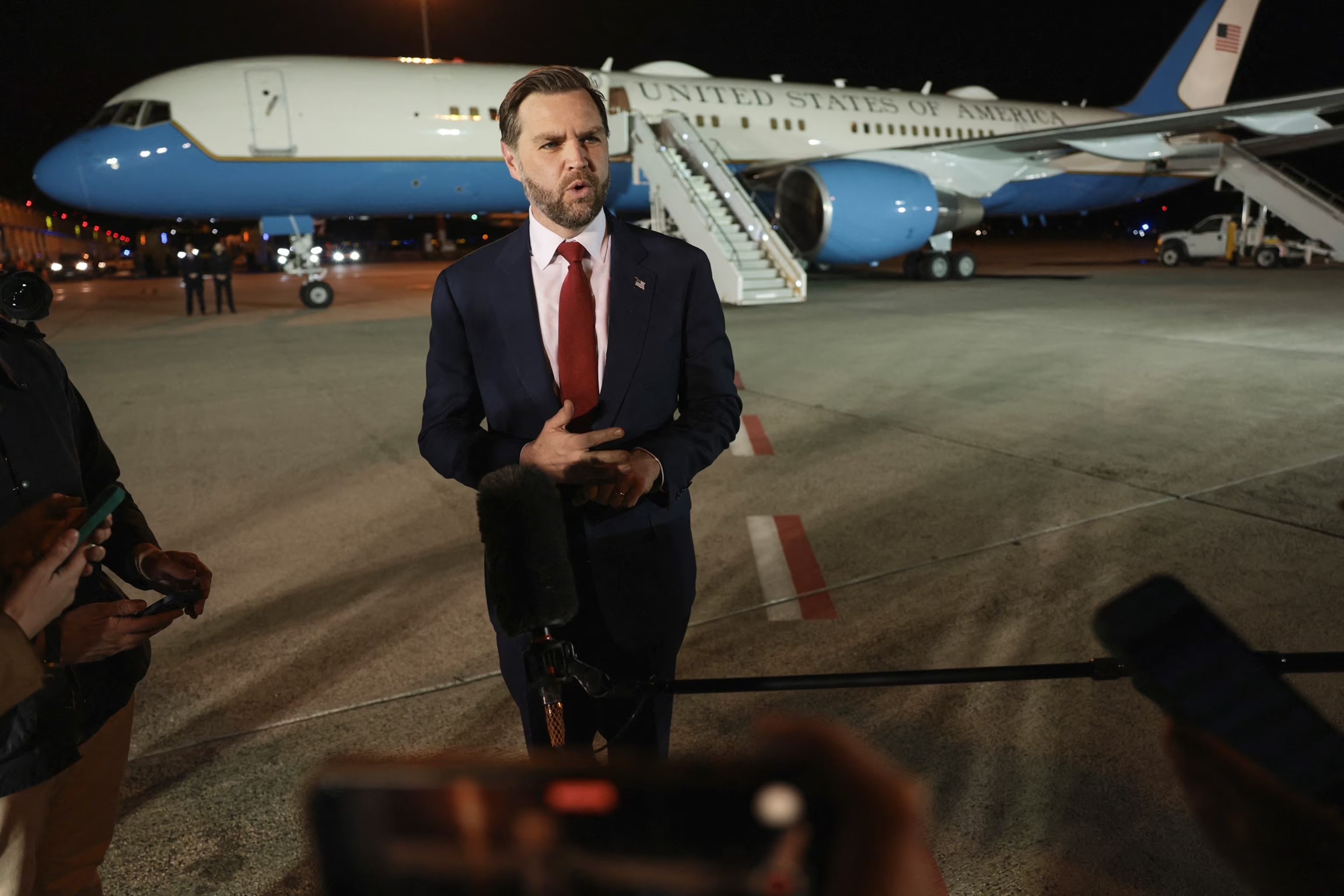
Vice President JD Vance speaks to the media before boarding Air Force Two to return to Washington in Budapest, Hungary, April 8, 2026.Jonathan Ernst/Pool/AFP via Getty Images
But later on Wednesday, Vance indicated there was a "genuine misunderstanding" involved.
"I believe the Iranians assumed the ceasefire encompassed Lebanon, which it did not. We never made such a promise, nor did we imply that would be the situation," Vance stated on a tarmac before boarding Air Force Two to head back to Washington after concluding a visit to Hungary.
Vance further mentioned he anticipated receiving a comprehensive briefing on the matter once he boarded the aircraft, but he understood that the Israelis had offered to "exercise some restraint in Lebanon."

Vice President JD Vance speaks to the media before boarding Air Force Two to return to Washington in Budapest, Hungary, April 8, 2026.Jonathan Ernst/Reuters
"They want to ensure our negotiation is successful," he remarked, adding that it "would be foolish" for Iran to allow the ceasefire to collapse due to the situation in Lebanon.
Assuming the ceasefire is maintained and preparations for discussions in Pakistan advance, the U.S. and Iran will still need to address significant divergences. In a social media announcement confirming his agreement to the truce, Trump stated that a 10-point proposal submitted by Tehran would provide "a viable foundation for negotiation."
Tehran's initial official response to this sentiment suggested that the Iranian regime believed Trump was consenting to a counterproposal it had presented to mediators on Monday, which U.S. officials dismissed as overly ambitious.
Another rendition of that proposal, disseminated in Farsi, went even further, insisting that Iran be permitted to continue enriching uranium — a condition Trump considers unacceptable.
Vance stated on Wednesday that Iran's preliminary list of demands was "immediately discarded" and that there was another proposal "that was far more sensible, formulated through collaboration among ourselves, the Pakistanis, and the Iranians."
U.S. officials have indicated that Iran's initial proposal was largely viewed as a propaganda tool employed by the regime, rather than an authentic reflection of its positions. They added that mediators revised the plan based on feedback from both parties. However, it remains unclear whether Tehran ever formally endorsed a revised version.
Iran has previously advocated for Vance's presence at the negotiation table, perceiving him as potentially offering a more balanced viewpoint within the Trump administration. The vice president's involvement in the discussions would also represent the highest-level, in-person engagement between Iran and the U.S. since diplomatic ties between the two nations were severed in 1979.
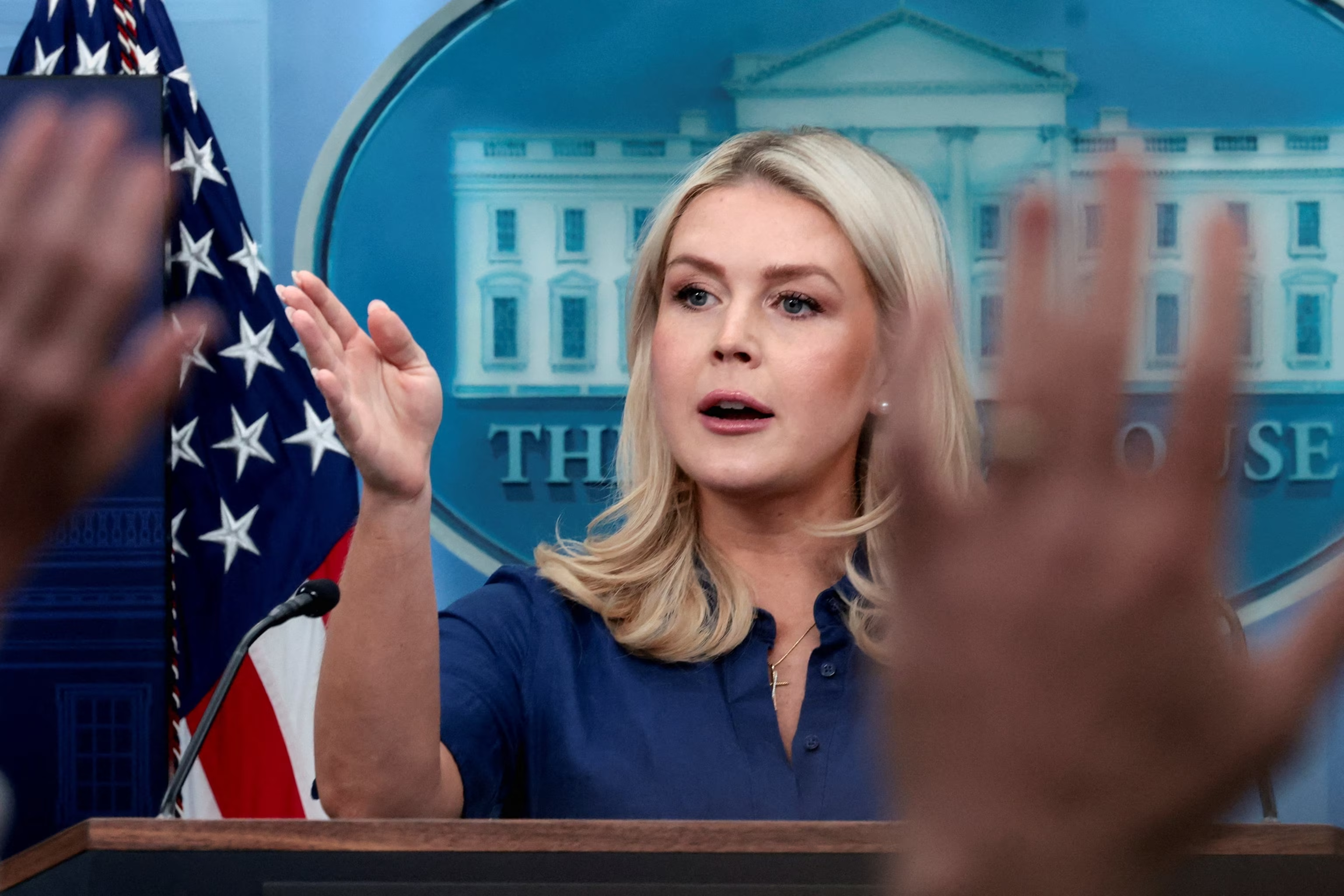
White House press secretary Karoline Leavitt speaks with reporters in the James Brady Press Briefing Room at the White House, April 8, 2026, in Washington.Evelyn Hockstein/Reuters
Leavitt has indicated that the same fundamental disagreements that hindered negotiations with Iran before the U.S. and Israel initiated military actions against the country in late February would still be in effect. These include demands for the complete cessation of uranium enrichment in Iran and the elimination of its stockpiles of near-weapons-grade material.
"He is dedicated to ensuring that this occurs. Our hope is that it will be achieved through diplomatic means," Leavitt stated, later adding that Tehran had suggested it might surrender its stores of highly enriched uranium.
However, Iran has not corroborated Leavitt's assertion, and earlier on Wednesday, Secretary of Defense Pete Hegseth stated that the U.S. could still resort to military action to confiscate the stockpiles.
"We will seize it if necessary," he conveyed to reporters.
There are also contradictory signals regarding Iran's compliance with the administration's most pressing demand: the complete reopening of the Strait of Hormuz. Iranian state media reported on Wednesday that the regime had once again closed the waterway in response to Israel's attacks in Lebanon.
Leavitt refuted these reports.
"This illustrates a disparity between their public statements and the reality. In private, we have observed an increase in vessel traffic in the Strait today," she explained.
Sourse: abcnews.go.com