
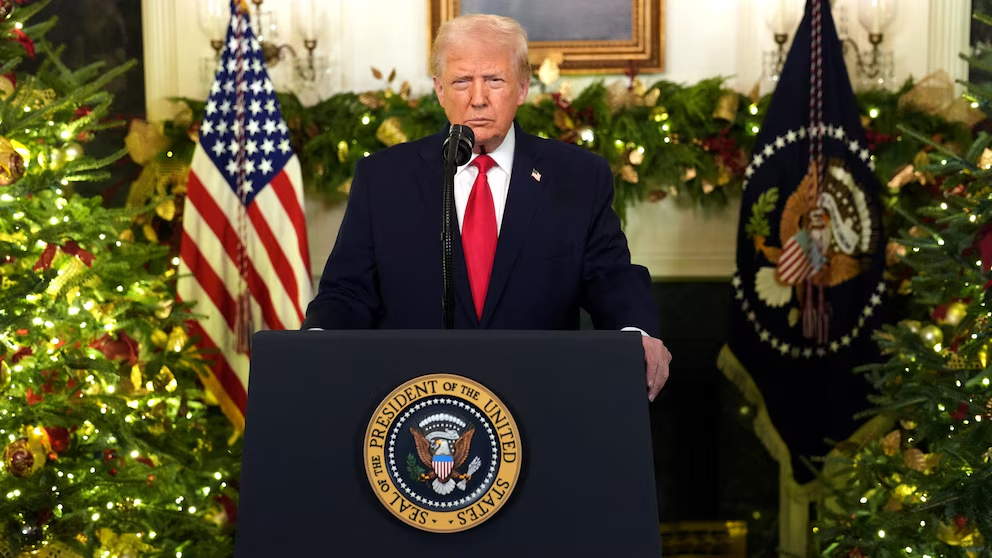
2:53President Donald Trump delivers an address to the Nation from the Diplomatic Reception Room of the White House, Dec. 17, 2025. Doug Mills/Pool via Reuters
President Donald Trump is conveying his message and vision regarding the economy directly to voters; however, he is confronted with an American populace that, according to recent surveys, harbors largely unfavorable views on his handling of economic matters.
“Here at home, we’re rescuing our economy from the edge of disaster,” Trump stated during a primetime address to the nation on Wednesday night.
Vice President JD Vance also visited Allentown, Pennsylvania, on Tuesday to discuss the White House’s economic outlook — just one week after Trump personally visited the Keystone State for comments on the economy.
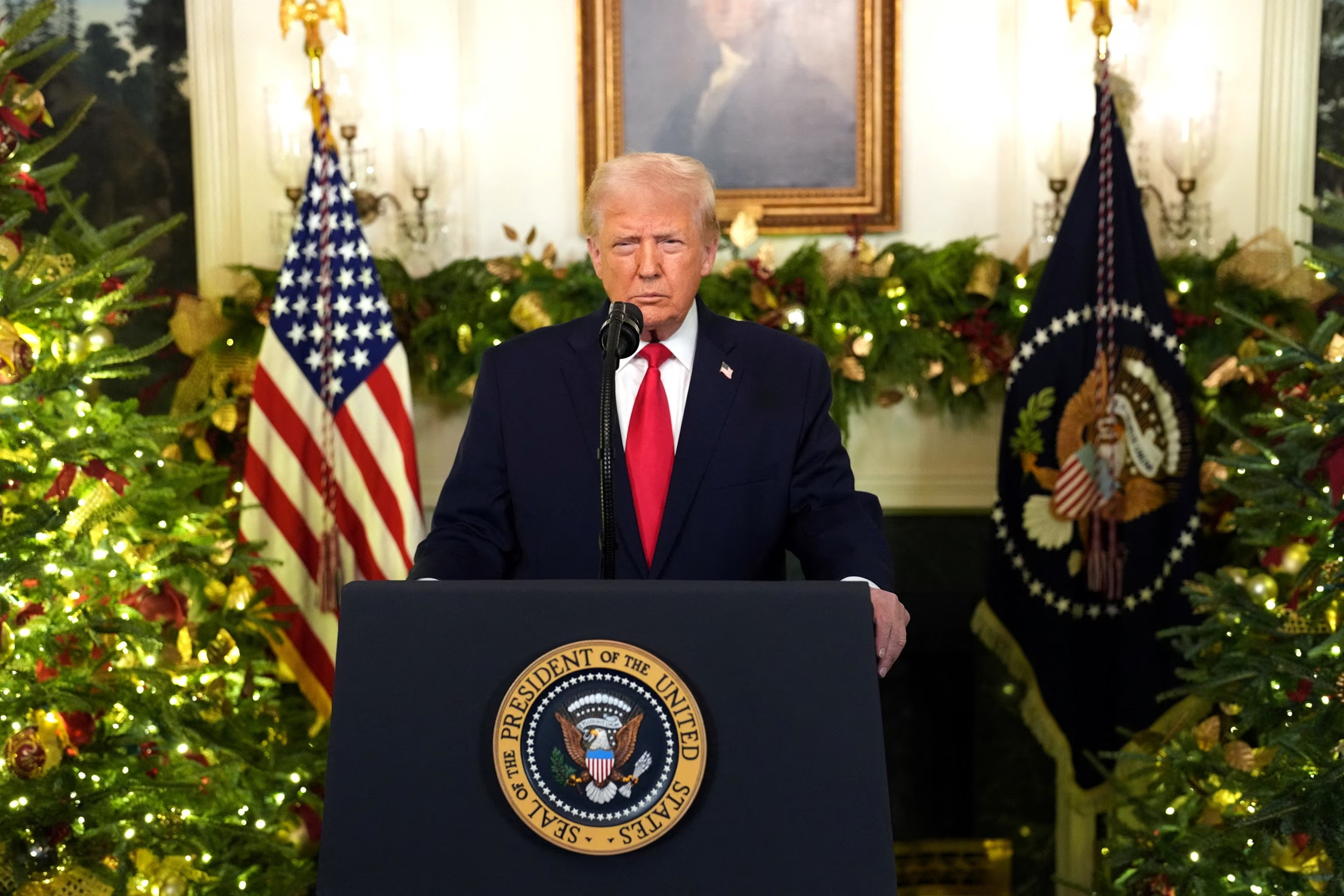
President Donald Trump delivers an address to the Nation from the Diplomatic Reception Room of the White House, Dec. 17, 2025.Doug Mills/Pool via Reuters
However, a Quinnipiac University poll released on Wednesday indicated that nearly 60% of registered voters disapprove of Trump’s economic management, with 65% expressing that the current state of the American economy is “not so good” or “poor.”
The Quinnipiac University poll also revealed that 57% of registered voters believe Trump bears more responsibility for the current state of the economy, while 34% attribute it to former President Joe Biden.
Last week, Reuters and Ipsos released a poll that showed only 31% of Americans approve of Trump’s approach to addressing the cost of living — an increase from 26% in their late November survey.
Dan Schnur, a political communications and strategy expert teaching at the University of Southern California, informed ABC News that part of this sentiment arises from Republican voters, especially working-class young men, feeling the burden of elevated costs.
“Many voters, particularly working-class young males, supported him last year due to their frustration with inflation under Biden and their belief that Trump would improve the situation,” he remarked. “That hasn’t yet materialized, and we are beginning to witness their dissatisfaction.”
Ryan Mahoney, a Republican strategist and former communications director for the Georgia Republican Party, expressed to ABC News that he believes this low approval rating could stem from a “disconnect between the White House and the American populace regarding the president’s acknowledgment and empathy for the financial strain that the American public is experiencing.”
When asked on Tuesday if he was concerned about recent polling and whether affordability might pose a political challenge, Vance dismissed the worries — instead attributing blame to Biden.
“As we go out there and share our narrative, that gasoline and energy prices surged excessively under Joe Biden’s administration, but we’ve reduced the cost of energy — the American people will comprehend that … They recognize that what Joe Biden damaged won’t be repaired in just a week,” Vance stated.
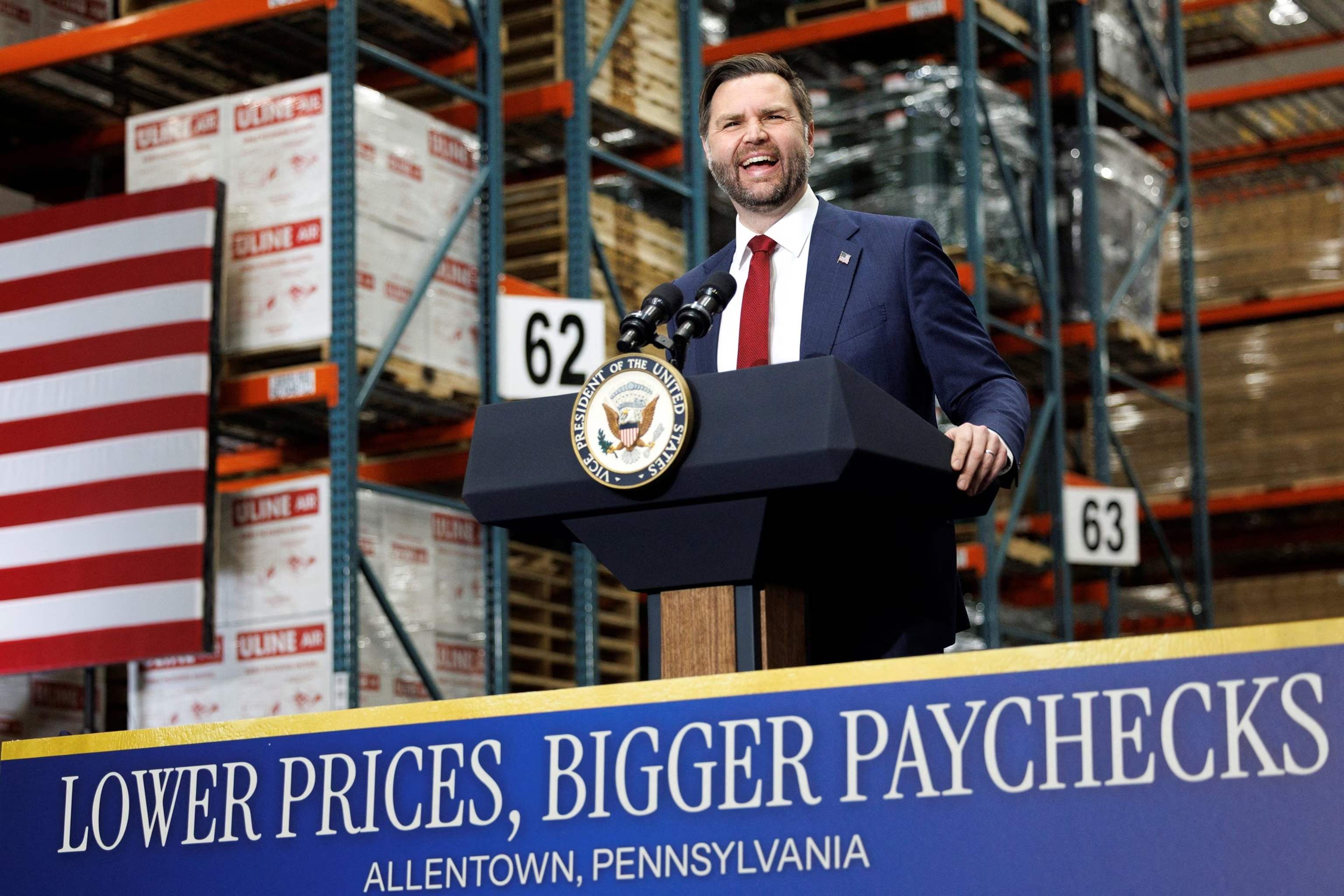
Vice President JD Vance delivers remarks at Uline Inc. in Allentown, Pennsylvania, December 16, 2025.Tom Brenner/Pool via Reuters
ABC News has reached out to Biden’s office for a response to Vance’s comments.
Inflation increased during Biden’s administration (although it slowed toward its conclusion). At that time, Biden and his White House defended the administration’s economic performance by highlighting the actions taken to support the economy, especially as it grappled with the aftermath of the COVID-19 pandemic.
Economists have also stated that the rise in prices during Biden’s presidency did not happen in isolation, but resulted partly from issues such as the supply constraints caused by the pandemic.
Despite the economic challenges stemming from the COVID-19
Sourse: abcnews.go.com