
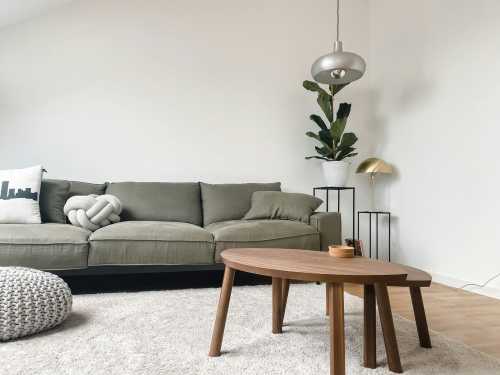
We are all a little crazy in our apartments now. The house has become our fortress, the only shelter from news and worries. But sometimes thousands invested in renovations give zero comfort at the end. It's not about the budget or the lack of taste. It's about the little things that the eye reads before the brain has time to evaluate the brand of the chair.
War-adjusted hoarding syndrome
Shelves filled with jars, candles, and ceramic frogs are visual noise; the eye simply refuses to focus in such an environment. But today this problem has a different dimension. Many of us have on these shelves not just dust collectors, but fragments of our past lives. A cup that survived the move from Mariupol, a child's drawing, a cartridge case from a military friend.
Throwing it away for the sake of fashionable magazine minimalism is definitely not. But if you spread these items all over the apartment, the apartment turns into a flea market. The solution is simple: make a kind of exhibition. Select one specific shelf, rack or display case. When artifacts dear to your heart are collected together, they look like a conscious collection, not chaos. And the rest of the surfaces should be left unfilled. One stylish ceramic vase from Ukrainian masters or a stack of good books look much better than a dozen small souvenirs. Give your eyes a rest.
A handkerchief-sized rug
Islands of despair – that's what I call small rugs that lie lonely somewhere in the center of the room. They visually fragment the space and make the furniture look as if they were placed randomly while the floor was being washed. A normal rug (which is now also an important element of floor insulation for many) should unite the area. At least the front legs of the sofa and armchairs should stand on it. Replacing this piece of fabric with an adequate size sometimes changes the proportions of the room more than moving the walls.
Curtains that jumped up
Even the most expensive fabric will look cheap if the curtains are too short. When there is a noticeable gap between the floor and the textile, the room seems lower and loses its neatness. The best option is curtains from the ceiling (from a hidden cornice) to the floor. This technique visually stretches the room.
By the way, many people are now choosing thick blackout fabrics – they not only make the interior “more expensive” thanks to beautiful folds, but also help with light blocking and ensure a sound sleep.
Office chandelier
If blackouts have taught us anything, it's that it's about understanding how cool it is to live with local lighting. A room lit by battery-powered lamps and garlands suddenly became the coziest place on earth. And then the overhead light was turned on – and the magic disappeared. One bright chandelier in the center makes the space flat. A normal interior requires shadows and halftones. A floor lamp in the corner, a sconce, a table lamp with warm yellow light – these are not just decor, they are literally tools for reducing cortisol.
Chaos of wires (and chargers)
In our realities, everyone at home has their own personal “point of invincibility”: charging stations, extension cords, and tangles of wires. It is clear that this is a strict necessity, but this visual noise is terribly exhausting. You can't hide a device like EcoFlow in a dead cabinet – it needs to breathe. But you can at least pull the wires together with black clamps and attach them to the legs of a shelf or table. Cables that don't lie under your feet in a shapeless mass immediately reduce the degree of clutter by fifty percent.
A mixed bag of soup instead of eclecticism
Mixing minimalism with an old grandmother's bedside table or a Hutsul bed is a beautiful idea. Roots, identity, the memory of generations. But the line between bohemian eclecticism and an apartment where everything that is a shame to throw away has been taken away is very thin. So that a vintage chair does not look like a foreign body, there must be a system in the room. A common denominator. A shade of wood that is repeated in the mirror frame, or a texture that echoes the textiles. Things should talk to each other, and not each shout about its own.
The aroma of stagnation
We stop smelling our own home about three minutes after we cross the threshold. And for good reason. Stagnant air, echoes of last night's dinner, or the smell of a damp towel can ruin the impression of the most exquisite design. And no, dousing everything with chemical air freshener “sea breeze” is not the way to go. It's enough to simply open the windows and find your diffuser with the smell of something discreet – sandalwood, cinnamon, or greenery. A space that smells fresh is subconsciously read as safe. And this is probably the only thing we want from it now.
Share
Subscribe to UkrMedia on Telegram.
⚡ Readers' Pulse
What is the basis of true comfort for you right now: impeccable visual cleanliness or a space filled with meaningful things despite the chaos?
0 people have already voted. Join the discussion.
✨ Strict order 🧸 Sincere imperfection 🤔 Looking for my own balance
☝️ First choose your position
✏️ Write a comment
📊 Mind map
✨ Strict order 0% 🧸 Sincere imperfection 0% 🤔 Looking for my own balance 0% 💡
The discussion is just beginning. Be the first to comment!
Comments
New ones first ↕
There are no comments yet. Be the first!