
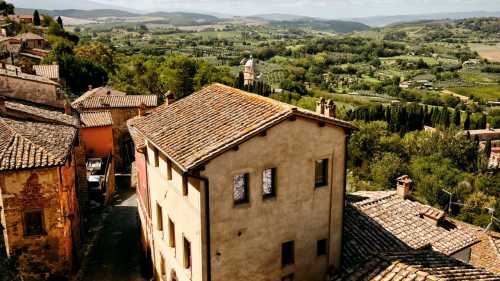
A familiar story. You flip through the feed, see an advertisement: a villa in Italy for 1 euro. The sea, the sun, ripe grapes. A plan instantly forms in your head, how you escape from Kyiv prices for panel houses and become a European landlord. Sounds great. But I climbed to understand the mathematics of this attraction of unprecedented generosity. Spoiler: you have just found the most expensive way to ruin your life.
Italian mayors invented the “Houses for a Euro” program not because of the good life. Where do these objects come from? Imagine a local whose grandmother left him a pile of medieval stones somewhere in the deep province of Calabria or Sicily. He doesn't plan to live there. The renovation costs a lot of money. Taxes drip every year. And if a piece of historical stucco falls on someone's head, it's a crime and a gigantic fine. The owner simply dumps this ballast on the municipality. And the city hall is looking for fools… sorry, investors, to bring fresh money into a dead village.
Get the image of Monica Bellucci and Aperol on a terrace out of your head. Reality is a narrow alley where you can get stuck, no jobs, and neighbors whose only entertainment is going to the pharmacy. The youth there fled to Milan or Rome a long time ago. The nearest normal hospital is 50 kilometers away on a serpentine road. The Internet can be accessed if you climb onto the roof and pray. By buying a house there, you become a city-forming enterprise. You are obliged to bring cash and create the illusion of life.
Now for the numbers. You solemnly give the mayor a 1 euro coin. Fanfare. And then they pull out the real bill from under the table.
To register a property, you need a notary. He doesn't work for euros – he respects himself and wants to eat pasta with truffles. That's 3,000 euros. Add cadastral fees, taxes and papers with seals – another 2,000. You haven't even crossed the threshold yet, and you're already in the red by five thousand.
You open the old door. There are no Renaissance antiques. There are four tons of construction debris, rusty springs, and mummified pigeons from the time of Mussolini. It won't work to quietly throw it in the trash – this is Europe with its eco-standards. Hiring a municipal service to remove this historical junk will cost another 2,000-3,000 euros. The bill: 8,000 euros. The house, in fact, doesn't exist yet.
Communications? Cut off half a century ago. To lay pipes in a meter-wide street, you have to dig up the paving stones by hand. These are new circles of bureaucracy and thousands of euros just for the right to have a flush toilet.
The city hall will also require a security deposit — from 2,000 to 5,000 euros. This is your promise to make the housing situation in three years. If you don't make it — the money goes to the budget for benches, and the house is taken away and sold again for 1 euro to the next dreamer.
Do you think you'll have time? Renovation in the Italian province is a separate type of torture. You can't patch up the facade with cheap foam from Epicenter. This is cultural heritage. The state commission will force you to buy authentic windows, specific tiles, and paint of an approved shade. The stone for the path will cost as if it were carved by Michelangelo.
And the local builders are people whose speed is inferior to tectonic plates. Two hours of smoke breaks, three hours of siesta and 45 minutes of arguments about mom's lasagna. Their “we'll do it tomorrow” stretches for years. The finale of this restoration will extract 50, 100, or even 150 thousand euros from you.
And here you are standing in the village. There is no money, your eyes are twitching, but there is a beautiful house. Are you thinking of moving there to live? No one has canceled the strict rule “90/180”. Buying real estate does not give you the right to live. You have spent a hundred thousand to be a tourist in your own house for three months out of six months.
Plan B is to build a boutique hotel and rent it out on Airbnb. Six months go by, and the only guest is the neighbor's goat, who came to chew on your ornamental bush. Tourists aren't stupid. They won't go to the wilderness to watch paint dry. They'll overpay for a tiny room in Rome, where there are restaurants and civilization.
Give up and decide to sell? Supply exceeds demand. Who needs your villa for 150 thousand, if the city hall nearby is giving away ruins for euros? Throwing the keys to the mayor and running away won't work either. You are in the cadastre. The Italian tax office will write to you for life. Annual taxes, meter subscription fees, garbage collection, fines for tall grass in the yard. To legally give up the house in favor of the state, you will have to pay thousands of euros again to the notary and the fee.
You didn't break the matrix. You just bought a ticket to a quest room with no exit. With your own money, you became a sponsor of a dying village, paid for a notary's vacation, and provided work for a local team.
Share
Subscribe to UkrMedia on Telegram.
⚡ Readers' Pulse
Would you risk fitting into this Italian horror for the sake of a villa, or would it be better to calmly drink coffee in a Kyiv panelka?
0 people have already voted. Join the discussion.
🍷 I want an Italian quest! 🙅♂️ Thank you, I'm adequate 🤔 I have my own dacha
☝️ First choose your position
✏️ Write a comment
📊 Mind map
🍷 I want an Italian quest! 0% 🙅♂️ Thank you, I'm adequate 0% 🤔 I have my own dacha 0% 💡
The discussion is just beginning. Be the first to comment!
Comments
New ones first ↕
There are no comments yet. Be the first!