
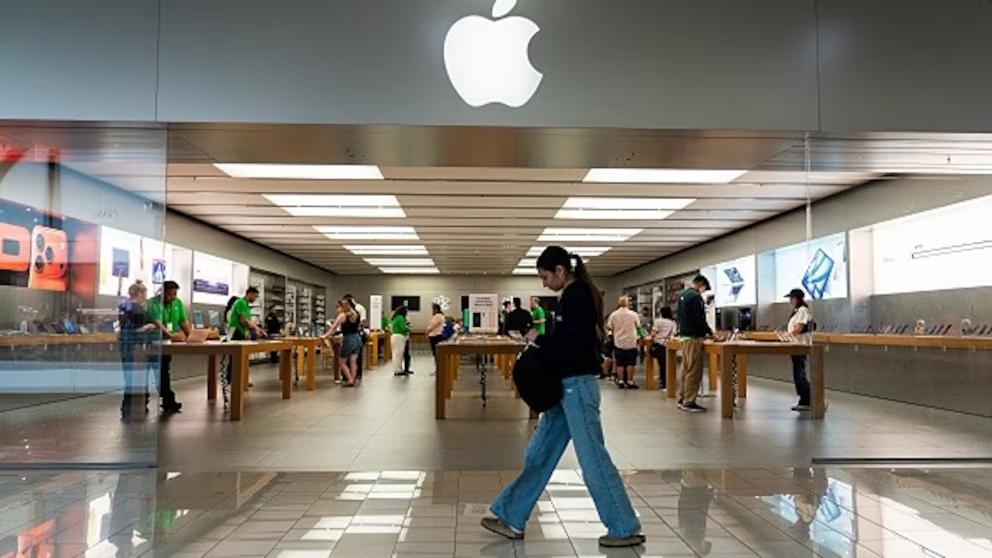
A retail location for Apple at the Americana at Brand mall in Glendale, California, as seen on May 7, 2026. Bloomberg via Getty Images
With a worldwide scarcity of memory and storage microchips for computers, Apple’s Chief Executive Officer, Tim Cook, is informing consumers that a cost increase for the technology giant’s sought-after products is "unavoidable."
In a discussion with The Wall Street Journal, Cook indicated that the immense demand for memory chips from artificial intelligence firms has placed Apple in a challenging situation, which he likened to a "hundred-year flood."
"In my forty years of experience, I’ve never witnessed anything comparable in any sector," Cook stated in the Journal’s article published on Wednesday.
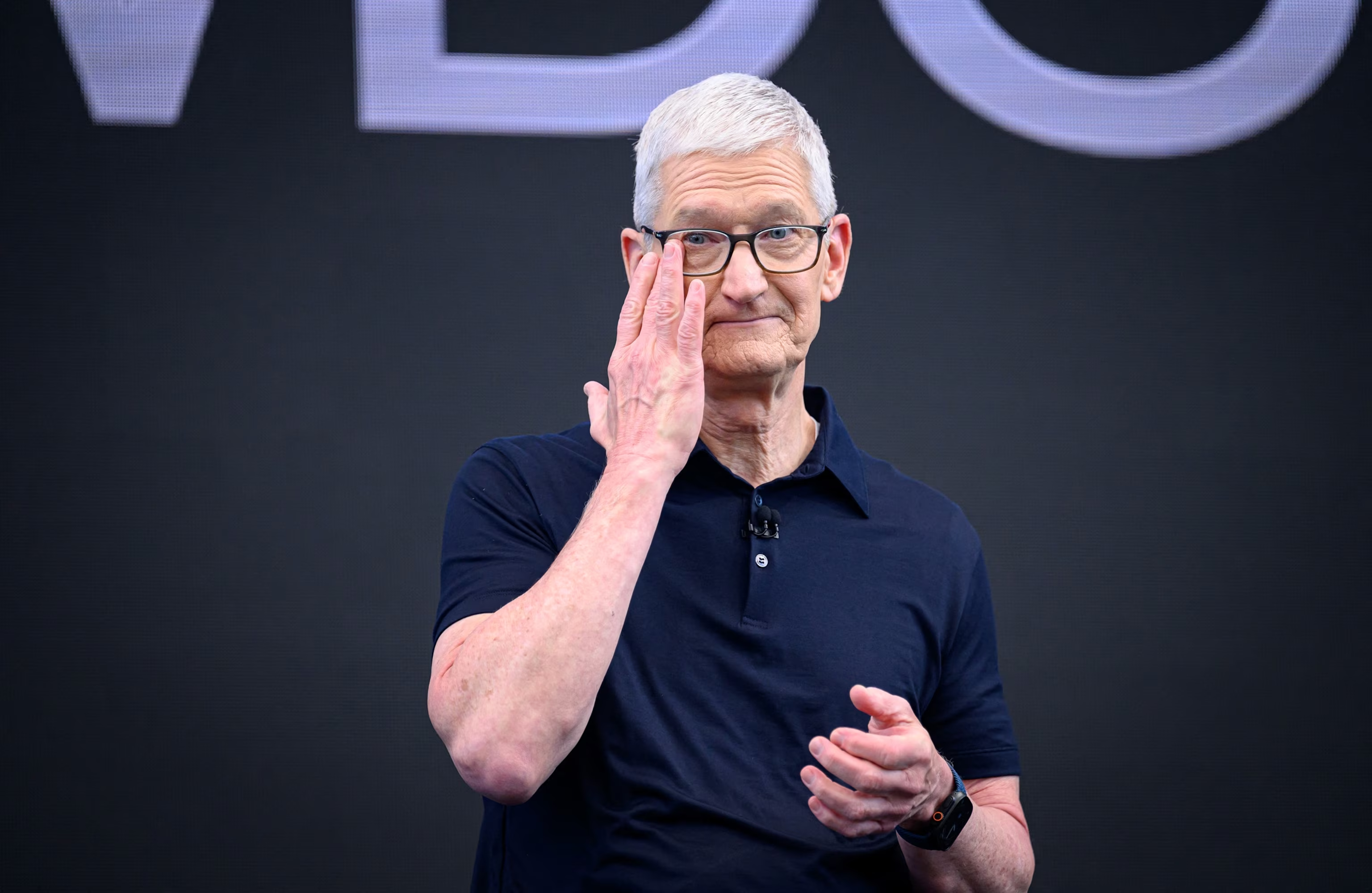
Apple’s CEO, Tim Cook, dabbing a tear during his final Apple Worldwide Developers Conference (WWDC) at Apple Park in Cupertino, California, on June 8, 2026. Josh Edelson/AFP via Getty Images
As Apple prepares to unveil its latest iPhone 18 models later this year, Cook mentioned that prices are expected to rise. However, he did not specify the exact timing of the price adjustment or which products would be impacted.
"Regrettably, escalating prices are unavoidable," Cook shared with the Journal. "We are exerting our utmost effort to lessen the substantial increases being passed on to us, and we have been attempting to shield our clientele from these hikes, but the circumstances have become untenable."
A retail location for Apple at the Americana at Brand mall in Glendale, California, as seen on May 7, 2026. Bloomberg via Getty Images
Cook, who is scheduled to conclude his tenure as the Silicon Valley company’s CEO on September 1st, noted that the escalating expense of memory and storage chips, driven by the demand from AI servers, is making it difficult for Apple to maintain its profitability.
Although Cook did not reveal the potential range of price increases for its products, the technology research firm TechInsights has projected that the cost of the forthcoming iPhone Pro 19 could increase by over $200, potentially reaching approximately $1,299, according to the Journal.
"We are facing reduced availability at a time when consumers desire devices, and chip manufacturers are passing on significant price hikes," Cook commented. "It is imperative that memory pricing and availability return to sensible levels for consumer products. That is the fundamental issue."
Shawn Kim, the head of Europe and Asia technologies at Morgan Stanley, elaborated in a podcast on June 8th that manufacturers of PCs and smartphones are experiencing the impact of "chipflation"—a phenomenon where memory chips cease to become cheaper over time, becoming instead more costly and harder to acquire.
"The cost of memory has surged more than sixfold within the past year," Kim remarked on Morgan Stanley’s "Thoughts on the Market" podcast.
Kim suggested that the substantial demand for memory chips from AI servers has resulted in a bifurcated market.
"Major AI and cloud entities are capable of securing long-term contracts, making upfront payments, and guaranteeing preferential access," Kim explained. "Traditional purchasers, encompassing manufacturers of PCs, smartphones, and industrial equipment, must contend for the remaining supply."
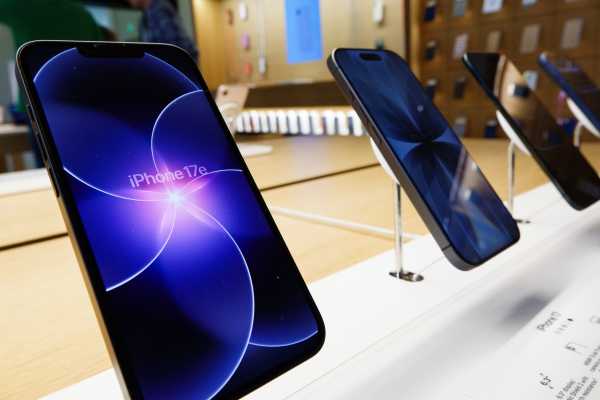
An iPhone 17e is showcased within the Apple Carnegie Library store, on May 29, 2026, in Washington, D.C. Kevin Carter/Getty Images
By 2027, PC manufacturers are anticipated to face a deficit of 15% in chips, which equates to approximately 58 million PCs, according to Kim. He further stated that smartphone manufacturers might encounter a 12% deficiency in memory chips, translating to roughly 134 million units.
"Companies might be compelled to escalate prices, reduce product specifications, postpone product releases, and accept reduced profits," Kim cautioned.
Due to the significant demand from AI corporations, the memory chip sector is projected to expand to an $890 billion industry by the conclusion of this year, a substantial increase from approximately $220 billion in 2025.
"Artificial intelligence has transformed memory from the most economical component of the digital economy into one of its most fiercely contested assets," Kim remarked. "These minute chips that most individuals rarely consider might now dictate what gets produced or postponed, and the ultimate cost we will all bear."
Sourse: abcnews.go.com