
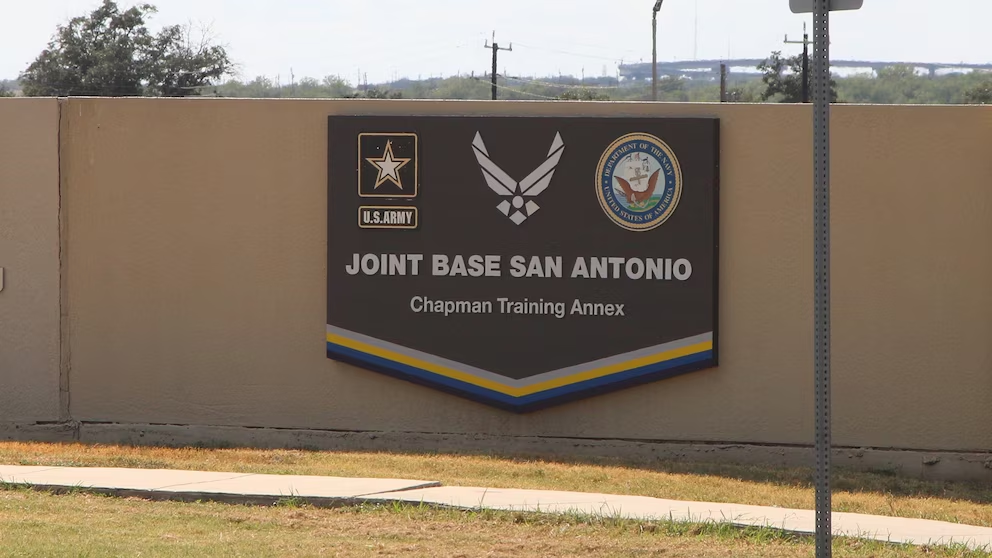
Front view of the Chapman Training Annex entry gate in San Antonio, Texas, Aug. 17, 2024. The Chapman Training Annex is a part of Joint Base San Antonio. Carlos Kosienski/Sipa USA via Reuters
A cluster of influenza cases is affecting the Air Force’s basic training center in San Antonio, Texas, following the discontinuation of mandatory vaccinations for all military personnel.
As of Wednesday, at least 159 confirmed infections have been reported among recruits, with two requiring hospitalization at Lackland Air Force Base within Joint Base San Antonio, according to two individuals familiar with the situation who spoke to ABC News. One source indicated that the actual number of cases and hospitalizations might be higher.
This outbreak follows Defense Secretary Pete Hegseth’s announcement in April that the annual flu inoculation would become optional for all U.S. military members, both active duty and reserve.
Previously, the flu shot was compulsory, but this new guideline aligns with a prior decision to make the COVID-19 vaccine voluntary.
The Pentagon has provided exemptions to the policy for the military branches, allowing for the flu vaccine to be mandated in specific circumstances.
An Air Force representative acknowledged the outbreak to ABC News, stating in a release that a “localized influenza outbreak among trainees at Basic Military Training” has been observed over the past three weeks.
“Medical professionals and Public Health officials have implemented mitigation measures to isolate and treat symptomatic trainees to reduce further exposure and continue to monitor the situation,” the statement said. “Medical personnel are also monitoring trainees who were in close contact with sick members in case they become symptomatic.”
Front view of the Chapman Training Annex entry gate in San Antonio, Texas, Aug. 17, 2024. The Chapman Training Annex is a part of Joint Base San Antonio.Carlos Kosienski/Sipa USA via Reuters
The spokesperson further stated that trainees exhibiting symptoms are receiving “the appropriate care,” which includes antiviral treatments like Tamiflu.
“Once they are cleared by medical professionals they will return to training,” the statement concluded.
Additionally, the passing of a recruit at the base is presently under investigation, as confirmed by an Air Force release. Keon McDaniel was in his sixth week of Basic Military Training when he suffered a medical emergency on June 12.
He was transported to Brooke Army Medical Center, where he unfortunately died. The reason for the medical emergency is currently under inquiry, and a thorough medical review is underway to ascertain the facts, according to the Air Force. It remains uncertain if his death is connected to the flu outbreak.
Earlier this year, upon rescinding the mandatory vaccination policy, Hegseth described it as “overly broad and not rational.”
“Our new policy is simple: If you, an American warrior entrusted to defend this nation, believe that the flu vaccine is in your best interest, then you are free to take it; you should. But we will not force you,” Hegseth remarked.
The sources informed ABC News that the flu vaccination rate among recruits at the San Antonio facility has dropped to 40% since the mandate was lifted, compared to nearly 100% previously.
Chief Pentagon spokesperson Sean Parnell informed ABC News that the Department of Defense recently granted waivers to the policy for the Army, Navy, Air Force, National Security Agency (NSA), and Defense Health Agency (DHA) through the Under Secretary of Defense for Personnel and Readiness.
“The decisions were based upon thorough risk assessments and are designed to maximize operational readiness, lethality, and force generation, while safeguarding at-risk populations,” Parnell stated. “The Army, Navy, Air Force, NSA, and DHA are responsible for implementing the [exceptions to the policy]. The Department remains committed to the health and readiness of our warfighters and civilian personnel.”
The annual flu inoculation is currently advised for everyone over six months of age between September and the beginning of November. Although the typical flu season concludes around February or March, individuals can contract the illness at any time.
Individuals who travel internationally or reside in communal settings face a heightened risk of spreading and contracting contagious ailments.
Public health experts have cautioned that military members may experience avoidable complications from the flu after the cessation of the vaccination requirement, expressing concern that severe instances could escalate in subsequent flu seasons if preventive inoculations are not administered to those most susceptible.
Evidence suggests that young recruits are significantly more susceptible to severe influenza infections compared to other service members, although less so than the general population due to historically high immunization rates within the military.
A study published last year by the Defense Health Agency revealed that across the flu seasons from 2010-2011 to 2023-2024, the highest incidence of influenza hospitalizations among active service members occurred in those under the age of 25, particularly young recruits.
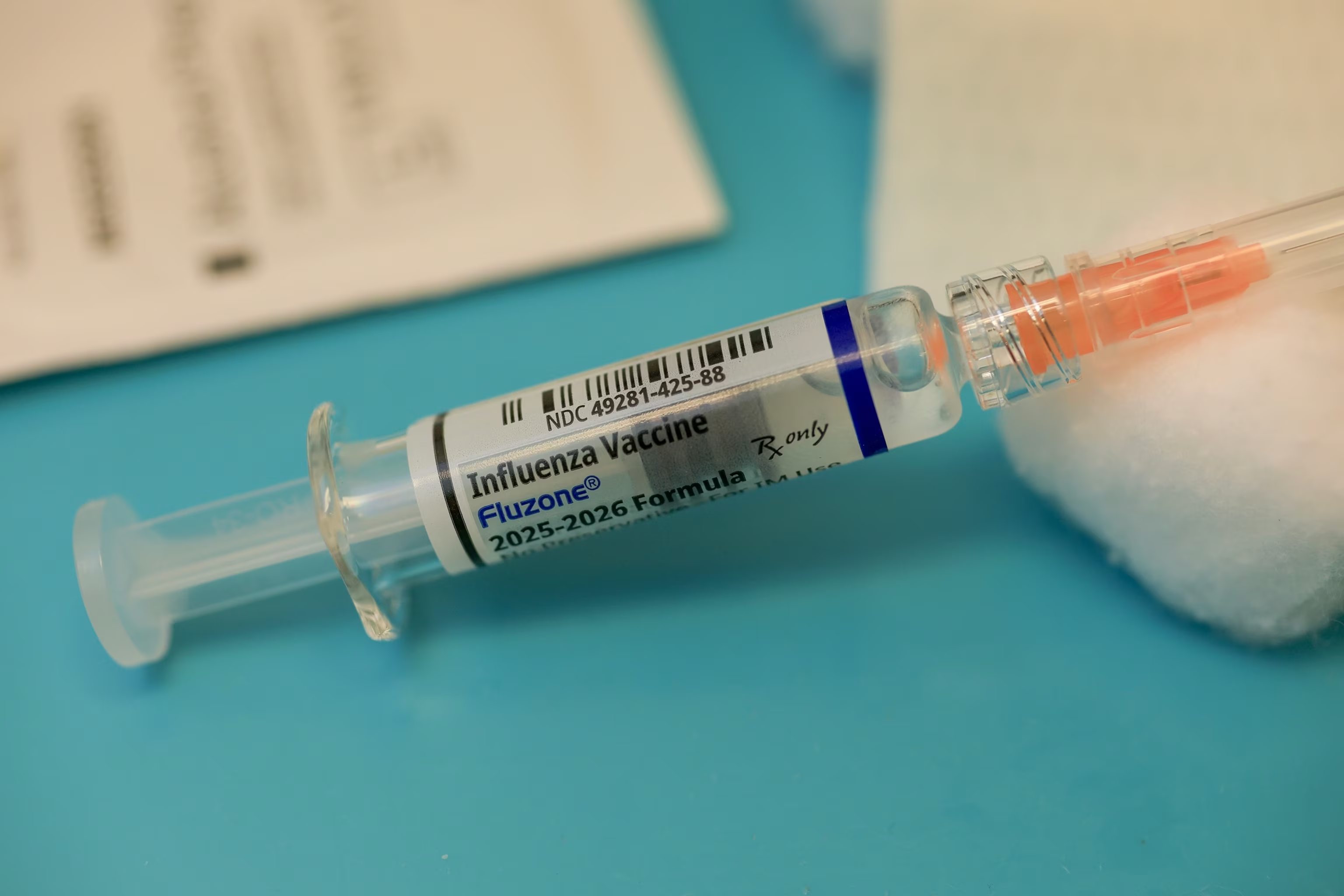
An Influenza Vaccine is prepared for a patient, Sept. 12, 2025, in Coral Gables, Fla.Joe Raedle/Getty Images
The flu vaccine has been a requirement for the military since 1945, following World War II. This was partly attributed to the threat of biological warfare by adversary nations and the severe impact of the 1918-1920 flu pandemic on U.S. troops, according to a 2022 analysis from Wright State University in Ohio and the U.S. Air Force.
It is estimated that between 20% and 40% of Army and Navy personnel became unwell, resulting in over 26,000 fatalities among U.S. soldiers during the 1918-1920 flu pandemic.
After researchers observed a decline in the vaccine’s efficacy, the mandate was withdrawn in 1949. This was later determined to be caused by abrupt and significant alterations in the flu virus. The mandate was subsequently reinstated in the early 1950s once these changes became “clearer and combatable,” as indicated by the analysis.
In previous years, adherence to the flu vaccine among military healthcare personnel surpassed 95%, in contrast to less than 75% among civilian healthcare professionals.
Sourse: abcnews.go.com