
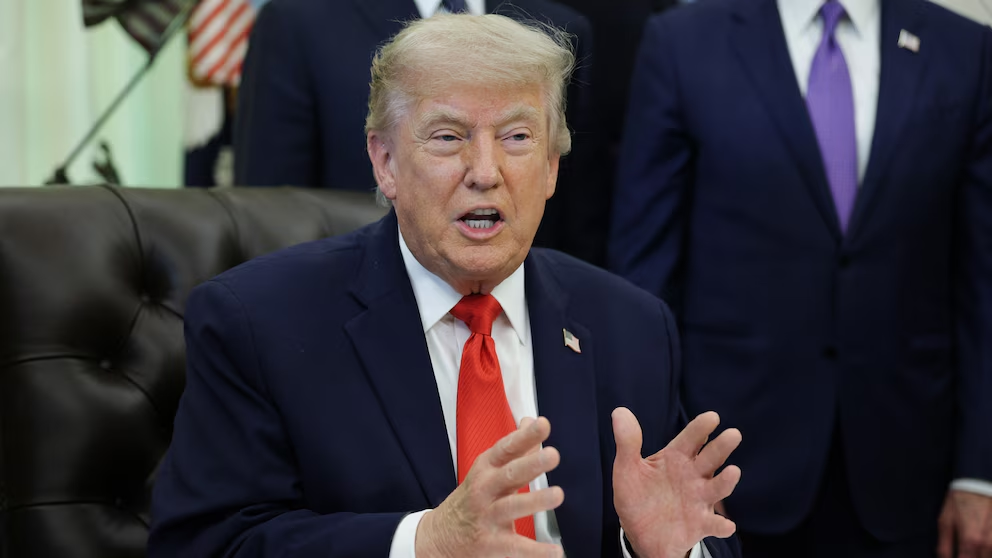
President Donald Trump speaks during a proclamation signing ceremony in the Oval Office of the White House, June 11, 2026 in Washington.Alex Wong/Getty Images
A high-ranking government representative on Friday outlined aspects of a potential interim accord between the United States and Iran, which might pave the way for formal discussions to end the conflict between the two nations.
The senior administration official, during a press briefing Friday afternoon, stated that the agreement would: reopen the Strait of Hormuz and lift the U.S. embargo upon it; “result in the dissolution of Iran’s nuclear program;” “ensure the United States obtains the enriched [nuclear] material” with that material being destroyed and removed from the country, and implement “an inspection framework that guarantees this is a long-term commitment and is sustainably enforceable.”
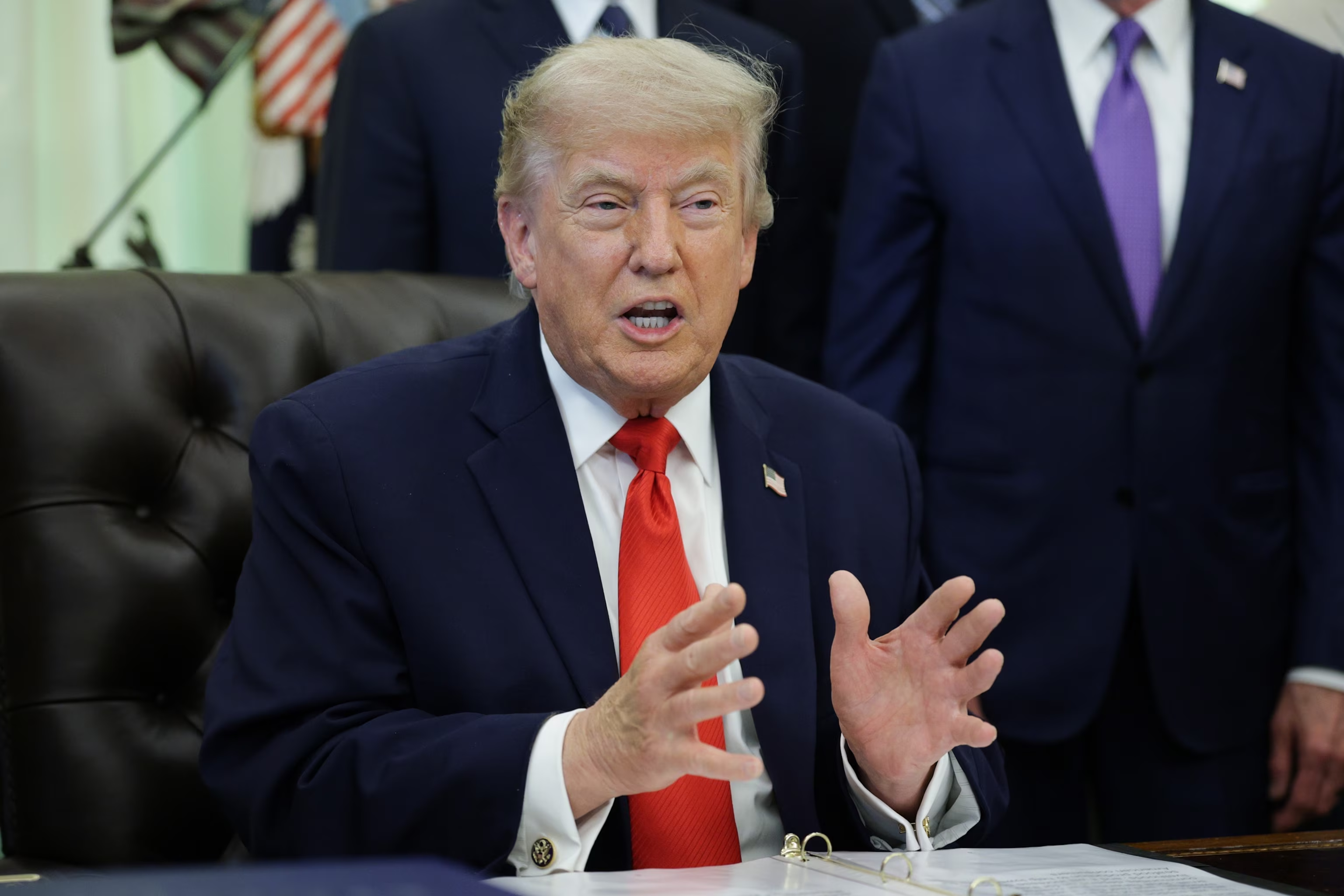
President Donald Trump speaks during a proclamation signing ceremony in the Oval Office of the White House, June 11, 2026 in Washington.Alex Wong/Getty Images
As part of the prospective pact, Iran would receive economic benefits if they fulfill their responsibilities, according to the senior administration officials.
“Should they adhere to the terms, a substantial portion of the economic hardships they have endured for numerous years will be alleviated, thus facilitating their reintegration into the global economy,” the senior administration official remarked.
The official refuted claims that Iran would receive any immediate sanctions relief or financial assistance, but affirmed that Iran’s compliance with the agreement’s terms would lead to them being “economically rewarded.” The official declined to specify the extent of this reward.
“The Iranians gain nothing upon the signing of the MOU or during the negotiation itself; rather, they are economically compensated for meeting their obligations under the accord,” the officials stated.
Additionally, the agreement includes a 60-day window for technical discussions on outstanding issues, according to the official.
The specifics of a potential accord or pact have been extensively debated, with the U.S. and Iran frequently presenting divergent viewpoints. The U.S. has also encountered challenges stemming from a fragmented negotiation environment, with various factions within the Iranian regime possibly holding conflicting stances.
President Donald Trump has alluded to a potential agreement for months during the period of the ceasefire, which has been marked by exchanges of fire and threats from both sides.
The senior administration official also indicated a belief that Iran’s supreme leader, Ayatollah Mojtaba Khamenei, has approved the deal, although certainty remains elusive.
“Ultimately, all we can rely on are the assurances from individuals, both civilian and military, who have confirmed that the supreme leader is comfortable with the current state of negotiations. Naturally, within their system, no action can be taken without the ultimate authorization of the supreme leader,” stated the senior administration official.
The official reported that the majority of individuals involved in negotiations who hold authority within the Iranian system “desire to finalize this accord,” but acknowledged that not all parties are in agreement, citing Iran’s “internal divisions” that are “in the process of resolution.”
“Certain Iranian hardliners wish to impede the agreement, but I believe most of them actually favor it, albeit with the intention of presenting it to their domestic audiences in a manner that maximizes their benefits while minimizing ours,” the senior administration official commented.
Nevertheless, this official estimated the likelihood of the deal being finalized in the near future to be between 80% and 85%.
Iran’s Minister of Foreign Affairs stated today that a memorandum of understanding “has never been closer.”
The official expressed optimism that both parties could reach a consensus on the agreement, but refrained from speculating on the timeline.
“I feel very positive about this agreement. I believe the president has positioned us very well, and the negotiating team has also put us in a strong position,” the senior administration official stated, adding that “we are not quite at the finish line, but we are exceedingly close.”

A U.S. Marine Corps AH-1Z Viper with Marine Medium Tiltrotor Squadron, 31st Marine Expeditionary Unit, conducts maritime operations in the U.S. Central Command area of responsibility, May 17, 2026.U.S. Marine Corps
The official indicated that parties are anticipated to sign “this agreement within the next few days.” President Trump has made similar pronouncements previously, but a deal did not materialize.
When questioned about the steps following this MOU, particularly the challenging task of negotiating Iran’s nuclear program and other specific details, the senior administration official responded that “technical specifics require resolution, but I believe there is a commitment to undertake that.”
“Therefore, we foresee a technical negotiation phase lasting 60 days, as explicitly outlined in the MOU,” the senior administration official clarified.
When specifically asked about Israel’s endorsement, the official conveyed the impression that Israel would be apprised and would ultimately adhere to commitments not to target Lebanon. This follows Israel’s statements on Thursday indicating they were not a party to the MOU.
“The comprehensive regional peace accord is extensive; it encompasses Lebanon, Iran, the Gulf Coast nations, and Israel. We are highly confident that all our allies, including the Israelis and the Gulf Coast Coalition, will lend their support,” stated the senior administration official.
Sourse: abcnews.go.com