
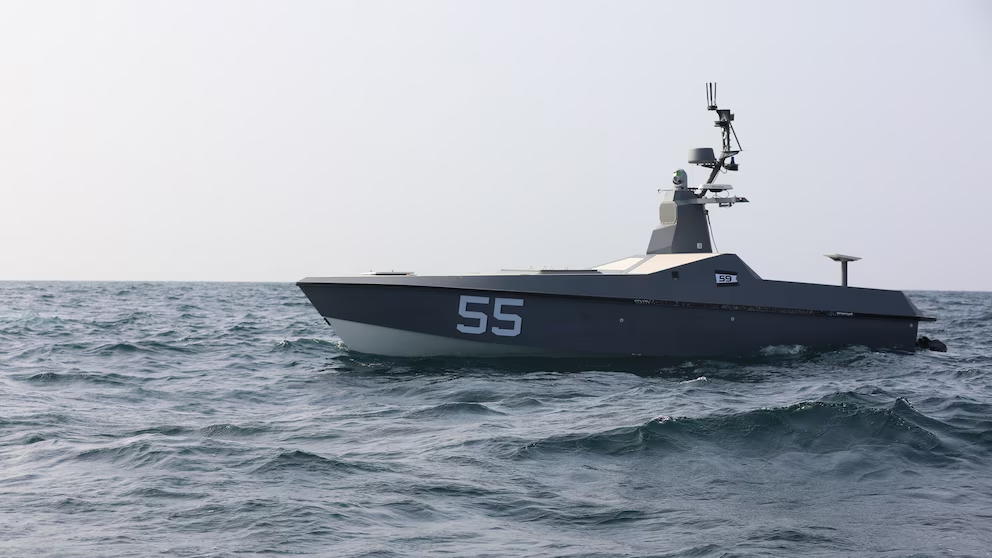
An Arabian Fox MAST-13 unmanned surface vessel, attached to U.S. Naval Forces Central Command’s Task Force 59, conducts surveillance in the Arabian Gulf, Nov. 21.Pfc. Tyrin Saunders/U.S. Naval Forces Central Command
U.S. military officials announced on Tuesday that an autonomous drone boat was instrumental in saving two individuals from a U.S. Army Apache attack helicopter that experienced a crash in the waters adjacent to the Strait of Hormuz, an incident President Donald Trump attributed to Iranian action.
American officials are characterizing this rescue operation as a historic first, marking the initial instance where an unmanned surface drone has been effectively utilized for crew recovery at sea.
The AH-64 helicopter went down at 7:33 p.m. EDT on Monday, leaving the pilots submerged in the waters off the coast of Oman, as per information from U.S. Central Command.
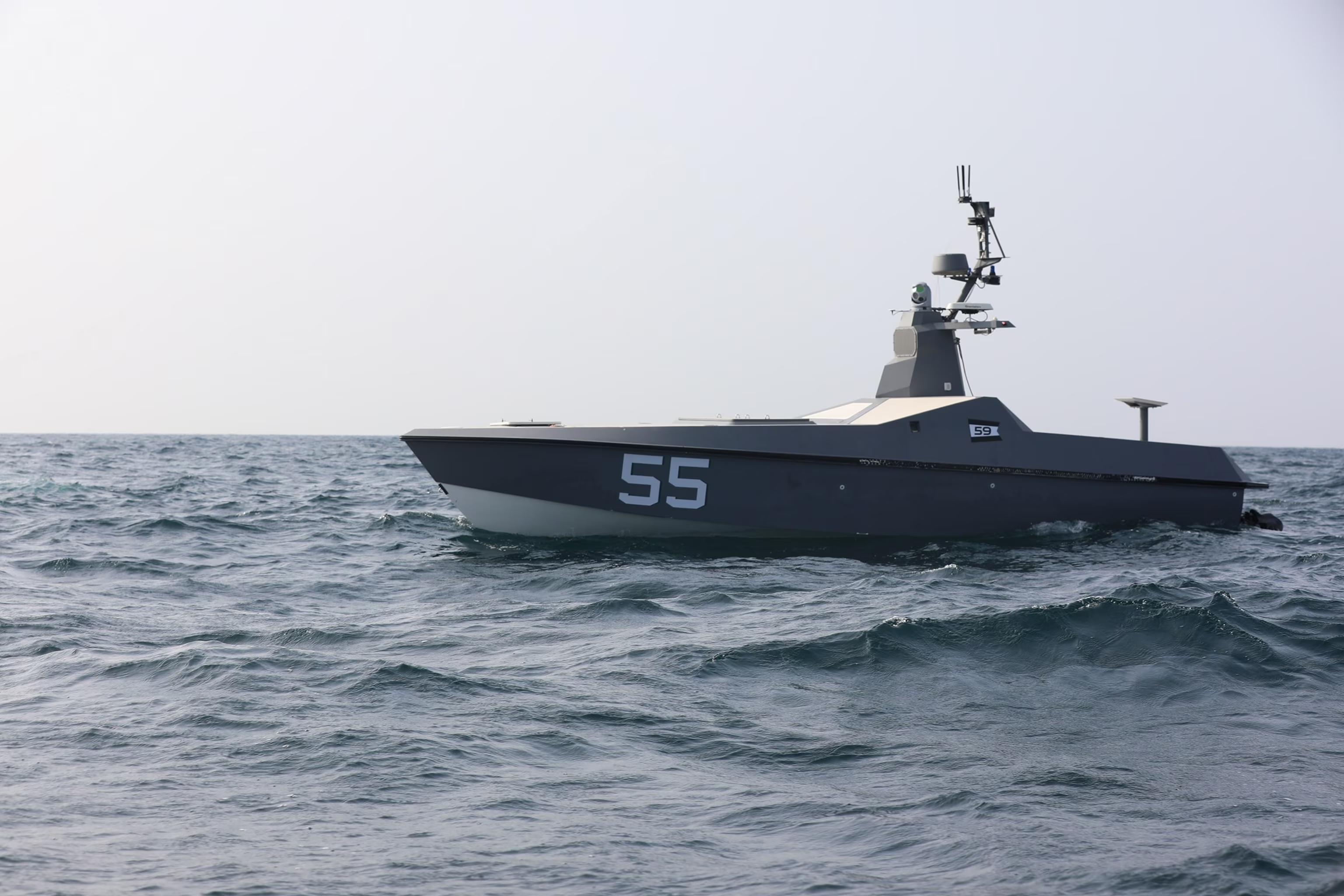
An Arabian Fox MAST-13 unmanned surface vessel, attached to U.S. Naval Forces Central Command’s Task Force 59, conducts surveillance in the Arabian Gulf, Nov. 21.Pfc. Tyrin Saunders/U.S. Naval Forces Central Command
"The service members were safely recovered in approximately two hours and are in stable condition," stated a CENTCOM release.
The unmanned naval vessel, described by a U.S. official as resembling a speed boat, successfully located the two crew members of the Apache helicopter. They were subsequently able to board the drone, which then conveyed them to another point on the water where they were airlifted by a helicopter for onward transportation, according to a U.S. official.
"The surface drone that aided in the rescue of the Apache crew off the coast of Oman last night was a U.S. Navy Corsair unmanned surface vessel, operated by U.S. 5th Fleet’s Task Force 59. This task force began deploying these drones in the operational theater in late March," commented Capt. Tim Hawkins, the spokesperson for U.S. Central Command.
President Trump stated on Tuesday afternoon that the military had informed him of Iran’s culpability in the helicopter incident, asserting that the U.S. must "respond to this aggression."
ABC News has contacted the White House to inquire whether the fragile ceasefire with Iran, which has been in place for weeks, has now concluded.
What is Task Force 59?
Task Force 59 manages a range of autonomous surface drones, as well as aerial drones, in Middle Eastern waters. Established in 2021, the task force leverages its unmanned platforms to provide rapid reconnaissance capabilities and integrates artificial intelligence for data sharing with manned warships operating in the vicinity, according to naval sources.
Given the insufficient number of manned vessels to maintain continuous situational awareness in the waters of the Middle East, these drones augment the 5th Fleet’s capacity to detect illicit activities such as smuggling and Iranian interference, naval officials reported.
"At a fraction of the cost, we can deploy unmanned systems, integrate them with artificial intelligence… and, crucially, optimize the deployment of our manned vessels for greater efficiency and effectiveness," then-5th Fleet Commander Vice Adm. Brad Cooper informed reporters in October 2022, following a regional exercise designed to showcase the task force’s abilities. Cooper now holds the position of commander for U.S. Central Command.
The estimated cost for the drone boat utilized in the Apache crew rescue is approximately $1.2 million per unit, according to a report from Sacra, a market research entity. This price point is remarkably economical when contrasted with conventional, crewed military vessels.
Artificial intelligence is employed to analyze behavioral patterns identified by the sensors aboard the drones. This analyzed data is then disseminated to commanders and vessels operating in the region.
In addition to the Corsair deployed in the operation, Task Force 59 utilizes other prominent unmanned surface drones, including the T-38 Devil Ray and the Sail Drone.
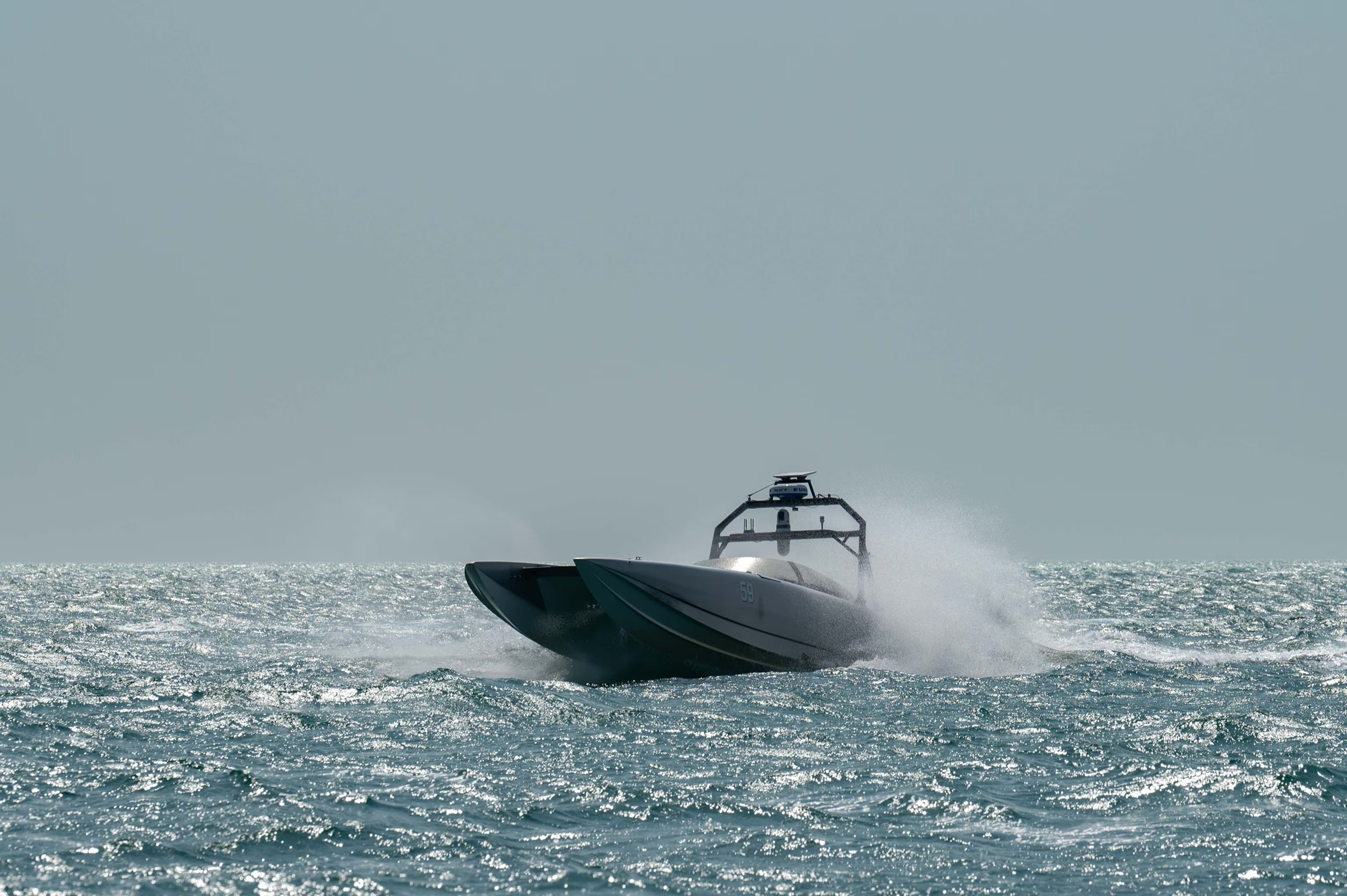
A MARTAC T-38 Devil Ray unmanned surface vessel, attached to U.S. 5th Fleet’s Task Force 59, sails in the Arabian Gulf, Oct. 26.Petty Officer 1st Class Jacob Ve/U.S. Naval Forces Central Command
The Devil Ray is characterized as a high-speed, autonomously operated unmanned surface vessel primarily designated for intelligence gathering, surveillance, and reconnaissance missions, as stated by its manufacturer.
In a 2024 exercise, it successfully discharged live ordnance at a designated training target.
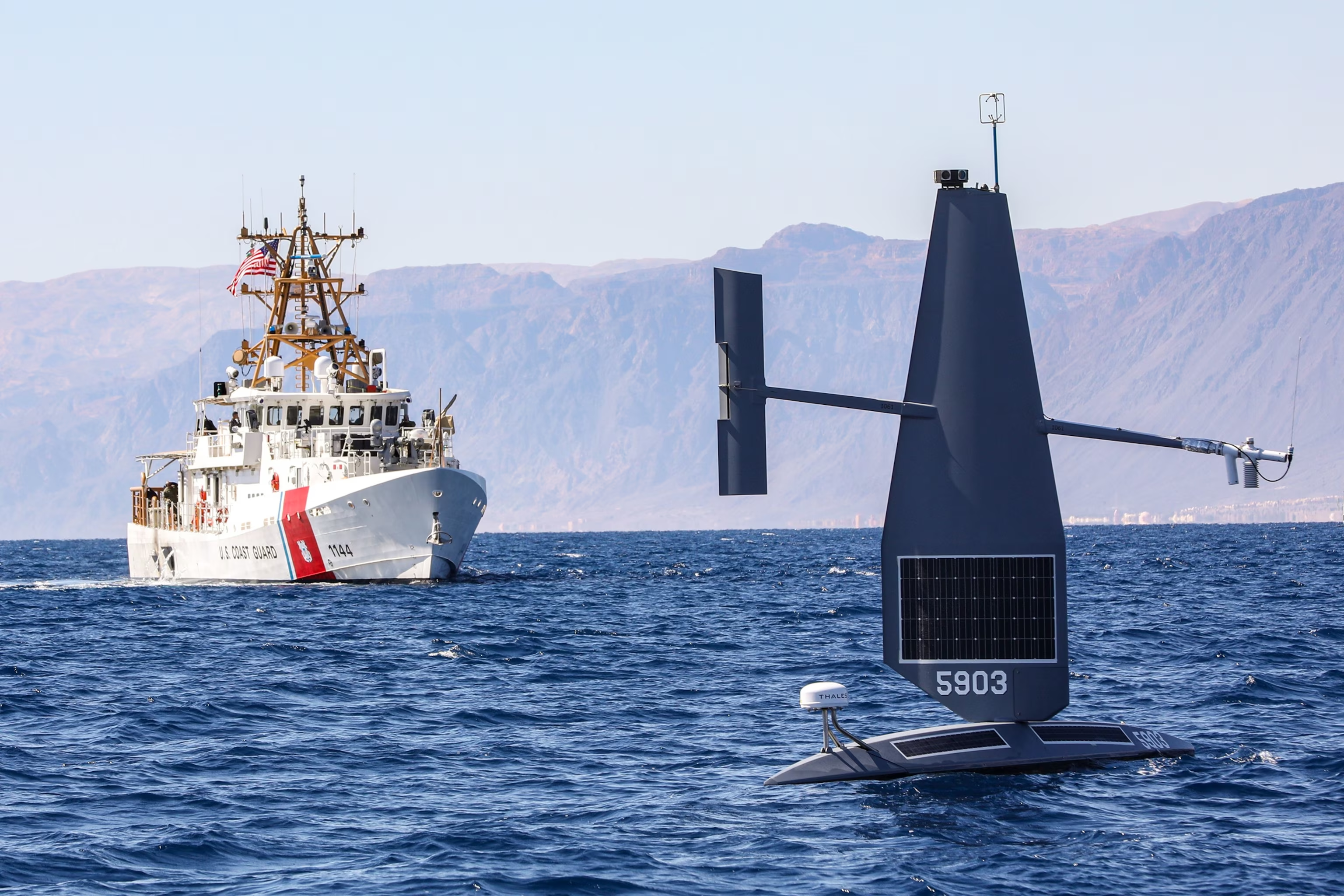
Fast response cutter USCGC Glen Harris (WPC 1144) sails near a U.S sail drone explorer in the Gulf of Aqaba, during the International Maritime Exercise/Cutlass Express.Sgt. Deandre Dawkins/U.S. Naval Forces Central Command
The Sail Drone, true to its nomenclature, is an autonomous marine platform equipped with a sail that harnesses wind power, supplemented by solar energy for propulsion, according to its maker.
An interconnected network of Sail Drones can furnish enhanced maritime situational awareness within challenging environments, as indicated by its manufacturer.
Sourse: abcnews.go.com