
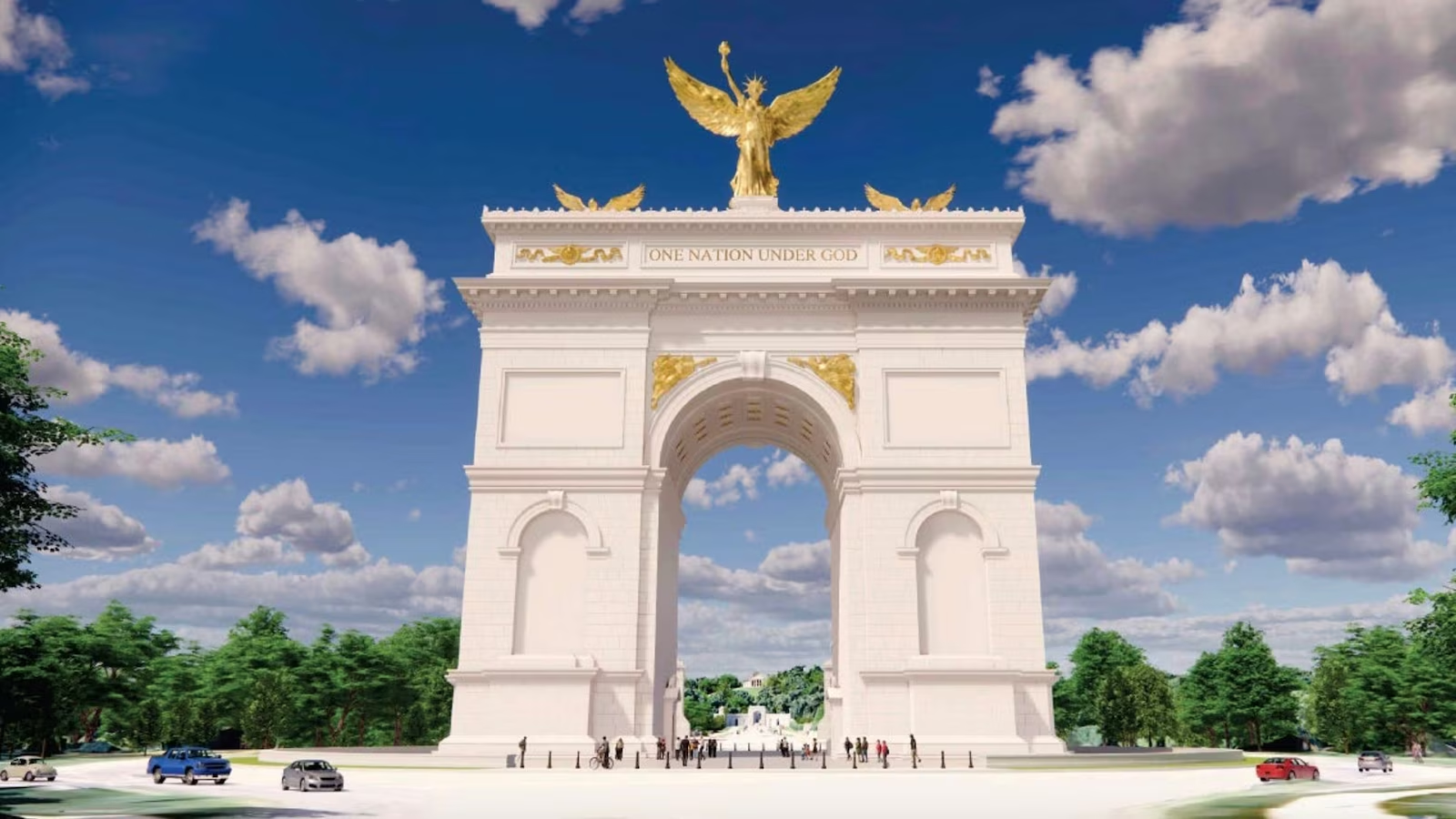
This depiction presents a ground-level perspective of President Donald Trump’s intended “triumphal arch,” with Arlington Memorial Cemetery visible behind it. National Capital Planning Commission
The National Capital Planning Commission (NCPC), guided by individuals appointed by President Donald Trump, decided on Thursday to endorse a compilation of reservations regarding the president’s envisioned 250-foot “triumphal arch.” These concerns, initially raised by staff, prompt a request for the administration to resolve them prior to final endorsement.
While the commission is overseen by Trump associates, the staff is independent and brought forth several issues concerning the undertaking.
“I believe the project team has further work to complete,” stated Will Scharf, President Trump’s White House staff secretary and the commission’s chairman, following a hearing that spanned nearly three hours. Scharf indicated a desire for the administration to furnish additional visual representations depicting the arch from various vantage points, aligning with one of the staff’s suggestions.
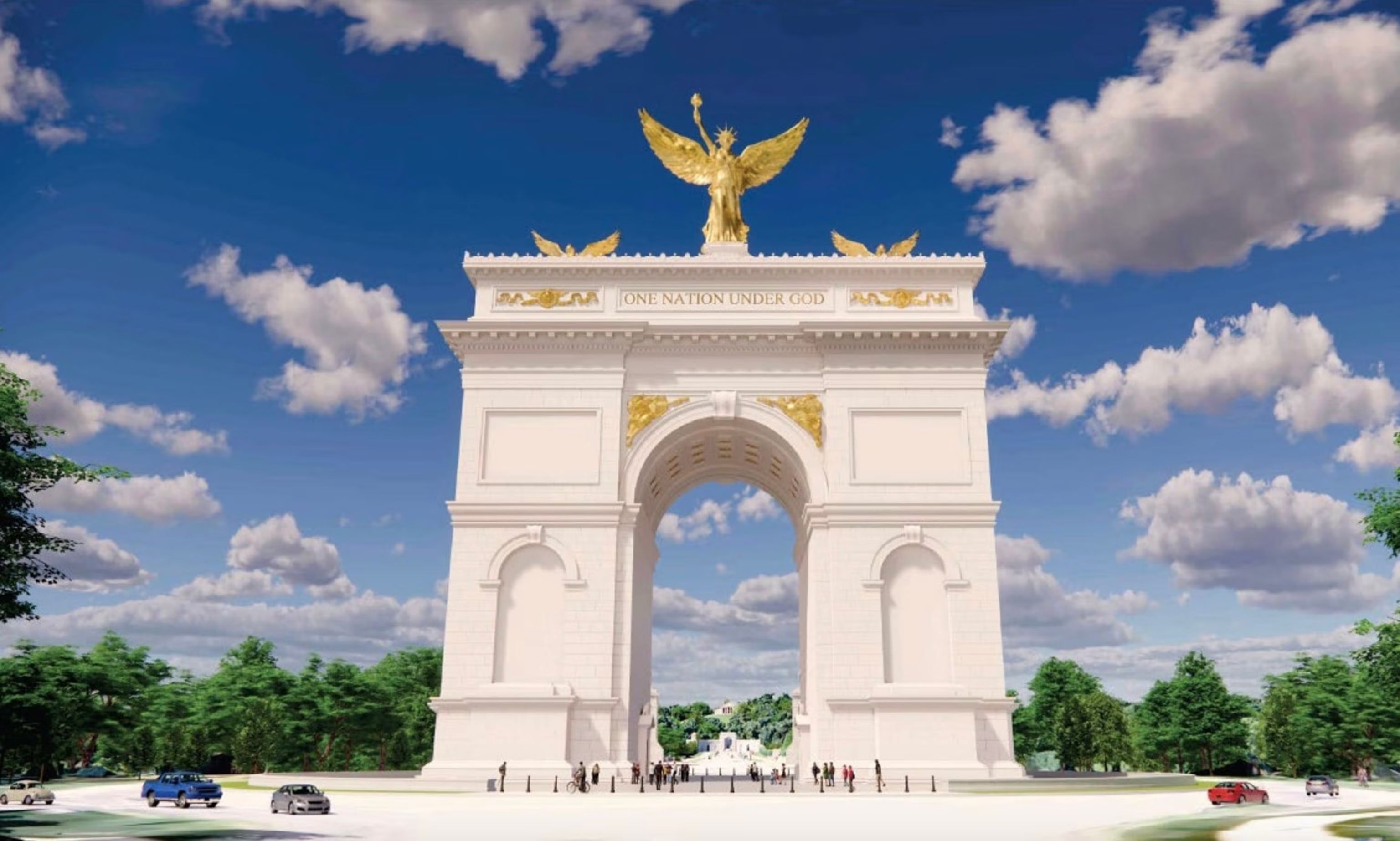
This depiction presents a ground-level perspective of President Donald Trump’s intended “triumphal arch,” with Arlington Memorial Cemetery visible behind it.National Capital Planning Commission
Following the session, Trump posted on his social media outlet his gratitude to the commission for approving the arch, an action the commission did not take.
However, Scharf remarked during the hearing, “I wish to point out, for those in attendance, that this is not our conclusive assessment of the project. That will occur at a subsequent meeting.”
Scharf addressed what he characterized as “disruptive interjections” from the attendees.
“I deem it crucial that this commission be permitted to conduct its duties,” he stated. “And for those among you who oppose this initiative, I do not think you advance your position by interrupting commissioners as they offer their reasoned remarks in response to the proposal before us.”
Later in the hearing, he addressed the audience once more.
“I genuinely do not appreciate the disruptions, but I will proceed,” he said.
The commission, which oversees the central planning for all federal government projects within D.C. and adjacent areas of Virginia and Maryland, received 1,696 public comments on the proposed arch prior to the meeting, with the vast majority expressing opposition.
One submission described the project as “an ostentatious, unneeded, and frankly unpleasant monument to ego,” while another asserted that “a triumphal arch is entirely incongruous with the American spirit.”
Several individuals commented that the arch was “unattractive.”
Approximately 30 individuals registered to provide their remarks during the meeting, participating both in person and virtually. Among them was Gary Langston, a veteran whose parents, a Vietnam veteran and an Army nurse, were both laid to rest at Arlington National Cemetery.
The project “must demonstrate reverence for those interred there, their kin, and present and future generations,” Langston informed the panel. “I ponder, ‘What will this arch resemble in another 250 years?’”
Langston, who primarily voiced concerns about the proposed arch potentially obscuring views of the cemetery, later added: “I believe the paramount aspect of this is that whatever is undertaken there should serve as a unifying element for the nation, and at present, certain elements of the arch’s design lead me to fear they will not endure the test of time.”
Jimi Shaughnessy, a Marine veteran whose great-grandparents are also interred at Arlington, also criticized the proposed arch.
“Now, potentially, a colossal arch will cast a shadow over my departed family, friends, and fellow Marines, as vanity is rewarded with a significant symbol of self-centeredness,” Shaughnessy stated. “A 250-foot arch represents a substantial disturbance and an affront at the entry to hallowed ground.”
Prior to the hearing, the commission’s staff highlighted a series of points that it recommended the panel ask the administration to address before granting final approval for the structure. Among the staff’s reservations were pedestrian safety, potential adverse effects on flight paths through the nearby Reagan National Airport, and the obstruction of vistas of Arlington National Cemetery.
Jamie Herr, an urban planner for the commission, presented the staff’s recommendations and emphasized that the administration should provide the essential details required for the commission to issue its final endorsement.
“The submission currently lacks information regarding any proposed illumination, strategies for managing stormwater, and the majority of site and building materials,” Herr noted. “These are indispensable components for the commission’s review as the design progresses.”
Before the period for comments, Scharf offered a preemptive response to what he described as the “unusual” arguments suggesting the arch’s height contravened the law.
“The Height of Buildings Act is incorporated into the D.C. local zoning regulations,” Scharf explained, adding that “traditionally, federal projects are not subject to local zoning mandates in that manner.”
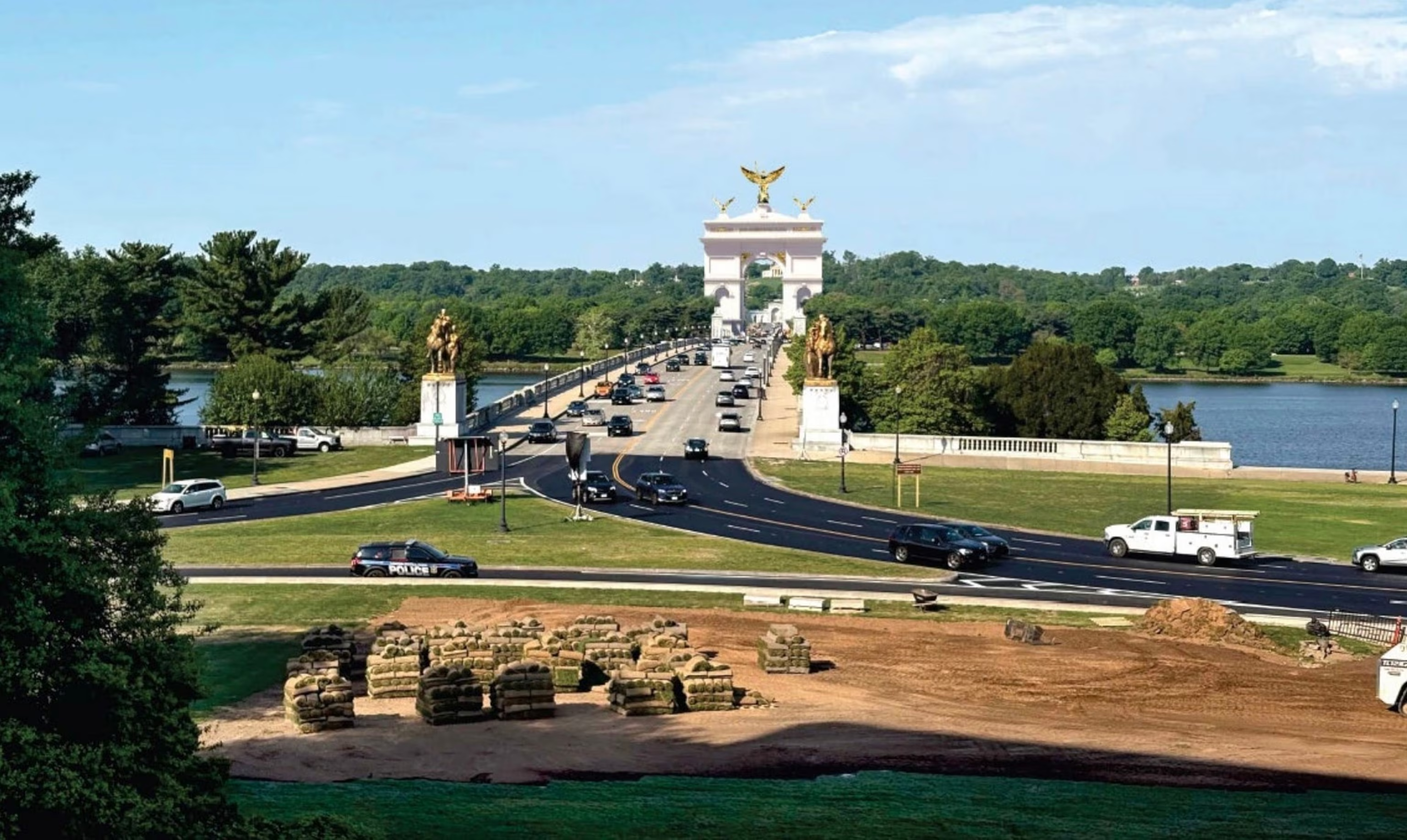
This depiction illustrates how President Donald Trump’s “triumphal arch” would appear from the Lincoln Memorial.National Capital Planning Commission
That legislation primarily restricts the height of structures in D.C. to 160 feet and assigns the NCPC the responsibility of reviewing proposed developments on federal land. Herr stated that the staff desires the administration to furnish “an analysis and justification for the project’s elevation in consideration of the Height of Buildings Act.”
Jessica Bowron, the National Park Service’s controller and acting director, representing Interior Secretary Doug Burgum, expressed her support for the staff’s recommendations.
“The recommendations detailed in the staff report will aid in informing the subsequent stage of planning and ensure that critical technical and design considerations are properly addressed as the proposal advances,” Bowron commented. “I endorse the NCPC staff recommendations and value the ongoing collaboration. I anticipate the review of the supplementary information requested in the report.”
NCPC Vice Chair Stuart Levenbach indicated he was “certainly interested” in “all the significant issues that were raised by the NCPC staff,” adding that he wished to see the proposal “further elaborated.”
Nine of the commission’s members voted to approve the comments and recommendations. Evan Cash, a representative for D.C. Council Chair Phil Mendelson, voted against it. Cash stated that his objections extend beyond the staff’s recommendations, asserting that the administration cannot “answer the more fundamental question of why this project is appropriate for this location, and that is a prerequisite issue.”
Sourse: abcnews.go.com