
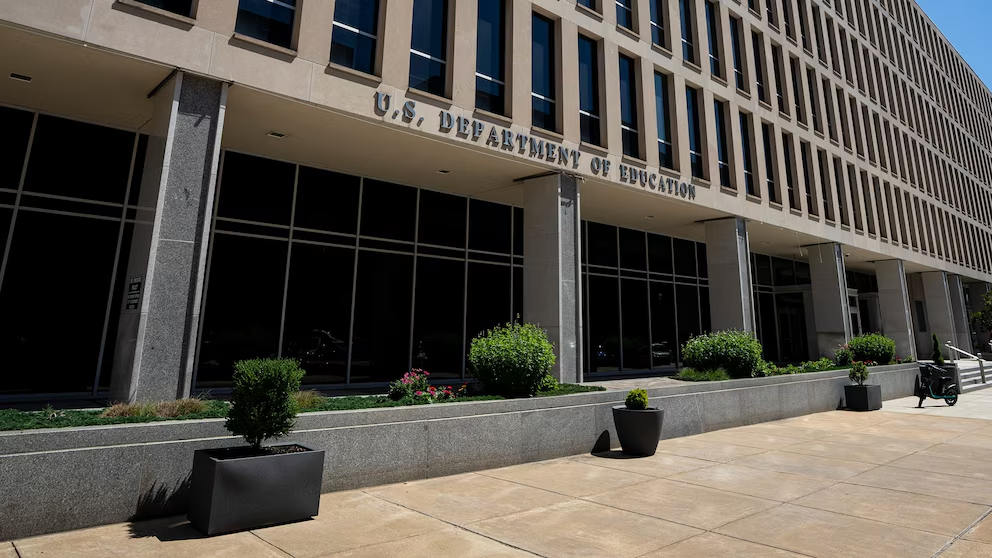
The Department of Education headquarters, May 28, 2026, in Washington, D.C.Al Drago/Getty Images
Two professional associations representing physician associates have initiated legal action against the Trump administration concerning a federal directive that restricts student loan disbursements for certain postgraduate degree programs affecting healthcare practitioners, such as physician associates and assistants (PAs), nurse practitioners, and other clinical professionals.
The American Academy of Physician Associates (AAPA) and the Physician Associates Education Association (PAEA) submitted a lawsuit intended to invalidate a regulation issued by the Department of Education, which the plaintiffs assert contravenes the Administrative Procedure Act. They are also independently seeking an urgent court order to prevent the regulation’s implementation for PA students commencing July 1.
The legal filing further contends that the regulation exceeds the statutory authority granted to the Education Department, rendering it unlawful. The Government Accountability Office’s website indicates that the Administrative Procedure Act outlines the minimum procedural steps an agency must adhere to in its administrative processes.
The lawsuit alleges that the Education Department improperly exceeded its legal mandate by disqualifying a PA degree from being classified as a professional degree.
The new directive, titled Reimagining and Improving Student Education-Federal Student Loan Program (RISE)—which builds upon an existing rule—established definitive criteria for “professional” and “graduate” programs, setting aggregate student loan borrowing limits at $200,000 and $100,000, respectively. The $100,000 total ceiling for PA students is further constrained to $20,500 annually.
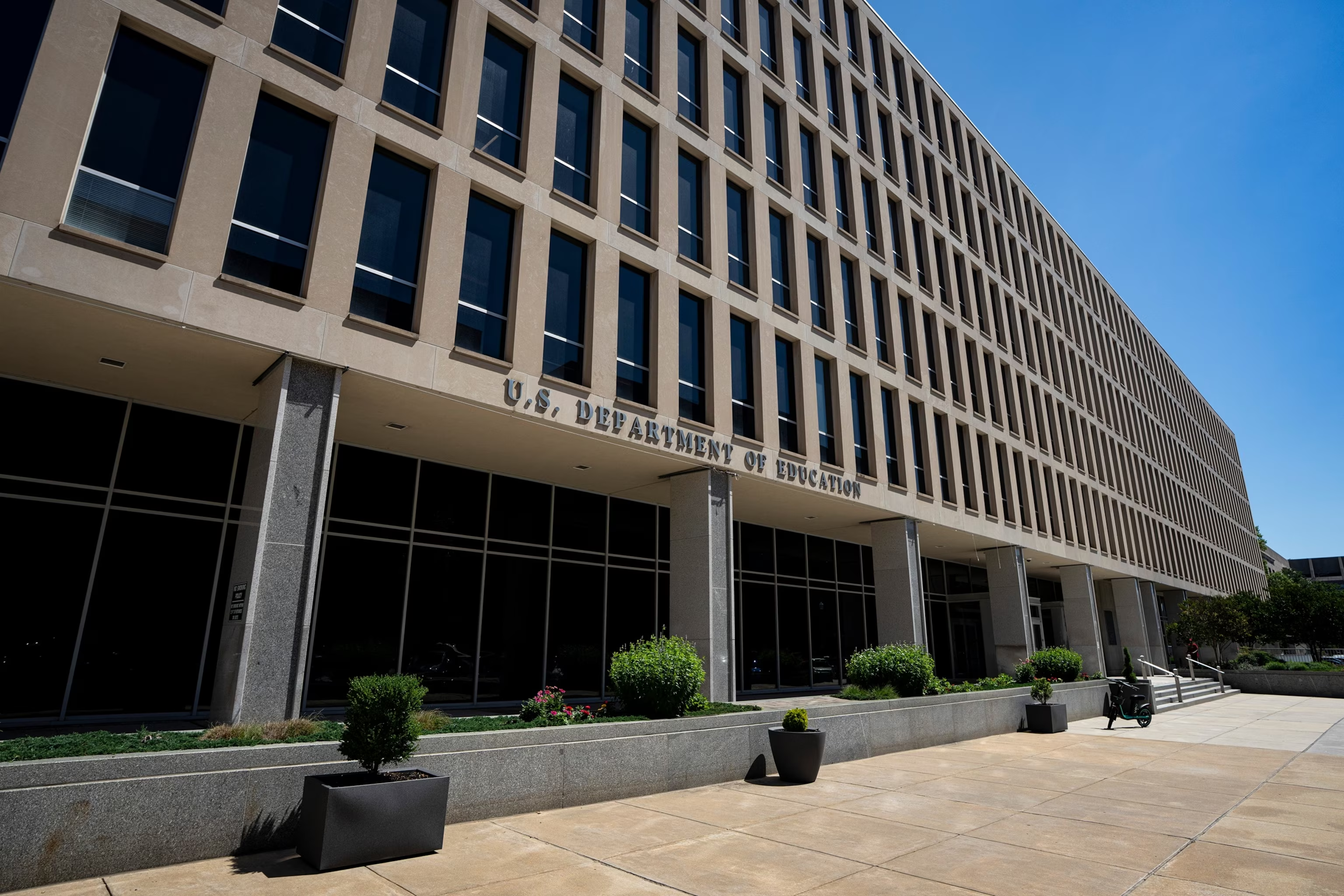
The Department of Education headquarters, May 28, 2026, in Washington, D.C.Al Drago/Getty Images
Lisa Gables, the CEO of AAPA, stated that the regulation will result in “disastrous repercussions” for the PA profession.
“PA programs fulfill every criterion of the professional degree definition established by Congress in law,” Gables communicated in a declaration. “They confer entry-level master’s degrees, necessitate rigorous clinical preparation, and permit professional licensure across all 50 states.”
She elaborated, “Our recourse to the courts is to ensure the legislation is applied as Congress intended.”
According to the Education Department’s finalized regulation, fields such as pharmacy and dentistry are included among eleven professional degree programs—alongside medicine, law, and clinical psychology degrees—eligible for the $200,000 ceiling, while teaching, nursing, and physician associate programs are now subject to the lower limit.
The average tuition for PA programs is close to $97,000 for in-state students, prior to fees and supplementary expenses, based on AAPA data.
This recent measure is generating significant apprehension among public advocacy groups, as healthcare organizations emphasize that the federal loan limitations will compel numerous students to rely on private student loans, which carry more stringent approval criteria, less favorable interest rates, and restricted repayment alternatives.
The regulation would impede the associations’ capacity to offer member services and representation, and the groups’ members would also endure “adverse outcomes” if PA students lack access to the elevated loan amounts that enable them to enroll in PA programs, as stated in the complaint.
Rory O’Sullivan, associated with the D.C.-based policy think-tank Arnold Ventures, argued that loan restrictions ought to be determined by the outcomes of degree programs, rather than the specific field of study.
Wednesday’s legal submission follows a similar lawsuit filed in May by 24 states and Washington, D.C., against the administration on comparable grounds, asserting that the regulation would exacerbate the nursing shortage by discouraging students from entering the field due to the reduced borrowing limit.
Secretary of Education Linda McMahon defended her department’s regulation during an annual budget hearing on Capitol Hill last month.
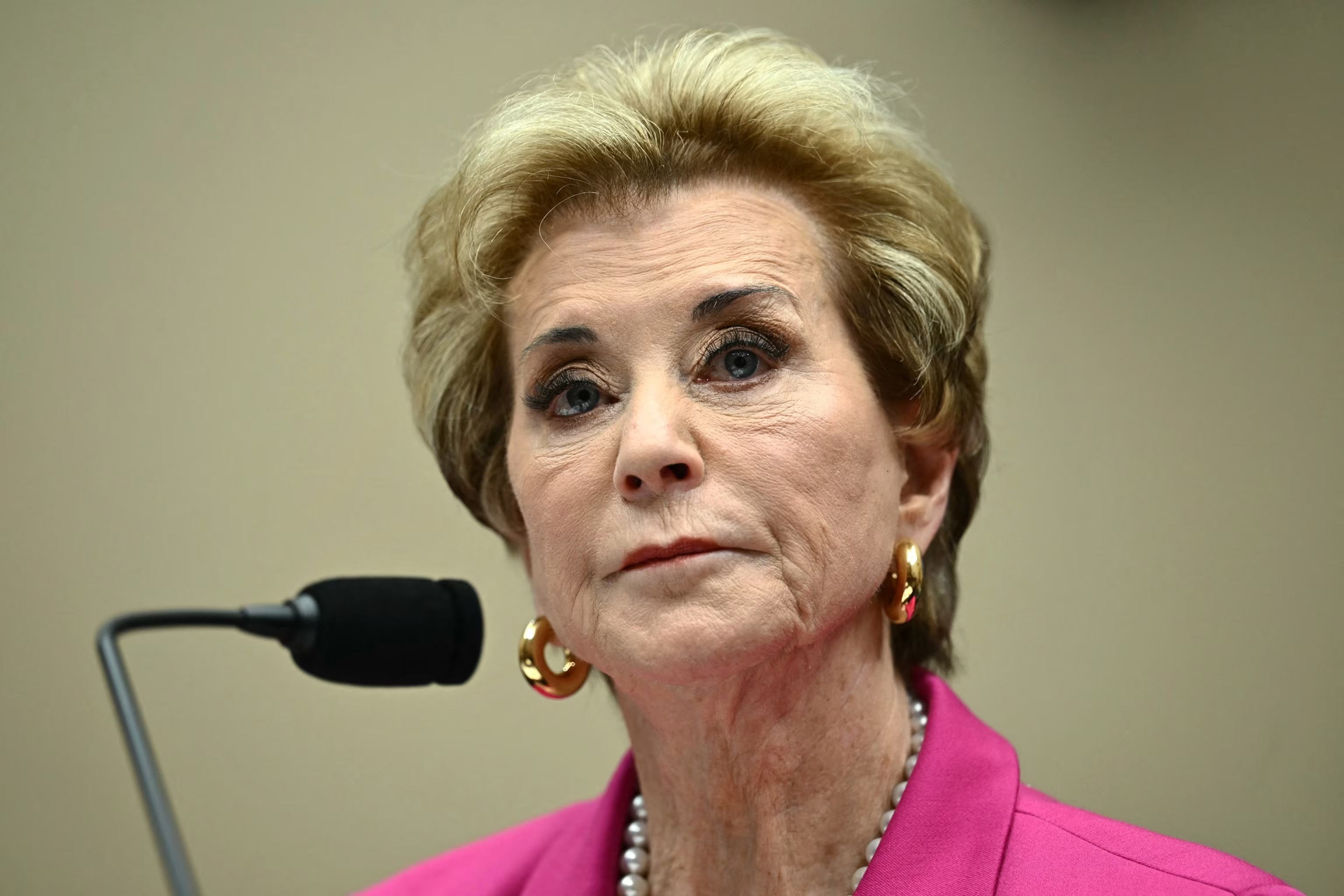
Education Secretary Linda McMahon testifies at a House Committee on Education and Workforce hearing titled “Examining the Policies and Priorities of the Department of Education” on Capitol Hill in Washington, D.C., on May 14, 2026.Kent Nishimura/AFP via Getty Images
“These specific programs have not been reclassified as nonprofessional,” McMahon stated during the House Education committee session. “They were never categorized as professional degrees—that was simply not a consideration.”
“No other measure has been implemented to attempt to reduce the cost of education,” McMahon maintained.
The Department of Education emphasized that loan ceilings are a “sensible approach” and exert downward pressure on tuition costs nationwide.
Ellen Keast, the press secretary for higher education at the Education Department, informed ABC News in a statement, “For two decades, academic institutions have been able to impose virtually unlimited tuition, even as many student loan recipients experience minimal to no return on their educational investment.”
“During this period, tuition has escalated more rapidly than any other household expenditure, and 71 percent of graduates burdened by debt report postponing significant life events, while institutions have accumulated billions at the expense of the financial stability of young Americans,” Keast commented.
She added: “The Trump Administration is working to rectify this persistent imbalance by discontinuing a system that led students into debt they frequently could not repay and by fostering access to high-quality education that benefits students, not institutional profit margins.”
‘My aspiration to become a PA is likely jeopardized’
Wednesday’s legal filing indicated that the regulation will impose burdens on students, such as Ben Pinckney from New York, and discourage them from applying to PA programs. The plaintiffs suggested that it effectively creates situations where prospective PAs cannot afford the cost of attendance, as the vast majority of PA students require the higher loan limits designated for “professional students” to be able to enroll in PA school.

Benjamin Pinckney graduates from Lehman College, the City University of New York’s only four-year college in the Bronx, in May 2026.Island Photography
Pinckney shared with ABC News in an exclusive conversation that he has harbored aspirations of becoming a PA for years but is still facing challenges in identifying an affordable graduate program within the student loan restrictions. The 46-year-old recent college graduate recounted how an emergency room PA saved his life after he was the victim of a shooting years prior, an event that motivated him to pursue a career in medicine.
“Not only did he preserve my life physically, but also through the discussions we used to have,” Pinckney told ABC News, adding, “My mindset and perspective shifted because of that PA.”
Pinckney, who subsequently served as a combat medic in the U.S. Army, stated he cast his vote for President Donald Trump in 2024 but believes the Trump administration’s directive is “disadvantaging both sides” by making the PA degree more difficult to attain.
“It’s less about political affiliations and more about facilitating the necessary schooling for providers or aspiring providers, so we can serve the communities we wish to assist,” Pinckney remarked.
Physician associates provide patient care under physician supervision in various healthcare settings, including hospitals, medical offices, and outpatient clinics, according to the Bureau of Labor Statistics. Advocates emphasize that the department’s resolution could strain access to critical patient care, and the majority of students pursuing PA degrees will constitute a significant portion of the nation’s healthcare workforce in the coming decade.
Pinckney expressed that it is disheartening because his objective of becoming a healthcare provider—within an already strained healthcare system—remains uncertain. “If no changes occur, then my dream of becoming a PA is likely finished,” Pinckney stated. “If nothing substantial happens besides someone offering me a considerable grant or scholarship, then this path for me is concluded,” he added subsequently.
Sourse: abcnews.go.com