
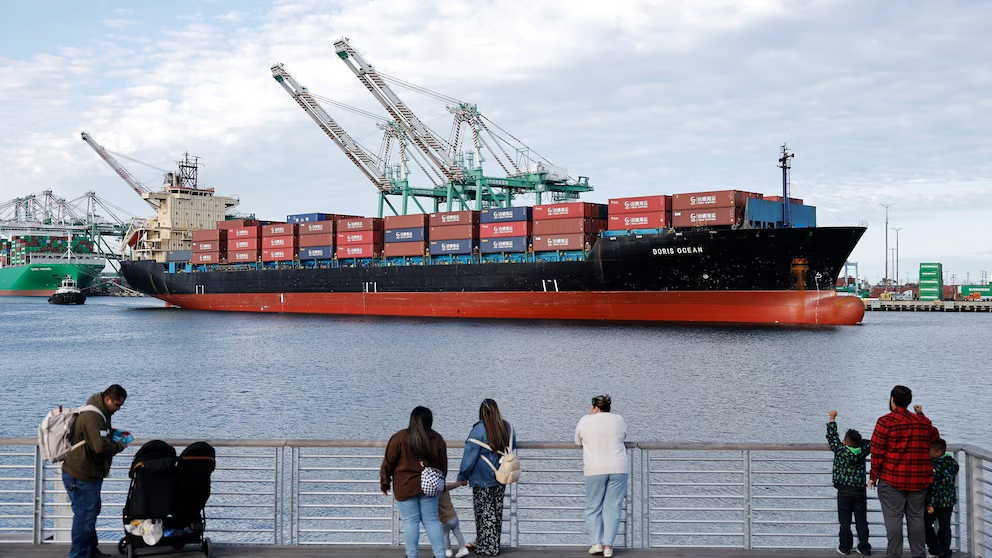
A person watches as the container ship Doris Ocean sails away from the Port of Los Angeles on May 28, 2026, in Los Angeles, California.Mario Tama/Getty Images
The administration led by President Trump is putting forth a comprehensive new set of duties on numerous vital trading partners, encompassing the European Union, China, Mexico, and Canada. This is a decisive step to reinstate the president’s signature economic strategy, particularly after several of his imposed tariffs were overturned by the Supreme Court.
This announcement was detailed in a report published late Tuesday by the office of the U.S. Trade Representative, Jamieson Greer, citing Section 301 of the Trade Act of 1974.
The report asserted that 60 trading nations neglected to implement or enforce regulations concerning "forced labor." This assertion serves as the rationale for introducing levies potentially reaching 12.5%. The proposed duties are set to affect 99% of goods imported into the United States, as indicated in the report.
Under the proposed measures, nations such as China, the United Kingdom, Japan, and Brazil could be subject to additional tariffs of up to 12.5%. Mexico, Canada, and the European Union would face supplementary duties of 10%.
These forthcoming tariffs have not yet been enacted. The USTR has indicated that a public forum concerning the proposed measures will be held on July 7, 2026.
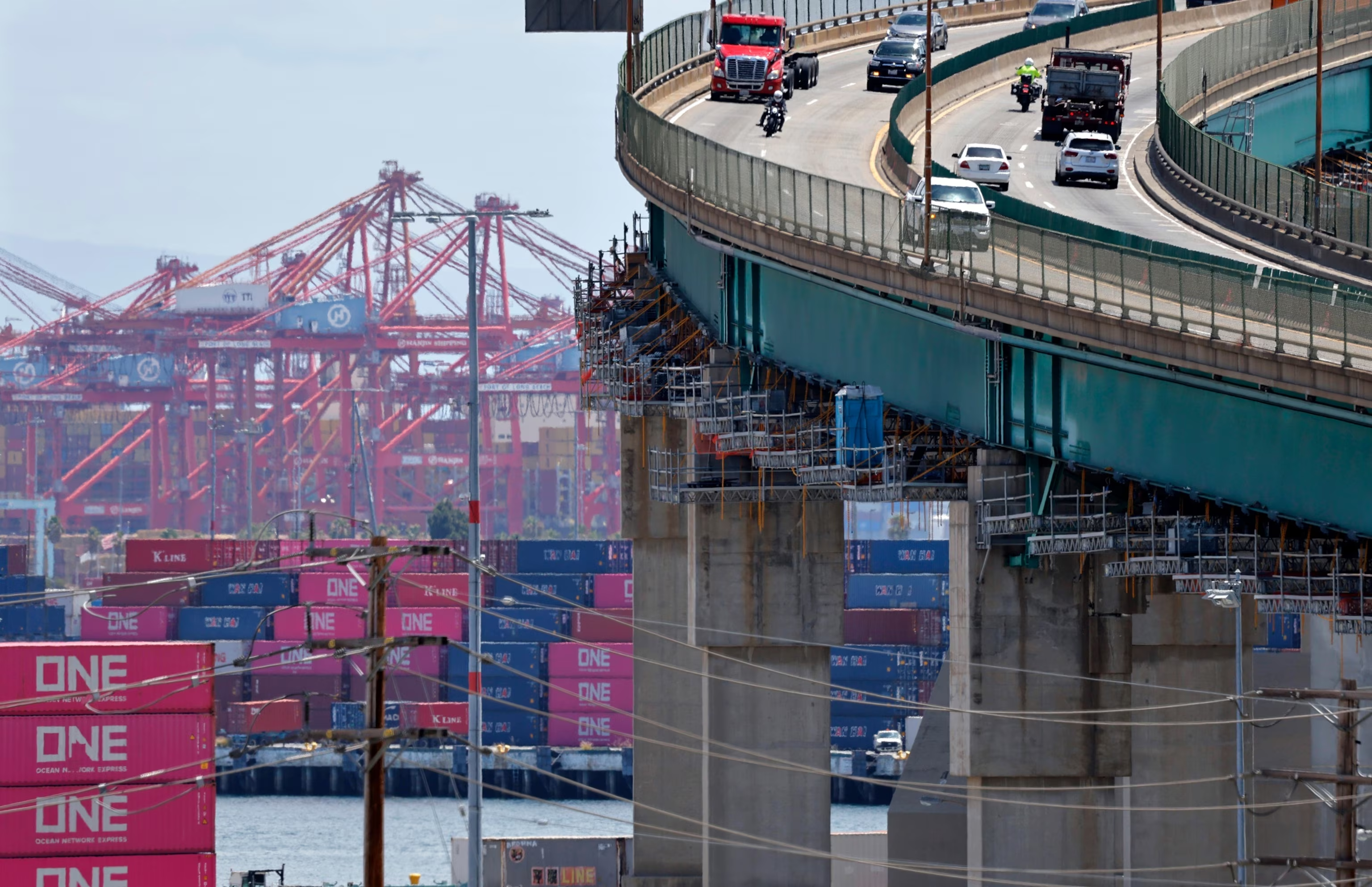
Automobiles drive past rows of stacked shipping containers at the Port of Los Angeles on May 28, 2026, in Los Angeles, California.Mario Tama/Getty Images
The administration initiated inquiries in March into various trading partners under Section 301, following a Supreme Court decision in February which ruled that President Donald Trump could not impose broad global tariffs using a different legal basis, the International Emergency Economic Powers Act. The government has already issued approximately $20 billion in reimbursements for those tariffs, according to a recent court filing.
Despite this, many of Trump’s other tariffs remain in effect, contributing to an overall effective tariff rate that is the highest since the 1940s, based on data from the Yale Budget Lab. This lab estimates that the current tariff policy, even without the new proposed additions, could incur costs of up to $1,200 annually for the average American household.
The USTR report contends that 54 economies have "failed to implement a legal ban on the importation of goods manufactured wholly or partially through forced labor, and to effectively enforce such a prohibition."
Among these countries are Algeria, Angola, Argentina, Australia, The Bahamas, Bahrain, Bangladesh, Brazil, Cambodia, Chile, China, Colombia, Costa Rica, the Dominican Republic, Egypt, El Salvador, Guatemala, Guyana, Honduras, Hong Kong, China, India, Iraq, Israel, Japan, Jordan, Kazakhstan, Kuwait, Libya, Malaysia, Morocco, New Zealand, Nicaragua, Nigeria, Norway, Oman, Peru, the Philippines, Qatar, Russia, Saudi Arabia, Singapore, South Africa, South Korea, Sri Lanka, Switzerland, Taiwan, Thailand, Trinidad and Tobago, Turkey, the United Arab Emirates, the United Kingdom, Uruguay, Venezuela, and Vietnam.
Furthermore, the report indicates that six economies "have not effectively enforced a prohibition on imports produced by forced labor." These nations, as per the report, include Canada, Ecuador, the European Union, Indonesia, Mexico, and Pakistan.
Greer stated on CNBC on Tuesday that the Trump administration would soon unveil the findings of several Section 301 trade investigations, describing them as "complex."
"We are proceeding very cautiously to alter the trade conditions between the United States and the global community," he remarked.
Sourse: abcnews.go.com