
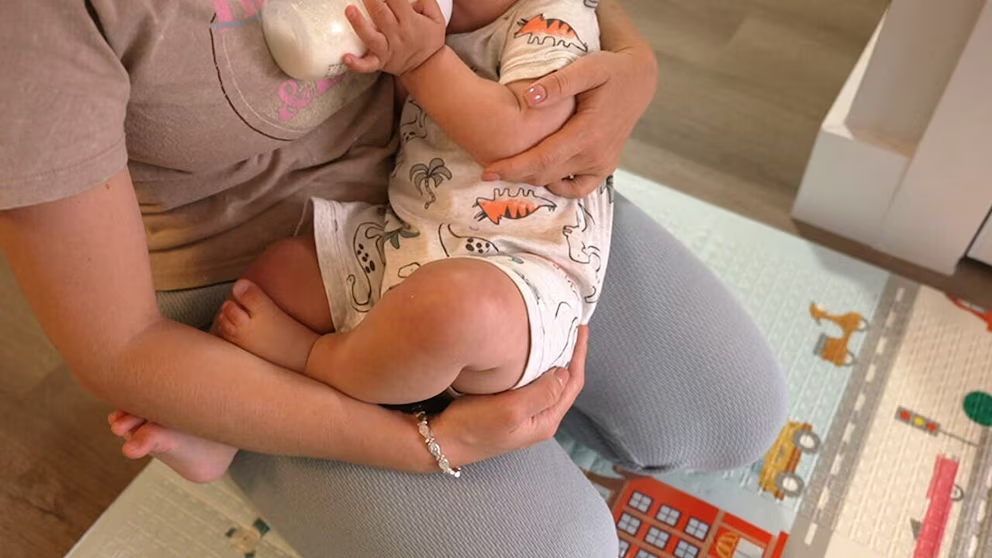
Defenders of immigrant rights assert that the offspring of countless non-citizens residing legally, yet temporarily, in the U.S. could become individuals without a country if President Trump’s directive to end birthright citizenship is enacted. ABC News
Eight-month-old Ivan is blissfully unaware of the impending legal shift that could dramatically impact his future and the anxiety consuming his young mother, Lily, an asylum seeker from Ukraine.
“The political landscape is evolving, and we are uncertain about what the future holds,” she conveyed to ABC News during an interview.
Ivan entered the world on American soil just months after President Donald Trump issued an order that would deny him and millions of other infants born to non-citizen parents, like Lily who sought refuge from the conflict in her homeland due to Russian aggression, U.S. citizenship.
While federal judges promptly halted the order, the Supreme Court is slated to make the final determination on whether Trump possesses the authority to terminate birthright citizenship and redefine the criteria for American citizenship at birth.
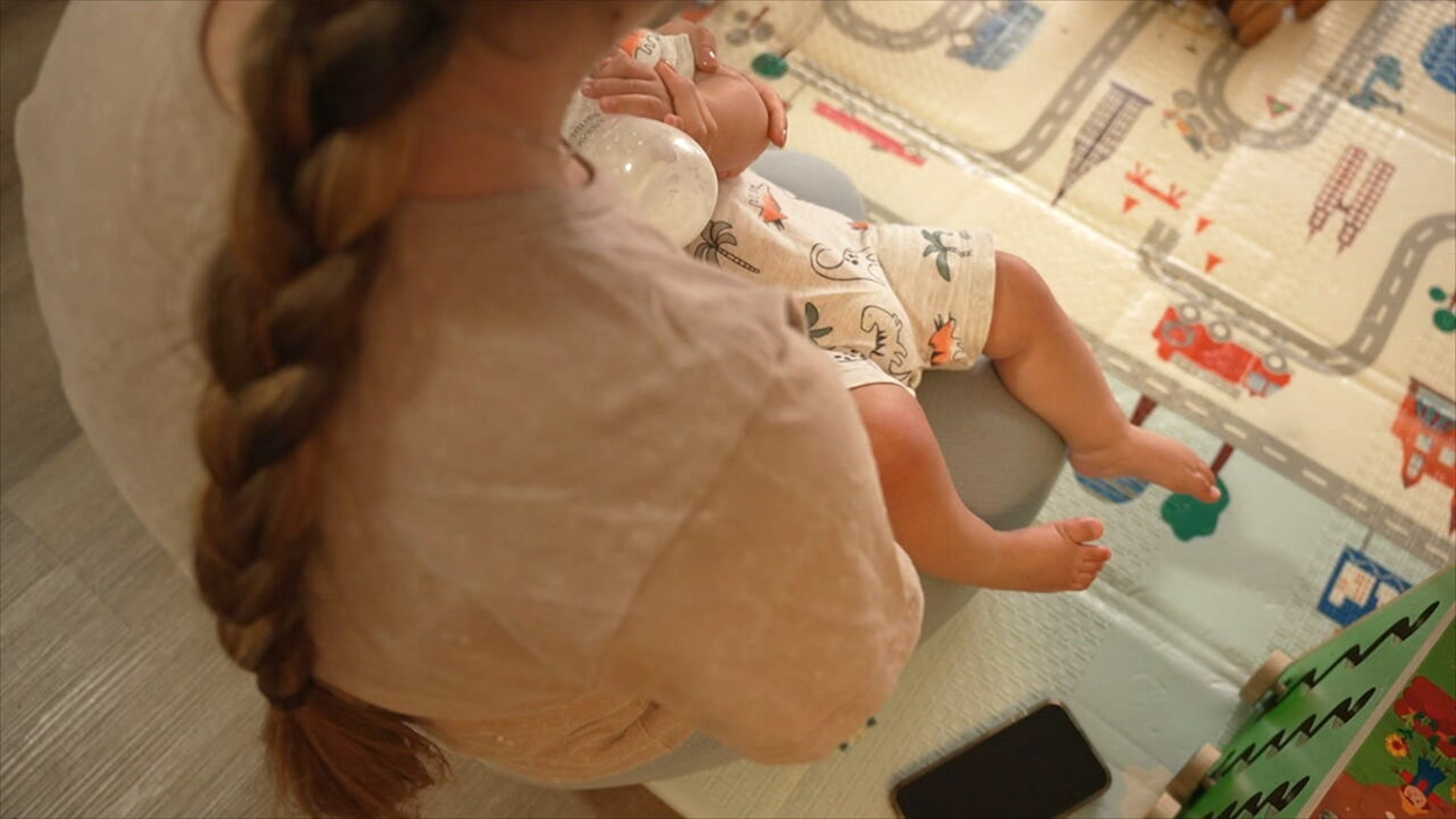
Lily, a Ukrainian seeking asylum, is lawfully in the U.S. while immigration authorities process her case. Her 8-month-old son is recognized as a U.S. citizen by birth. ABC News
“My child deserves citizenship. He should not be left without a country,” Lily stated. “He ought to belong to this nation, having been born under the American flag and subject to its jurisdiction. Should he choose, he can serve this country as well.”
Lily and Ivan are pseudonyms that ABC News consented to use to safeguard the family’s identity, given concerns they might be targeted by the Trump administration while Lily’s asylum application is still pending.
Should Trump’s position prevail in court, with a ruling anticipated by early July, legal representatives contend that Ivan and the children of millions of immigrants in the U.S. could be rendered stateless through no fault of their own.
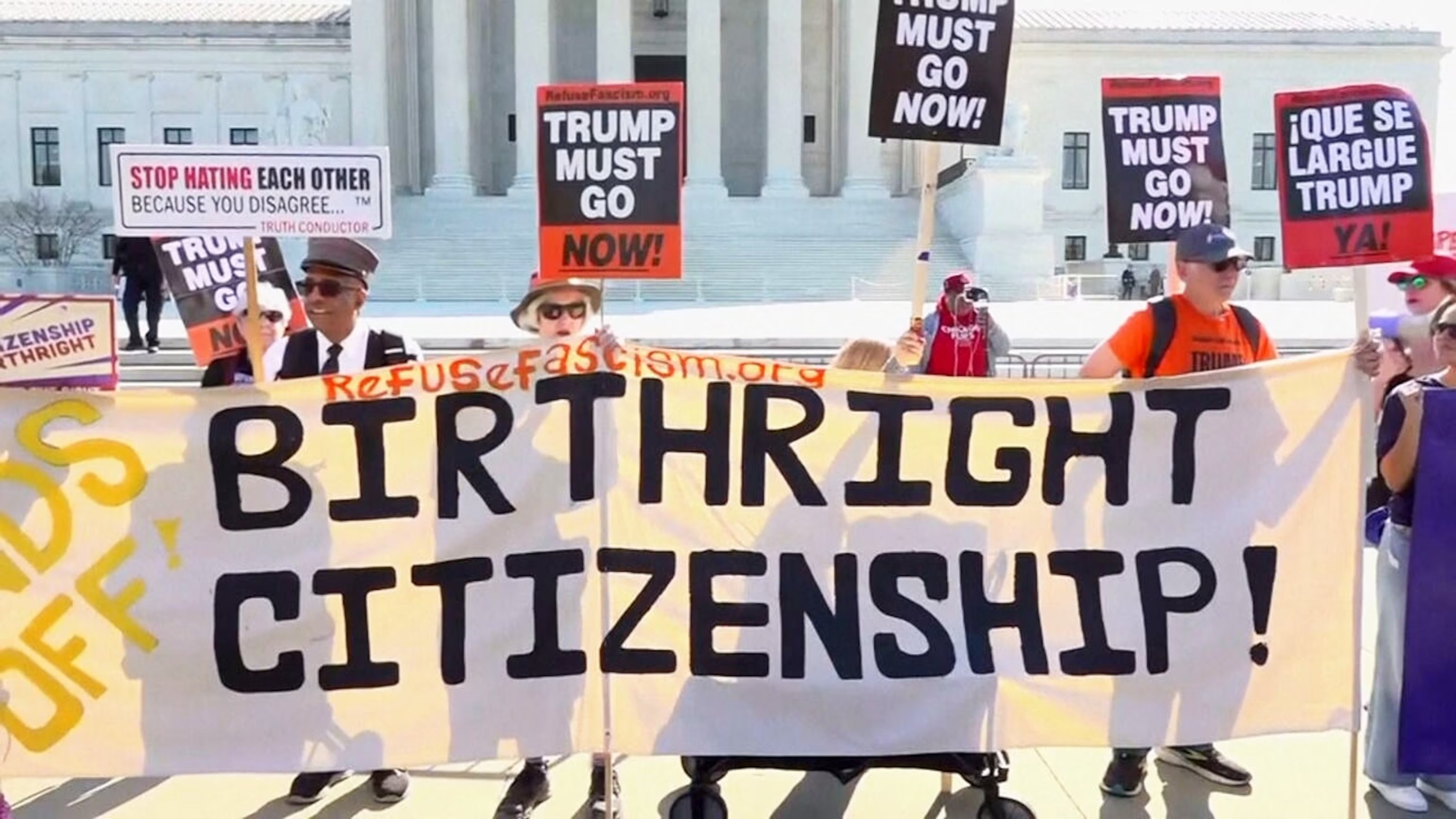
In April 2026, demonstrators gathered outside the U.S. Supreme Court, urging the justices to uphold birthright citizenship as guaranteed by the 14th Amendment to the Constitution. ABC News
“If a child is stateless, it implies they would lack any form of identification — and I’m not solely referring to U.S. identification — but any identification whatsoever,” remarked Conchita Cruz, an attorney and co-executive director of the Asylum Seeker Advocacy Project, one of the organizations challenging the government to prevent Trump’s directive.
“We have heard from numerous asylum seekers and other individuals here who are exceedingly fearful that, despite possessing legal status in the U.S., their child might be born undocumented, facing the risk of deportation or separation from them,” Cruz stated.
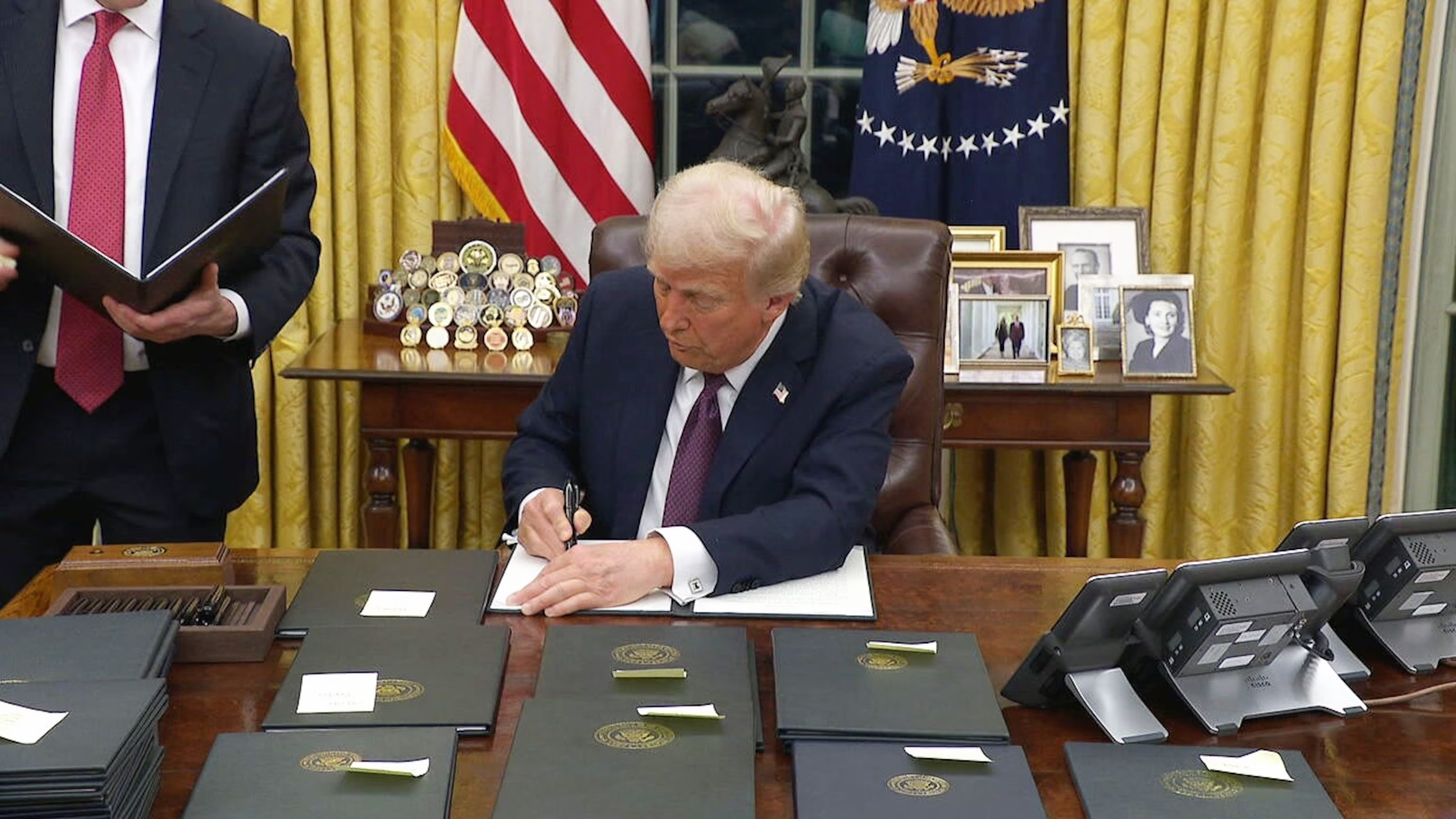
President Donald Trump signs an executive order in the Oval Office on January 20, 2025, intended to end birthright citizenship. ABC News
The Trump administration maintains that the order is applicable only to infants born after its effective date, although certain legal scholars have cautioned about a potential ambiguity between the order’s signing in January 2025 and a final court judgment.
“The fundamental question is whether giving birth within the United States automatically confers citizenship. This hinges on the original public understanding of the clause concerning the legality of their presence and their domicile,” U.S. Solicitor General John Sauer articulated to the justices during oral arguments in the case last month.
The interpretation of the term ‘domiciled’ lies at the core of the constitutional debate.
The administration posits that the framers of the 14th Amendment, which established birthright citizenship, intended it exclusively for children whose parents maintain a permanent residence—or domicile—in the U.S.
Furthermore, the government argues that the children of undocumented immigrants and temporary visitors like Lily do not possess formal ‘allegiance’ to the U.S. and therefore should not qualify for citizenship.
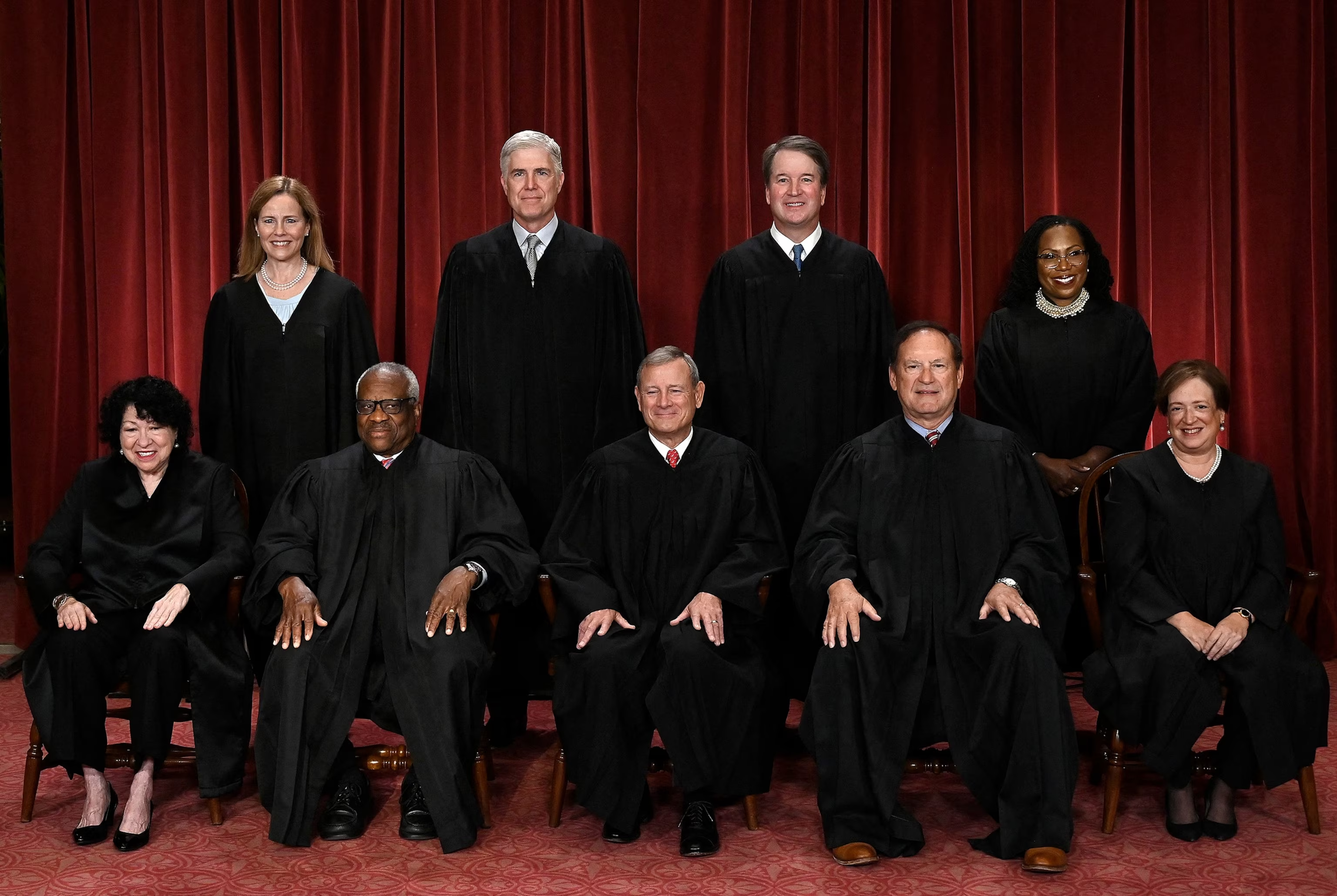
The Justices of the Supreme Court are pictured in their official photograph at the Supreme Court on October 7, 2022. (Seated from left) Associate Justice Sonia Sotomayor, Associate Justice Clarence Thomas, Chief Justice John Roberts, Associate Justice Samuel Alito, and Associate Justice Elena Kagan; (Standing behind from left) Associate Justice Amy Coney Barrett, Associate Justice Neil Gorsuch, Associate Justice Brett Kavanaugh, and Associate Justice Ketanji Brown Jackson. Olivier Douliery/AFP via Getty Images
During a significant hearing in April, a majority of the justices indicated that determining ‘domicile’ for the parents of the approximately 3.6 million infants born annually in the U.S. could present a formidable challenge.
“How will we ascertain domicile?” Justice Neil Gorsuch inquired of Sauer. “And must we undertake this for every individual?”
Justice Ketanji Brown Jackson pondered the potential implications for all expectant mothers. “So, are we summoning pregnant women for depositions?” she questioned.
“What if the parents are unknown?” Justice Amy Coney Barrett hypothesized.
“The [administration’s] guidance offers, I believe, very clear, objective, and verifiable methods for accomplishing this,” Sauer responded.
Over 125 years ago, the Supreme Court settled the question of eligibility for birthright citizenship in the seminal case of U.S. v. Wong Kim Ark, an infant born to Chinese nationals in California, whom the court ultimately ruled was automatically an American under the 14th Amendment.
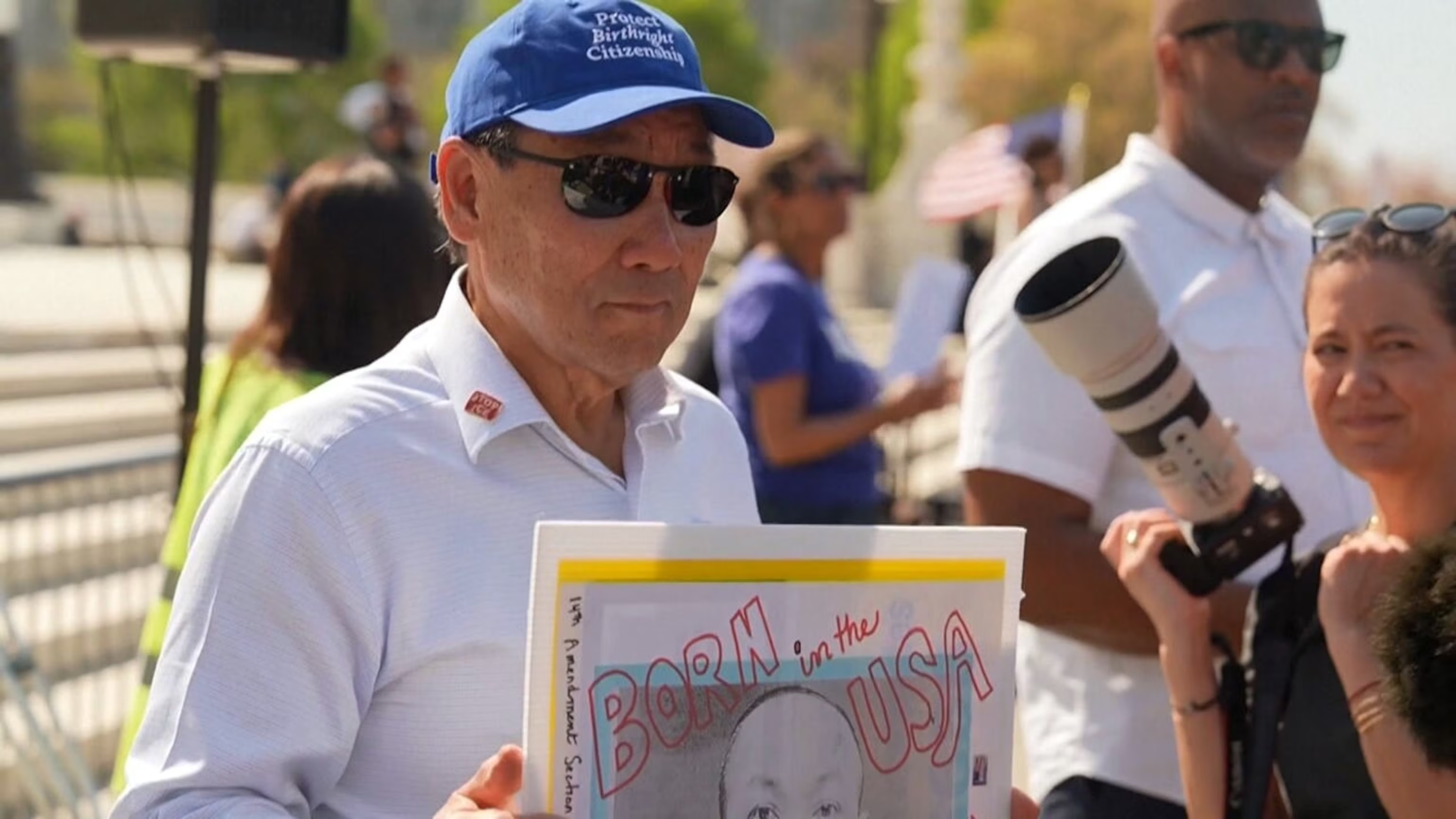
Norman Wong is the great-grandson of the Chinese-American man central to a landmark 1898 Supreme Court case that affirmed the constitutionality of birthright citizenship. ABC News
Wong’s great-grandson, Norman, informed ABC News that he now fears the dissolution of his family’s legacy.
“I never imagined we would find ourselves in this predicament. When we were children, if you were born here, you were American. It was that straightforward,” he stated. “Growing up, the children all around me knew they were American. These were simple principles that everyone could comprehend.”
Researchers estimate that Asian and Latino infants would be most affected by a ruling overturning Wong Kim Ark and enabling Trump to abolish birthright citizenship.
According to social scientists from Penn State University, in an article published this year in the journal Demography, over 90% of infants born on U.S. soil without citizenship or legal status by 2050 would be Latino, while the number of “unauthorized” Asian infants would quintuple.
For American-born children of undocumented immigrants, there is also apprehension that their U.S. citizenship could be revoked.
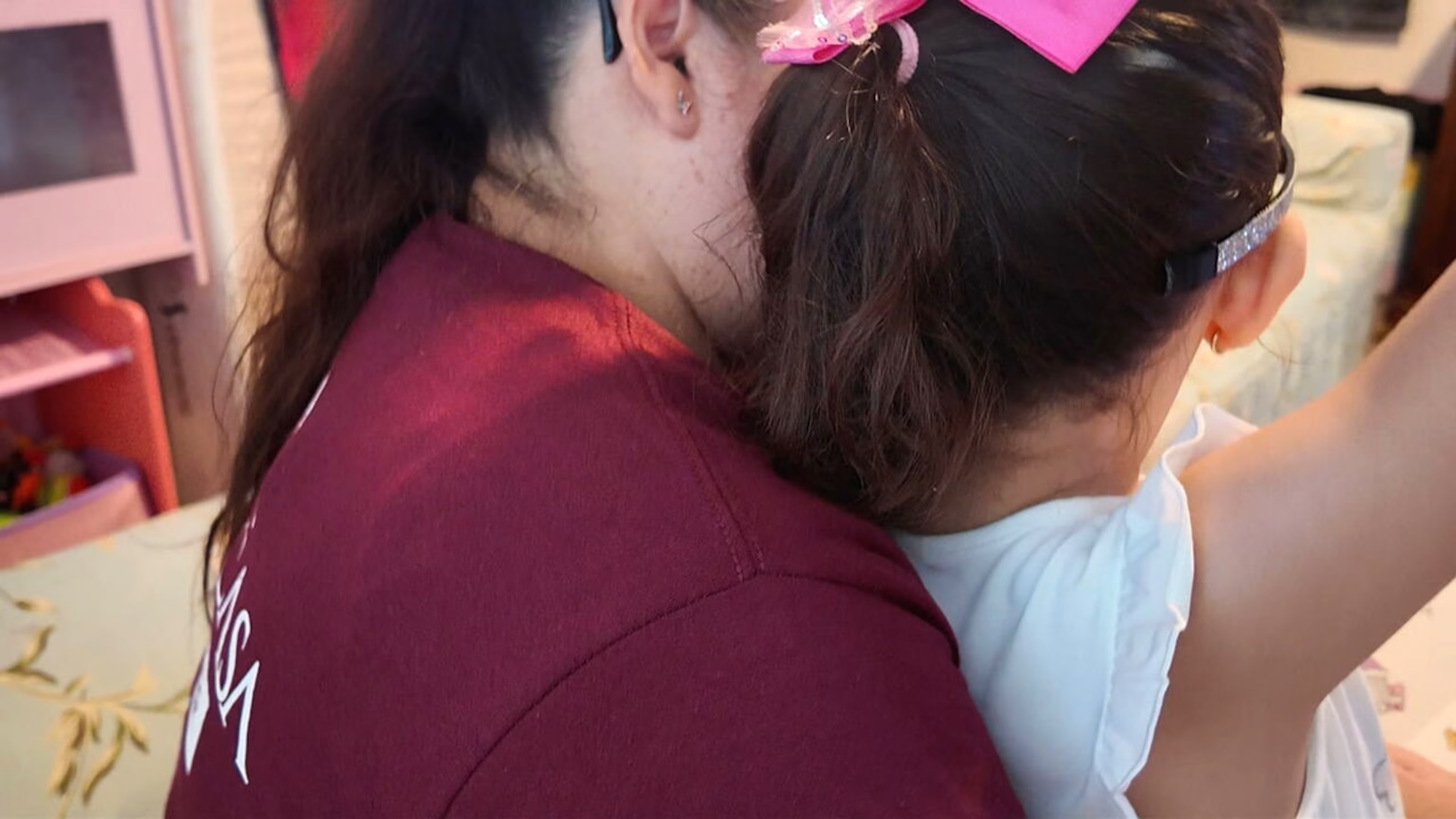
Viviana, an undocumented immigrant from Ecuador, worries that her 4-year-old daughter Denise, who is a U.S. citizen by birth, might lose her legal status if President Trump prevails at the Supreme Court. ABC News
“I cannot find peace at night; I am preoccupied with this entire situation,” expressed Viviana, an undocumented mother of three from Ecuador who has been living and working in the U.S. without legal status for four years.
“I am extremely apprehensive. My daughter would forfeit her rights,” she said of her 4-year-old girl, Denise. “Not solely my daughter, but numerous children would lose the privileges they possess, such as health insurance and the ability to attend school normally.”
For generations, U.S. birth certificates have served as the definitive proof of American citizenship. However, if the order stands, they would no longer suffice for anyone—including older Americans—to apply for Social Security benefits, a passport, or even a home mortgage.
This alteration, according to experts, could disproportionately affect vulnerable children, as many families with lower incomes lack the requisite knowledge or financial means to secure and maintain vital personal documentation.
“It causes delays in accessing all types of services,” stated Bruce Lesley, president of First Focus on Children, a bipartisan policy advocacy organization, noting that children without adequate proof of citizenship could be denied assistance with nutrition, healthcare, or education.
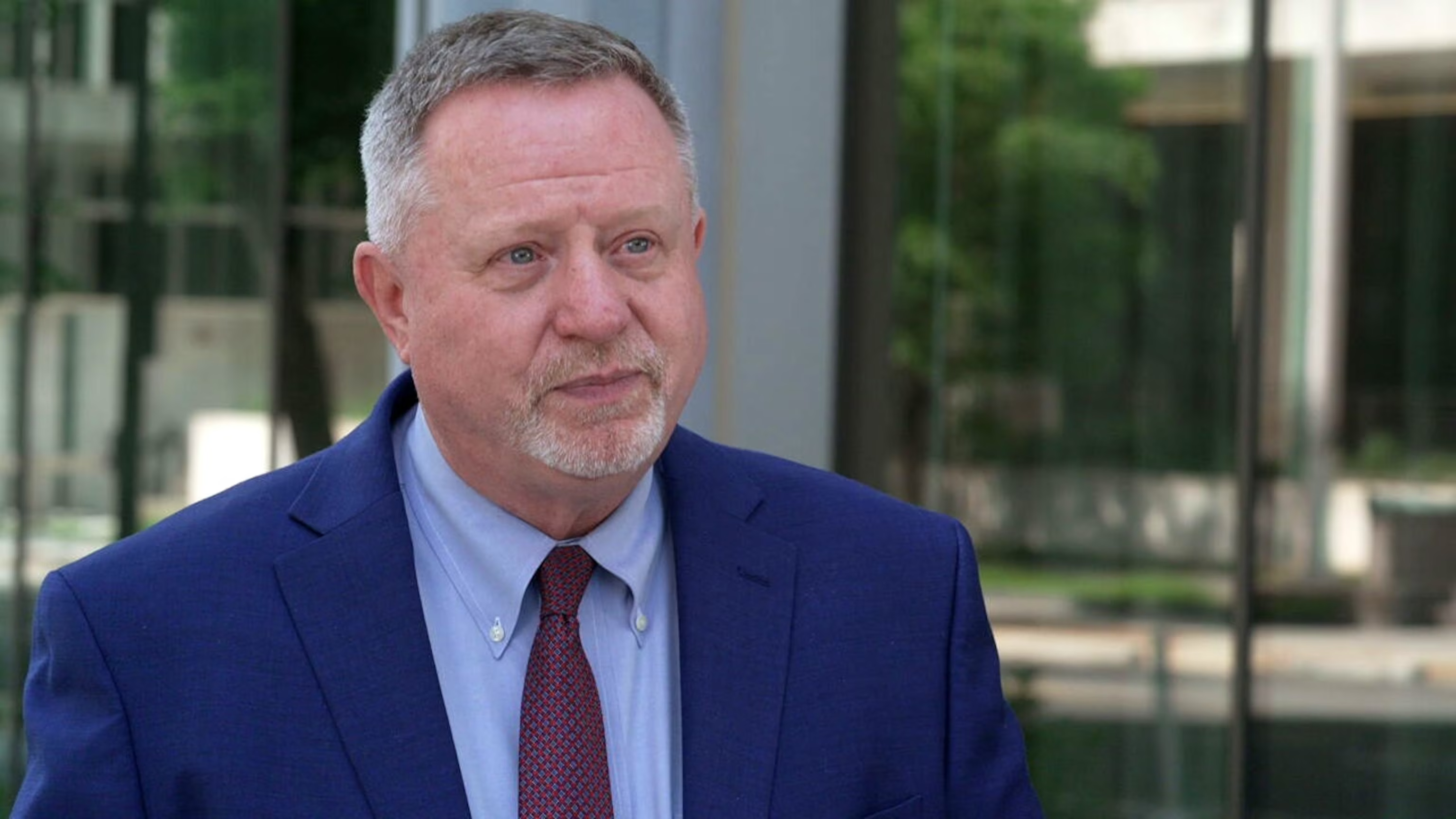
Bruce Lesley, president of First Focus on Children, a bipartisan advocacy group, posits that ending birthright citizenship would affect every baby born in the U.S. moving forward. ABC News
“Suppose a mother is receiving Medicaid and has been utilizing healthcare services from prenatal care through delivery. Upon the child’s birth, they would lack citizenship,” Lesley explained. “It would be necessary to prove citizenship, and for a governmental entity to confirm, ‘Yes, you have now proven it.’ This would lead to a delay, possibly six to nine months.”
For Trump, who attended the Supreme Court’s oral arguments in this case—a first for a sitting president—birthright citizenship has long been perceived as a financial drain on taxpayers.
He posted on social media last year that it was “not meant for people taking vacations to become permanent Citizens of the United States of America, and bringing their families with them, all the time laughing at the "SUCKERS" that we are!”
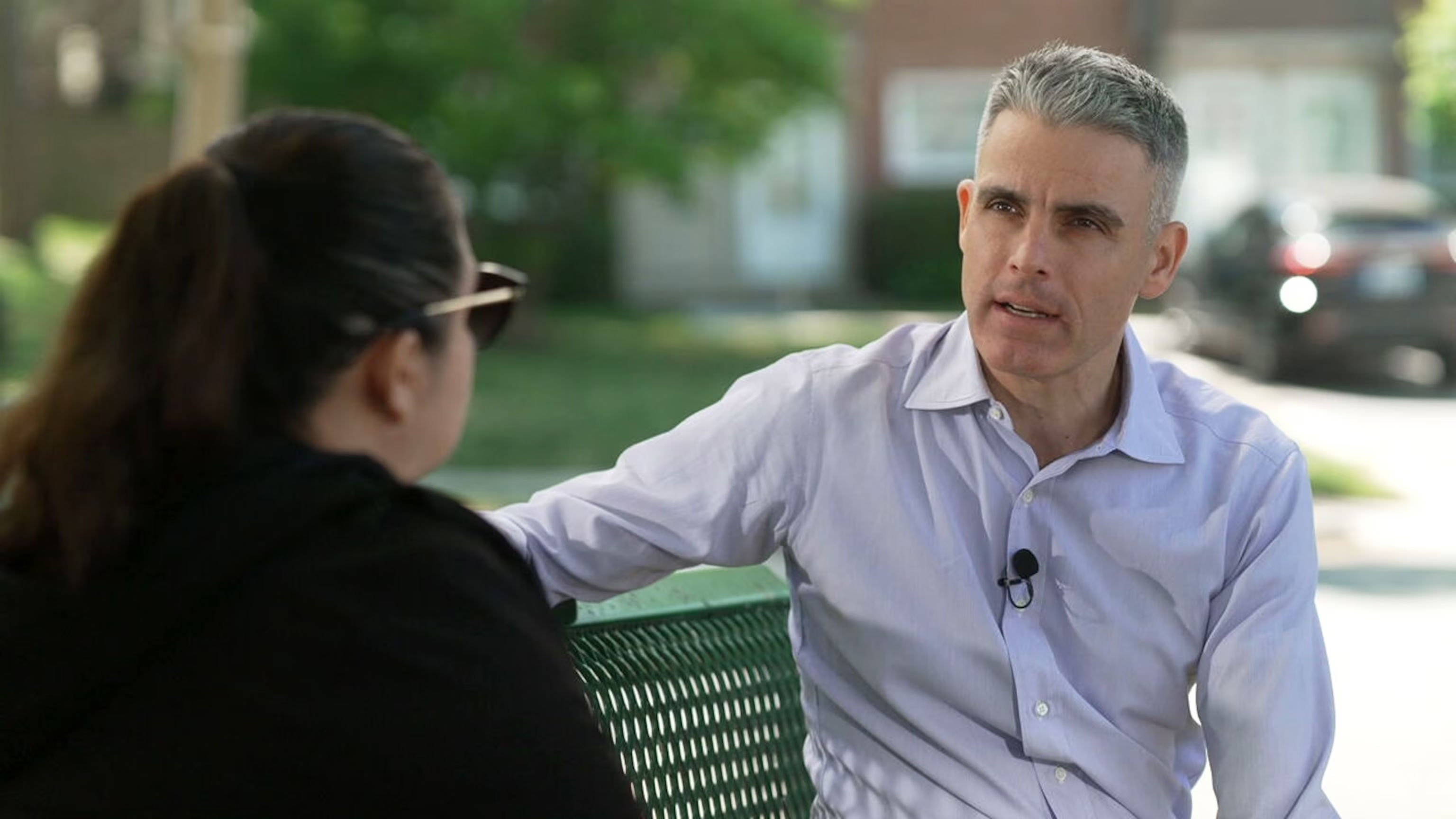
Viviana, an undocumented immigrant and mother of a young American-born daughter, informs ABC News’ Devin Dwyer of her concern that the Trump administration might attempt to revoke her daughter’s citizenship if the Supreme Court permits the president to end birthright citizenship. ABC News
For Lily, birthright citizenship for her infant son Ivan represents her family’s commitment to their community and the nation they have adopted as their new home.
“My child did not alter the country, and he should not be penalized for being born in the United States,” she asserted. “I desire a happy life for my child, a good job, and a wonderful wife. I hope he achieves these aspirations, and does so here.”
Sourse: abcnews.go.com