
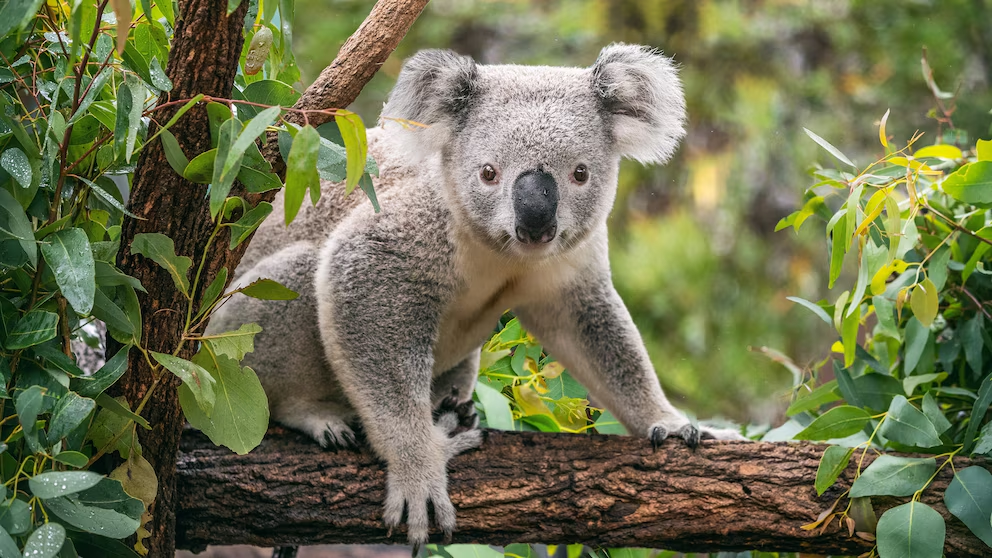
In this archived picture, which lacks a specific date, a koala is observed resting on a eucalyptus tree.Adobe Stock
Scientists caution that climbing temperatures are intensifying the dangers to Australia’s well-known koalas, an already at-risk species.
As highlighted in a paper released in Biology Letters this Tuesday, koalas are experiencing heightened heat stress and potential fatalities when temperatures surpass a defined point.
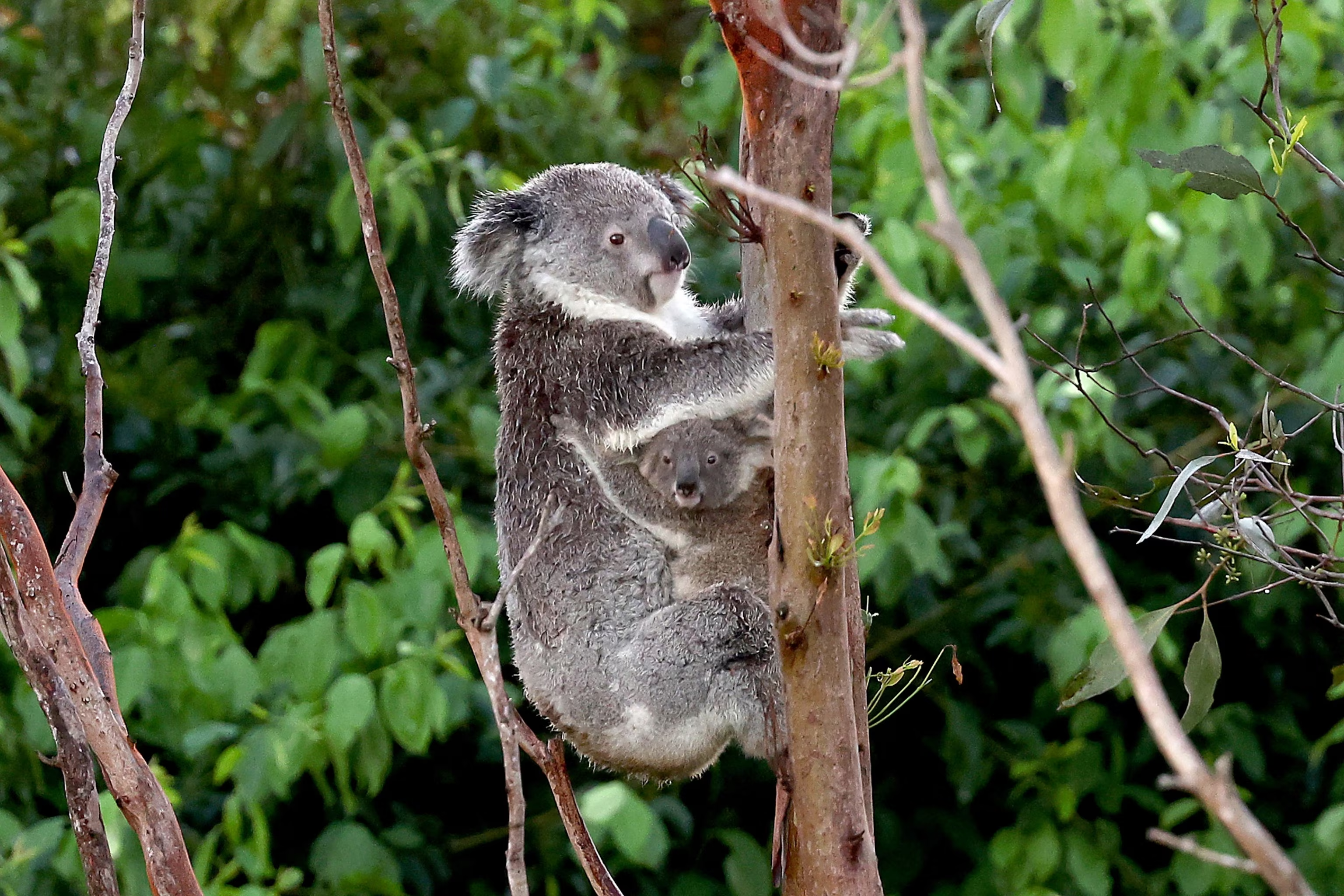
In this file image dated Dec. 14, 2024, a koala and its young climb a tree within bushland close to Brisbane’s city center, Australia.David Gray/AFP via Getty Images, FILE
An investigation involving nearly 12,000 koala rescue reports across New South Wales suggests that the likelihood of koalas needing care and possibly dying rose noticeably when the average peak temperature hit 27 degrees Celsius — equivalent to 80.6 degrees Fahrenheit — or exceeded it.
The research team discovered that koala groups in the inland northwest faced the biggest threats.
Prior to this research, Valentina Mella, a senior educator in animal behavior and preservation at the Sydney School of Veterinary Science, mentioned to ABC News that there were numerous observational accounts of koalas perishing during heatwaves, especially during Australia’s intense summer temperatures. However, no concrete evidence existed to explicitly establish a definite correlation between temperature levels and koala deaths.
"We aimed to gain a deeper understanding of how escalating temperatures and increasingly common heatwaves could impact the endurance of koalas, mainly as climate change gets worse," stated Mella, the study’s primary author.
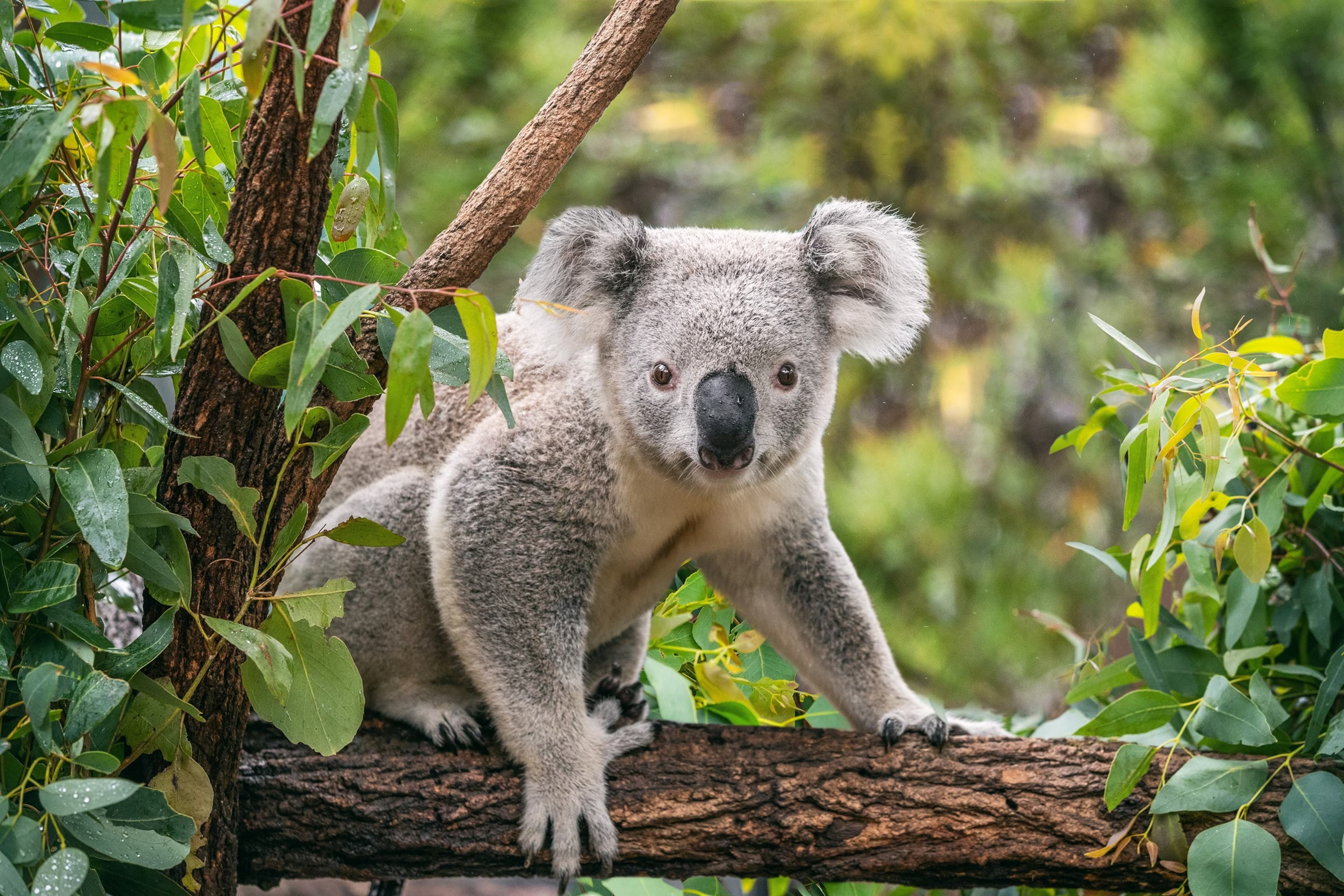
In this archived picture, which lacks a specific date, a koala is observed resting on a eucalyptus tree.Adobe Stock
The research team scrutinized the connection linking ambient temperature with the likelihood of koalas needing care and succumbing to death. They employed a method that is "extensively" applied in human environmental epidemiology when evaluating links between short-term heat exposure and immediate heat-related health consequences.
Their findings indicated that both the volume of admissions for care and instances of death started to escalate when the seven-day average peak temperature reached 80.6 degrees Fahrenheit.
Mella noted that admissions and deaths also sustained their increase as the temperature climbed.
When the seven-day average peak temperature peaked at 30 degrees Celsius — which translates to 86 degrees Fahrenheit — the chances of koalas being admitted and then dying due to exposure were elevated up to 3.5 times when compared to a temperature exposure of 25 degrees Celsius — or 77 degrees Fahrenheit.
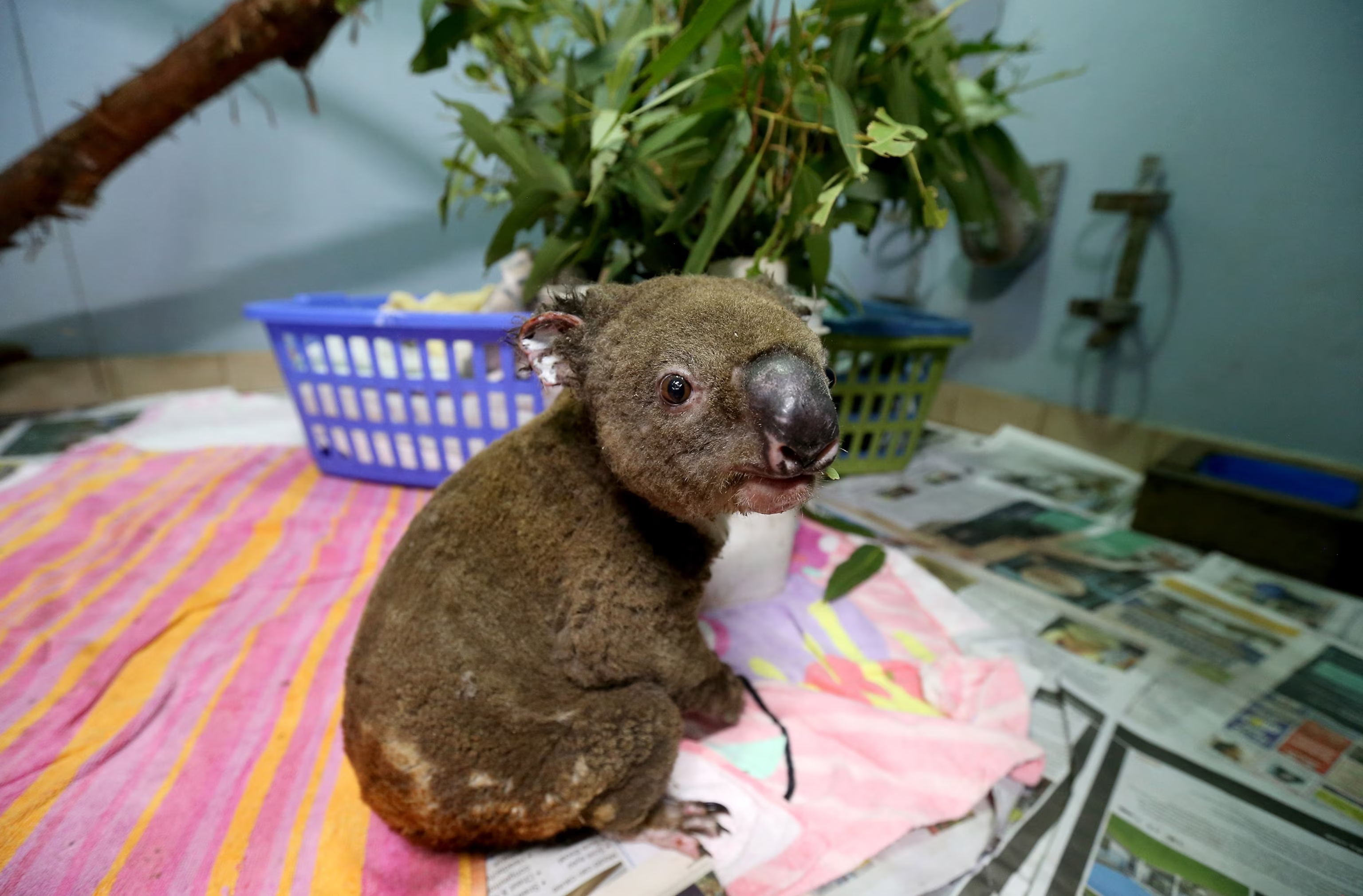
In this archival image from Nov. 29, 2019, a koala called Paul recovers from burns within the ICU at The Port Macquarie Koala Hospital situated in Port Macquarie, Australia. Following weeks of harsh bushfires across New South Wales and Queensland, volunteers have collaborated alongside crews from National Parks and Wildlife Service to find koalas. Koalas rescued from impacted fire zones have been returned to the hospital for treatment. It’s estimated that bushfires have scorched a million hectares of land across Australia in recent weeks, resulting in the deaths of an estimated 1000 koalas and other wildlife.Nathan Edwards/Getty Images, FILE
Mella added that this pattern was further aggravated in koalas afflicted with chlamydiosis — a prevalent bacterial illness among the species — and in those residing in unsuitable environments.
On the International Union for Conservation of Nature’s Red List of Threatened Species, koalas are labeled as "vulnerable" due to population projections indicating a decline of 28% over the course of the last three generations.
According to the IUCN, prime risks include residential and commercial expansion, logging activities, disease, and fires, which are in addition to drought, climate change, and other temperature extremes.
During the extensive bushfires that ignited in Australia towards the close of 2019 and persisted into 2020, a significant number of koalas died. Roughly 47 million acres were consumed by flames across southeast Australia and the eastern coastline, resulting in the death of nearly 6,400 of these marsupials — about 15% of their total count.
Mella explained that koala populations endured massive setbacks due to immediate death, injuries, dehydration, and enduring obliteration of their habitats.
Mella stated that "The potency and magnitude of these fires were directly associated with extreme heat, sustained drought, and arid conditions tied to climate change."
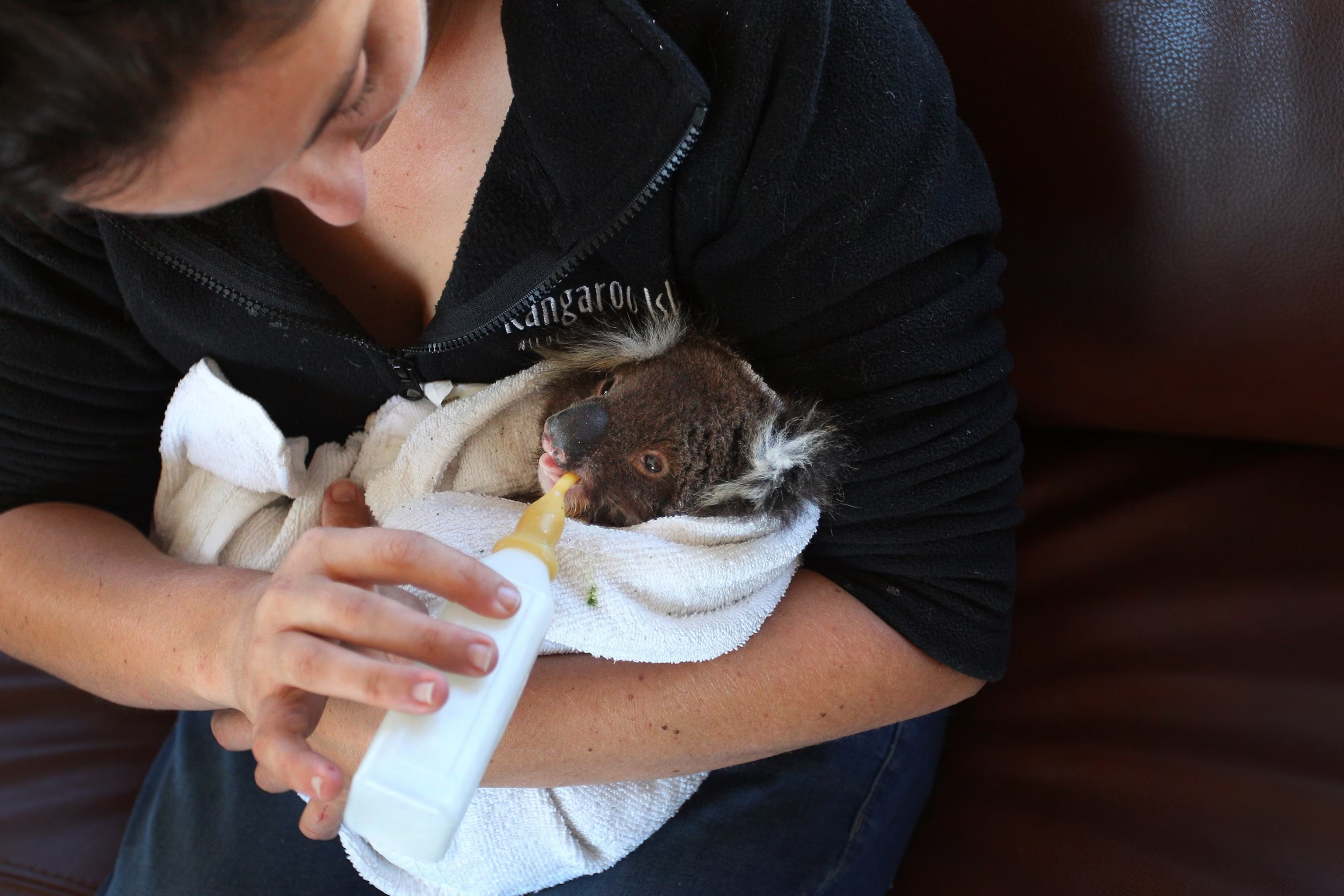
In this archival image from Feb. 23, 2020, Dana Mitchell, who is the owner of the Kangaroo Island Wildlife Park, is seen feeding a koala joey that was impacted by the recent bushfires, inside the joey hospital located in Parndana, Australia. Since the fires, the Kangaroo Island Wildlife Park has cared for 600 animals, with 95% of them being koalas.Lisa Maree Williams/Getty Images, FILE
The researchers conveyed that the latest research nonetheless points out that even relatively moderate heat has the capacity to endanger the marsupial’s existence.
Mella stated that these stressors, when paired with the growing likelihood of experiencing extreme climate occurrences, generate "compounding dangers" for koalas, a species that is already exposed to risks of habitat depletion and disruption.
The researchers communicated that the results highlight the importance of implementing measures that improve heat-response strategies to safeguard imperiled wildlife.
Sourse: abcnews.go.com