
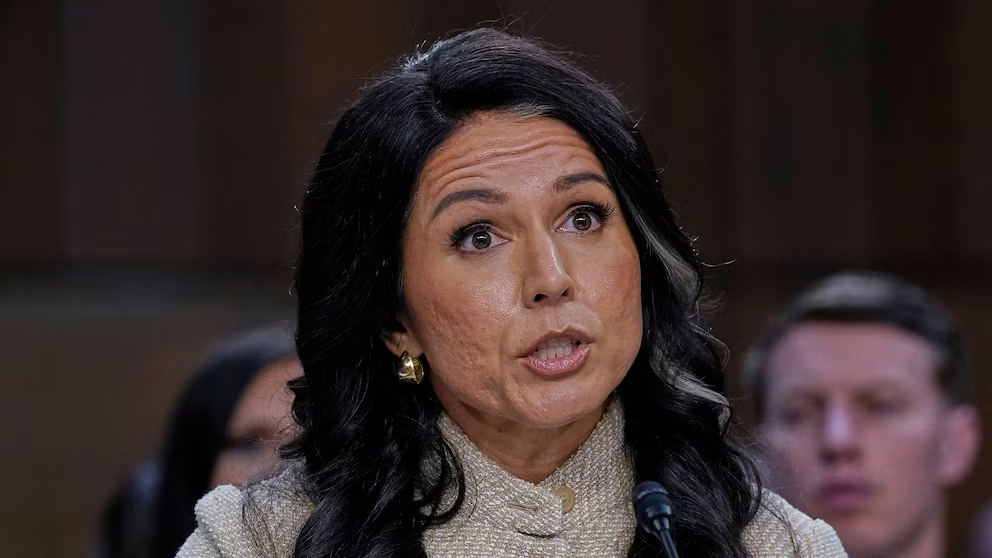
Director of National Intelligence Tulsi Gabbard gives evidence before the Senate Committee on Intelligence meetings to analyze global threats on Capitol Hill, March 18, 2026, in Washington. Jose Luis Magana/AP
National Intelligence Director Tulsi Gabbard is tendering her resignation from her position.
Gabbard is relinquishing her duties after her spouse of 11 years, Abraham Williams, was recently diagnosed with “an exceptionally uncommon type of bone cancer,” according to a letter of resignation she shared on social media.
Within the letter to President Donald Trump, Gabbard conveyed that Williams "is confronted with substantial obstacles in the upcoming weeks and months."
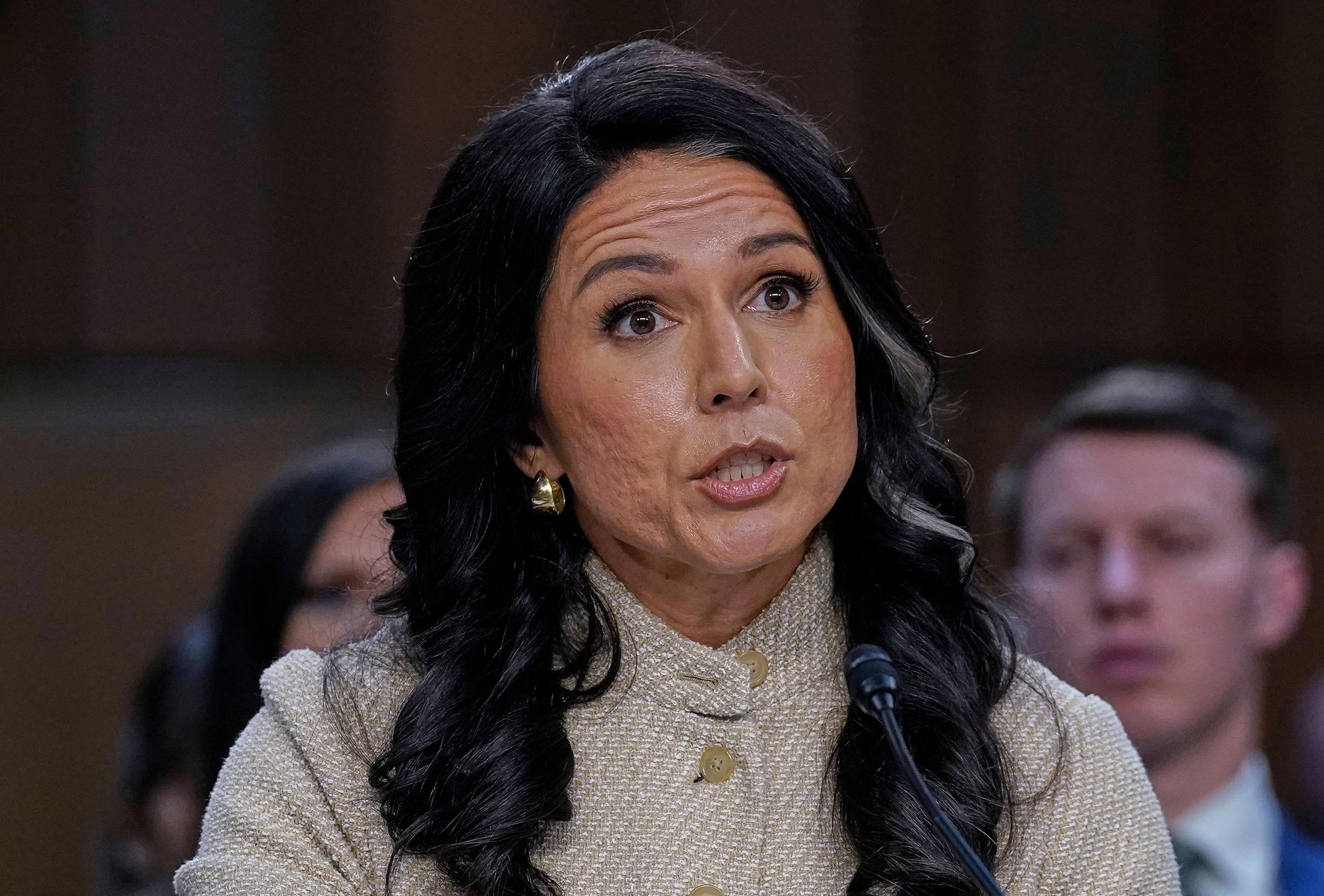
Director of National Intelligence Tulsi Gabbard gives evidence before the Senate Committee on Intelligence meetings to analyze global threats on Capitol Hill, March 18, 2026, in Washington.Jose Luis Magana/AP
"During this period, I must withdraw from public office to be at his side and provide unwavering assistance to him throughout this struggle," Gabbard penned.
Her departure is effective June 30, 2026, according to the aforementioned letter.
Trump verified in a social media announcement that Gabbard will be resigning from her role, commending her for having executed an “outstanding job” and noting that the administration will “miss her.”
The president further stated that Principal Deputy Director of National Intelligence Aaron Lukas will act as the DNI.
The information regarding Gabbard's exit was initially reported by Fox News.
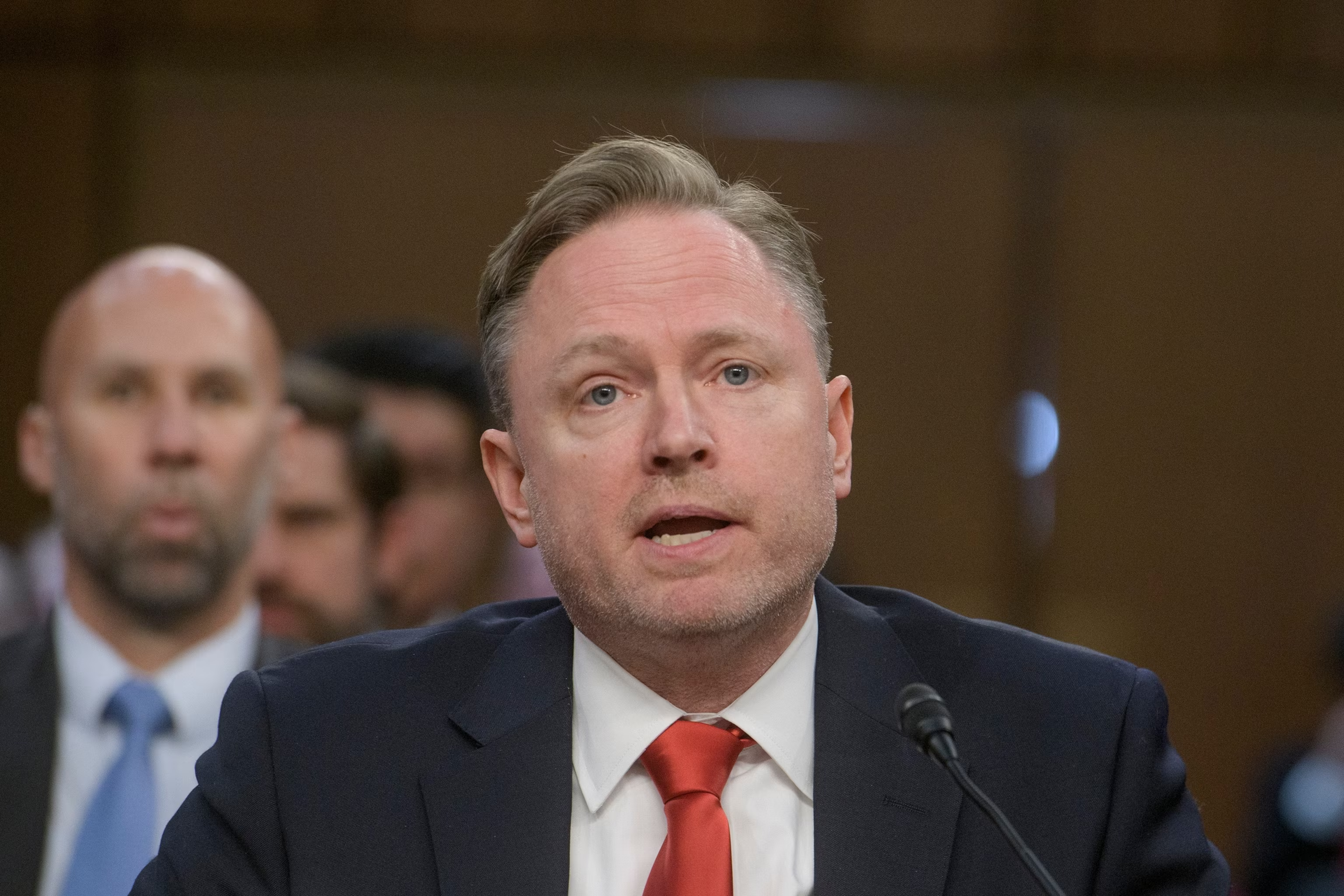
Aaron Lukas appears before a Senate Committee on Intelligence hearing for his pending confirmation to be principal deputy director DNI, on Capitol Hill, April 9, 2025, in Washington.Rod Lamkey/AP
Her leave signifies the most recent high-level reshuffle of Trump's second term following departures by former Attorney General Pam Bondi and Homeland Security Secretary Kristi Noem earlier this year.
Gabbard concludes a term recognized by two substantial international disagreements, politically tinged election-related inquiries domestically and the unresolved strain between the anti-war platform that originally characterized her entrance into politics and the national security office she later occupied.
Gabbard was an unconventional preference to spearhead the vast system of 18 intelligence bodies with a $100 billion budget.
The former Democratic congresswoman representing Hawaii and one-time Democratic presidential contender diverged from her party, moved into Trump’s sphere of influence during his 2024 campaign and aligned with the Republican Party.
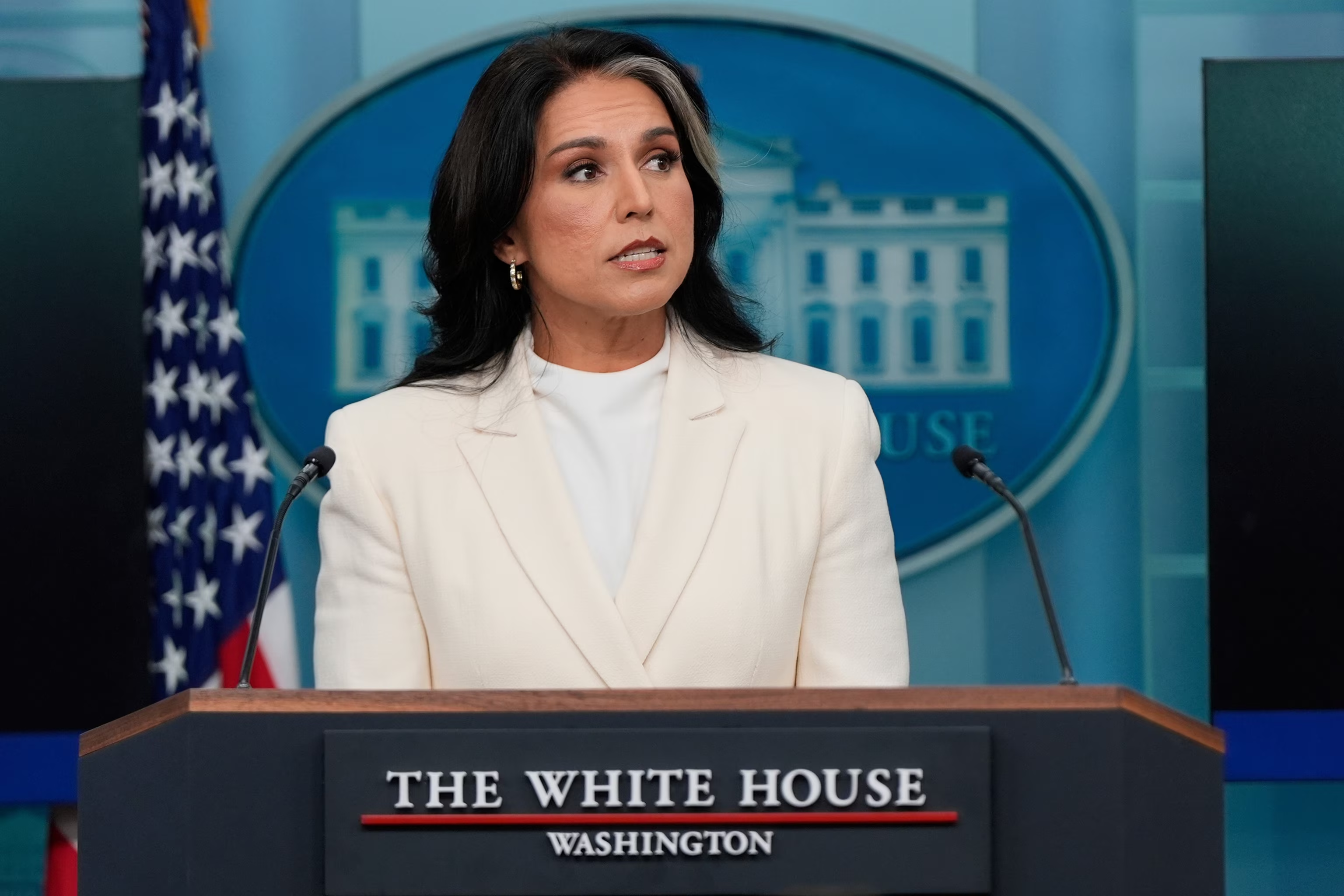
Director of National Intelligence Tulsi Gabbard speaks with reporters in the James Brady Press Briefing Room at the White House, July 23, 2025, in Washington.Julia Demaree Nikhinson/AP
Gabbard is leaving office following months of examination regarding the Iran war, the administration’s military heightening in Venezuela, the resignation of National Counterterrorism Center Director Joe Kent concerning Iran and sustained repercussions from the administration's 2020 election investigations, including the Fulton County, Georgia, probe.
In the position, Gabbard fulfilled a pivotal part in ascertaining which content is incorporated into the president's daily intelligence briefings.
But a few months into the administration, discrepancies started to materialize.
Gabbard shared a video in June to her personal account on X issuing a grave warning regarding the menace of nuclear war.
Resistance to U.S. intervention
The administration's military measure against Venezuela contrasted with her prior opposition to U.S. interference in other nations and her past critique of regime-change endeavors geared toward Venezuelan leader Nicolás Maduro.
Gabbard's departure also transpires after the March resignation of Kent, the Trump administration's leading counterterrorism official, who directly reported to her at ODNI and communicated he could not "in good conscience" endorse the Iran war.
Within a resignation correspondence shared publicly on social media, Kent expressed that Iran presented "no impending peril" to the U.S. and contended the administration had been drawn into war by Israel. Since departing from office, Kent has persisted in stating publicly that "Israel prompted the decision" to strike Iran.
Gabbard is also leaving office amidst continuing fallout from the administration’s investigations into the 2016 and 2020 elections, including the investigation in Georgia, where her involvement garnered intense analysis.
Gabbard facilitated for FBI agents who searched the Fulton County Elections and Operations Hub in January to engage in a phone dialogue with Trump, according to numerous sources knowledgeable of the matter.
The president, according to multiple sources, addressed the agents via speakerphone and said they were performing exceptional work in searching and examining Georgia’s elections.
Fulton County representatives state FBI agents took away 700 boxes containing ballots and other items linked to the 2020 election after obtaining a search warrant granted by a federal magistrate judge.
As a portion of the inquiry, investigators have analyzed each ballot individually, searching for any anomalies, sources have informed ABC.
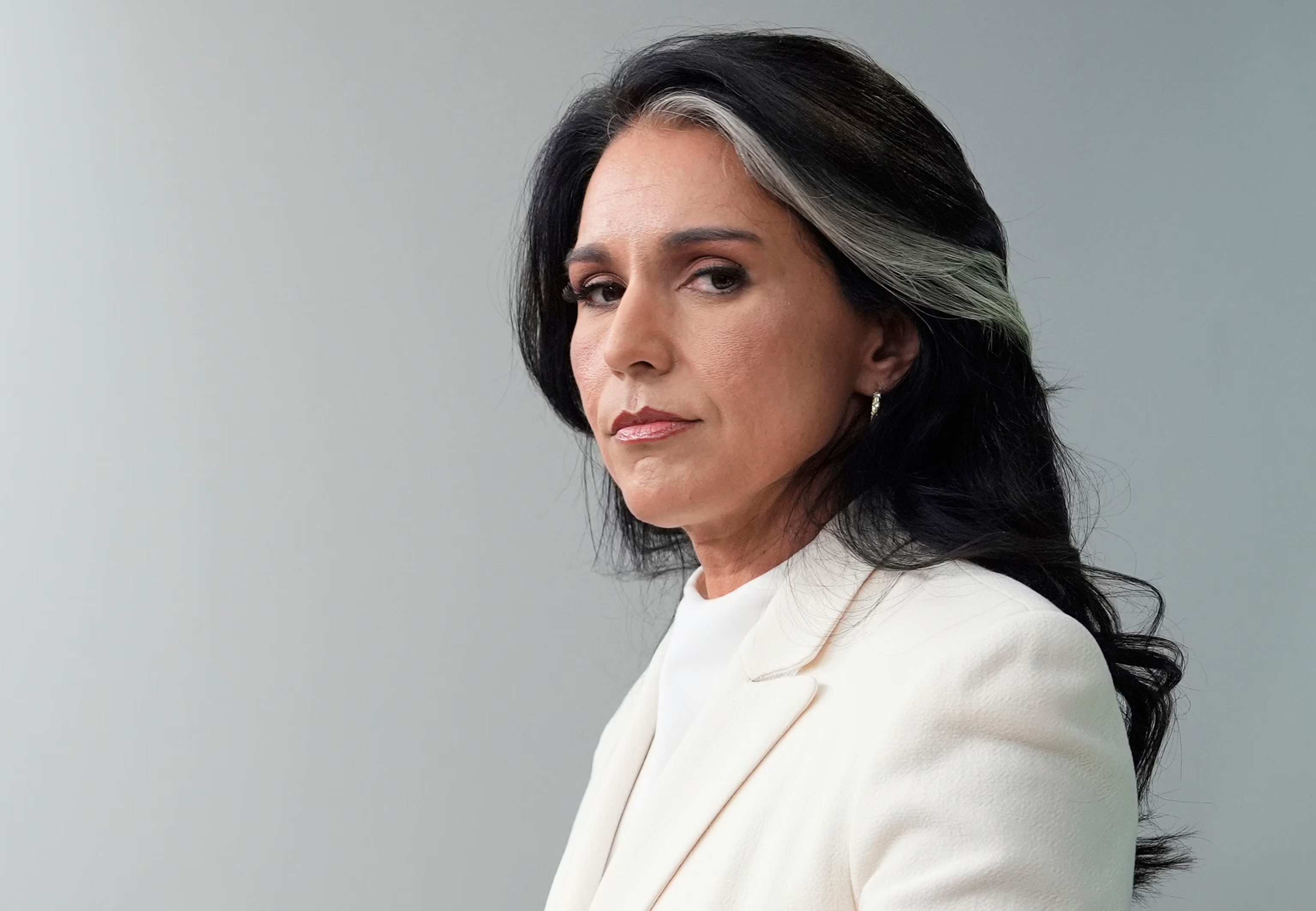
Director of National Intelligence Tulsi Gabbard, speaks with reporters in the James Brady Press Briefing Room at the White House, July 23, 2025, in Washington.Alex Brandon/AP
The Iran war is presently in its 12th week after Trump declared in February that the U.S. and Israeli forces commenced assaults on Iran intending to eradicate Iran's aspirations of procuring a nuclear weapon.
Gabbard’s 2025 congressional testimony faced renewed examination this year as Democratic lawmakers pressed her regarding the intelligence community’s assessment of Iran’s nuclear initiative and Trump’s public backlash last summer.
In that testimony, Gabbard expressed that the intelligence community evaluated that Iran was not “constructing” a nuclear weapon and that Supreme Leader Ali Khamenei had not sanctioned the nuclear weapons initiative he halted in 2003.
Last that summer, prior to the war’s inception, Trump was invited to contribute to Gabbard’s assessment.
"I am not concerned about what she declared," Trump replied at the time. "I believe they were extremely close to possessing a weapon."
Subsequently, Trump again denounced Gabbard and the intelligence community as "incorrect" on Iran's nuclear capacity.
Gabbard appeared later and expressed she and Trump were "in agreement" regarding Iran's nuclear timeline and stated her testimony was being misinterpreted.
After the second instance that Trump said she was "incorrect," Gabbard shared on X, "America possesses intelligence indicating Iran is at the stage where it can yield a nuclear weapon within weeks to months, should they determine to complete the assembly. President Trump has made it evident that cannot come to pass, and I concur."
In March, Rep. Jimmy Gomez questioned Gabbard on remarks she delivered last year that Iran was not building a nuclear weapon and Trump’s public backlash at that point in time.
Gabbard indicated in the exchange that "context is significant” and she "support[s] the intelligence community assessment."
Sourse: abcnews.go.com