
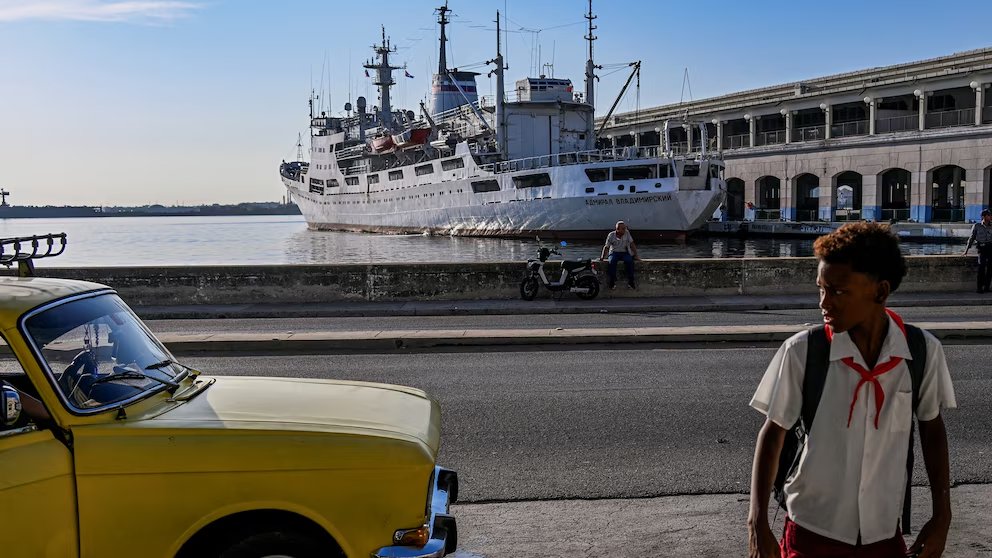
The Russian oceanographic research vessel Admiral Vladimirsky is still stationed in Havana’s harbor, June 9, 2025.Yamil Lage/AFP via Getty Images
Leading cruise operators Royal Caribbean, Carnival, Norwegian, and MSC can be held accountable financially for utilizing the American-constructed harbor in Havana, Cuba, which was seized by the communist regime in 1960, the Supreme Court determined on Thursday.
In an 8-1 judgment, the justices determined that federal statutes permit the U.S. entity that built, managed, and briefly possessed a portion of the harbor before the Cuban Revolution — Havana Docks Corporation — to pursue legal action against the cruise companies in federal court, seeking hundreds of millions of dollars over business use of the harbor for tourism purposes years later, spanning 2016 to 2019.
The judgment occurs as the Trump administration intensifies pressure on Cuba, encompassing a continuous oil embargo and a criminal indictment revealed Wednesday of former leader Raul Castro. It might further discourage business transactions with the communist nation, paving the way for comparable lawsuits against entities that have endeavored to forge commercial connections with the island in recent times.
The lawsuit revolved around the Cuban Liberty and Democratic Solidarity Act of 1996, a measure sanctioned by Congress following Cuban fighter aircraft’s downing of two unarmed Cessna planes operated by Brothers to the Rescue, intended to discourage commerce in American property taken by the Cuban Government during the revolution.
“The Act generally renders those who employ property compromised by prior confiscation responsible to any U.S. national who possesses a claim to that property,” Justice Clarence Thomas articulated for the majority.
In 2016, subsequent to the Obama administration’s establishment of renewed relations with Cuba, U.S. cruise operators commenced sailing from Florida to Havana for the initial occasion in 50 years. These voyages persisted through 2019.
President Donald Trump was the initial president following the act’s passage to enforce a stipulation of the statute that permitted U.S. entities to sue anyone who trafficked in property confiscated by the Cuban government.
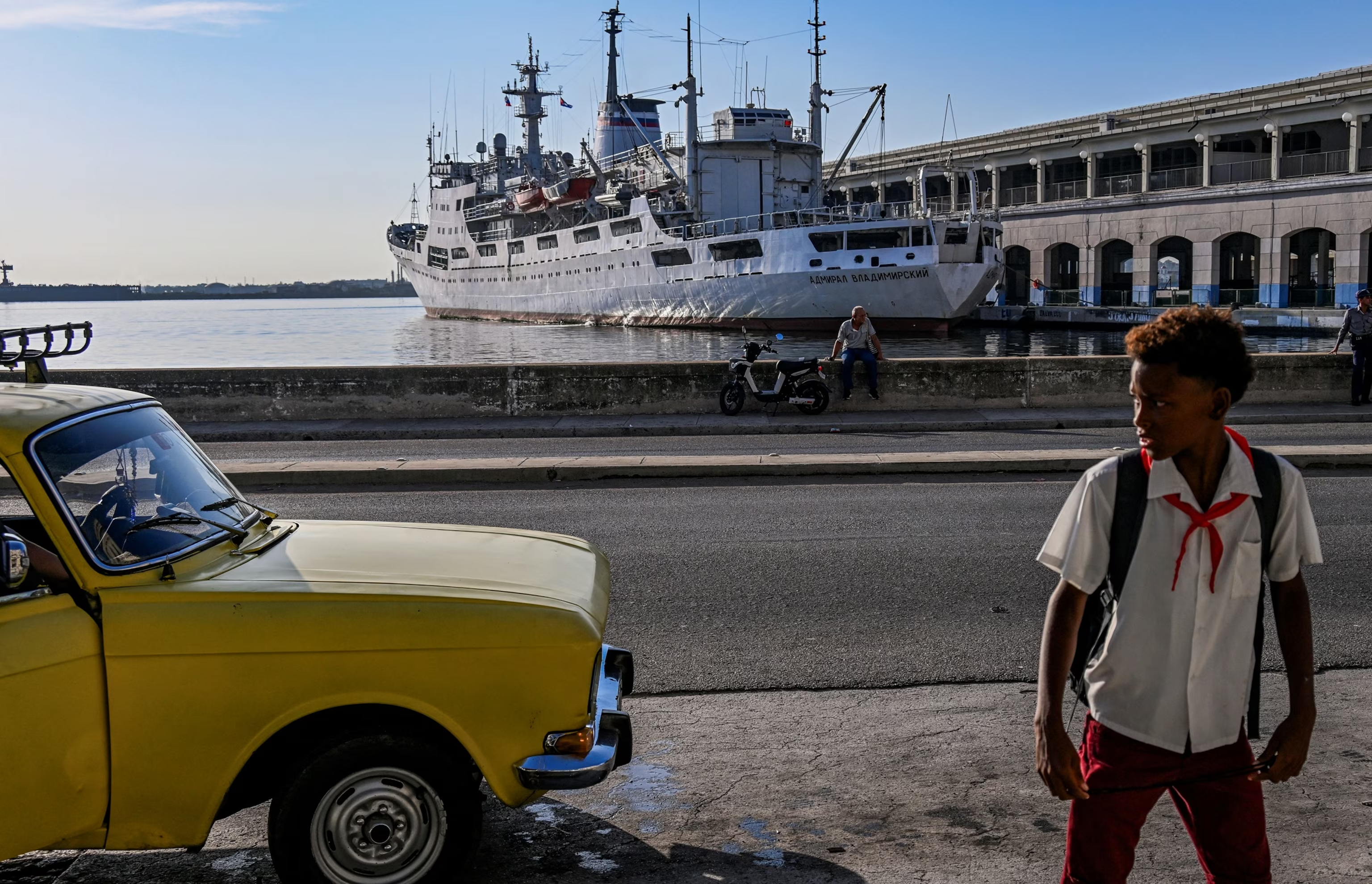
The Russian oceanographic scientific vessel Admiral Vladimirsky remains docked in the Port of Havana, June 9, 2025.Yamil Lage/AFP via Getty Images
“[The law] acknowledges that the impact of the Cuban Government’s expropriation was the destruction of the plaintiff ‘s stake in the property,” Thomas penned. “It subsequently grants a right to compensation stemming from the plaintiff’s former property stake from those who subsequently traffic in the property and consequently contribute to supporting the Communist Cuban Government.”
Following Trump’s authorization for the stipulation to take effect, Havana Docks initiated legal action against four cruise companies in 2019 concerning their employment of their former piers, and a district court awarded the company in excess of $400 million. Nevertheless, the 11th U.S. Circuit Court of Appeals overturned that judgment, determining that Havana Dock’s claim to the piers would have lapsed in 2004 under their initial accord with the Cuban government, implying that the cruise lines did not infringe upon their property entitlements.
Justice Thomas refuted that determination and asserted that the cruise lines’ utilization of the docks was sufficient to establish liability. Havana Docks, he conveyed, is not required to demonstrate that the utilization of the docks interfered with their property entitlements.
“In that manner, confiscated property is, in essence, tainted – off-limits – such that anyone who utilizes the property can be held liable to those who formerly held an interest in the tainted property,” Thomas noted.
Justice Sonia Sotomayor, joined by Justice Brett Kavanaugh, rendered a concurring opinion to challenge the majority’s “unlimited” interpretation of the statute, allowing for the recovery of billions of dollars from any individual who employs confiscated property.
“It is improbable that Congress envisioned an individual who suffered a finite loss to reap boundless recoveries. Congress delineated ‘confiscated’ property to signify property that was seized by the Cuban Government ‘without the property having been returned or adequate and effective compensation provided,'” Sotomayor stated.
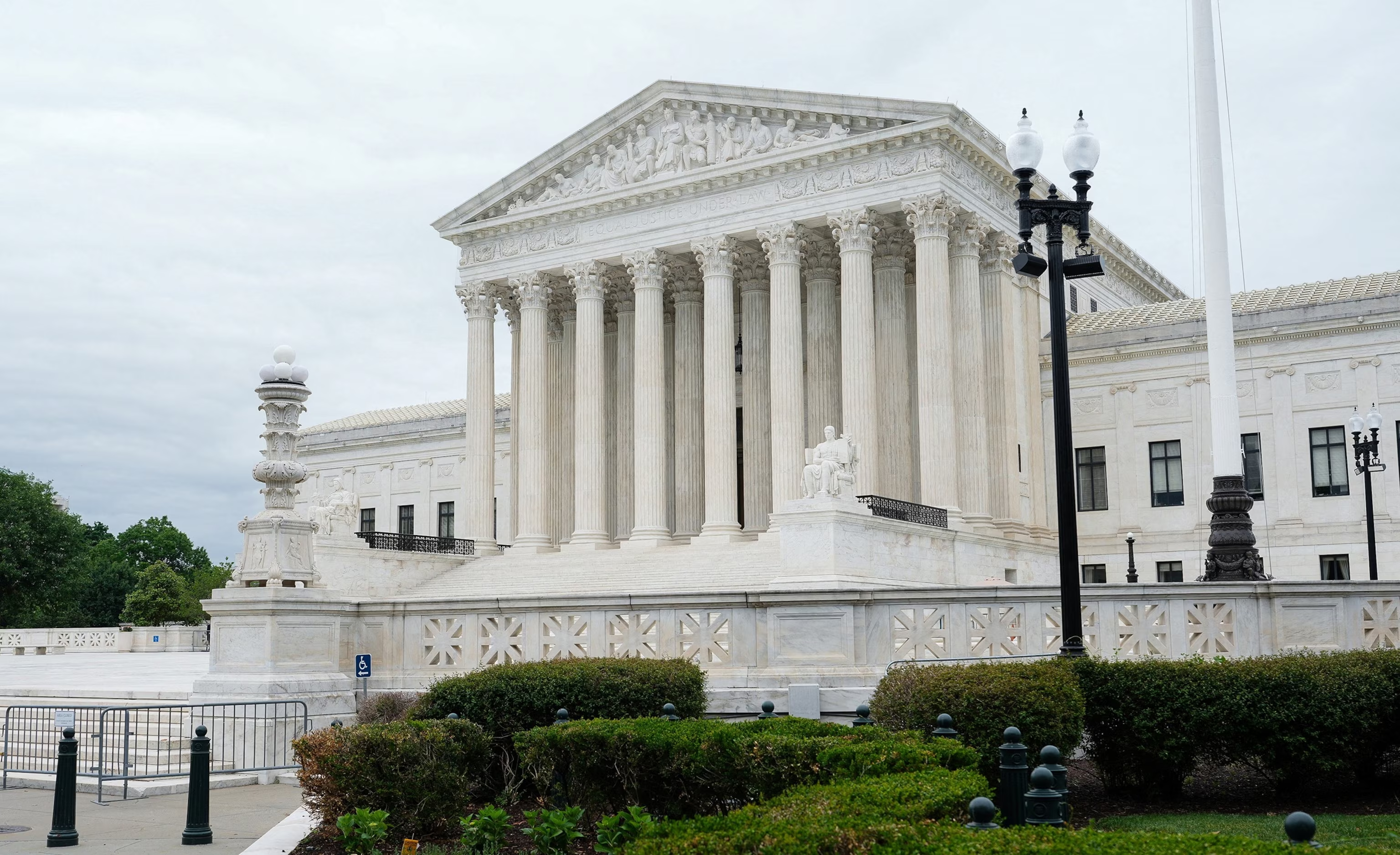
U.S. Supreme Court in Washington, May 21, 2026.Eric Lee/Reuters
Justice Elena Kagan stood as the solitary dissenter, concluding that Havana Docks lacked a right to the piers, given that their original agreement with the Cuban government would have concluded in 2004.
“The docks do not qualify as ‘property which was confiscated by the Cuban Government’ within the context of Title III. Why? Because the docks were the property of the Cuban Government — not Havana Docks — throughout. What Havana Docks possessed was solely a property stake enabling it to utilize those docks for a predetermined duration,” she penned.
The Supreme Court is still deliberating on a more significant lawsuit pertaining to property entitlements in Cuba. Argued concurrently with the Havana Docks case, Exxon Mobil v. Corporacion Cimex contemplated whether Cuban-owned enterprises are shielded from legal action concerning property allegations. The ruling in that lawsuit is anticipated in the forthcoming weeks.
Sourse: abcnews.go.com