
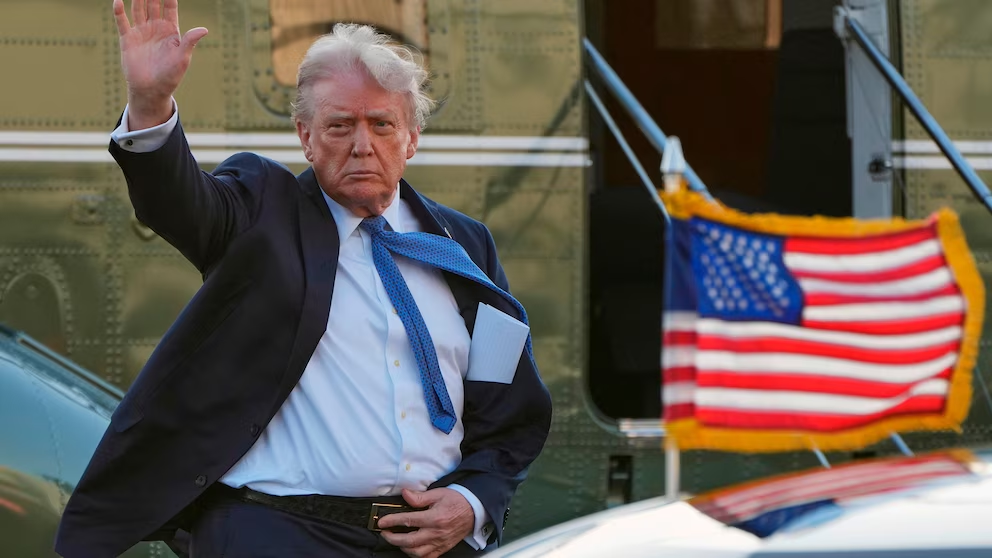
FILE – President Donald Trump arrives at Leesburg Executive Airport aboard Marine One in Leesburg, Va., Thursday, April 24, 2025, heading towards Trump National Golf Club Washington DC in Sterling, Va. Jacquelyn Martin/AP Photo/Jacquelyn Martin
Republicans are postponing plans to move forward with a $70 billion immigration measure, backing off after a meeting with Acting Attorney General Todd Blanche to discuss misgivings about the administration's anti-weaponization fund.
The decision delays the process until after their week-long Memorial Day break, following the House and Senate adjourning Thursday afternoon.
Previously, Senate Republicans were prepared to attempt to limit two of President Donald Trump's contentious spending requests: $1 billion for the East Wing expansion and almost $1.8 billion for an "Anti-Weaponization Fund," sources familiar with the situation told ABC News.
Blanche abandoned planned travel to visit Capitol Hill in order to try and calm the growing Republican opposition to the "anti-weaponization fund," which would be used to compensate allies who claim to have experienced injustices at the hands of the Biden administration. However, Blanche's meeting appears to have completely misfired.
There was shouting in the room, multiple sources informed ABC News, with some senators — even certain outspoken Trump supporters — telling Blanche they feared they'd forfeit the Senate majority because of the fund.
Blanche even made an attempt to appease Republican senators by releasing a fact sheet earlier Thursday indicating that they themselves can apply to obtain funds from the fund.
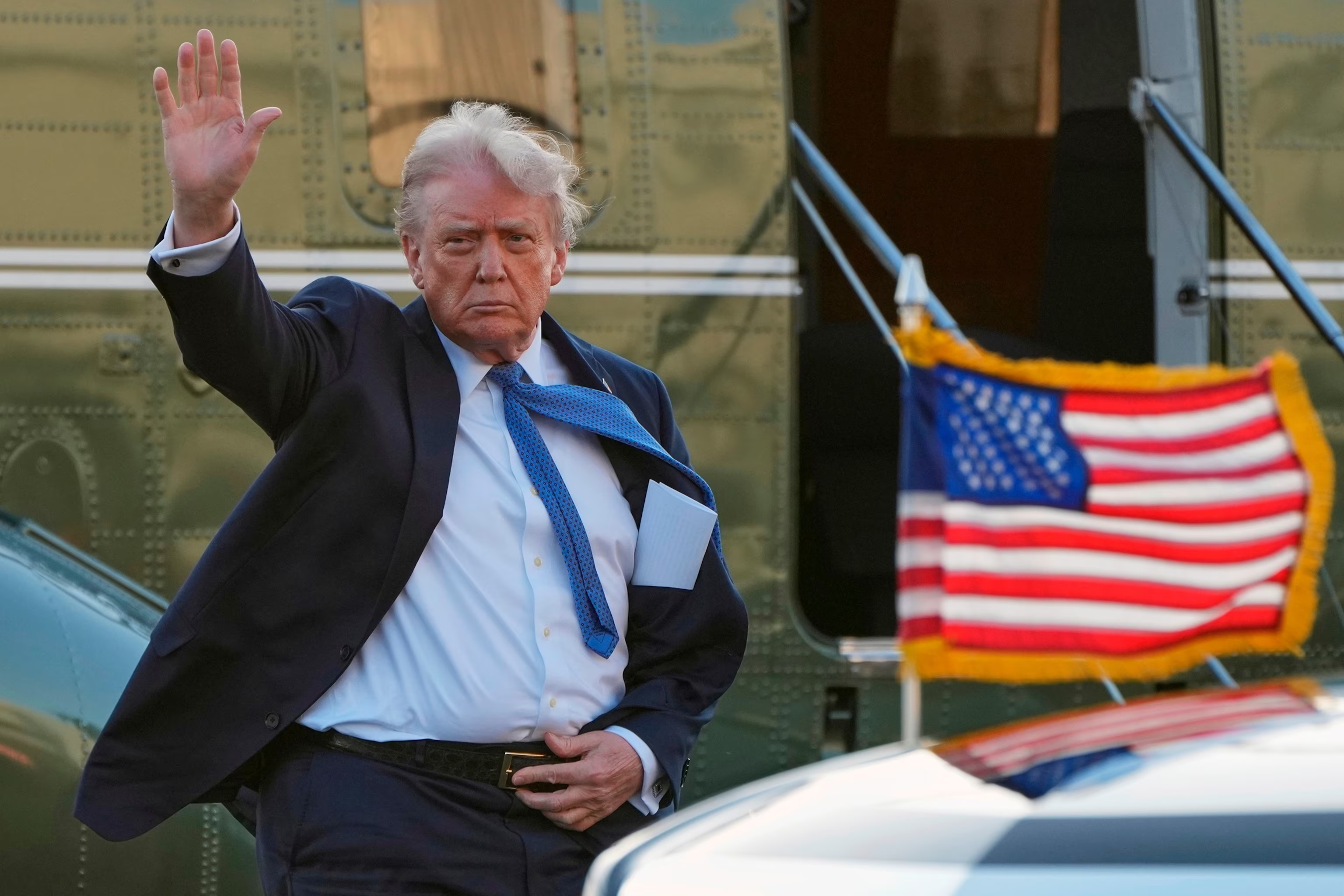
FILE – President Donald Trump arrives at Leesburg Executive Airport on Marine One in Leesburg, Va., Thursday, April 24, 2025, en route to Trump National Golf Club Washington DC in Sterling, Va.Jacquelyn Martin/AP Photo/Jacquelyn Martin
Republicans are exploring methods to utilize the bill to impose limitations on Trump’s "anti-weaponization" fund.
On Wednesday afternoon, some Republicans informed reporters that the $1 billion for White House security — including funds for the ballroom — would likely be excised from the bill due to a lack of GOP backing.
Since the text of the new bill has not been released publicly, it’s not yet certain exactly what restrictions Republicans might attempt to impose on the "Anti-Weaponization Fund," the foundation of the settlement between the Department of Justice and Trump to resolve his $10 billion lawsuit against the IRS.
The taxpayer-funded money pool will be managed by a five-member commission chosen by the acting attorney general with minimal oversight aside from the president, who possesses the power to remove members.
Senators were engaged in discussions regarding potential provisions to address their worries about the fund, but as of Thursday afternoon, those discussions still appeared to be considerably apart.
Republican Sen. Susan Collins stated "no," Blanche did not alter her opinion concerning the weaponization fund.
Republican Sen. John Hoeven indicated that the "consensus building process" on the subject is "going to demand more effort."
"We simply don't have the correct arrangement where we know we possess 50 votes," he commented.
Republicans could endeavor to incorporate limitations for the fund within the actual bill, or they could conversely attempt to propose an amendment addressing the fund once the bill is debated on the Senate floor.
However, if Republicans do not take action, it is widely anticipated that Democrats will undoubtedly attempt to.
Senate Republicans are seeking to push the $70 billion immigration enforcement package through utilizing a budget mechanism known as reconciliation, which will permit them to approve the bill with a straightforward majority of votes in the Senate instead of the usual 60 votes needed to authorize most legislative matters.
However, prior to the bill passing, there will be a voting marathon referred to as a vote-a-rama, during which lawmakers are able to introduce an unlimited amount of amendments to the bill.
Democrats lack the power to prevent this package from being approved if Republicans remain united, but Democrats could propose a series of amendments that compel Republicans to participate in politically challenging votes.
Should Republicans fail to develop a clear approach to address the "anti-weaponization" fund in their underlying bill or through an amendment favored by Republicans who oppose the fund, Democratic-led amendments aimed at restricting the fund could potentially secure the necessary GOP support to pass on the Senate floor.

Sen. Bill Cassidy, R-La., speaks to supporters during an election night watch party Saturday, May 16, 2026, in Baton Rouge, La. (AP Photo/Gerald Herbert)The Associated Press
Certain Senate Republicans whom Trump has openly criticized in recent weeks have become the fund's most vocal detractors, including Sen. Bill Cassidy, who was defeated in his primary race in Louisiana after Trump endorsed his rival.
Cassidy spoke out on Wednesday night, condemning the fund.
“People are worried about covering their mortgage or rent, affording groceries and paying for gas, not about assembling a $1.8 billion fund for the President and his allies to compensate whomever they desire with no legal foundation or accountability. This is contributing to our national debt. Should a settlement be needed, the administration should present it to Congress to decide,” Cassidy posted on X.
Regardless of Republican actions, Democrats are anticipated to utilize the vote-a-rama to compel a series of votes that they anticipate will trap Republicans regarding the fund.
Democratic Sen. Richard Blumenthal informed ABC News on Wednesday that he plans to force votes on amendments to “halt this unlawful, abhorrent slush fund” during the vote-a-rama.
With sufficient GOP support, Democrats could have a genuine prospect of placing restrictions on — or even abolishing — this fund as part of the massive package. Depending on how Democrats structure their amendments pertaining to the IRS fund, securing as few as four Republican proponents to pass some of them could be sufficient.
What became of the ballroom funding?
The $1 billion earmarked for White House security, encompassing the security elements of Trump’s ballroom, is being abandoned by Republicans, according to some GOP lawmakers. The Republican lawmakers are stating there is insufficient backing within their conference to proceed with the funding.
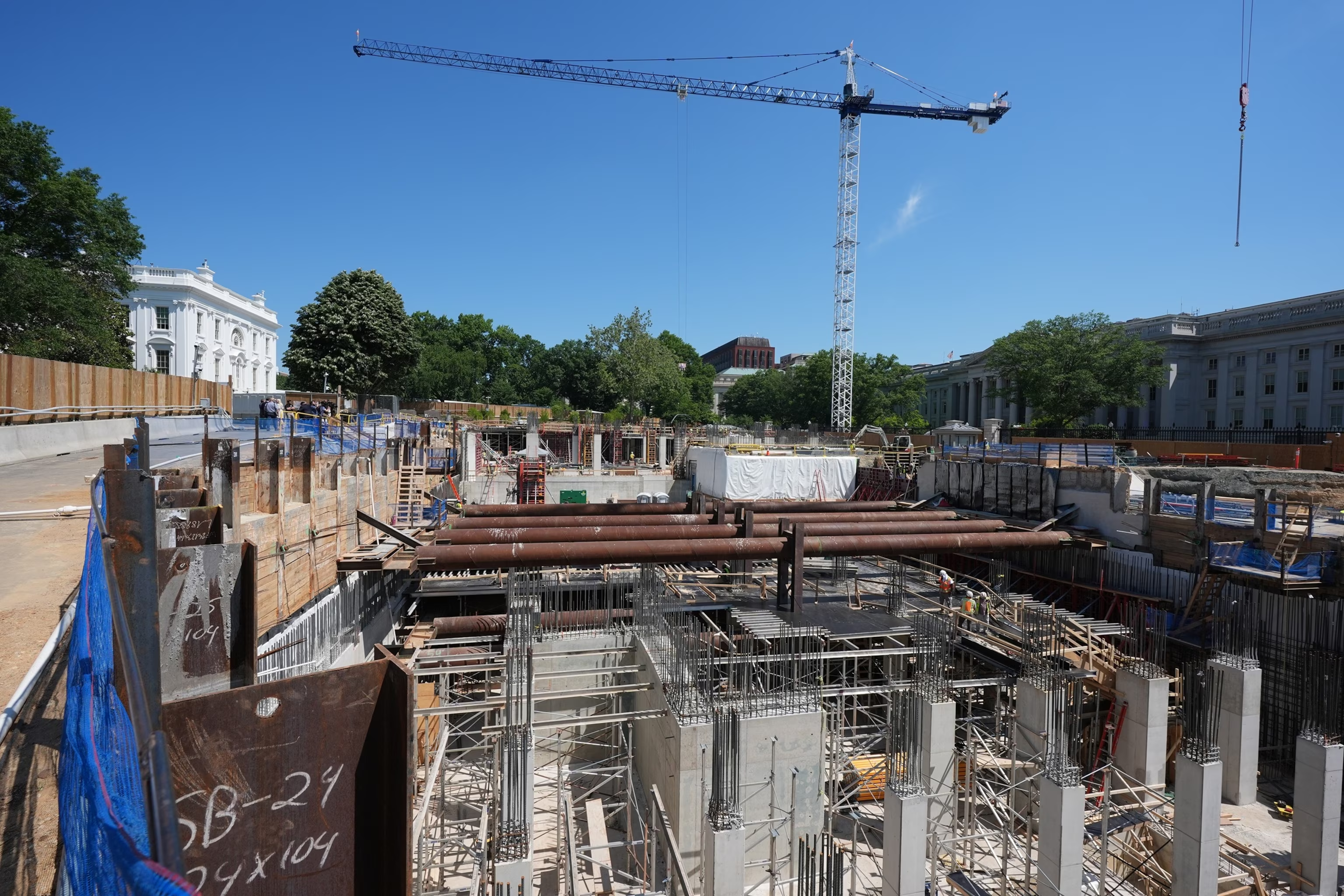
A view of the site of ongoing construction of the planned White House ballroom in Washington, May 19, 2026.Jacquelyn Martin/AP Photo
The Senate’s rule keeper indicated over the weekend that $1 billion could not be encompassed within the bill under Senate regulations. Despite some Republicans initially stating they’d rework the measure, a number of GOP senators came out strongly against the $1 billion allocation and threatened to derail the entire bill if it was not removed.
Democrats were anticipated to propose a series of amendment votes to attempt to eliminate the ballroom funding from the bill. Those amendments would only have necessitated the support of four Republicans and likely would have passed.
Sourse: abcnews.go.com