
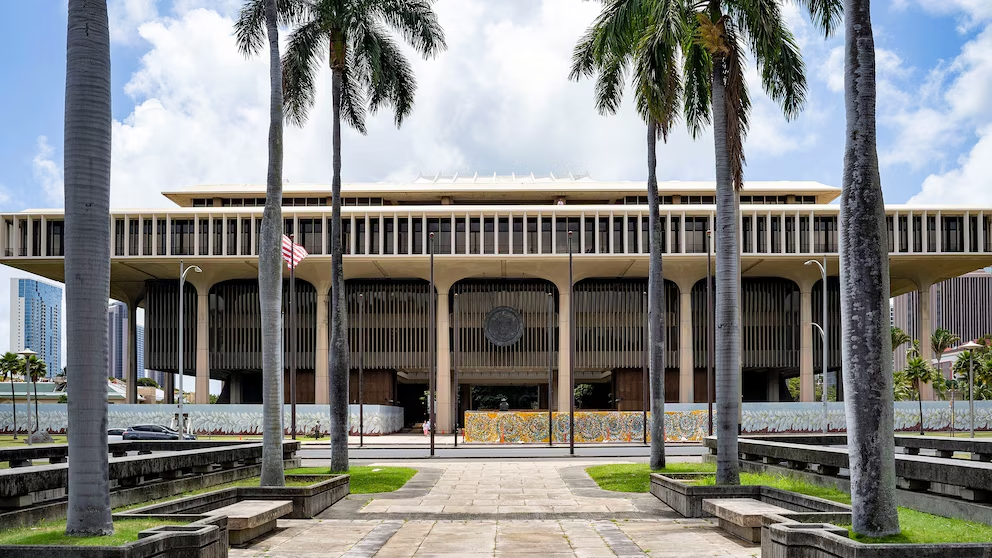
Palm trees grace the Hawaii State Capitol, April 23, 2025, situated in Honolulu, Hawaii.Mengshin Lin/AP
Following its governor’s approval of a groundbreaking campaign finance reform measure, Hawaii appears headed for a confrontation with legal standards that permit entities to funnel vast sums into electoral contests.
Senate Bill 2471 was devised to restrict political expenditures by employing the state’s authority to delineate corporate powers. The new statute’s widespread ramifications for political discourse and elections suggest that it is highly likely to encounter legal objections.
State Senator Jarrett Keohokalole, a co-sponsor of the bill, perceives a link between the legislation and Hawaii’s history.
“Hawaii has a lengthy, somber history of corporations supplanting the desires of its populace,” Keohokalole conveyed to ABC News. “The Hawaiian Kingdom’s overthrow in 1893 was executed by U.S. entrepreneurs who controlled the sugar industries.”
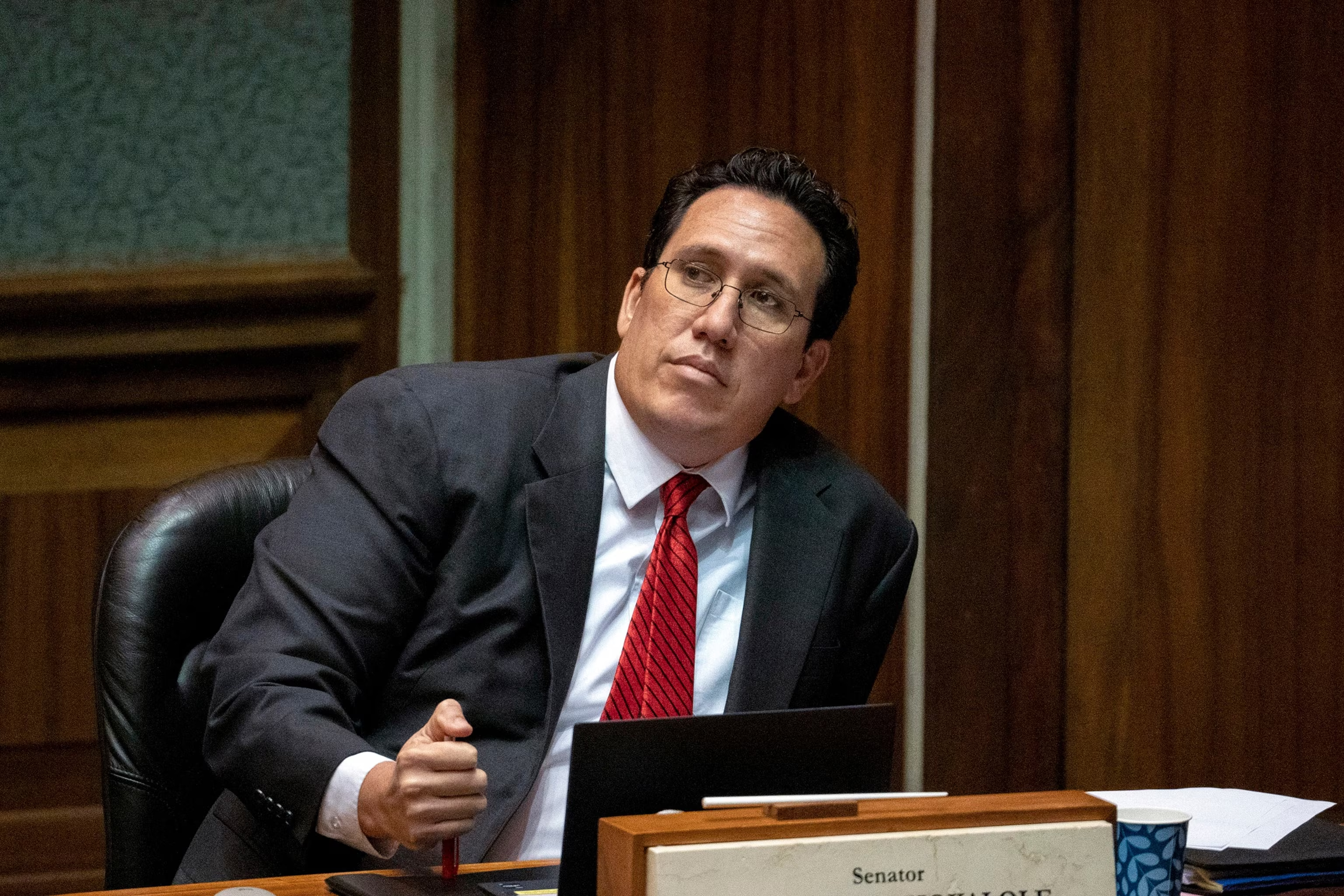
State Sen. Jarrett Keohokalole observes a colleague speaking during a floor session at the State Capitol, April 30, 2025, in Honolulu, Hawaii.Mengshin Lin/AP
In 2010, the Supreme Court rendered a verdict in Citizens United v. Federal Election Commission that affirmed that independent corporate expenditures in elections constitute a form of protected expression. The decision famously revoked former limitations on political spending and fostered the development of “super PAC” political action committees, which can bolster their chosen candidates with limitless corporate funding.
Although it does not directly challenge the notion that corporations possess a right to political expression, the recent Hawaii statute asserts that, given that states grant corporations their powers, a state may opt not to grant corporations the authority to expend funds on elections initially. The new mandate is slated for enforcement in 2027.
This same concept concerning corporate authority bolsters several other reform endeavors nationwide. A key figure behind this theory is Tom Moore of the Center for American Progress, a left-leaning policy organization, who informed ABC News that over a dozen bills predicated on the theory have been presented in state legislatures.
Nearly all these bills failed to pass. California’s AB 1984, for example, proposed by state Assemblymember Chris Rogers in February, died in committee without a vote. Rogers communicated to ABC News his intention to resubmit the bill the following year.
“I believe there’s merit in persisting in the fight and demonstrating to the average voter that not every elected official, nor every institution formulating policy, is bought and paid for,” Rogers remarked.
In Montana, an entity known as the Transparent Election Initiative (TEI) is amassing signatures for a ballot initiative that, upon passage, would curtail the political expenditure powers of corporations within the state.
Jeff Mangan, director of TEI, expressed his extreme satisfaction at seeing Hawaii’s bill enacted into law. According to Mangan, TEI is approximately two-thirds of the way to securing the 30,000 signatures necessary to place their initiative on the ballot.
“Significant momentum exists at the grassroots level,” Mangan told ABC News.
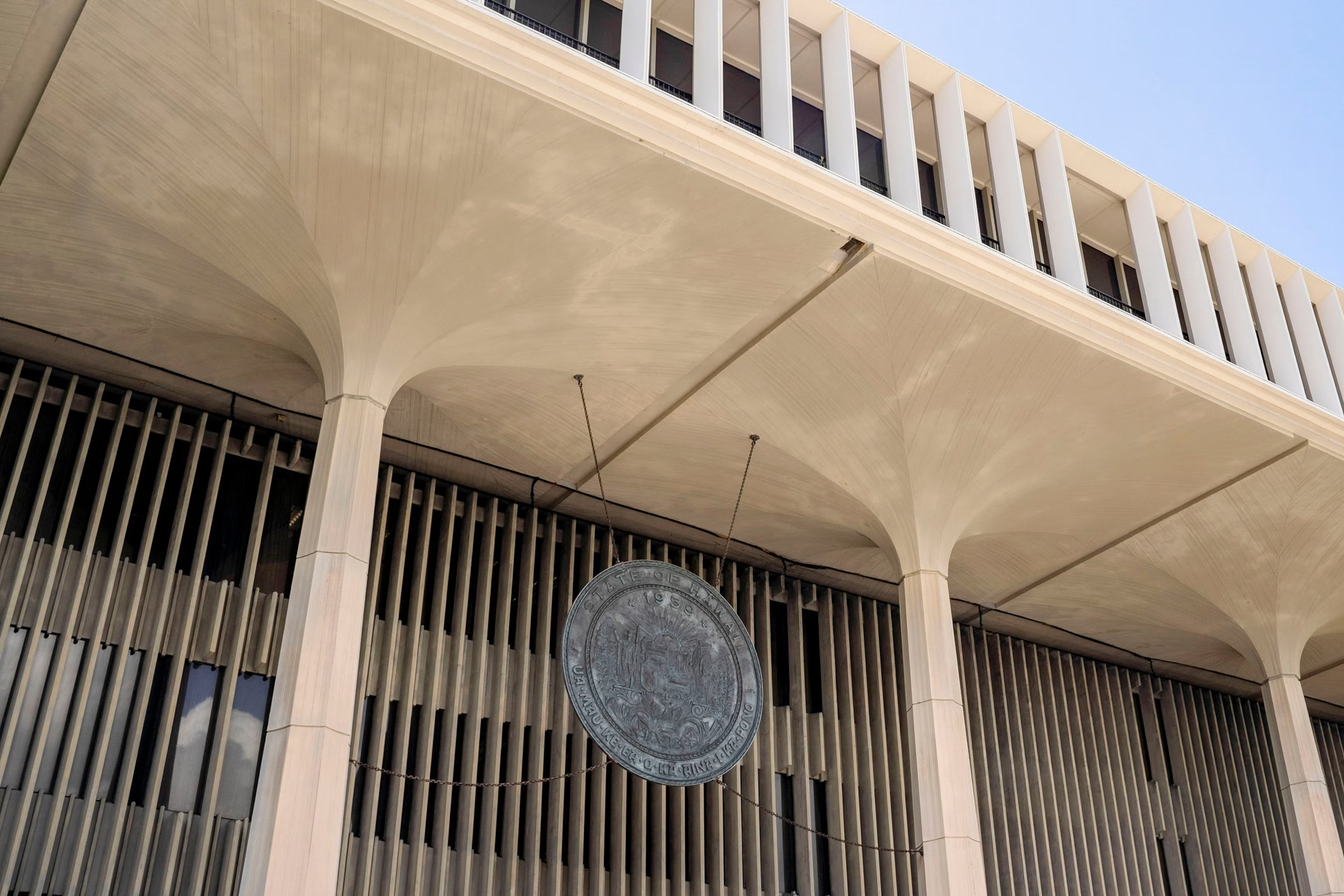
The seal of the State of Hawaii is displayed at the state Capitol, April 23, 2025, in Honolulu, Hawaii.Mengshin Lin/AP
Hawaii stands as the pioneering state to convert its policy into legislation amidst the states pursuing this specific brand of campaign finance reform. Moore, a former employee of the Federal Election Commission (FEC), characterized the bill’s progression through the Hawaii legislature as a “delightful surprise.”
“It doesn’t nullify (Citizens United),” Moore clarified. “It resembles a Supreme Court case pertaining to buggy whips… It simply lacks current relevance.”
Bradley Smith, the initiator of the Institute for Free Speech, remains unconvinced by Moore’s premise.
“Do you genuinely anticipate the Supreme Court embracing that?” Smith inquired, himself a past FEC commissioner, during an interview with ABC News. “Does anyone realistically believe that they will heed this and respond, ‘You’re remarkably clever. You’ve outwitted me. I never entertained the notion of merely designating it a power rather than a right’?”
Smith indicated that the Institute for Free Speech might challenge the legislation, and that such a challenge could potentially reach the Supreme Court.
Even within Hawaii, reservations exist concerning the rationale underpinning the new legislation. The state Attorney General’s office, for instance, conveyed in testimony this past February that while it “holds significant sympathy for the dissatisfaction with federal caselaw on this subject,” the bill “elicits considerable constitutional apprehensions and significant unfavorable litigation risks should it be enacted into law.” In addition, despite Hawaii Governor Josh Green’s assertion to Honolulu ABC affiliate KITV that he considers “the concept to be sound,” he alluded to “difficulties” with SB 2471 in the days preceding its passage in the legislature.
Senator Karl Rhoads, a Democrat and a co-sponsor of the bill, concurs that the law could ultimately be appealed to the nation’s highest judicial body.
“The Supreme Court has entangled itself in peculiar legal complexities to achieve its desired outcomes, thus… I comprehend the AG’s concerns. However, I believe they are excessively pessimistic,” Rhoads conveyed to ABC News.
Chris Rogers, the assemblymember representing California, posits that any legislation or ballot initiative founded upon Moore’s legal theory will invariably confront legal challenges.
“Once the courts are obligated to rule on this matter, it will signify a noteworthy systemic shift across the United States,” Rogers stated.
Sourse: abcnews.go.com